Close-ups
Framed and on the wall

Frame and rooms are illustrations of how the piece could look; it is sold unframed unless the description says otherwise.
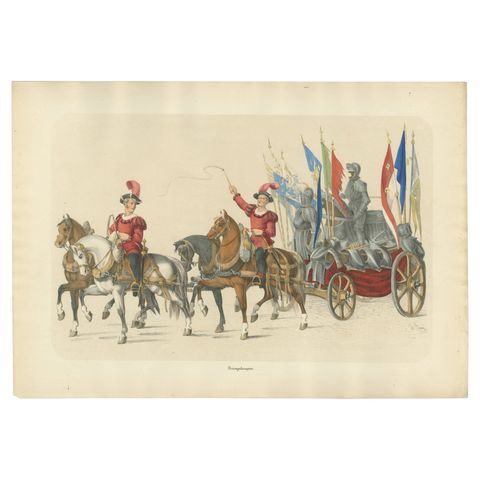
1855 Swiss Victory Parade, Captured Burgundian Cannons in Triumphal Procession
£460
$610 · €540
Original print, not a reproduction.
Ships worldwide from the Netherlands, flat, insured and tracked. 14-day returns. To buy, use Ask a question and we will reserve it for you.
- Date
- 1855
- Sheet size
- 13.4 × 19.5 in (34 × 49.5 cm)
- Condition
- Good. This print has been well preserved, with vibrant hand coloring that enhances the historical richness of the scene. Minor signs of handling and occasional light foxing in the margins are present but do not detract from the artwork’s overall appeal.
- Collection
- Uniforms & regiments
- Era
- 1816 to 1899, Empire and industry
- Stock no.
- f_43960962
Title: 1855 Swiss Victory Parade, Captured Burgundian Cannons in Triumphal Procession
Description:
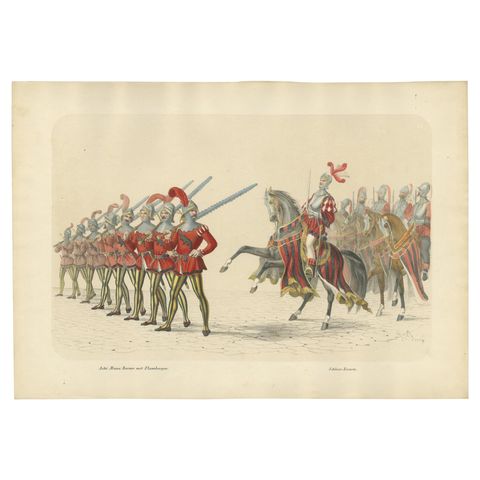
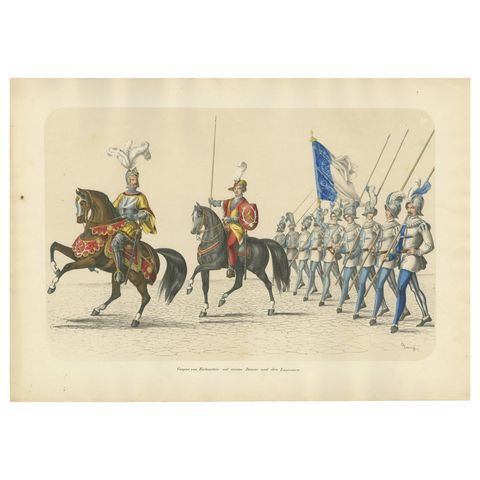
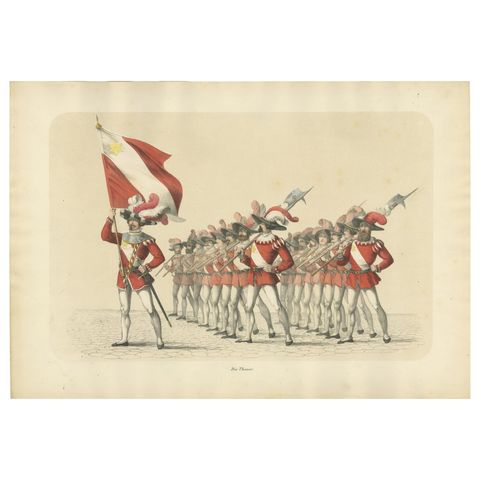
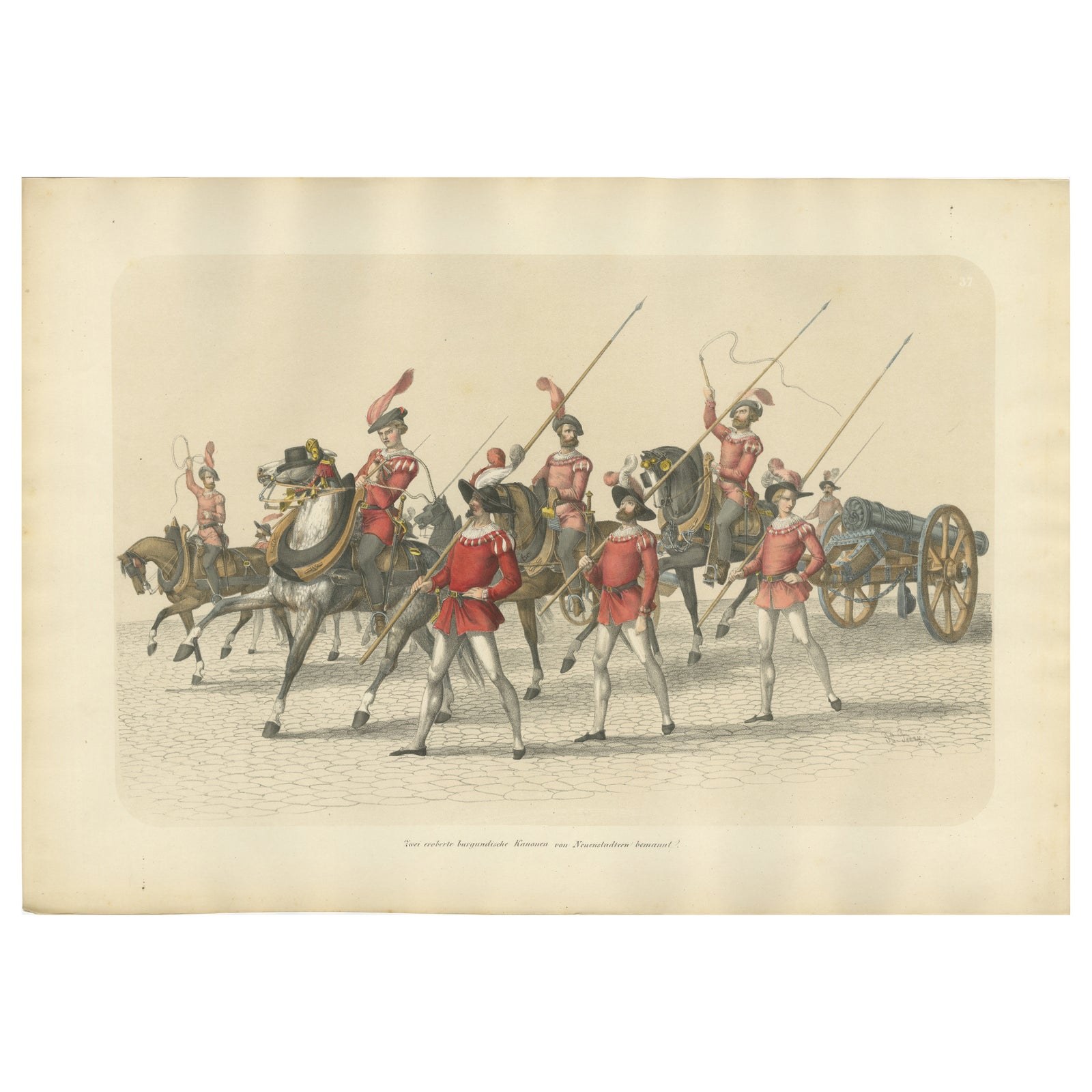
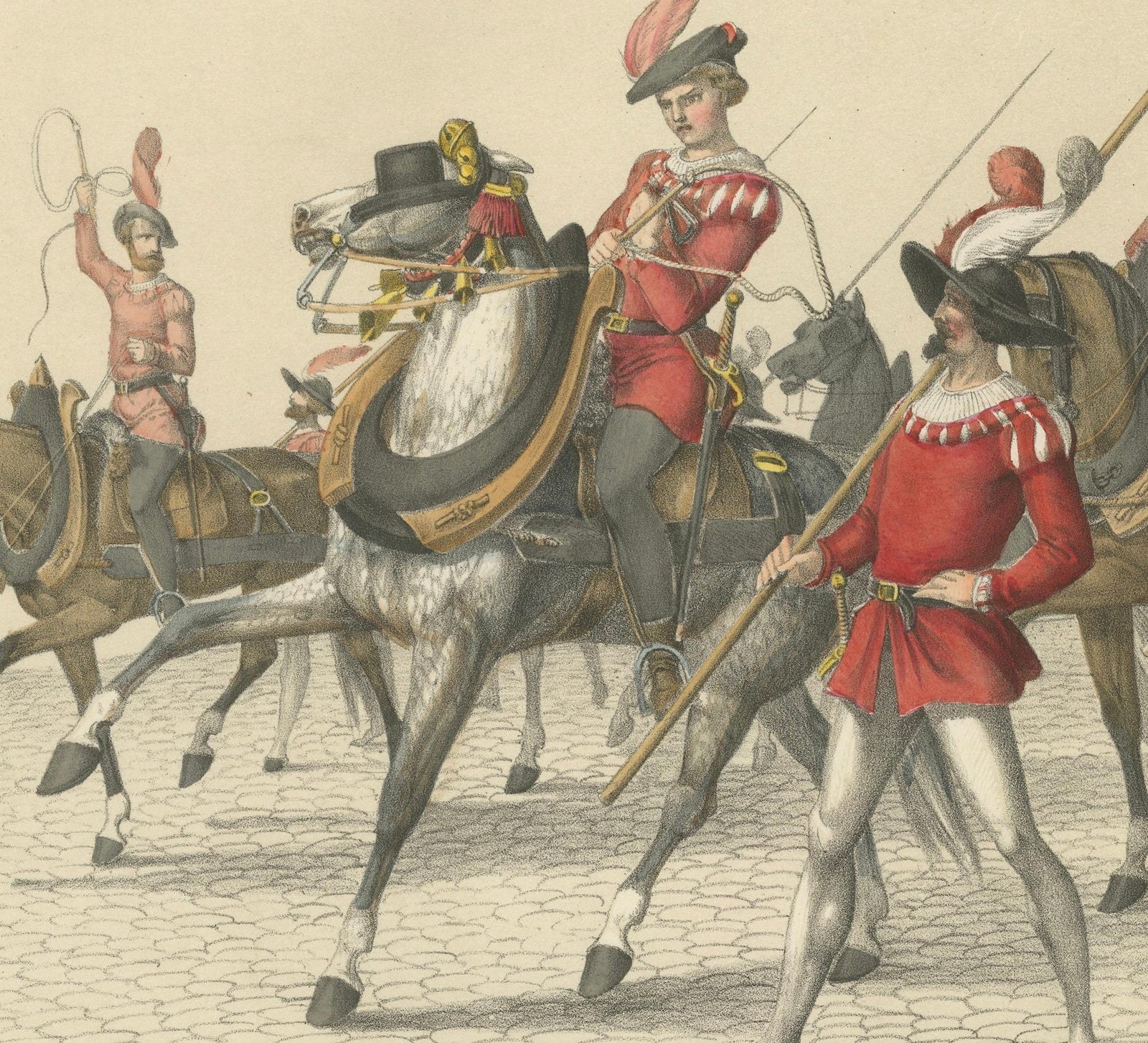
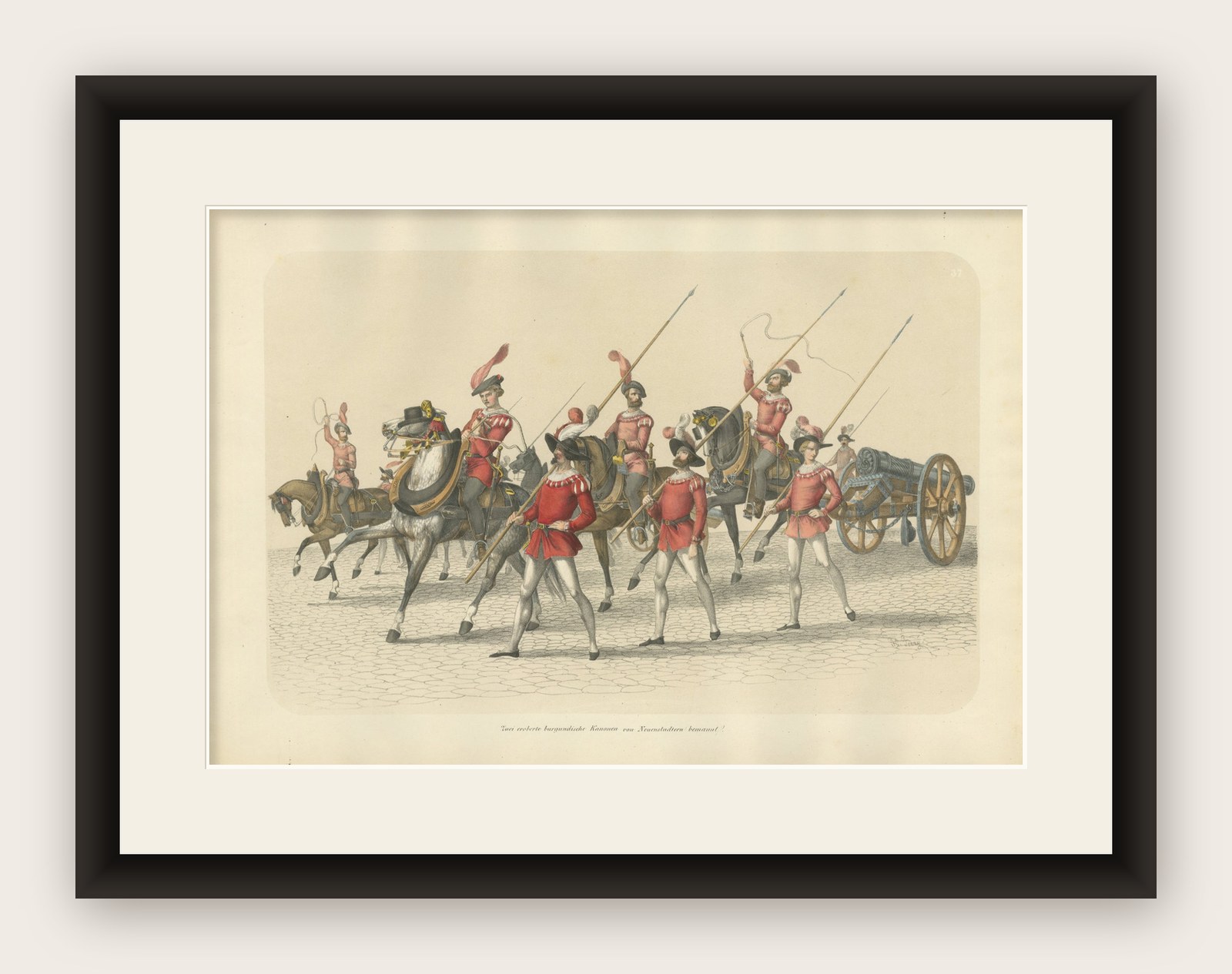
This exquisite hand-colored lithograph, created by H. Jenny and lithographed by Kümmerly and Wittmer, is part of the 'Fest Album' celebrating Bern’s entry into the Swiss Confederation on March 6, 1353. Published in Bern and Zurich in 1855, this large oblong folio commemorates the grand festival held in 1853, which featured historical reenactments honoring Bern’s military triumphs, particularly against the Burgundians.
The scene captures a moment of triumph as Swiss forces parade with two captured Burgundian cannons, likely referencing the Swiss victories over Charles the Bold in the late 15th century, including the decisive battles of Grandson (1476) and Murten (1476). These victories cemented Swiss military dominance and secured Bern’s position within the Confederation.
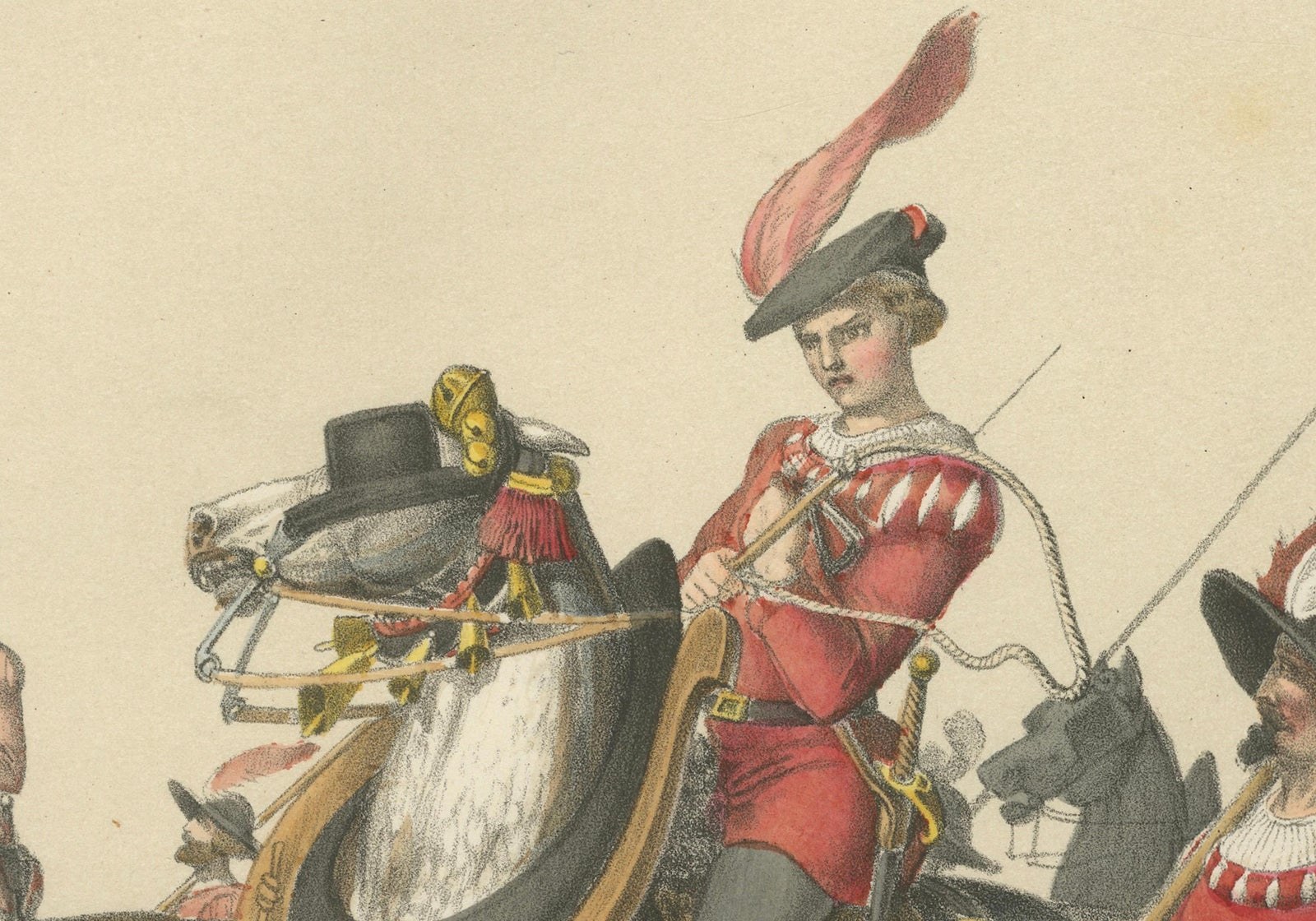
At the forefront, Swiss foot soldiers in red Renaissance-style doublets and short tunics march with long pikes, exuding discipline and confidence. Their light armor and striking plumed hats add a sense of pageantry to the scene. Behind them, mounted officers and artillerymen guide the captured cannons, which are mounted on sturdy wooden carriages. The horses, adorned with decorated bridles and elaborate harnesses, move in a coordinated display of order and strength. The dynamic poses of both the riders and their steeds bring energy to the composition, emphasizing movement and celebration.
This lithograph is an exceptional example of 19th-century Romantic historical revivalism, portraying Swiss pride and military heritage with great attention to period accuracy. The choice to highlight the capture of Burgundian artillery reflects Switzerland’s transformation from a loose confederation into a formidable military force that played a crucial role in European warfare.
The artist’s meticulous detailing, seen in the ornate horse tack, the folds of the soldiers’ garments, and the carefully rendered cannon, demonstrates the craftsmanship of 19th-century lithographic printing. The contrast between the soldiers’ bright red uniforms and the muted tones of the cannons and horses adds depth and visual interest to the composition.
Condition Summary:
This lithograph has been well preserved, with vibrant hand coloring that enhances the historical richness of the scene. Minor signs of handling and occasional light foxing in the margins are present but do not detract from the artwork’s overall appeal. The paper remains strong and well-structured, making this a fine collectible.
Framing Tips:
For the best presentation, use a high-quality frame with UV-protected museum glass or acrylic to prevent fading. A wide mat border in a neutral or warm tone will help highlight the detailed composition. Given the large oblong format, a dark wooden or gold-accented frame will enhance the historical character of the piece. Archival mounting materials should be used to ensure long-term preservation.