Close-ups
Framed and on the wall
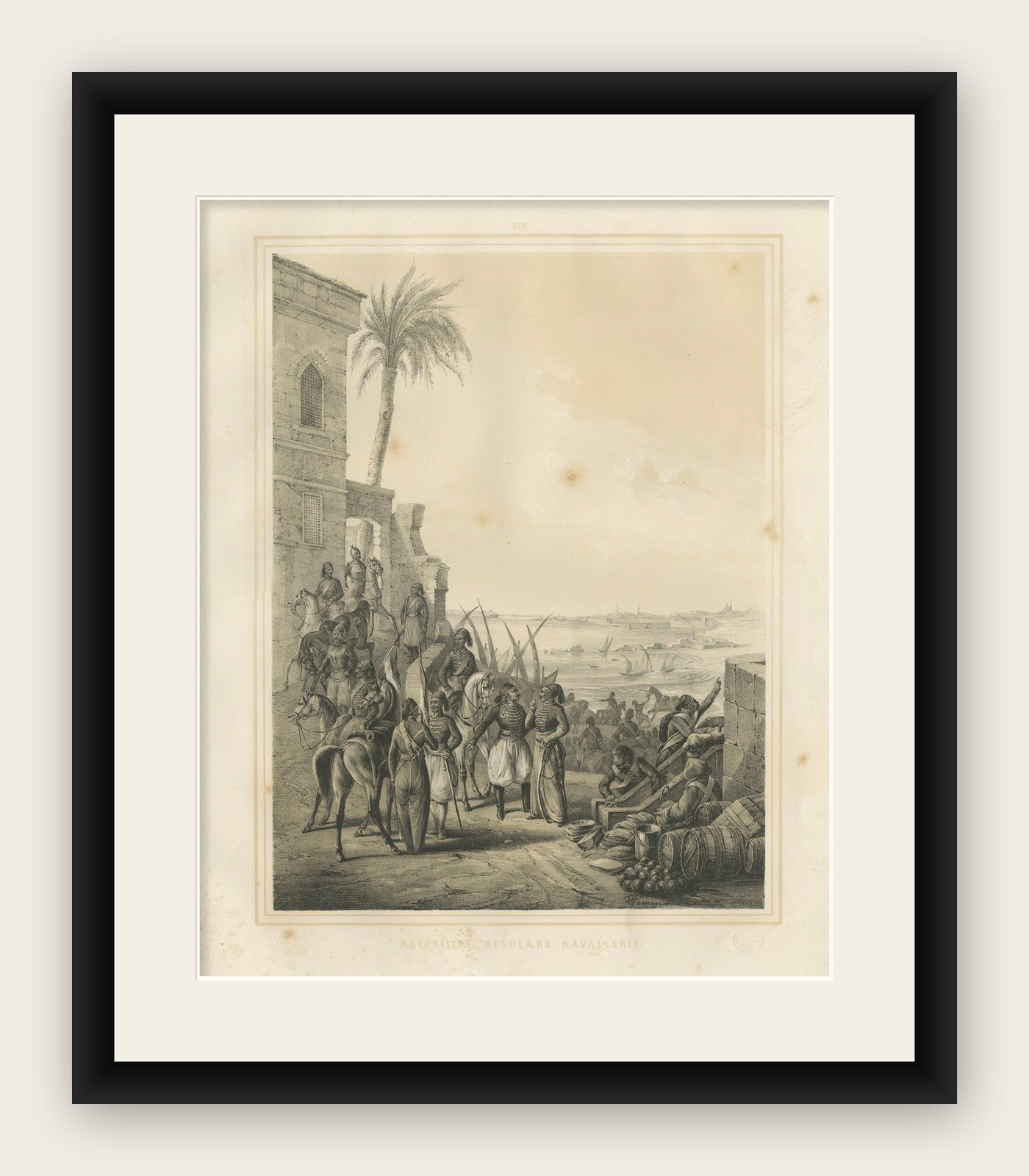

Frame and rooms are illustrations of how the piece could look; it is sold unframed unless the description says otherwise.
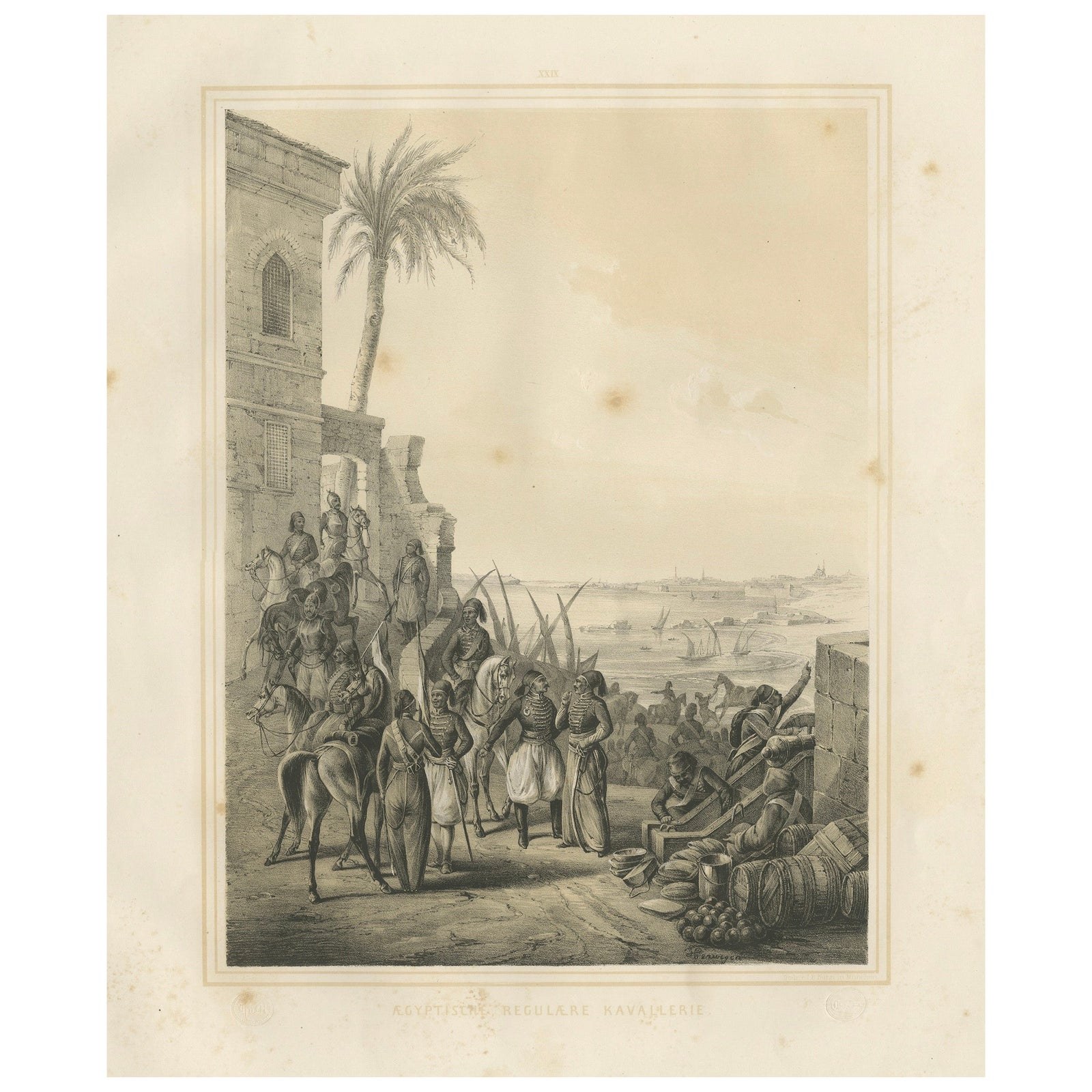
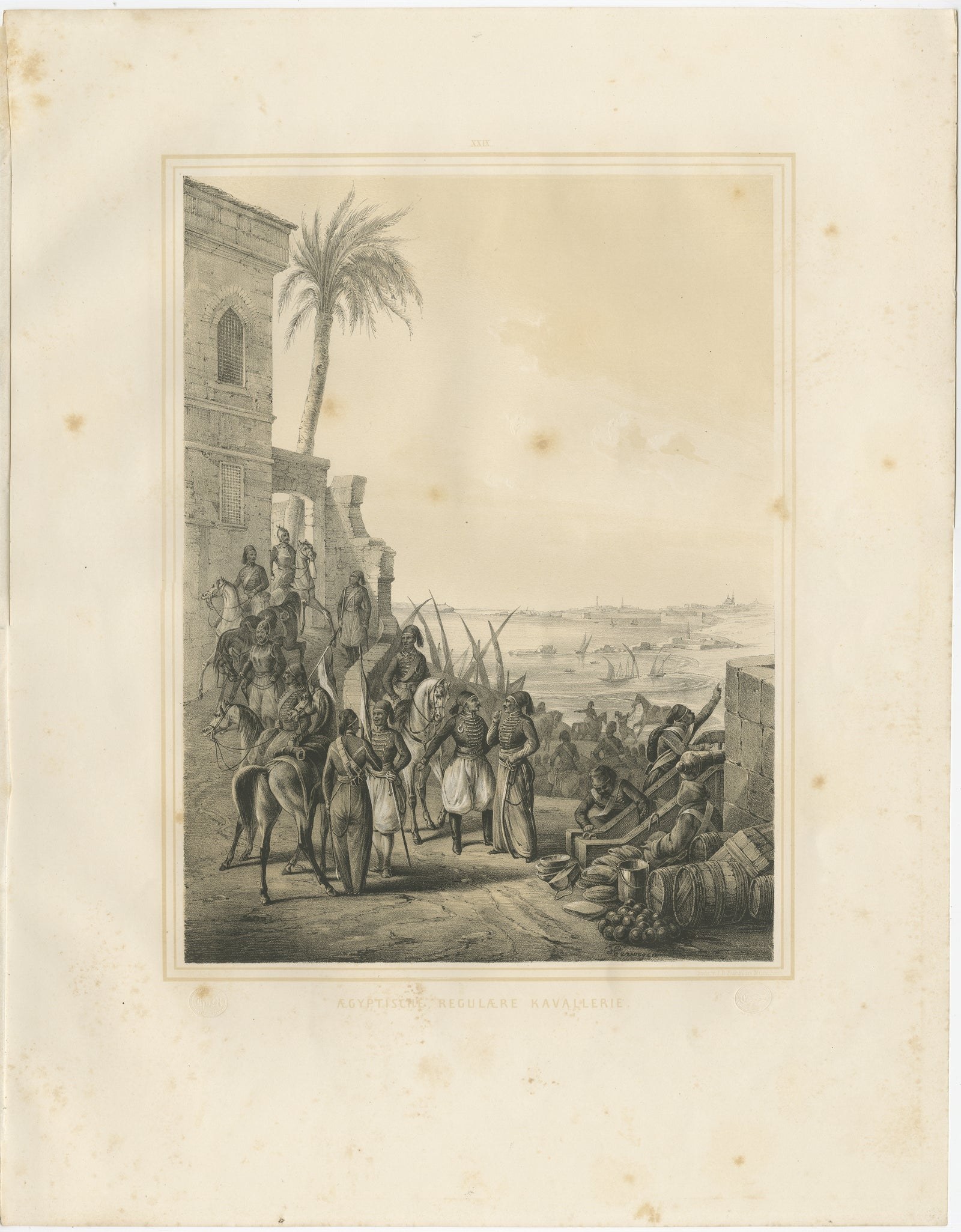
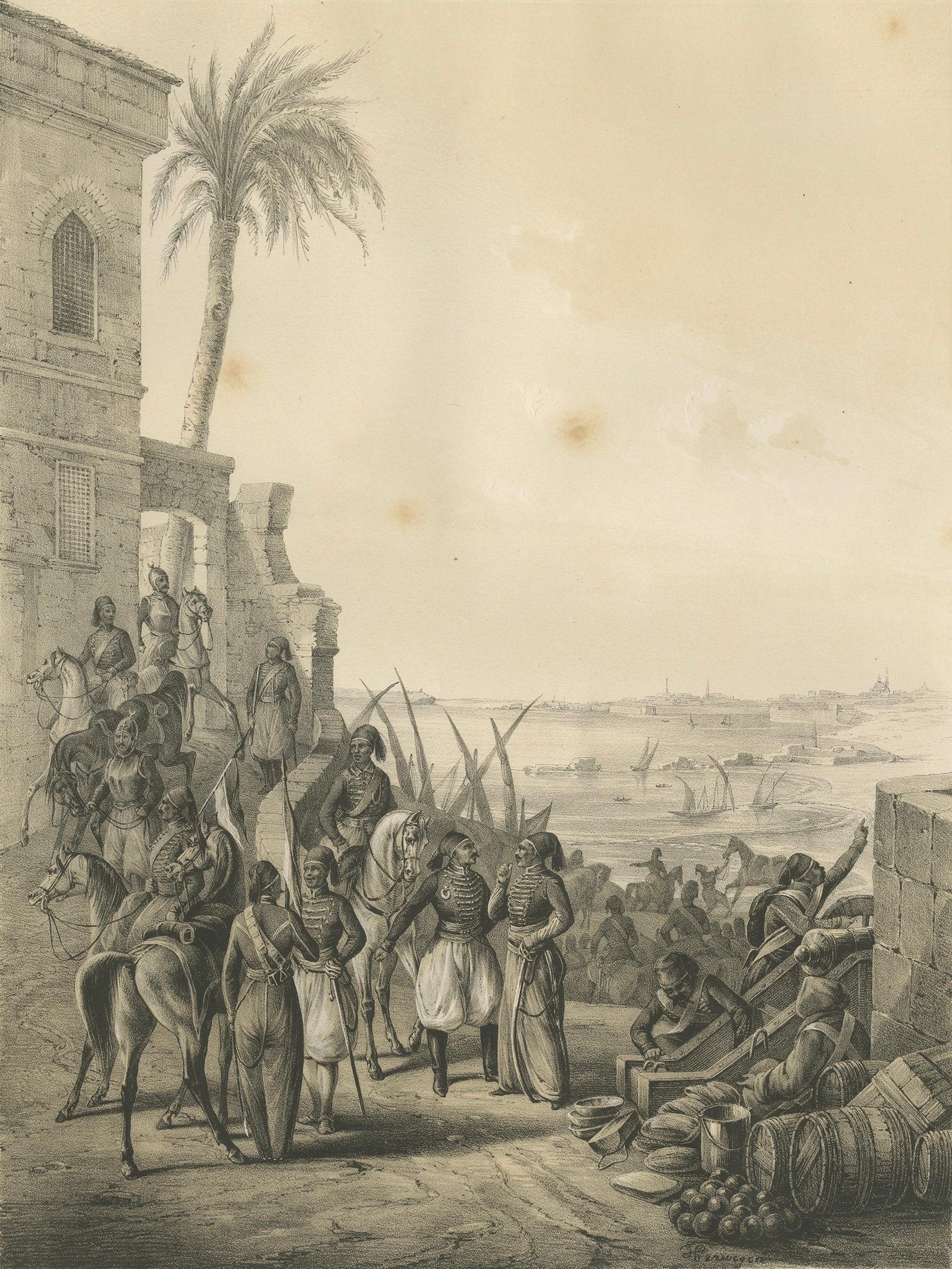
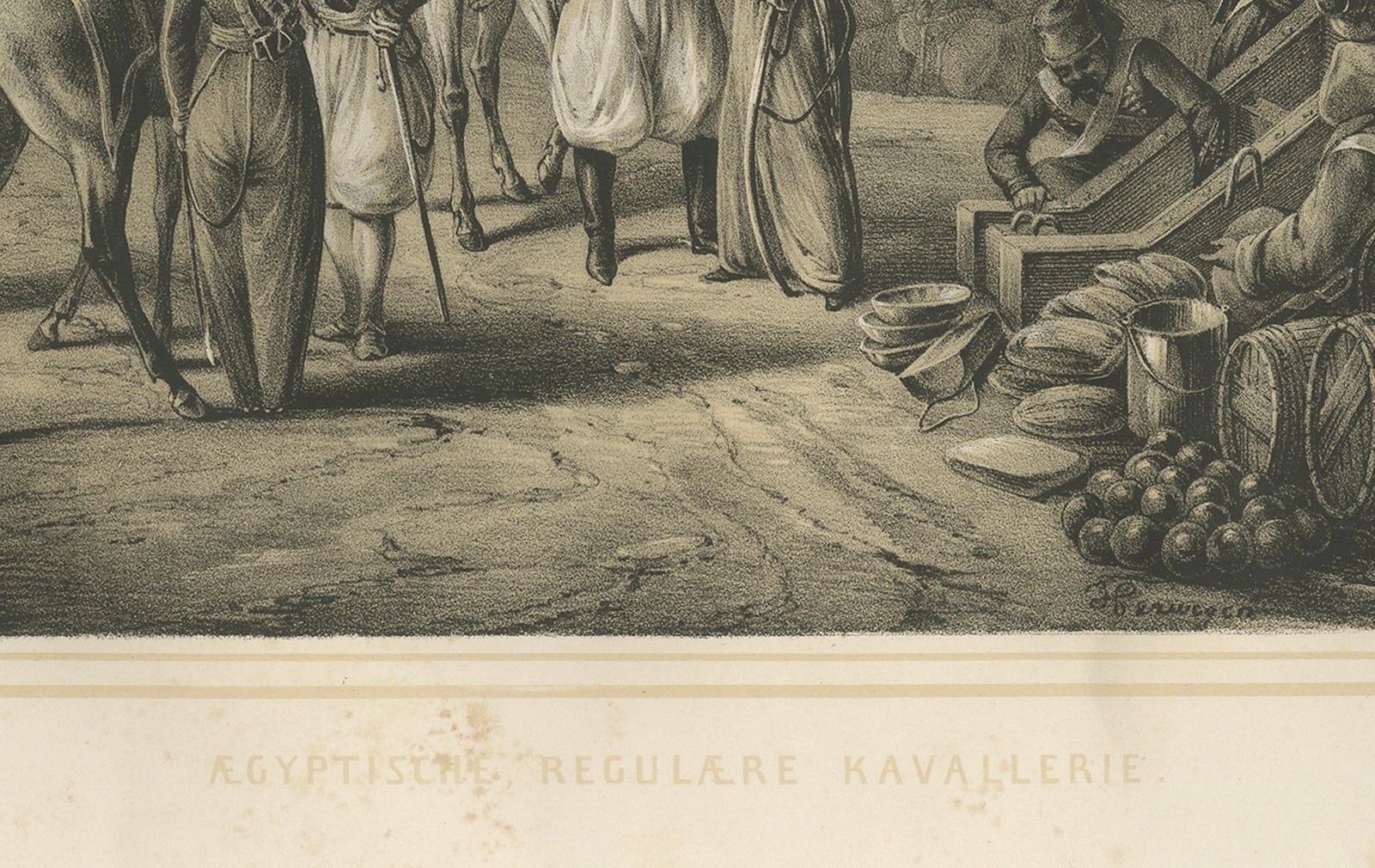
Antique Egyptian Regular Cavalry on the Nile from Maximilian in Bavaria, 1846
$385
€340 · £290
Original print, not a reproduction.
Ships worldwide from the Netherlands, flat, insured and tracked. 14-day returns. To buy, use Ask a question and we will reserve it for you.
- Date
- 1846
- Sheet size
- 19.7 × 15.2 in (50 × 38.6 cm)
- Condition
- Good. Good antique condition. Light overall age-related toning and scattered foxing visible across the sheet, slightly more pronounced in the margins. Minor edge wear consistent with age. The engraved image remains crisp with excellent definition.
- Collection
- Uniforms & regiments
- Era
- 1816 to 1899, Empire and industry
- Stock no.
- f_47880822
Antique Egyptian Regular Cavalry on the Nile from Maximilian in Bavaria, 1846
Description:
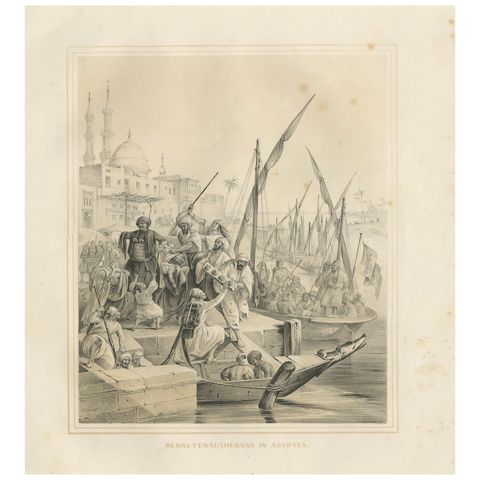
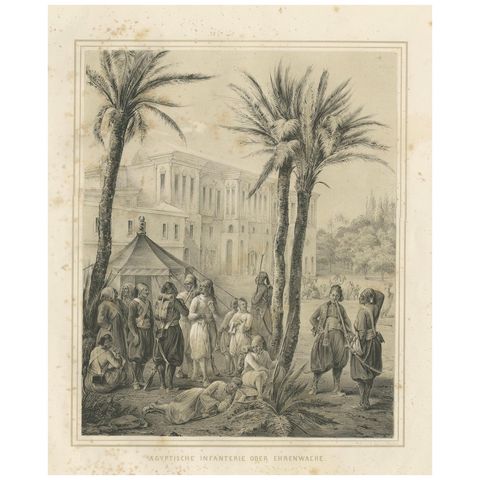
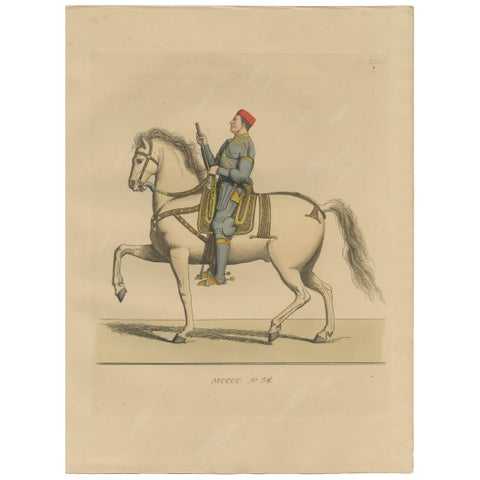
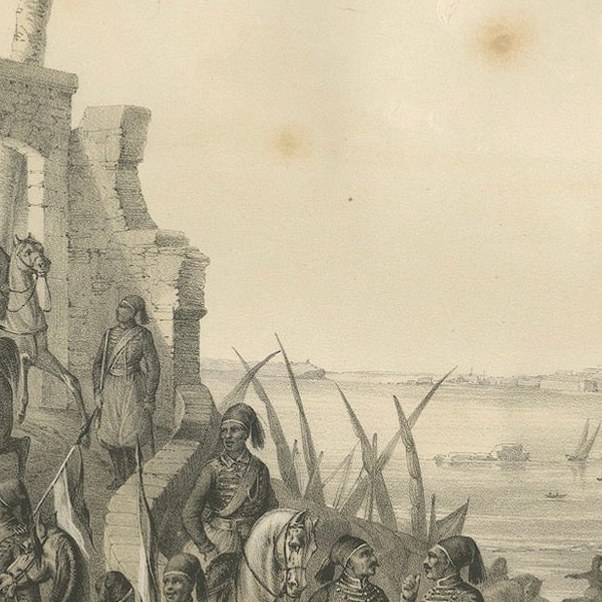
This impressive 19th-century Orientalist engraving depicts a detachment of the Egyptian regular cavalry assembled at the edge of a Nile harbor, presenting a vivid image of military order, colonial reform, and everyday life at the water’s edge. Mounted soldiers stand beside their horses in formal formation while others descend from a fortified gateway, creating a strong sense of movement between architecture, landscape, and disciplined manpower.
In the foreground, a lively market-like scene unfolds with barrels, baskets, and goods being handled beside the soldiers, illustrating the close interaction between military presence and civilian life. Beyond the figures, the Nile opens wide with feluccas and river craft gliding across its surface, while the distant shoreline fades into atmospheric haze. A single palm rises beside the stone gateway, acting as a vertical anchor within the composition and reinforcing the unmistakable Egyptian setting.
The engraving originates from the important travel publication documenting the oriental journey of Duke Maximilian of Bavaria, with drawings executed by Heinrich von Mayr and explanatory text by Dr. Sebastian Fischer. Von Mayr’s strength lies in his ability to combine military structure with lived reality. The cavalry is shown not in battle, but in a moment of transition, arriving, organizing, and observing, offering a rare documentary view of Egypt’s modernized army in daily service.
Historically, this scene reflects the profound military reforms introduced under Mehmed Ali Pasha in the early 19th century. His efforts to build a professional standing army transformed Egypt into a regional power. This engraving captures that transformation visually: traditional dress and landscape coexist with European-style military organization and discipline.
Artistically, the plate is distinguished by its calm authority and spatial depth. The strong diagonal movement from the gateway into the open river creates natural flow, while the contrast between shaded foreground figures and the luminous Nile beyond adds depth and atmosphere. The horses are rendered with particular care, their posture and harnesses emphasizing both strength and control.
Today, this engraving holds strong appeal for collectors of Middle Eastern history, Ottoman-period military subjects, cavalry imagery, and 19th-century European travel illustration. Its balanced composition and maritime setting also make it a striking decorative wall piece for libraries, studies, offices, and refined hospitality interiors with a historical or equestrian focus.
Condition report:
Good antique condition. Light overall age-related toning and scattered foxing visible across the sheet, slightly more pronounced in the margins. Minor edge wear consistent with age. The engraved image remains crisp with excellent definition. Plate mark faintly visible.
Framing tips:
A wide ivory or warm parchment mat will enhance the tranquil river setting and architectural depth. A dark walnut, black, or softly antiqued gilt frame will give the scene a dignified museum-quality presence. UV-protective glass is strongly recommended.
Technique: Steel engraving
Maker: Heinrich von Mayr, Germany, 1846
Keywords:antique egyptian cavalry engraving
orientalist military scene egypt
19th century nile harbor soldiers
egyptian regular cavalry print
ottoman egypt military illustration
middle east cavalry antique artwork
nile river military scene engraving
orientalist soldiers on horseback
maximilian of bavaria egypt expedition
heinrich von mayr military engraving
egyptian army 19th century print
antique orientalist travel engraving
horse cavalry antique wall art
ottoman era egypt army scene
museum quality orientalist engraving