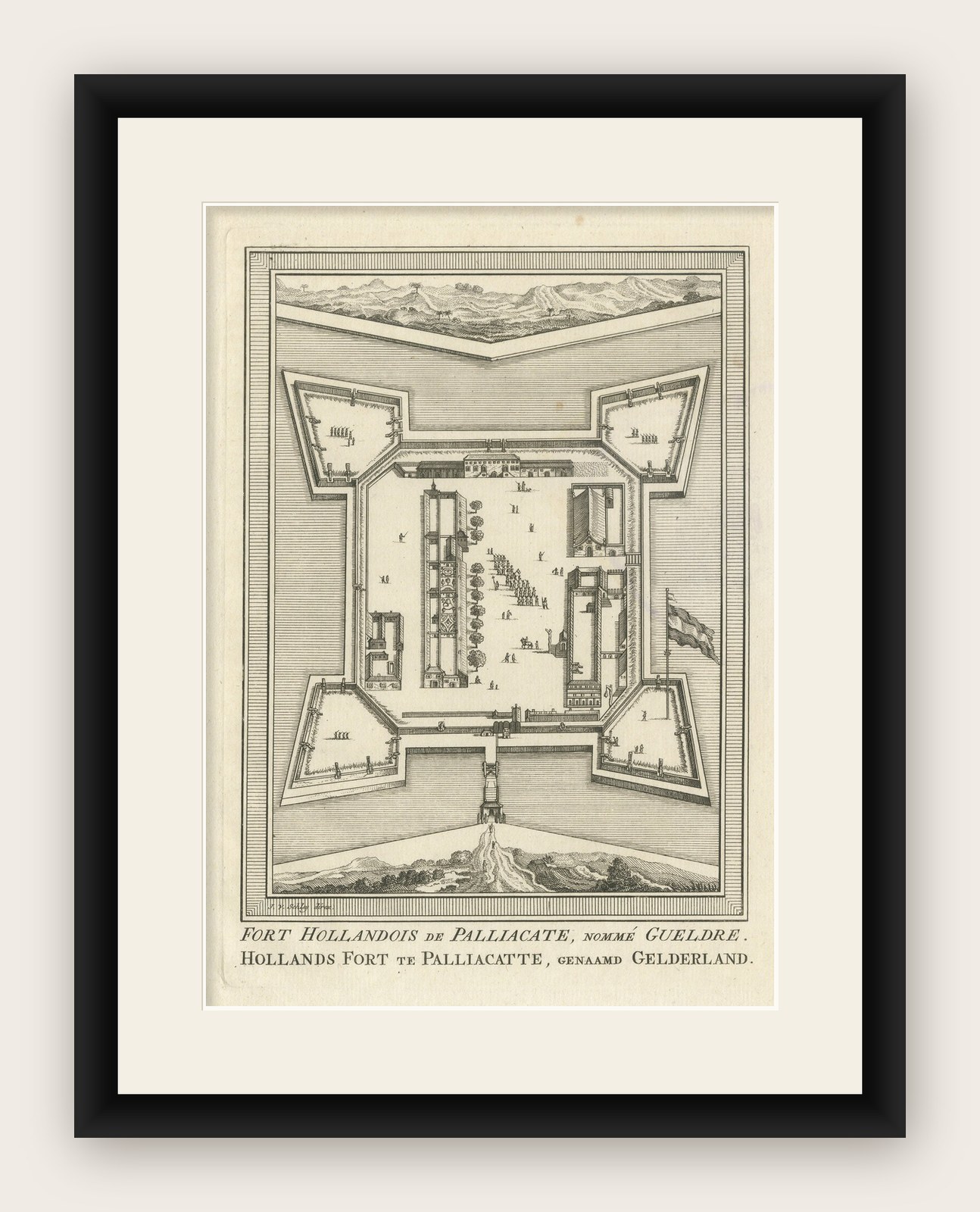
Framed and on the wall

Frame and rooms are illustrations of how the piece could look; it is sold unframed unless the description says otherwise.
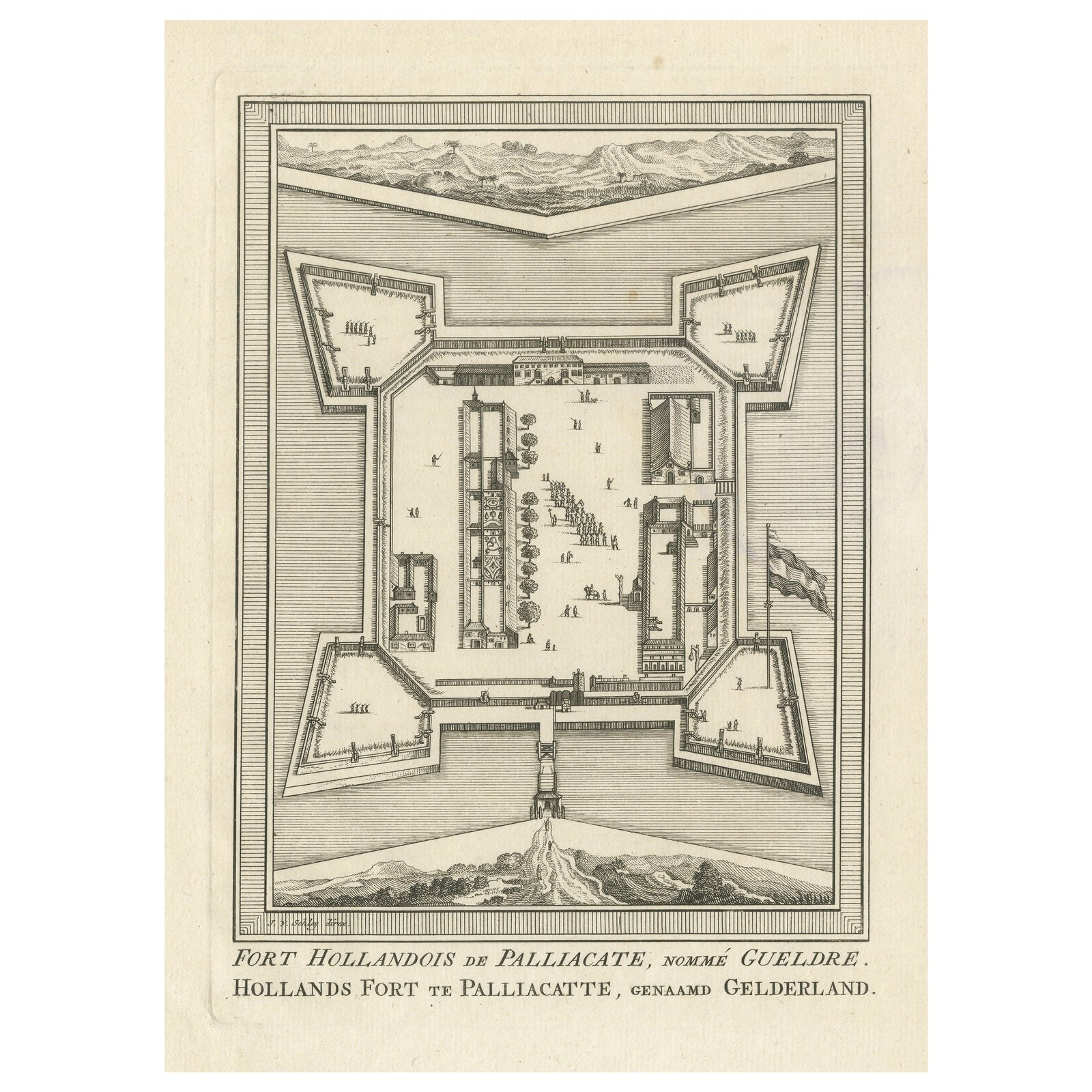
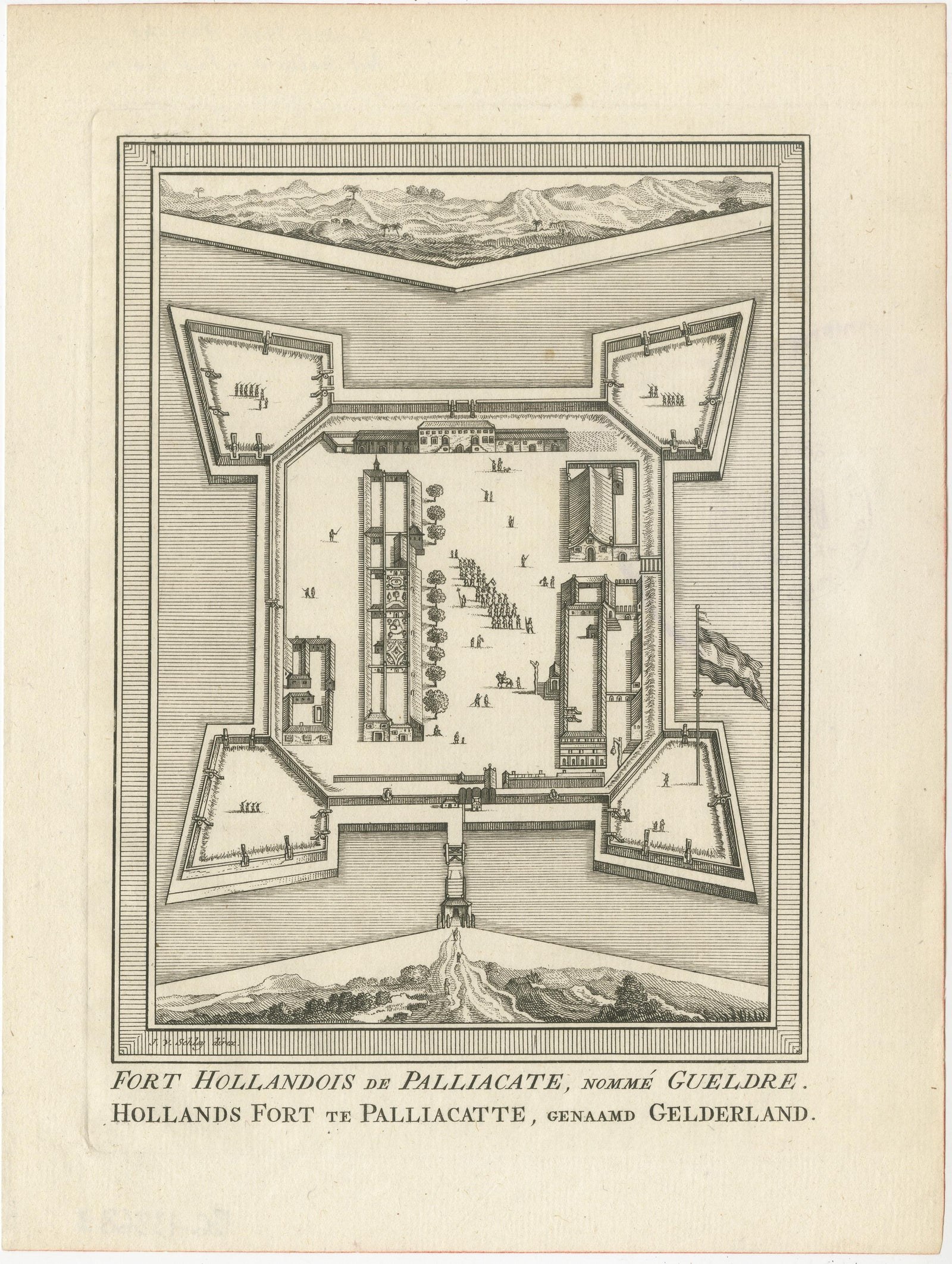
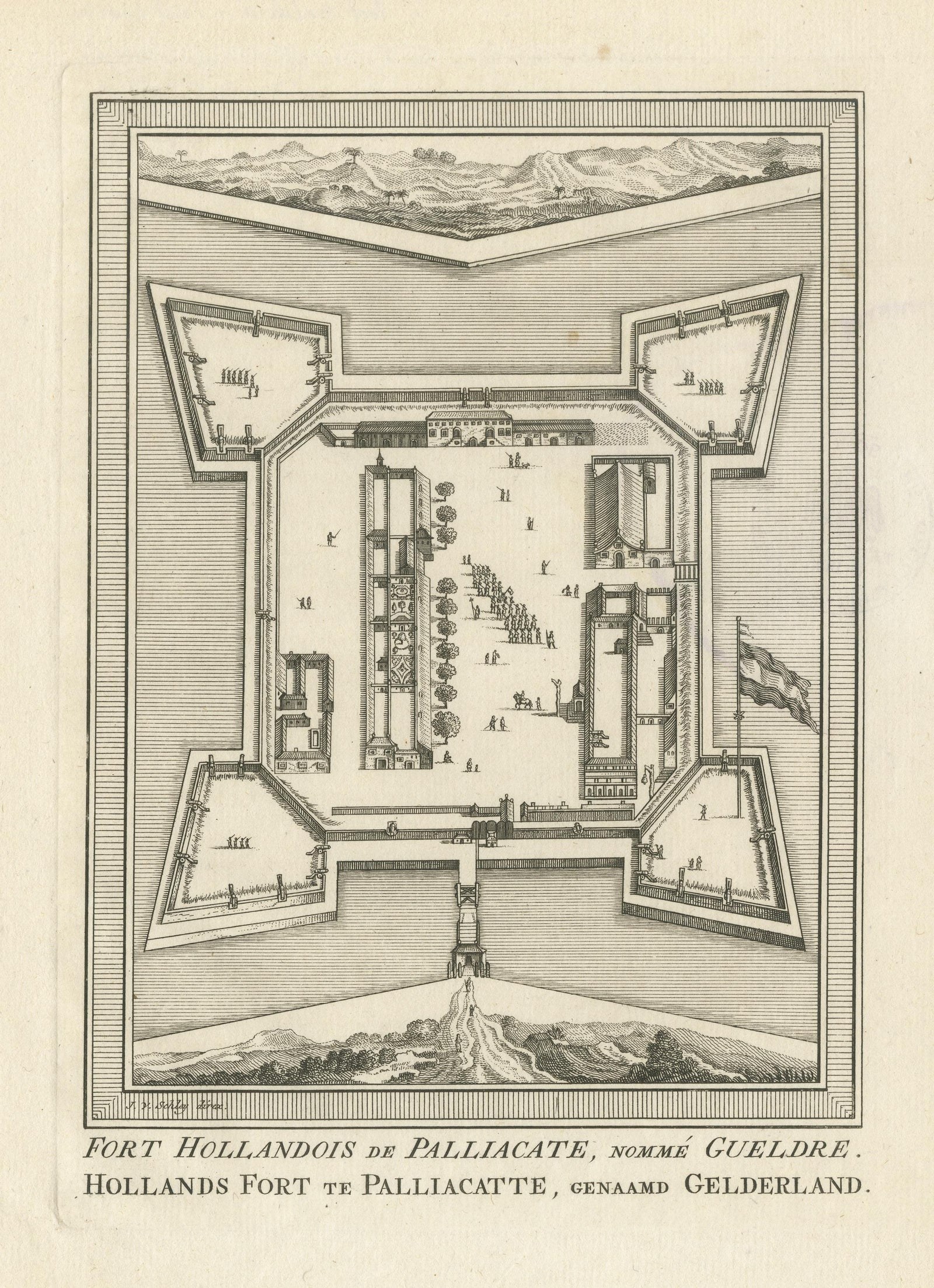
Antique Print of Fort Geldria or Fort Geldaria, located in Pulicat, Tamil Nadu
€280€19630% off
$215 · £165
Original print, not a reproduction.
Ships worldwide from the Netherlands, flat or rolled, insured and tracked. 14-day returns.
- Date
- Not stated
- Sheet size
- 10 × 7.6 in (25.3 × 19.2 cm)
- Condition
- Good. Wear consistent with age and use. General age-related toning. Minor wear and soiling, blank verso. Please study image carefully.
- Collection
- Sieges & fortresses
- Stock no.
- BG-13368-3
What the condition grades mean
- Excellent
- Bright and clean, with no faults worth mentioning.
- Very good
- Only light signs of age, such as faint toning.
- Good
- Normal signs of age for a sheet of this period: toning, some foxing, small marks or neat old repairs.
- Fair
- Clear faults such as staining, tears or repairs, priced to match.
Every fault we see is written in the condition note, and the whole sheet is shown uncropped in the photos.
Antique print titled 'Fort Hollandois de Palliacate, nommé Gueldre, Hollands Fort te Palliacatte, genaamd Gelderland'. Original old print with a plan of Fort Geldria or Fort Geldaria. Fort Geldria, located in Pulicat, Tamil Nadu, was the seat of the Dutch Republic's first settlement in India, and the capital of Dutch Coromandel. It was built by the Dutch East India Company in 1613 and became the local governmental center in 1616. It was named for Geldria, the native province of Wemmer van Berchem, the General Director of the company. Regularly protected by a garrison of 80 to 90 men, Fort Geldria was the only fortification in the Indian empire; all other positions of the Dutch Company were trading posts. Originates from a Dutch edition of 'Histoire générale des voyages' by Antoine-François Prévost.
Engraved by J. van Schley. Jakob van der Schley (Amsterdam, 1715-1779) was a Dutch draughtsman and engraver, who studied under Bernard Picart, and whose style he subsequently copied.
EXPLORE