Framed and on the wall

Frame and rooms are illustrations of how the piece could look; it is sold unframed unless the description says otherwise.
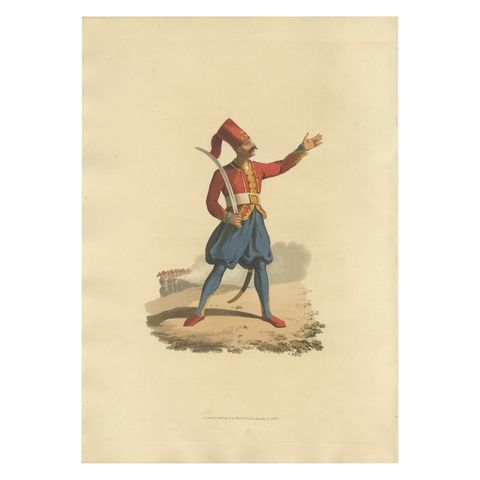
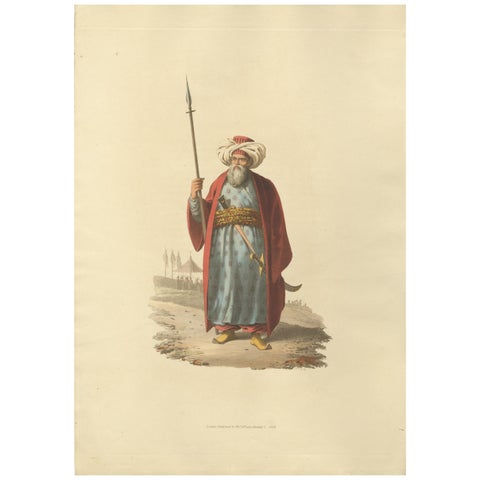
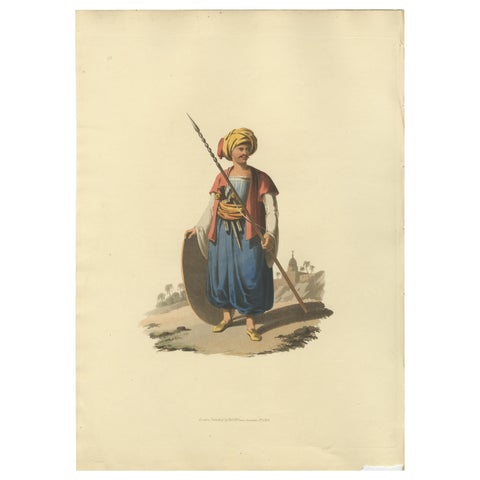
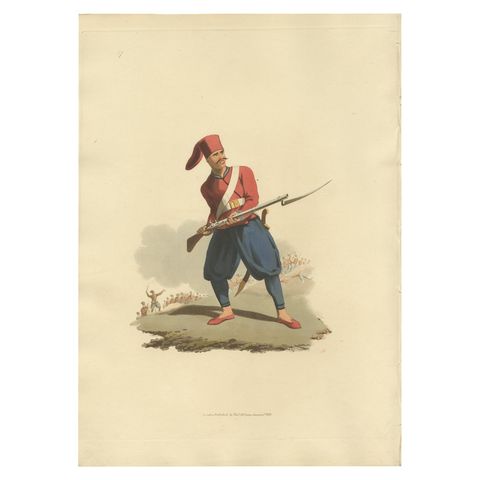
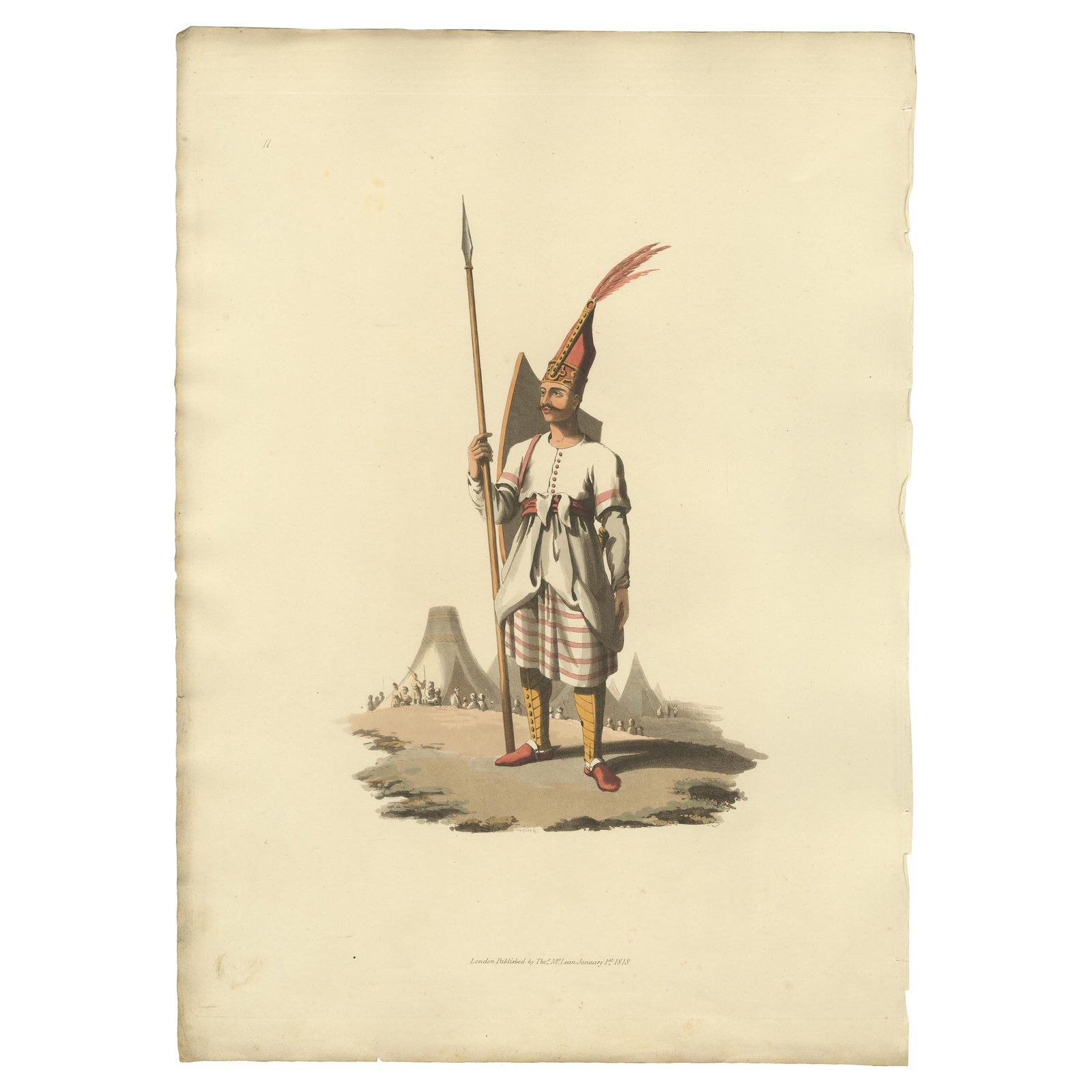
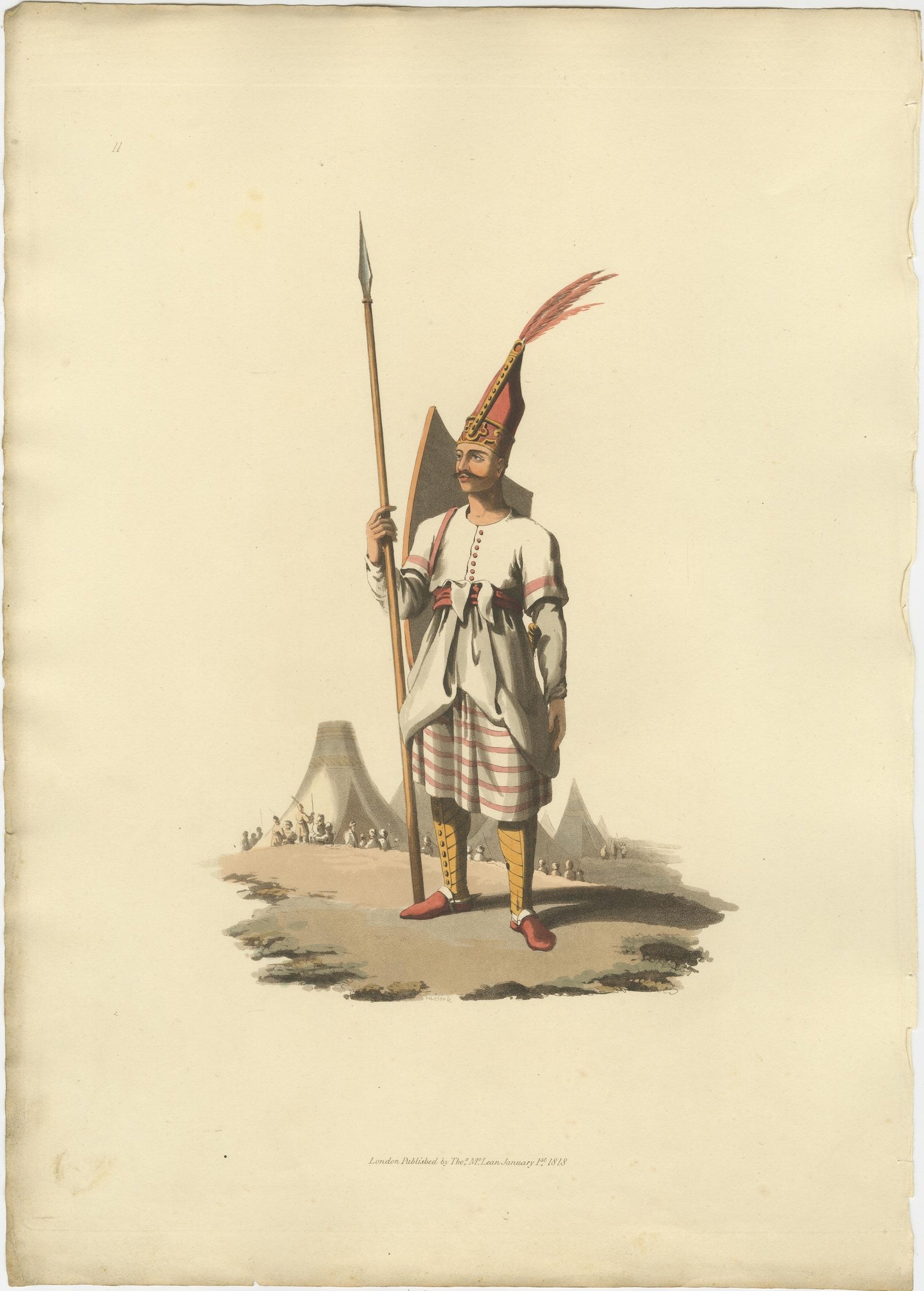
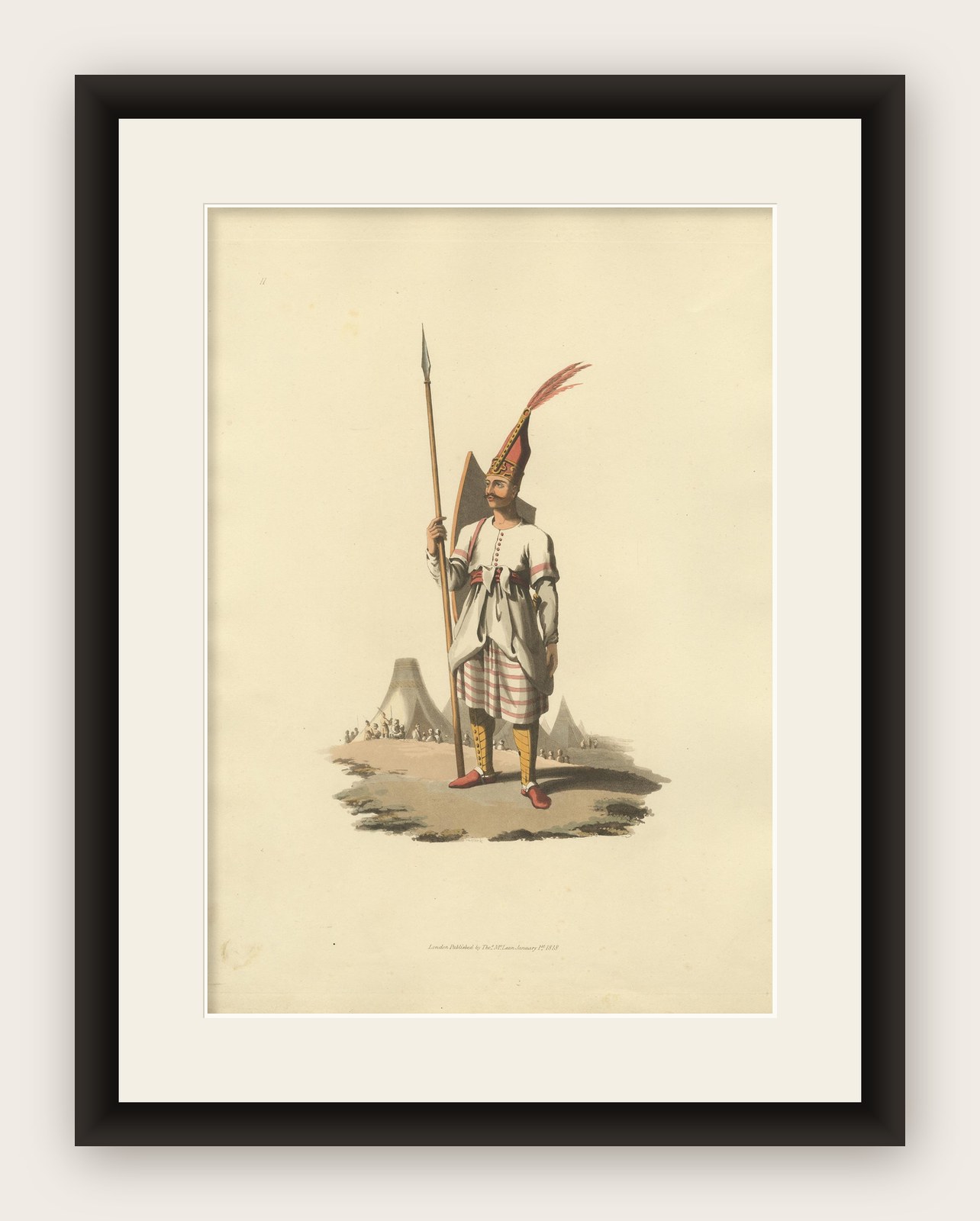
Antique Print of Officer of Spahis, Hand-Colored Aquatint, 1818
£380
$505 · €450
Original print, not a reproduction.
Ships worldwide from the Netherlands, flat, insured and tracked. 14-day returns. To buy, use Ask a question and we will reserve it for you.
- Date
- 1818
- Sheet size
- 15 × 10.6 in (38 × 27 cm)
- Condition
- Good. Original/contemporary hand coloring. General age-related toning, some foxing. Minor wear and soiling, blank verso. Please study image carefully.
- Collection
- Uniforms & regiments
- Era
- 1816 to 1899, Empire and industry
- Stock no.
- f_25984682
This print is from 'The Military Costume of Turkey. Illustrated by A Series of Engravings. From Drawings made on the Spot. Dedicated by Permission to His Excellency the Minister of the Ottoman Porte to his Britannic Majesty.'
London, Published by Thomas M'Lean, Haymarket, (1818). Folio. One of 29 fine handcoloured aquatint plates . Very light offsetting from plate. The original accompanying text of this print is as follows:
'This plate represents an officer of the corps a description of which accompanies the subject which precedes the present one; in the back ground is an encampment. The Turkish camps are in general disposed in the following manner: The troops more immediately under the command of the Grand Vizier, occupy a camp apart from the rest of the army: the Aga of the Janizaries encamps separately with his troops; and the artillery are encamped in the middle; at night the camp is illuminated as follows :, Pieces of rag which have been soaked in grease or oil, are burnt in a sort of lanthorns, made of iron hoops, which are suspended from long poles, several of which are placed in front of the tents of the Pachas. By day-time these officers have the number of horse tails, which are the ensigns of their respective dignities, placed in a conspicuous manner in the same situation.'
EXPLORE