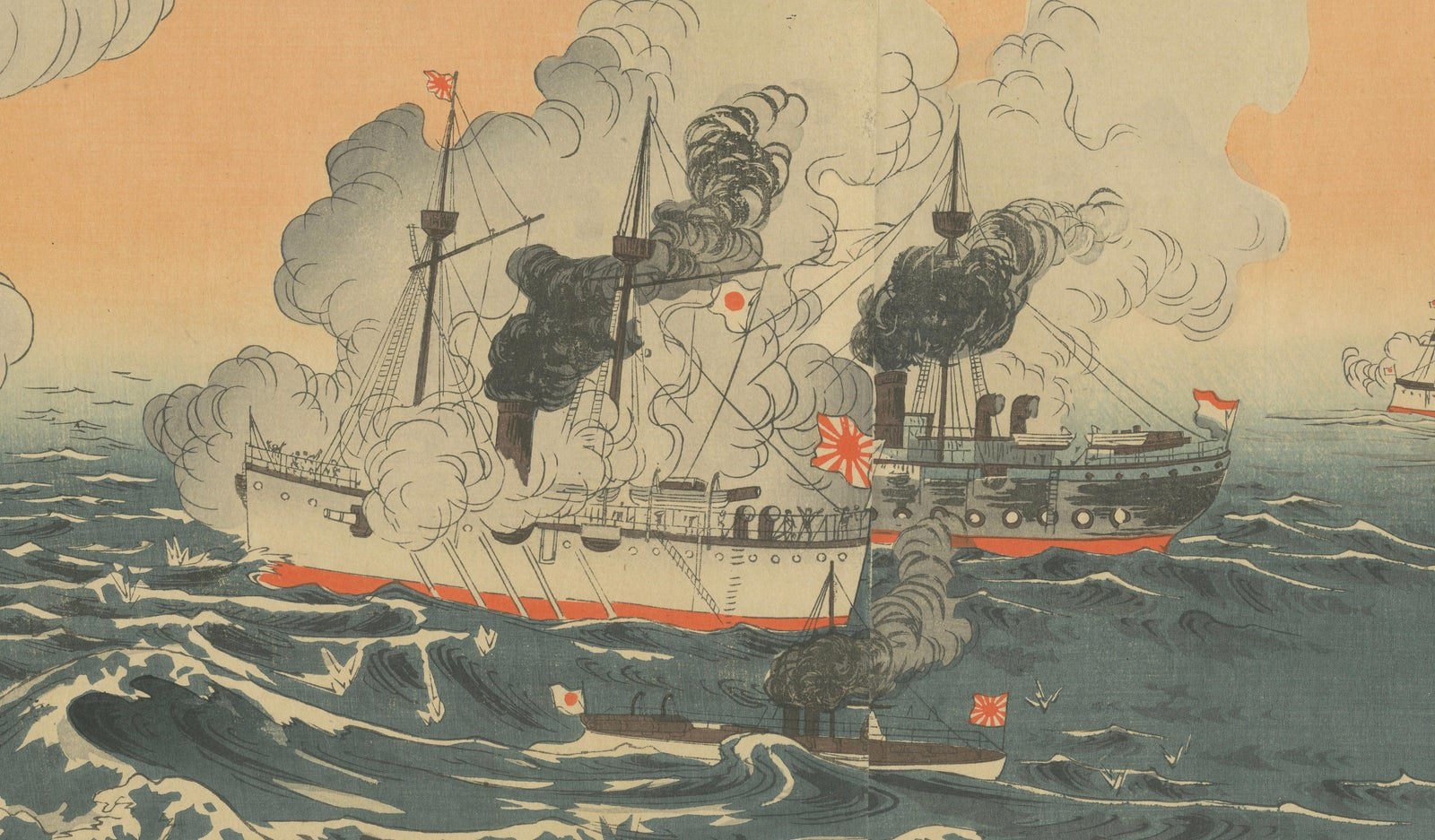
Close-ups
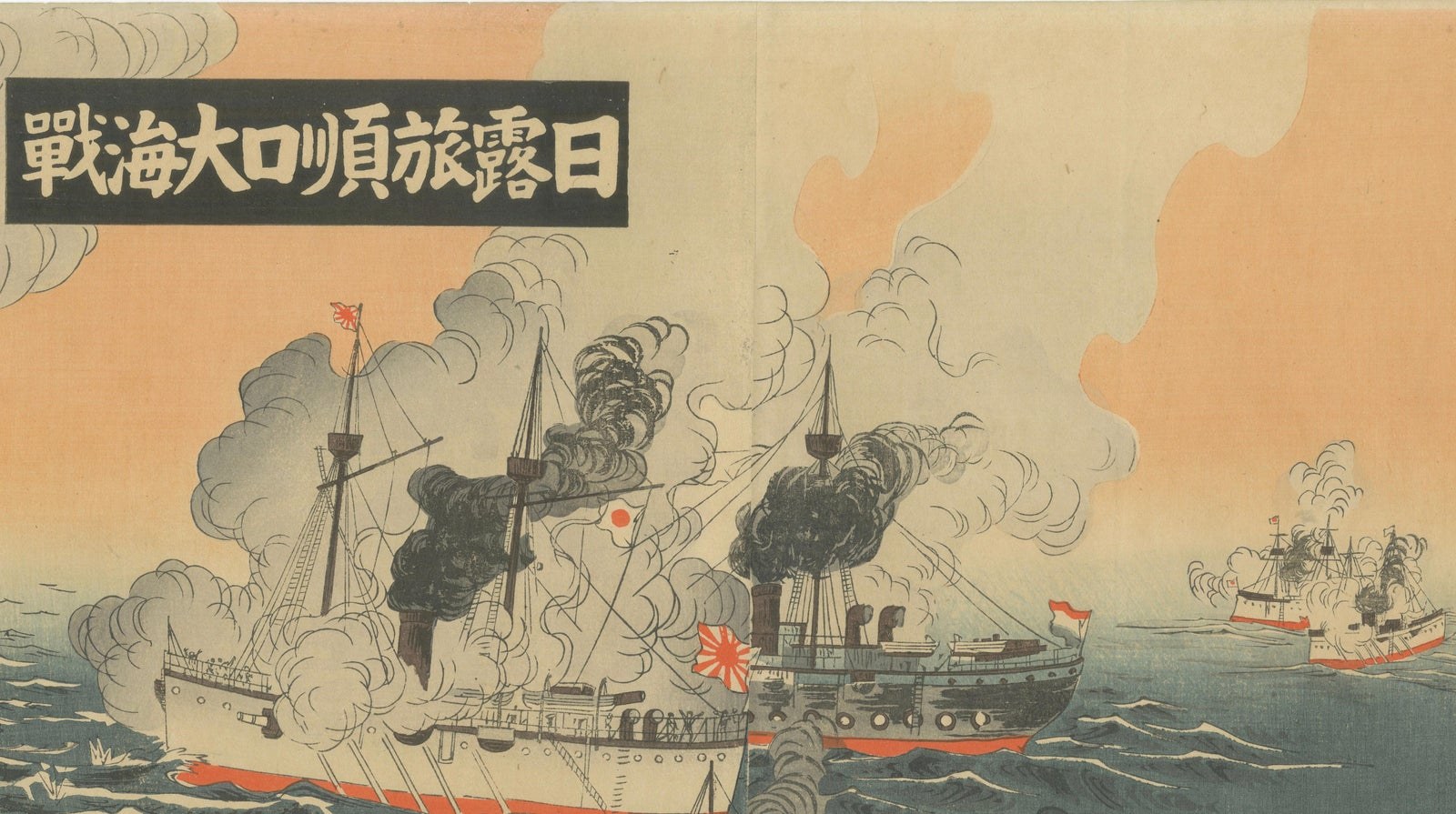
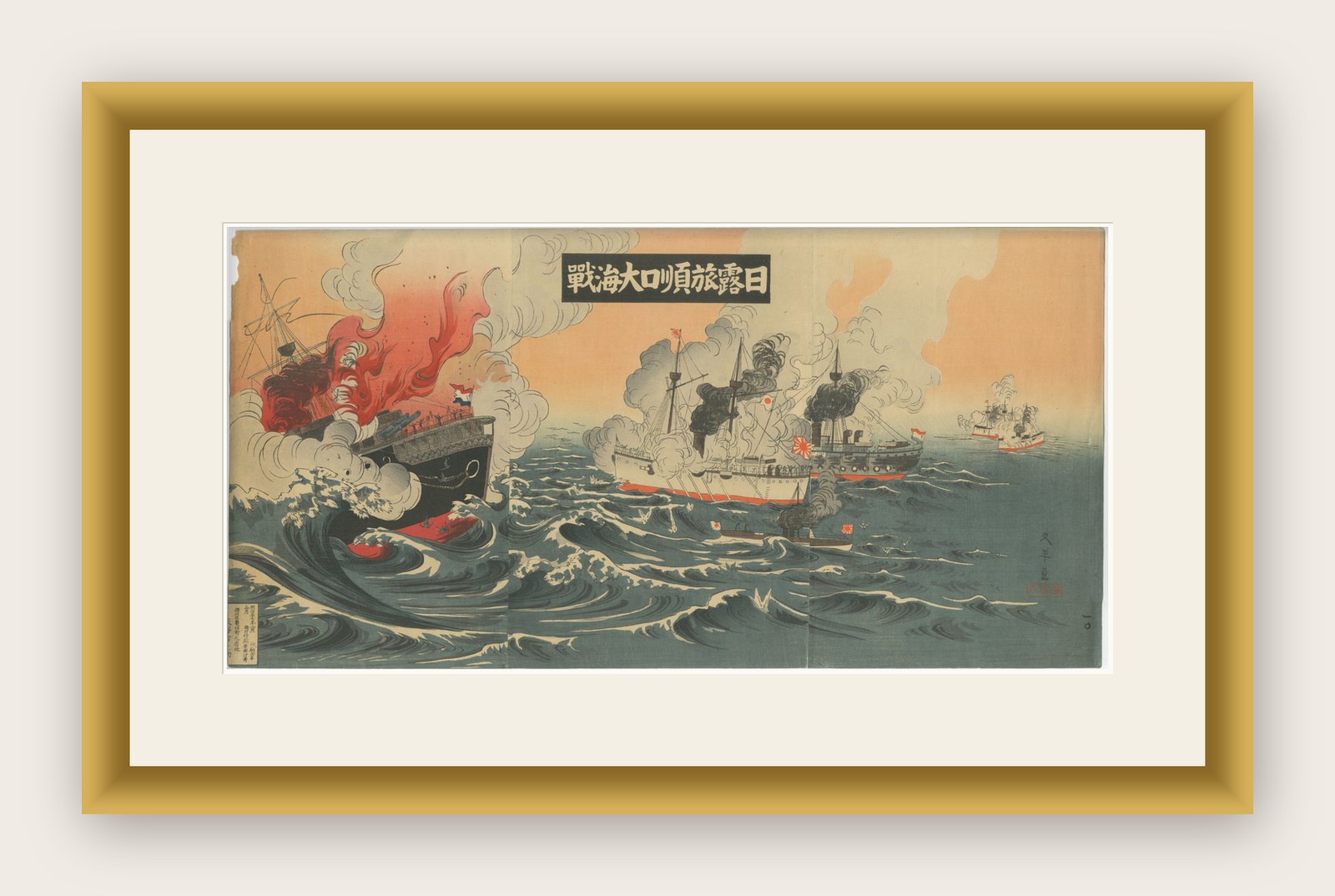
Framed and on the wall
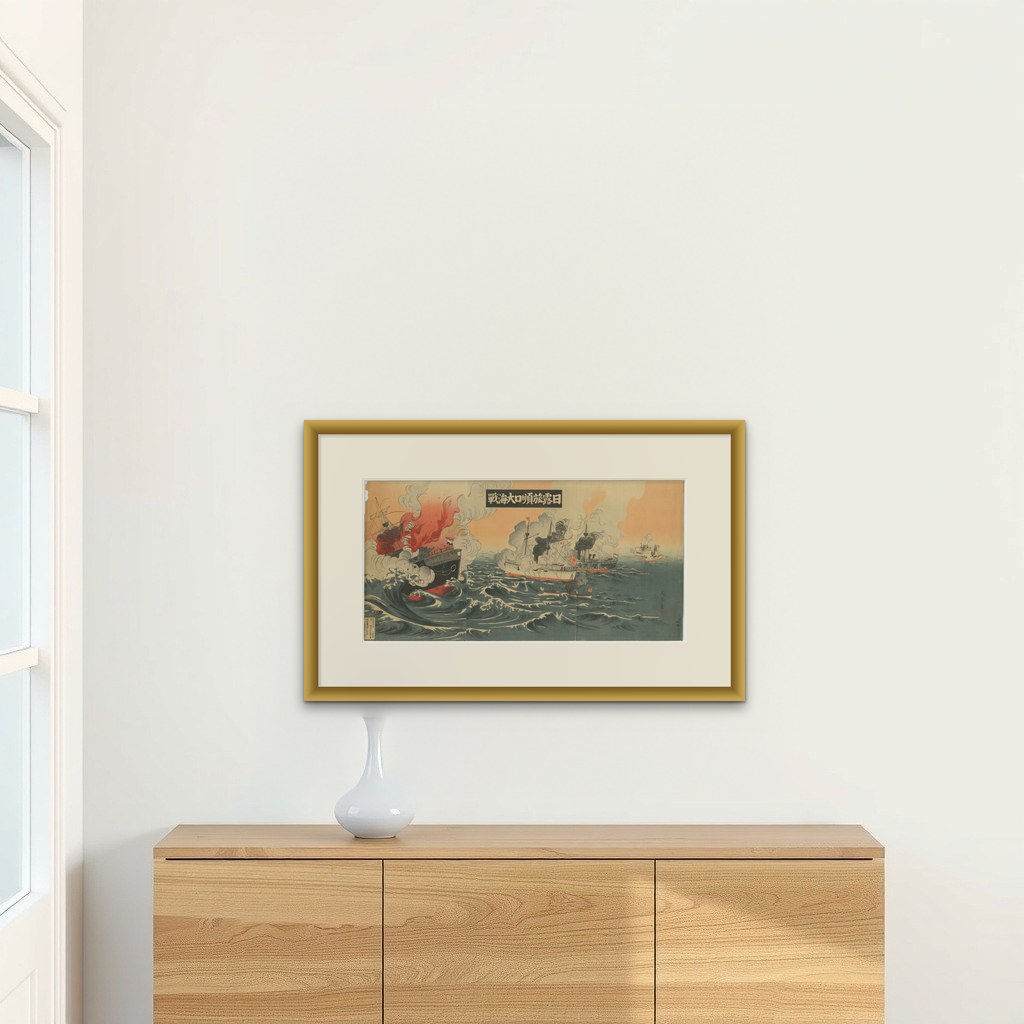
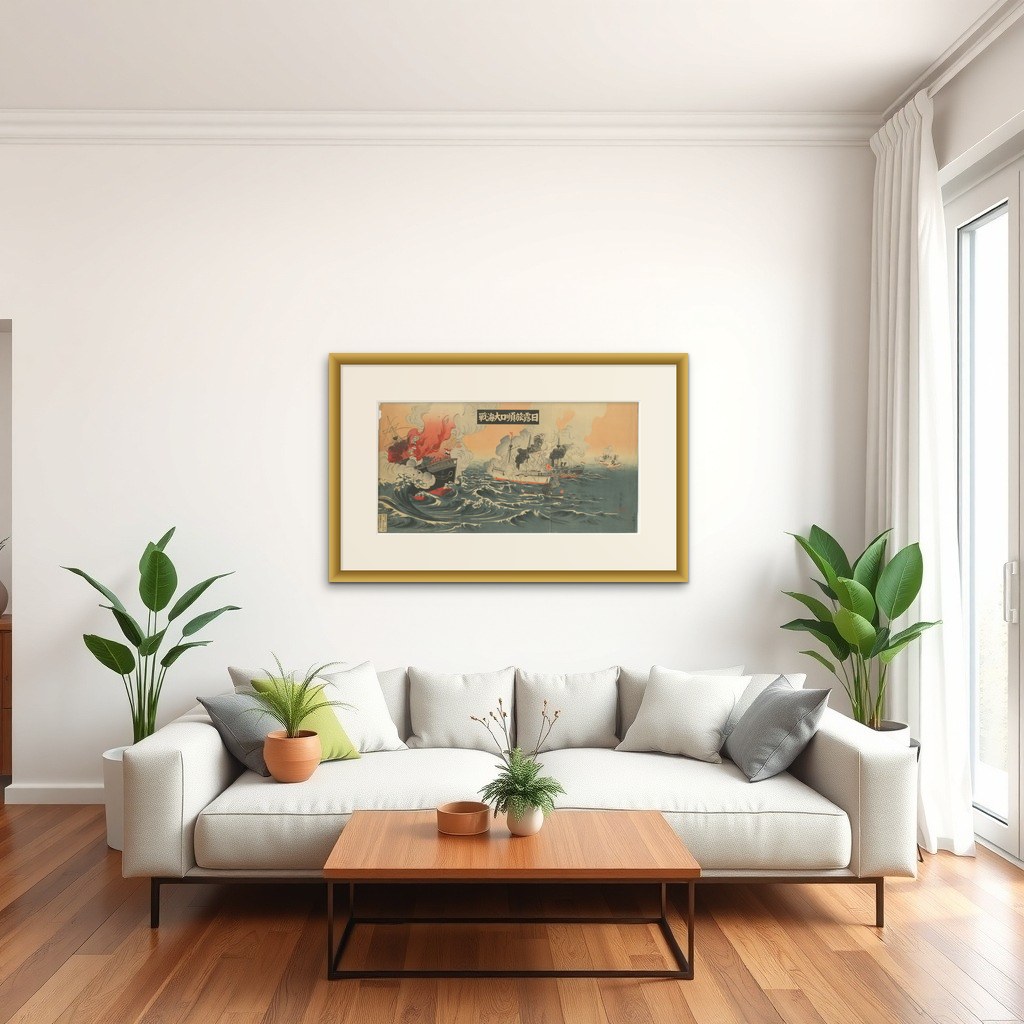
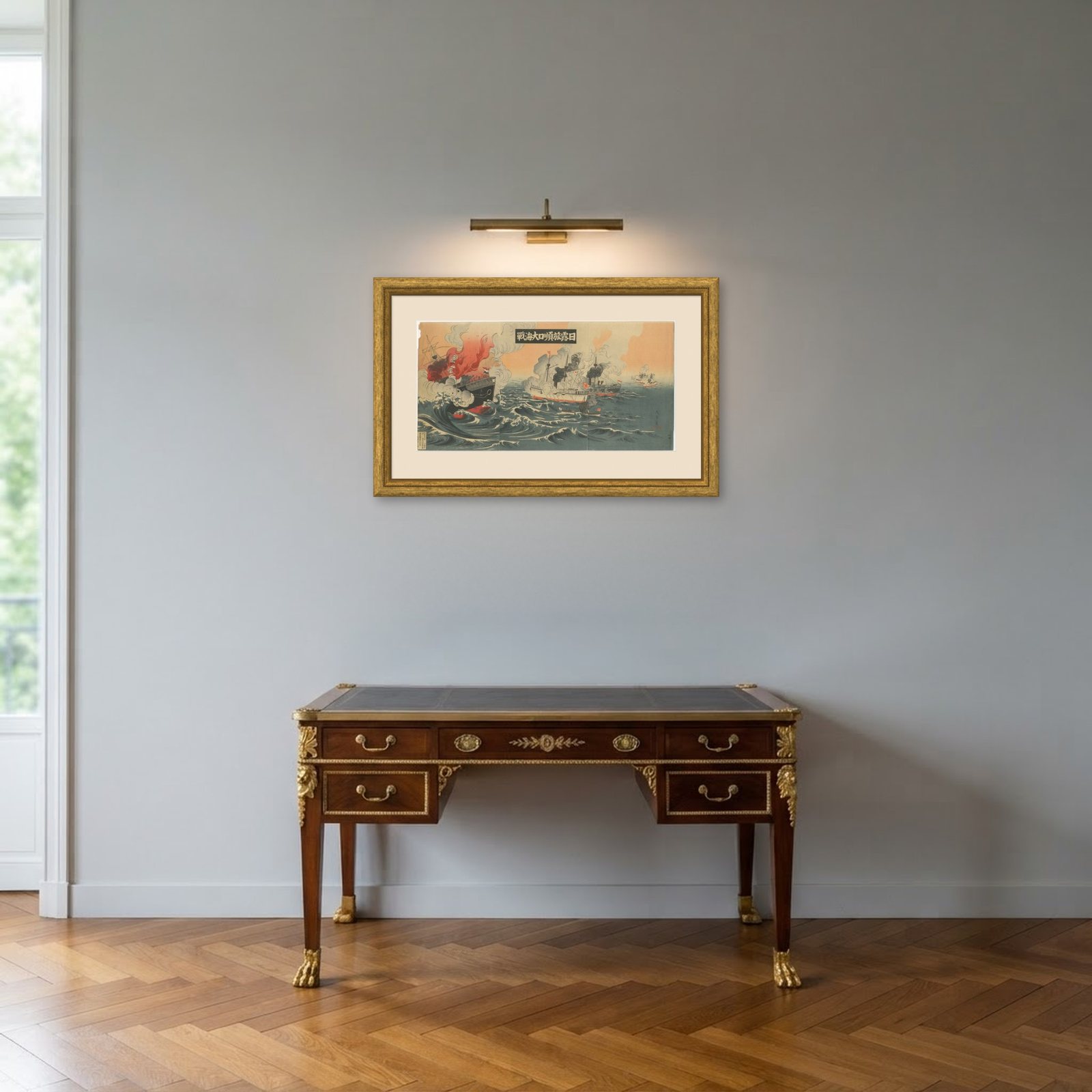
Frame and rooms are illustrations of how the piece could look; it is sold unframed unless the description says otherwise.
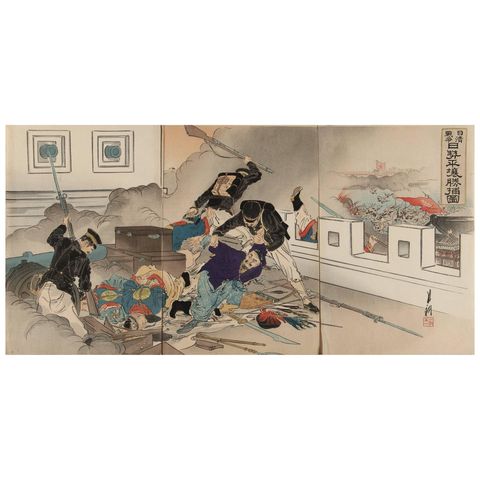
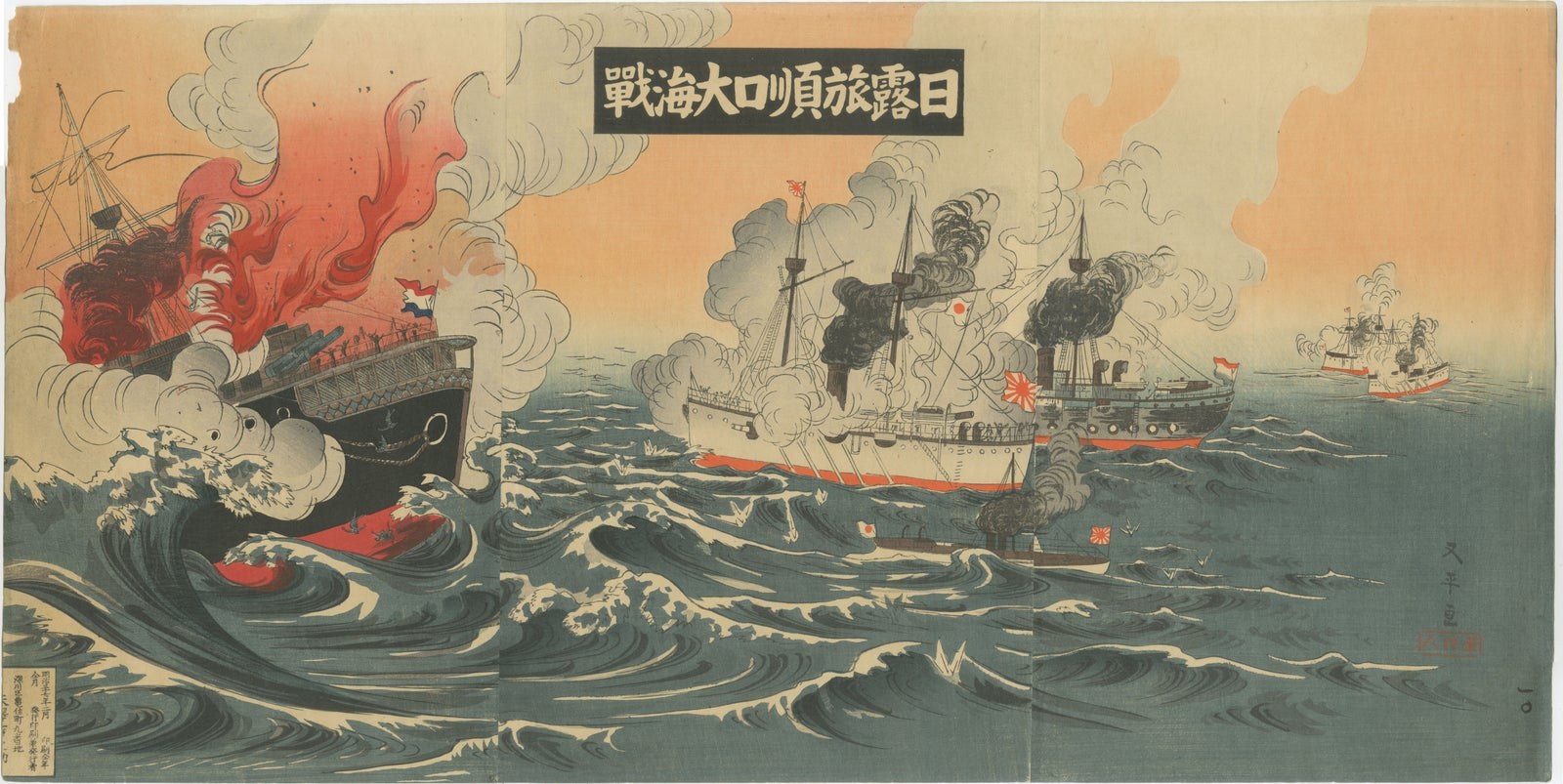
Battle of Port Arthur, Russo-Japanese War Woodblock Triptych, 1904
€699€52525% off
$575 · £440
Original print, not a reproduction.
Ships worldwide from the Netherlands, flat or rolled, insured and tracked. 14-day returns.
- Date
- 1904
- Sheet size
- 14.1 × 27.8 in (35.8 × 70.7 cm)
- Condition
- Fair. Complete oban triptych. Creasing to the left and right margins. Margins slightly trimmed short in places. Hole and associated tears in the upper left corner. Backed or reinforced on the reverse. General age toning and handling wear.
- Collection
- Battle scenes
- Era
- 1900 and after, The world wars
- Stock no.
- BG-14310
What the condition grades mean
- Excellent
- Bright and clean, with no faults worth mentioning.
- Very good
- Only light signs of age, such as faint toning.
- Good
- Normal signs of age for a sheet of this period: toning, some foxing, small marks or neat old repairs.
- Fair
- Clear faults such as staining, tears or repairs, priced to match.
Every fault we see is written in the condition note, and the whole sheet is shown uncropped in the photos.
1904 Battle of Port Arthur, Russo-Japanese War Woodblock Triptych
Description:
A dramatic original Japanese color woodblock triptych depicting the naval battle of Port Arthur during the opening stages of the Russo-Japanese War. Published in 1904 and signed by the artist Matahei, this striking composition captures one of the most significant naval engagements of the early twentieth century and reflects the patriotic wartime imagery that became immensely popular in Meiji Japan.
The title, Nichiro Ryojunkō Daikaisen, translates as "The Great Battle of Port Arthur in the Russo-Japanese War." The scene presents a powerful vision of modern naval warfare, with Japanese warships advancing through turbulent seas while enemy vessels are engulfed in flames and smoke. Towering waves dominate the foreground, emphasizing the violence of both nature and battle. Thick clouds of black smoke rise from steam-powered warships as artillery fire and explosions illuminate the horizon.
The Russo-Japanese War of 1904–1905 marked the first major military victory of an Asian power over a European empire in the modern era. The Japanese attack on Port Arthur, located in present-day Lüshunkou, China, was a pivotal event that announced Japan's emergence as a major world power. Artists responded quickly to public demand for visual news reports, producing vividly colored triptychs that documented battles, military heroes, and wartime victories.
Matahei's composition demonstrates the influence of traditional ukiyo-e design combined with modern military subject matter. The dramatic curling waves recall the great maritime prints of earlier Japanese masters, while the steamships, naval flags, and artillery represent the technological realities of twentieth-century warfare. The contrast between the cool blue-gray sea and the brilliant reds of fire and explosions creates a particularly dynamic visual effect.
Today, Russo-Japanese War prints are highly sought after by collectors of military history, naval art, Japanese prints, and Meiji-period material. This example is especially attractive for its panoramic composition and strong depiction of naval combat.
An original 1904 Japanese woodblock print and not a later reproduction.
Condition Report:
Complete oban triptych. Creasing to the left and right margins. Margins slightly trimmed short in places. Hole and associated tears in the upper left corner. Backed or reinforced on the reverse. General age toning and handling wear consistent with age. Despite these condition issues, the image remains visually strong and displays well.
Framing Tips:
This triptych is ideally suited for panoramic framing. A dark walnut, black lacquer, or ebonized frame paired with an ivory museum mat would complement the dramatic maritime subject and the print's original colors. UV-protective glazing is recommended.
Technique: Color woodblock print (Nishiki-e), oban triptych
Maker: Matahei, Japan, 1904