Close-ups
Framed and on the wall

Frame and rooms are illustrations of how the piece could look; it is sold unframed unless the description says otherwise.
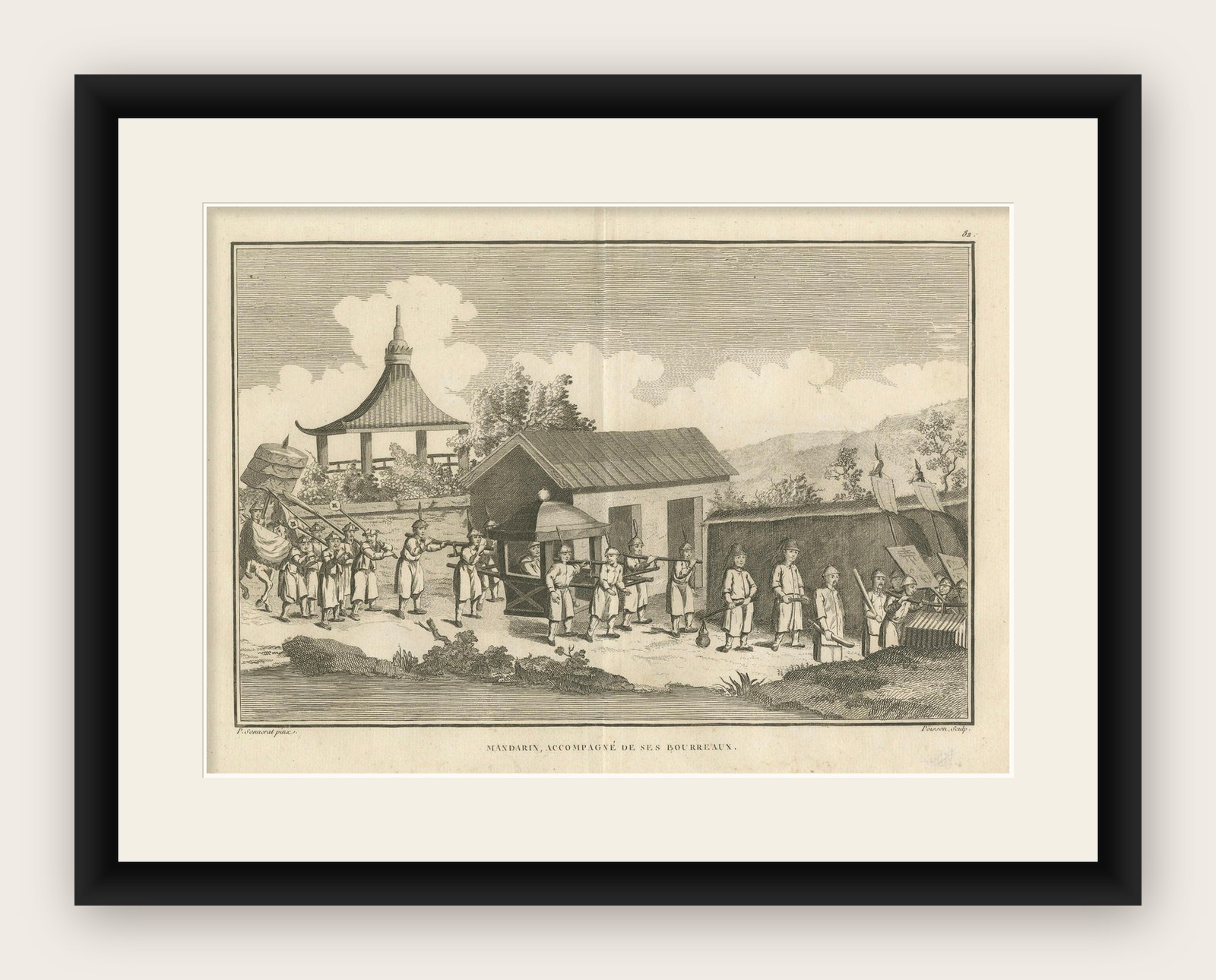
Chinese Mandarin with Retinue of Guards, Engraving after Sonnerat, 1806
£270
$360 · €320
Original print, not a reproduction.
Ships worldwide from the Netherlands, flat, insured and tracked. 14-day returns. To buy, use Ask a question and we will reserve it for you.
- Date
- 1806
- Sheet size
- 11.2 × 15.4 in (28.5 × 39 cm)
- Condition
- Good. Good condition. Center fold as issued, with some toning and occasional foxing, especially in the margins. Plate impression is strong, with clear architectural and costume detail.
- Collection
- Uniforms & regiments
- Era
- 1790 to 1815, Napoleonic wars
- Stock no.
- f_46093192
Title: Chinese Mandarin with Retinue of Guards, Engraving after Sonnerat, 1806
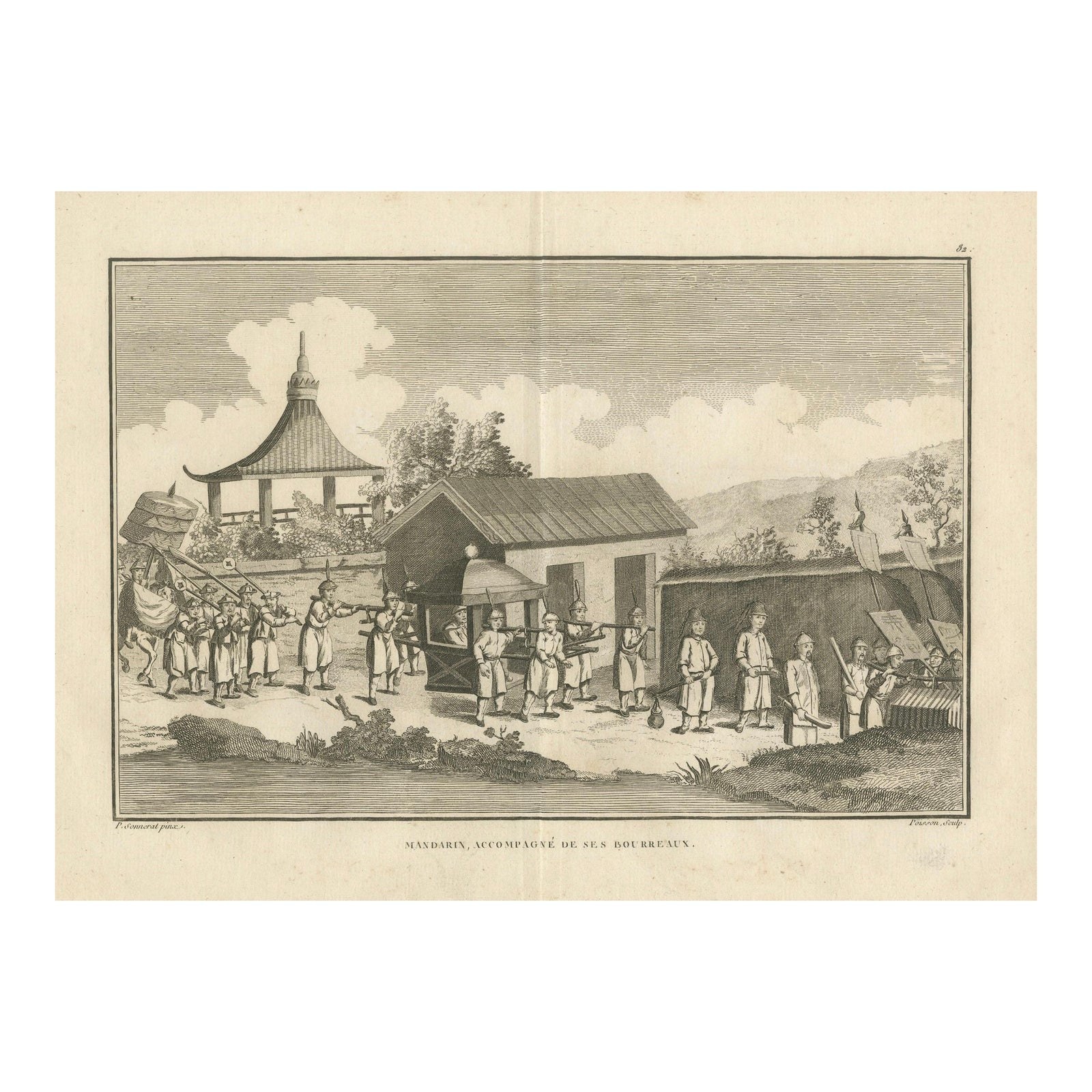
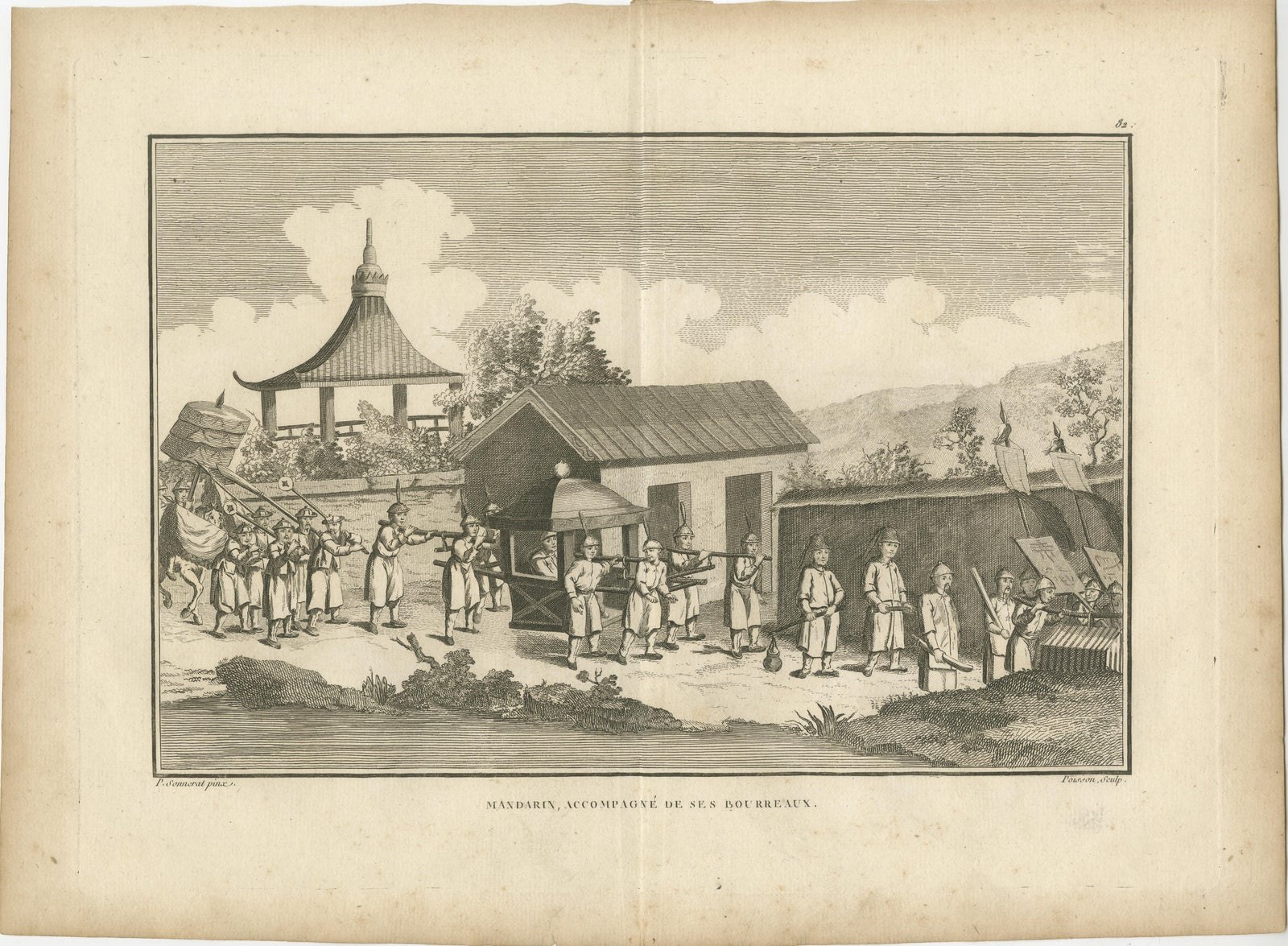
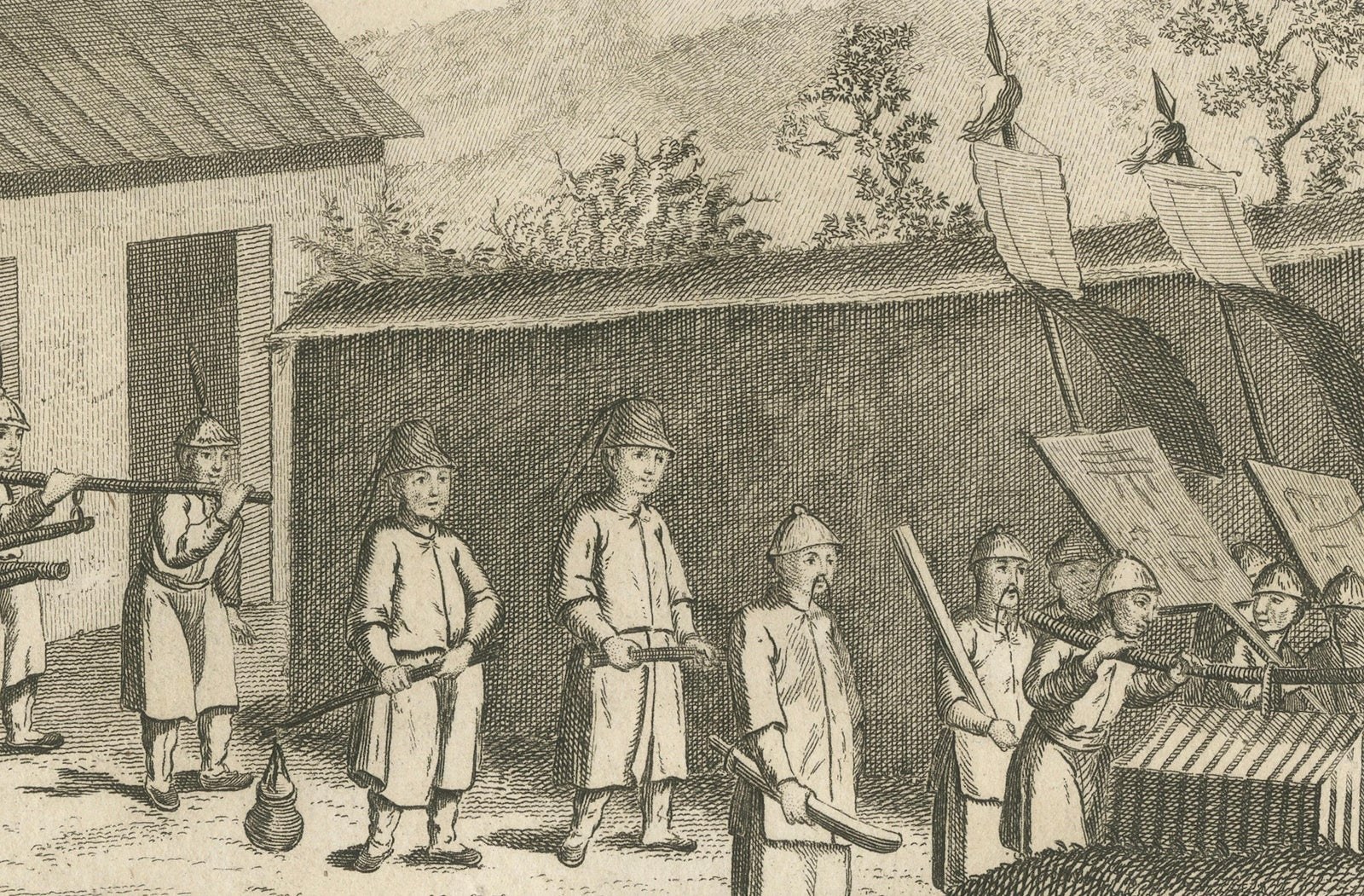
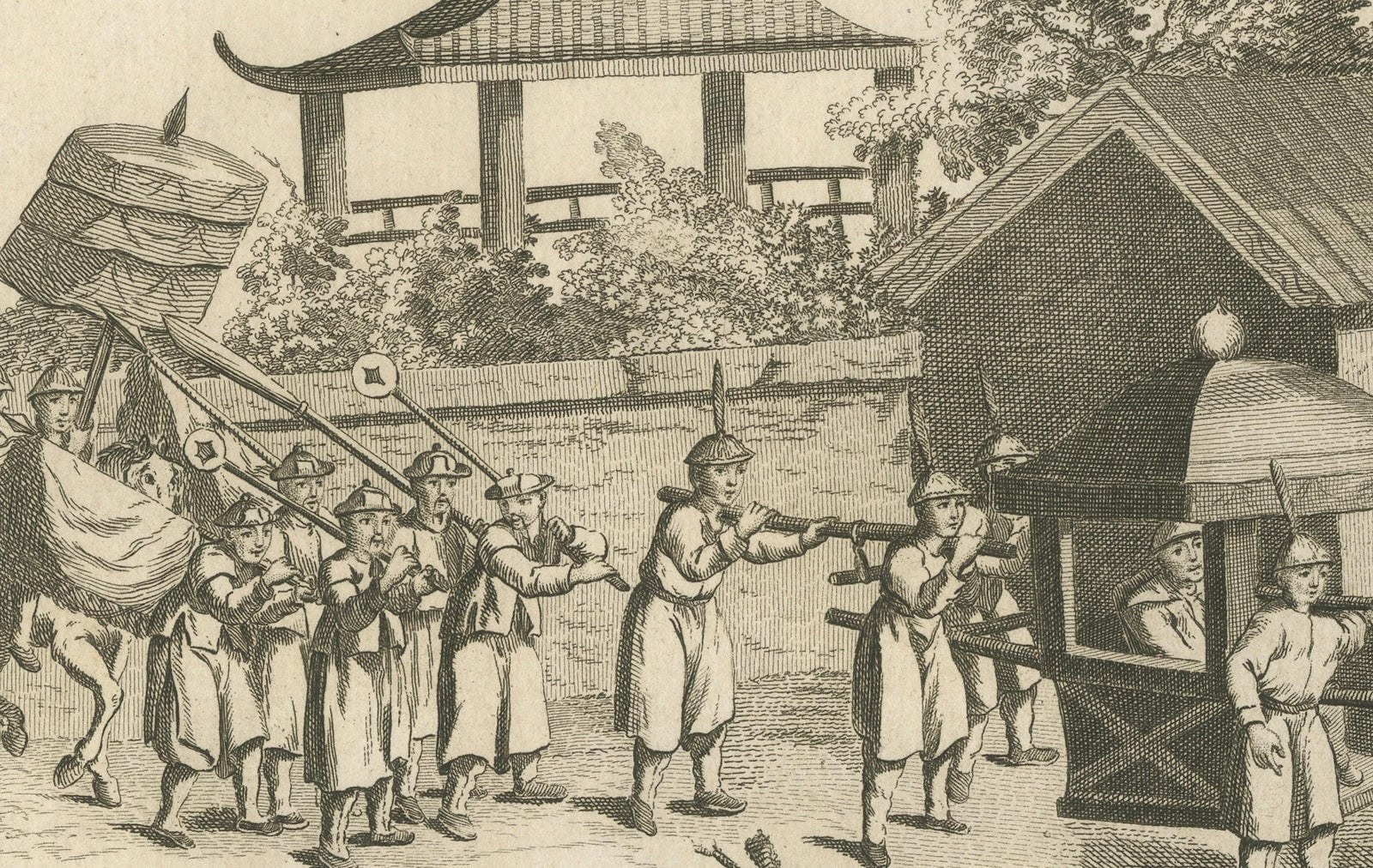
This evocative engraving titled 'Mandarin, accompagné de ses bourreaux' (Mandarin accompanied by his executioners) presents a detailed scene of an imperial Chinese official being carried in a sedan chair, surrounded by a large procession of attendants, soldiers, and servants. The official, or *mandarin*, is shaded within the curtained palanquin, while his entourage proceeds in ceremonial order with banners, spears, parasols, and instruments of authority or punishment.
The phrase “ses bourreaux” refers to the guards or executioners in his service, some may carry rods or other disciplinary tools, indicating their role in law enforcement or justice under the authority of the mandarin. This scene offers insight into the formal and hierarchical structure of Qing imperial administration, where public appearances of local governors or magistrates were staged with grandeur and precision.
In the background, traditional Chinese architecture is visible, including a pagoda-style pavilion with a curved roof, adding context to the setting. The procession is likely moving through a town or village, symbolizing the mandarin’s reach over civil and criminal affairs.
This engraving was based on observations by French naturalist and explorer Pierre Sonnerat (1745–1814), and engraved by Jean-Baptiste-Marie Poisson (1747–1820). It was published in the 1806 edition of *Voyage aux Indes Orientales et à la Chine*, a richly illustrated travel work documenting Sonnerat’s journeys through Asia, including China.
Highly collectible for its documentary and artistic value, this print exemplifies early 19th-century European interpretations of Chinese society, governance, and ritual. It is particularly valuable for collectors of China trade imagery, Qing Dynasty culture, or colonial-era visual reportage.
Condition report:
Good condition. Center fold as issued, with some toning and occasional foxing, especially in the margins. Plate impression is strong, with clear architectural and costume detail.
Framing tips:
A horizontal frame with a neutral cream or tan mat will enhance the linearity of the procession. A dark wooden or black frame will contrast nicely with the fine linework.
Technique: Engraving
Maker: J.-B.-M. Poisson after Pierre Sonnerat, Paris, 1806
EXPLORE