Close-ups
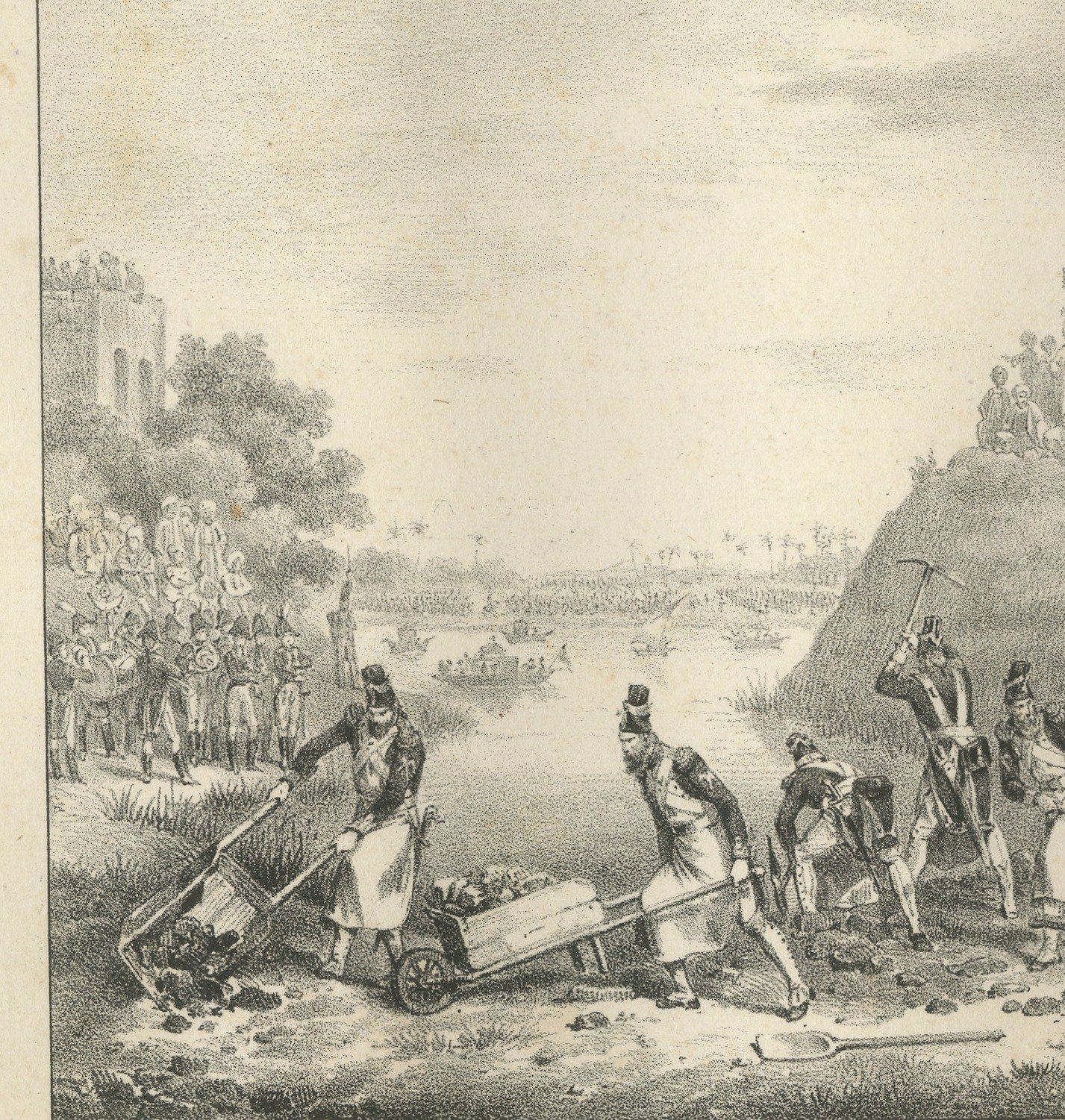
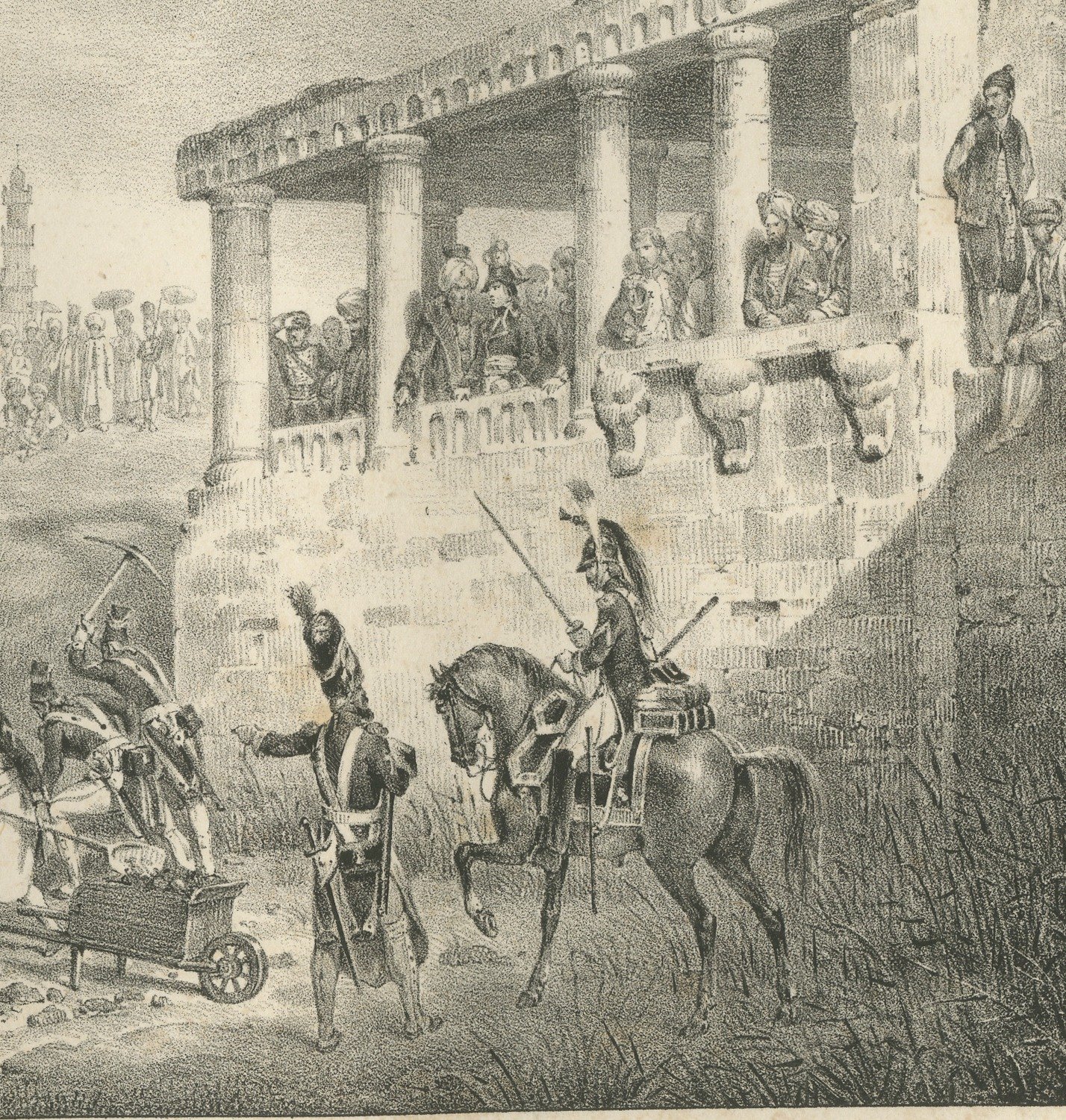
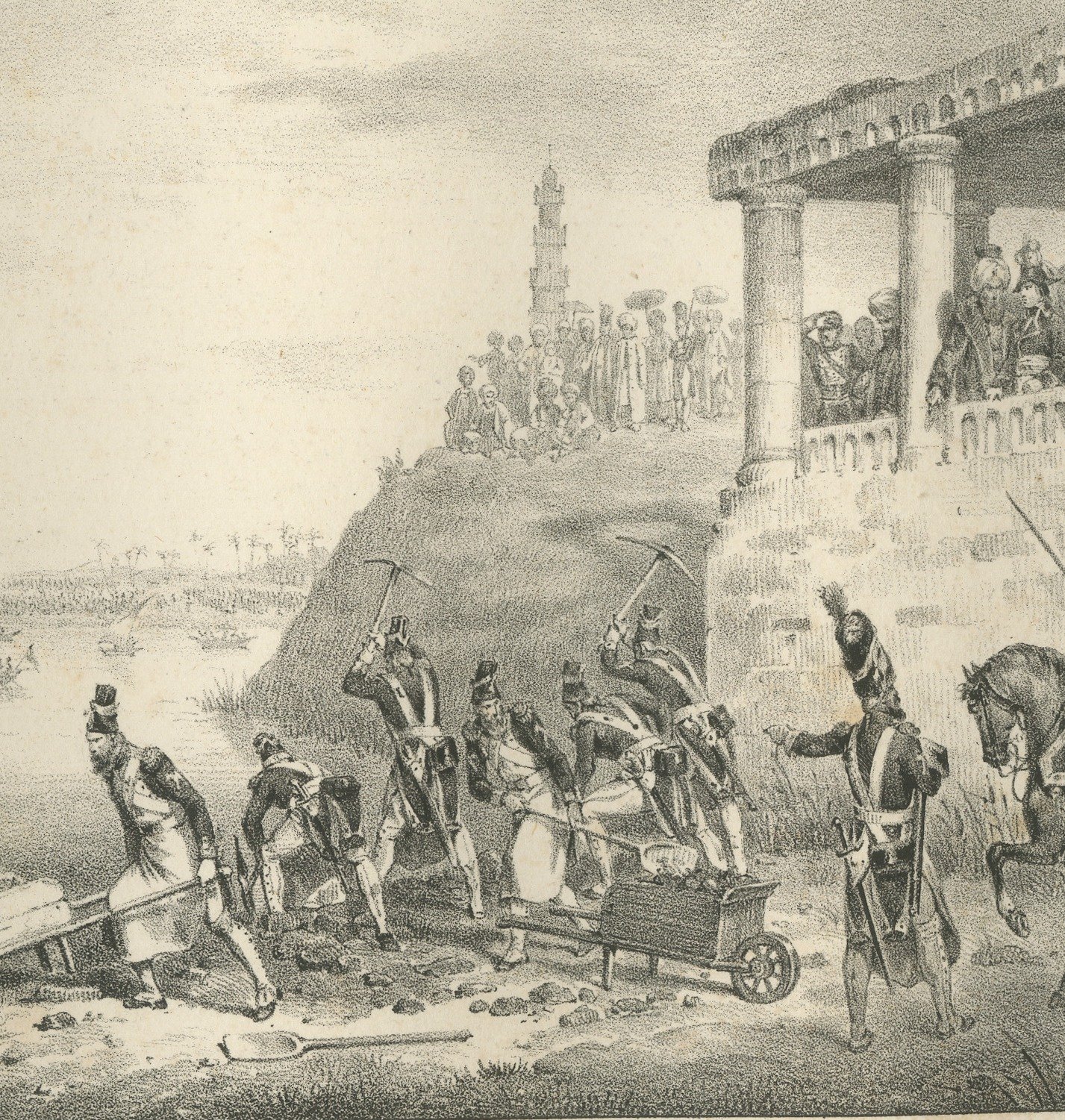
Framed and on the wall
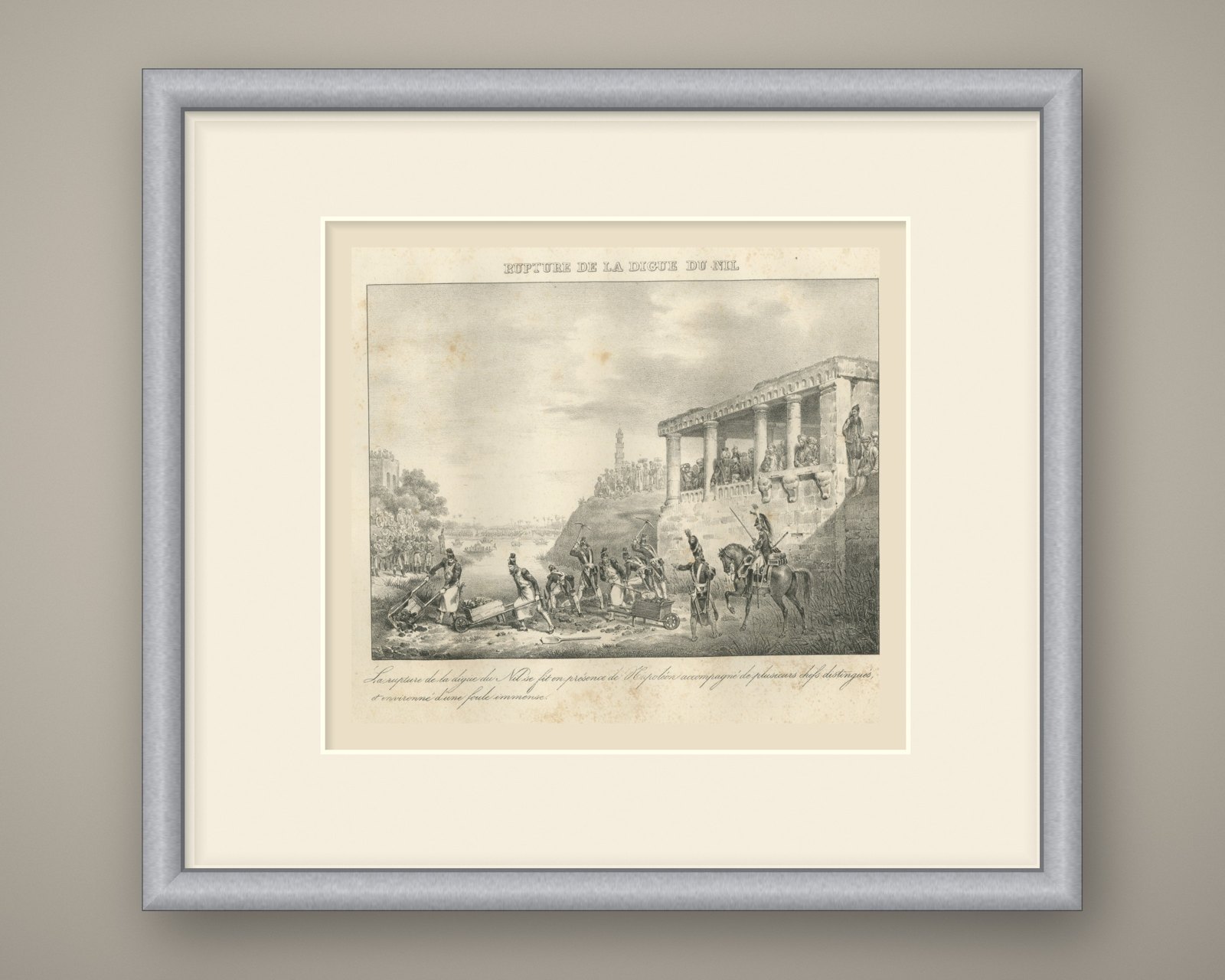

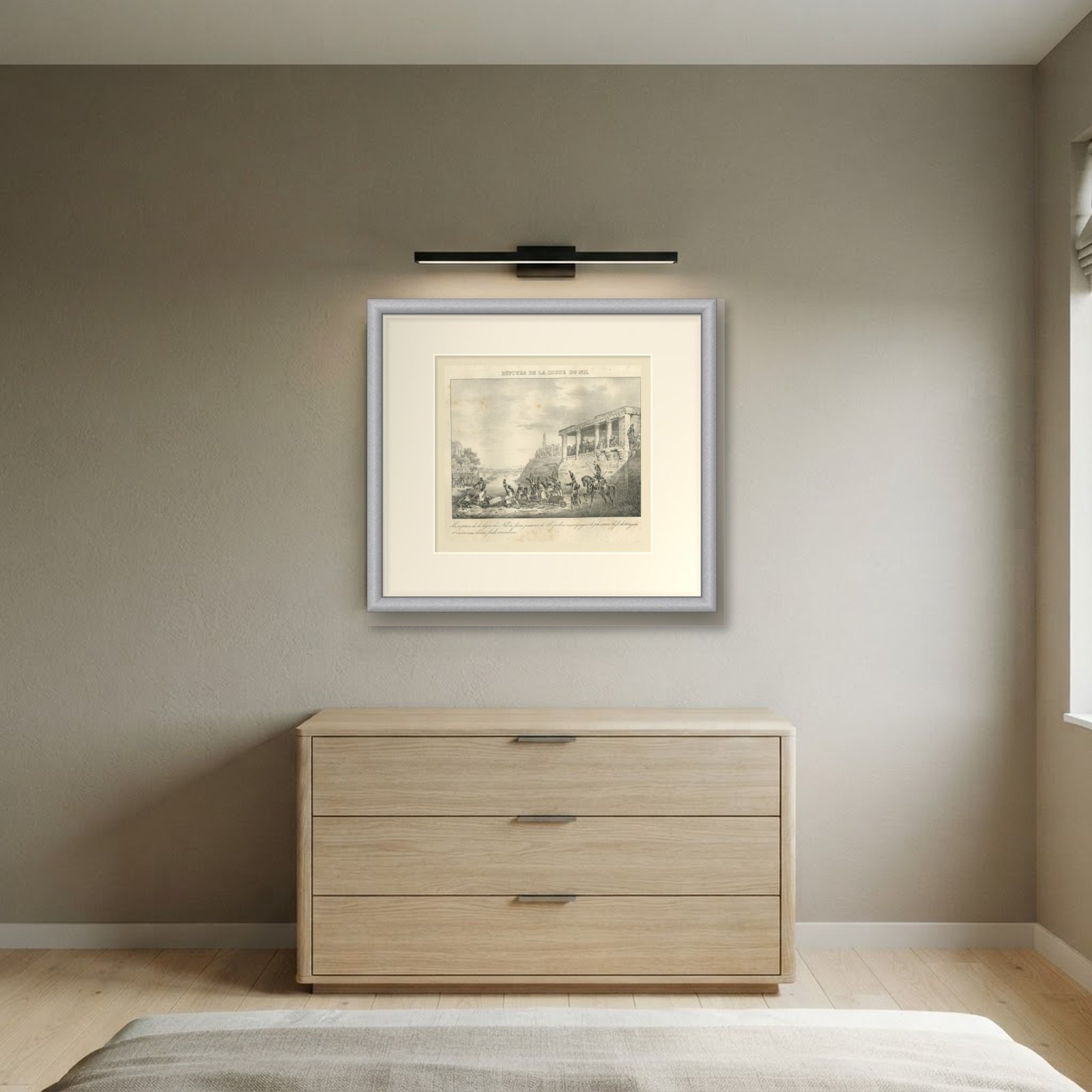
Frame and rooms are illustrations of how the piece could look; it is sold unframed unless the description says otherwise.
Cutting the Dyke of the Nile, Cairo, Antique Madou Lithograph, 1827
$275
€245 · £210
Original print, not a reproduction.
Ships worldwide from the Netherlands, flat, insured and tracked. 14-day returns.
- Date
- 1827
- Technique
- Lithograph
- Coloring
- Uncolored
- Condition
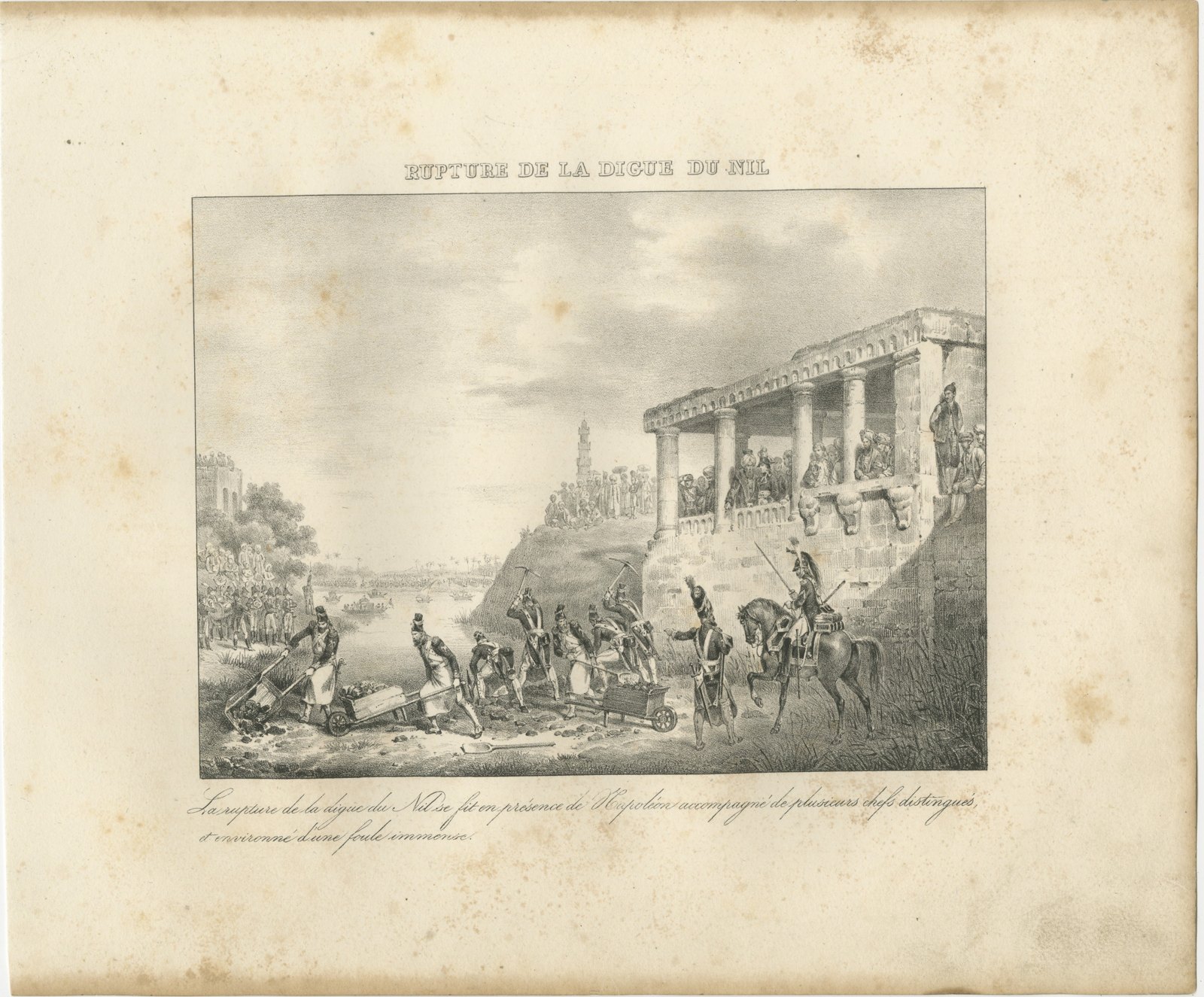
- Good. Light wear to the bottom left corner. Age toning, darker at the edges; handling soiling along the edges and scattered foxing in the margins. Printed image clean.
- Collection
- Battle scenes
- Era
- 1790 to 1815, Napoleonic wars
- Stock no.
- BG-14174-3-39
What the condition grades mean
- Excellent
- Bright and clean, with no faults worth mentioning.
- Very good
- Only light signs of age, such as faint toning.
- Good
- Normal signs of age for a sheet of this period: toning, some foxing, small marks or neat old repairs.
- Fair
- Clear faults such as staining, tears or repairs, priced to match.
Every fault we see is written in the condition note, and the whole sheet is shown uncropped in the photos.
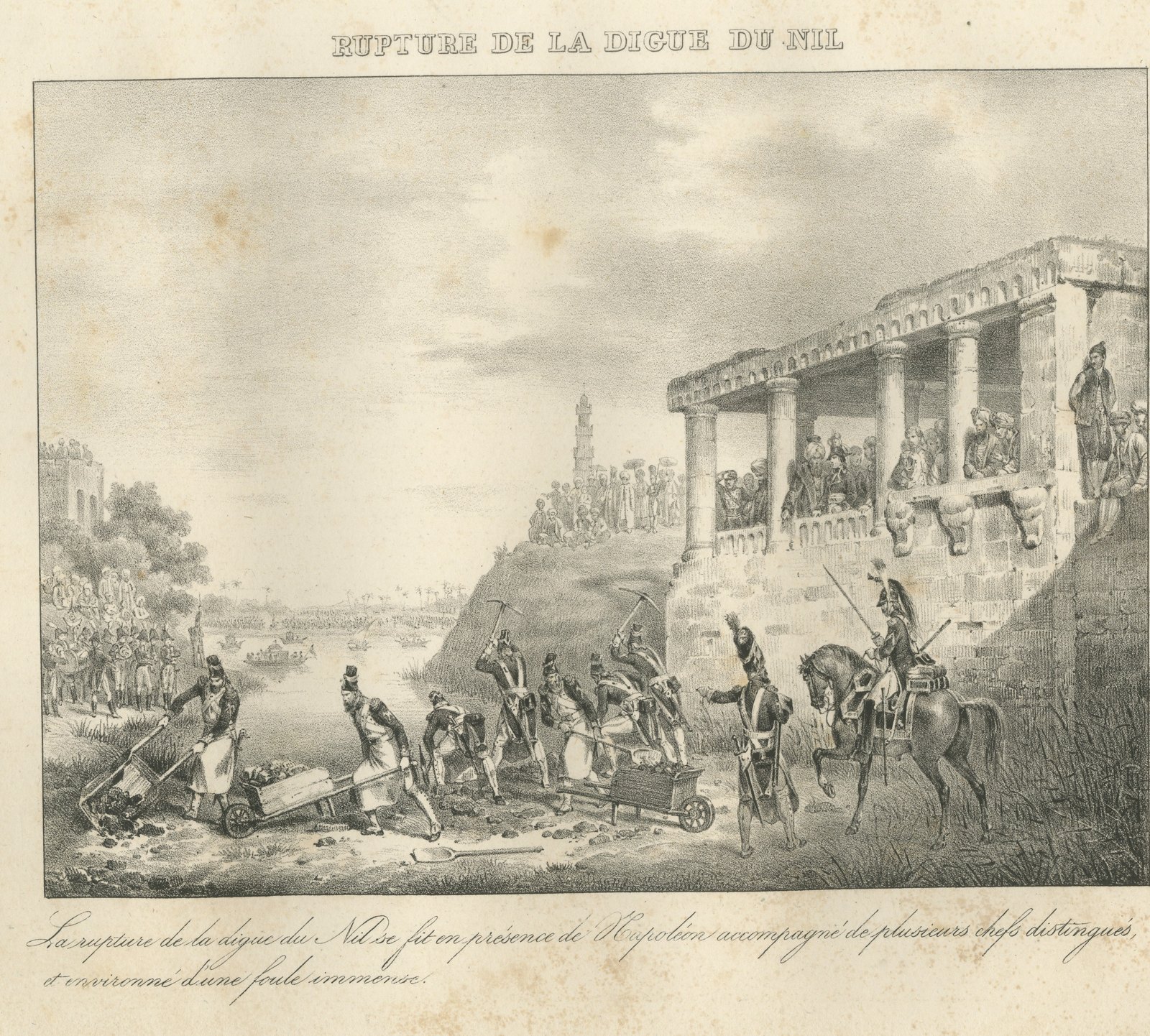
An original antique lithograph of the ceremonial cutting of the Nile dyke at Cairo, from Madou's Vie de Napoléon, published at Brussels in 1827. The sheet is lettered RUPTURE DE LA DIGUE DU NIL in open capitals above the image. French soldiers with picks and wheelbarrows break the embankment while turbaned spectators and officers watch from a pillared pavilion above, a mounted dragoon looks on at the right, and crowds and boats line the water beyond a distant minaret.
The printed caption below the image reads: La rupture de la digue du Nil se fit en présence de Napoléon accompagné de plusieurs chefs distingués, et environné d'une foule immense. In English: The cutting of the Nile dyke took place in the presence of Napoleon, accompanied by several distinguished chiefs and surrounded by an immense crowd.
Vie de Napoléon was published at Brussels in 1827 by the Lithographie royale de Jobard, the press of Marcellin Jobard, in two volumes, with a text by a society of men of letters drawn from the documents Napoleon dictated and corrected on Saint Helena. The plates are the work of Jean-Baptiste Madou (1796 to 1877), the leading Belgian lithographer of his generation, who worked closely with Jobard in the 1820s.
The opening of the canal at the height of the flood was the great annual festival of Cairo, and Bonaparte presided over it in August 1798 as a deliberate gesture toward the people of the city. The printing is lithographic, black on wove paper, and the sheet is uncolored.
Condition: Light wear to the bottom left corner. Age toning, darker at the edges; handling soiling along the edges and scattered foxing in the margins. Printed image clean.
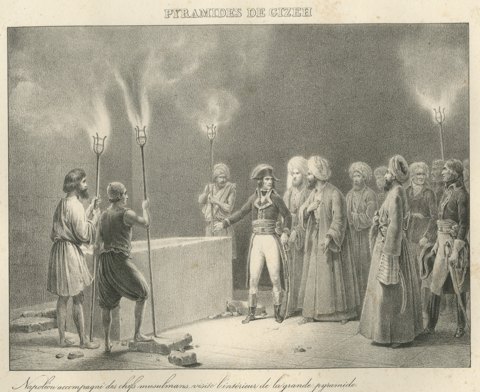
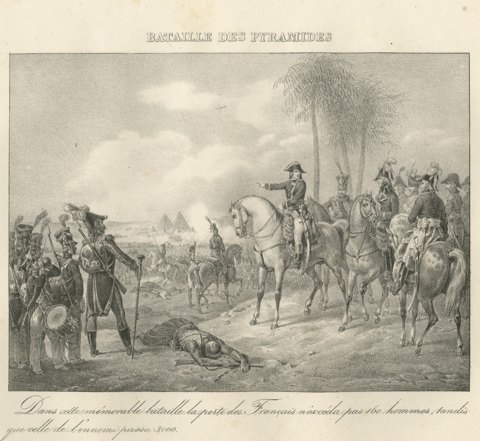
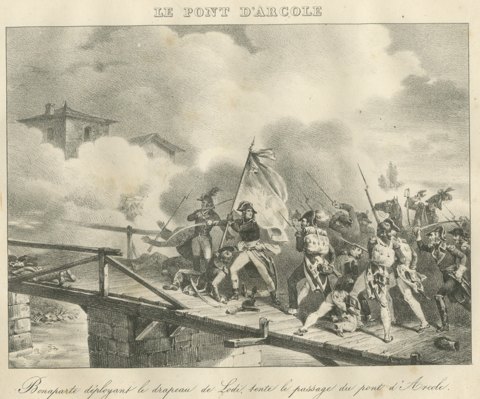
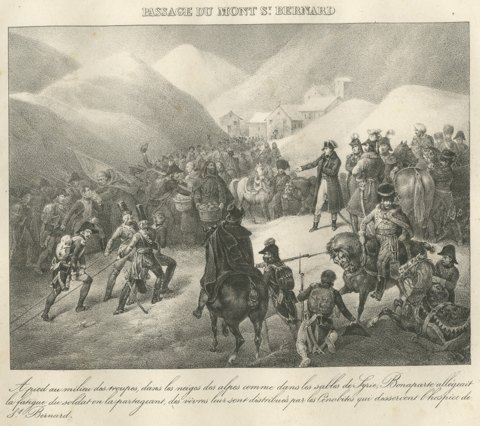
The oblong format hangs well over a desk or a mantelpiece, and because the plates in the series share the same size and style of lettering, a group bought together reads as a set rather than as an assortment.
This is an original antique print, not a modern reproduction. This item is sold unframed. Any framed or interior images are shown for presentation and inspiration only, unless the listing explicitly states that the item is sold framed.