Close-ups
Framed and on the wall
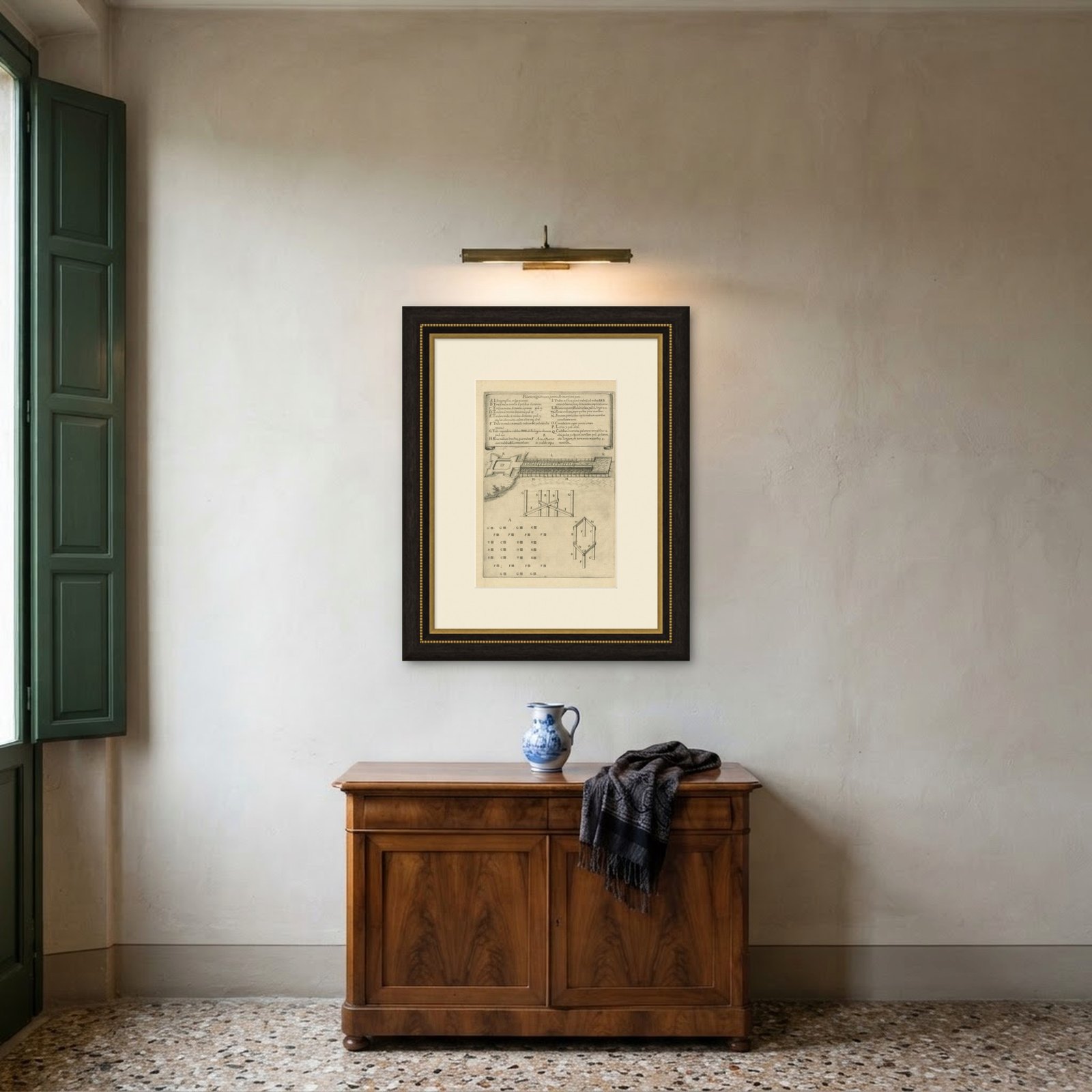
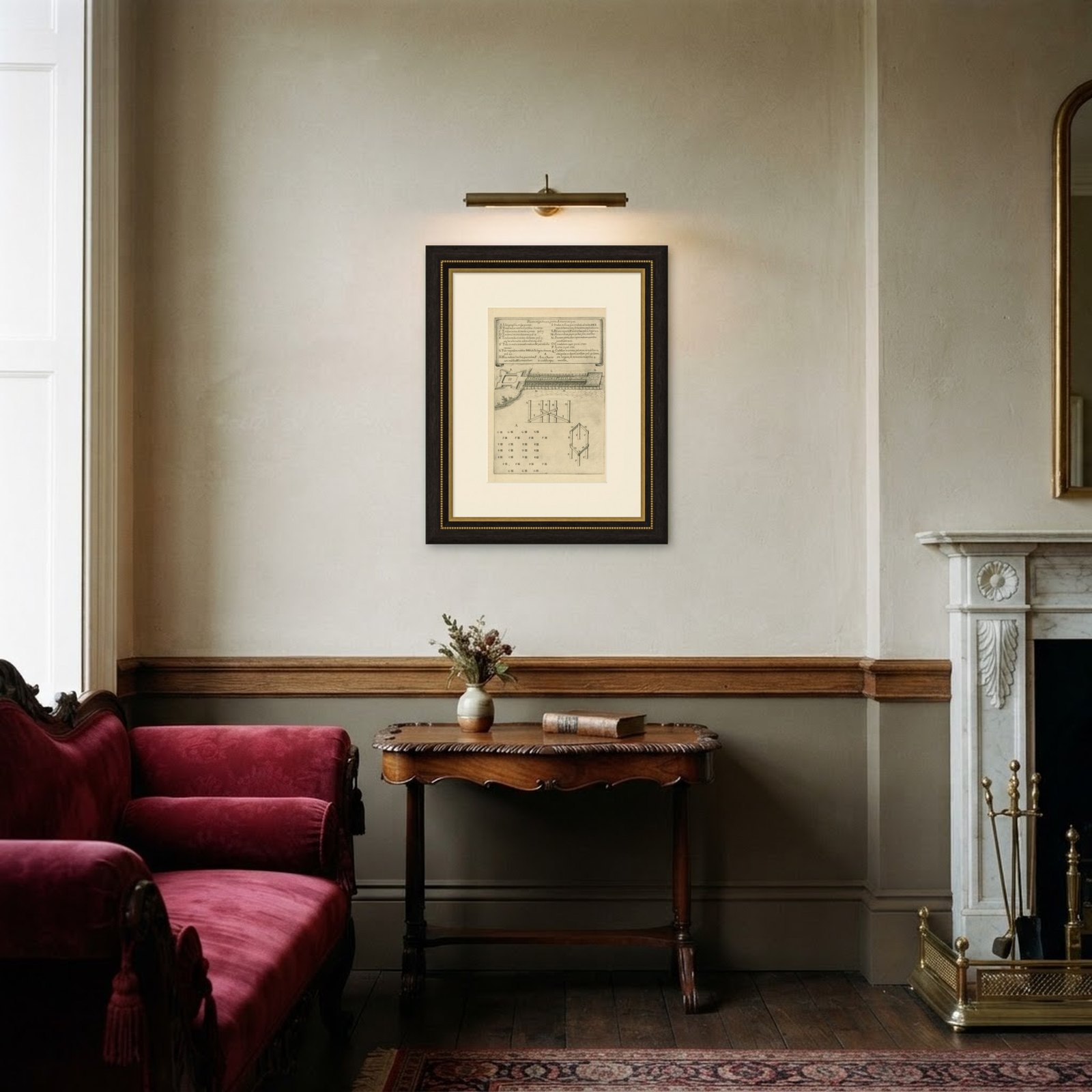
Frame and rooms are illustrations of how the piece could look; it is sold unframed unless the description says otherwise.
Duke of Parma’s 1585 Ship Bridge Plan: Siege of Antwerp Engineering Print
$325
€290 · £245
Original print, not a reproduction.
Ships worldwide from the Netherlands, flat, insured and tracked. 14-day returns. To buy, use Ask a question and we will reserve it for you.
- Date
- 1585
- Sheet size
- 13.8 × 9.6 in (35 × 24.5 cm)
- Condition
- Good, given age. Light creasing. General age-related toning and/or occasional minor defects from handling. Please study scan carefully.
- Collection
- Sieges & fortresses
- Era
- Before 1700, Pike and siege
- Stock no.
- f_41757312
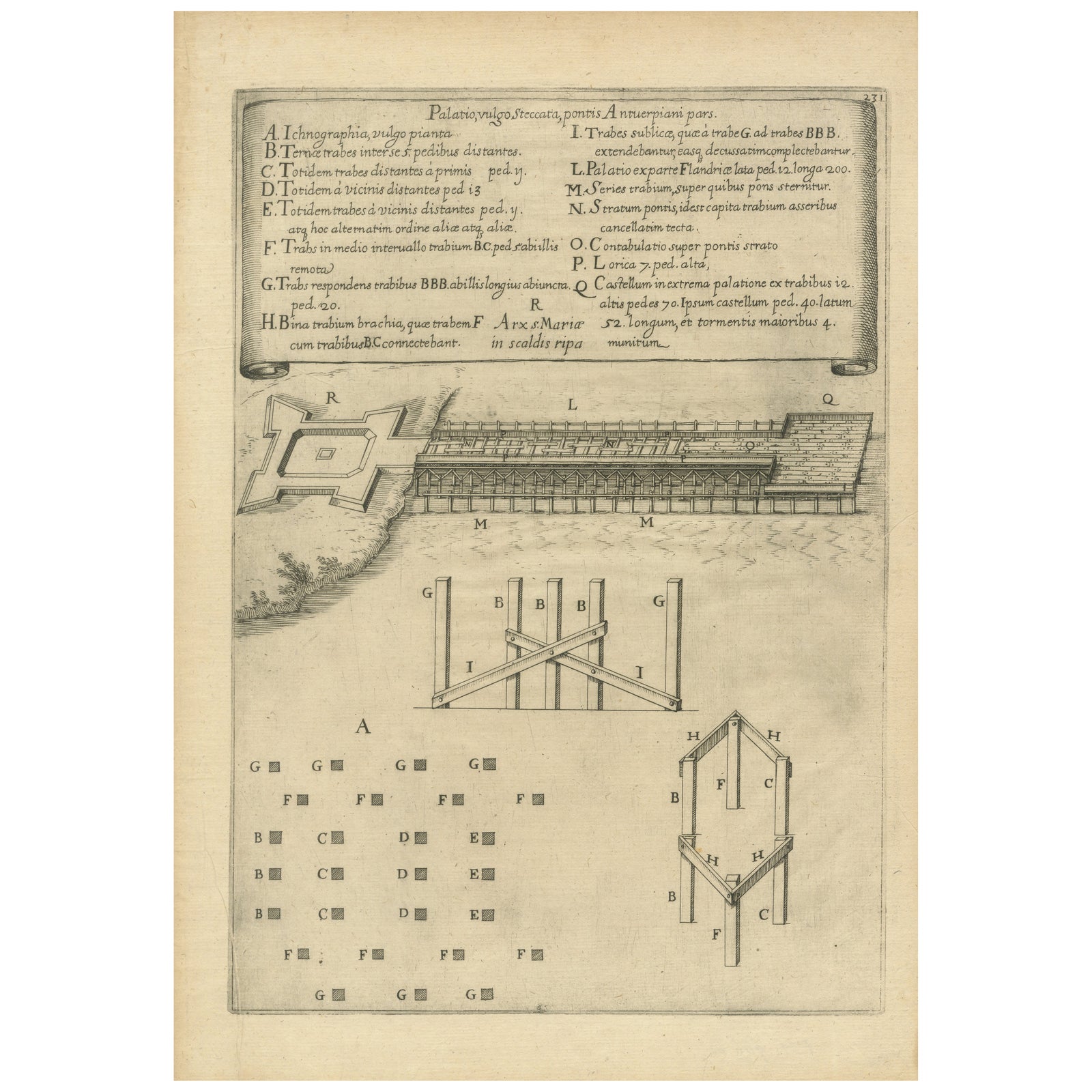
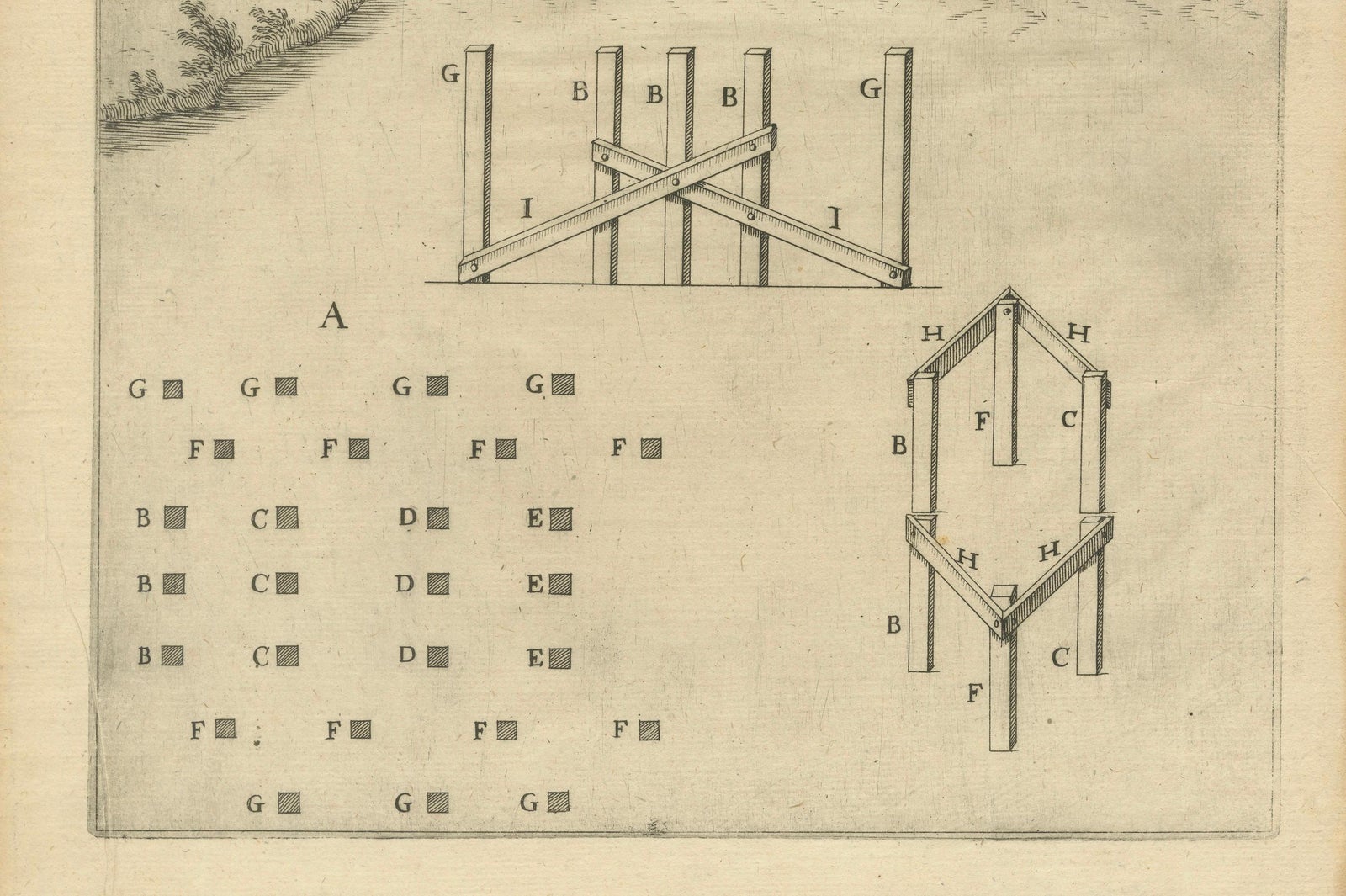
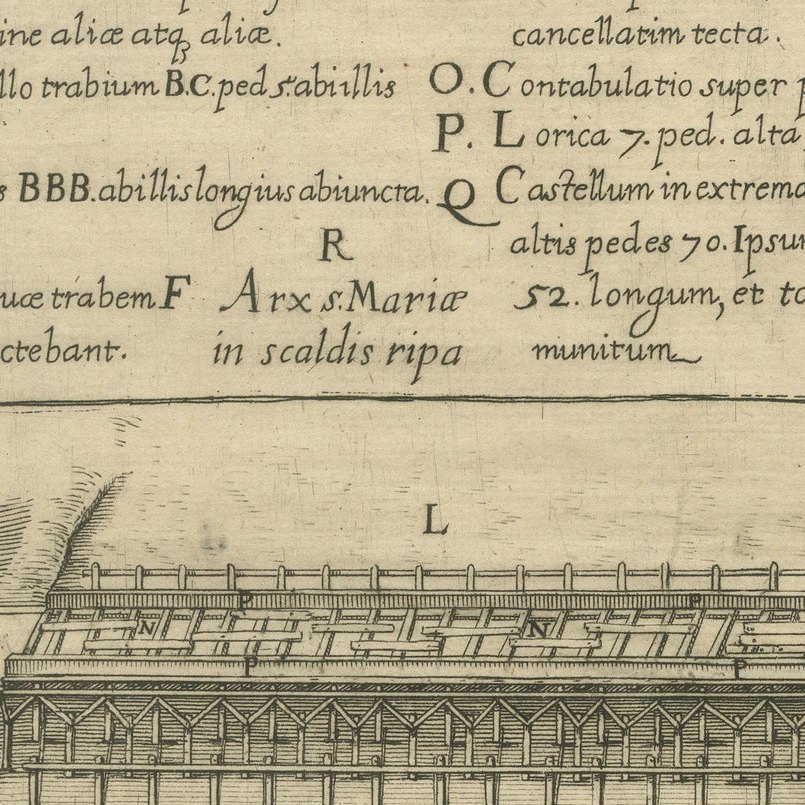
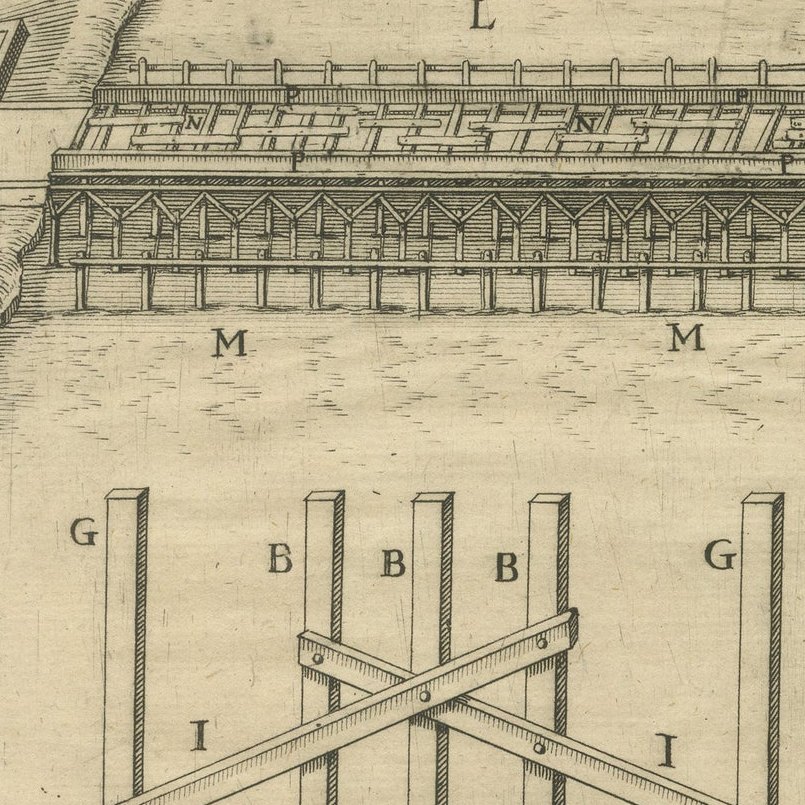
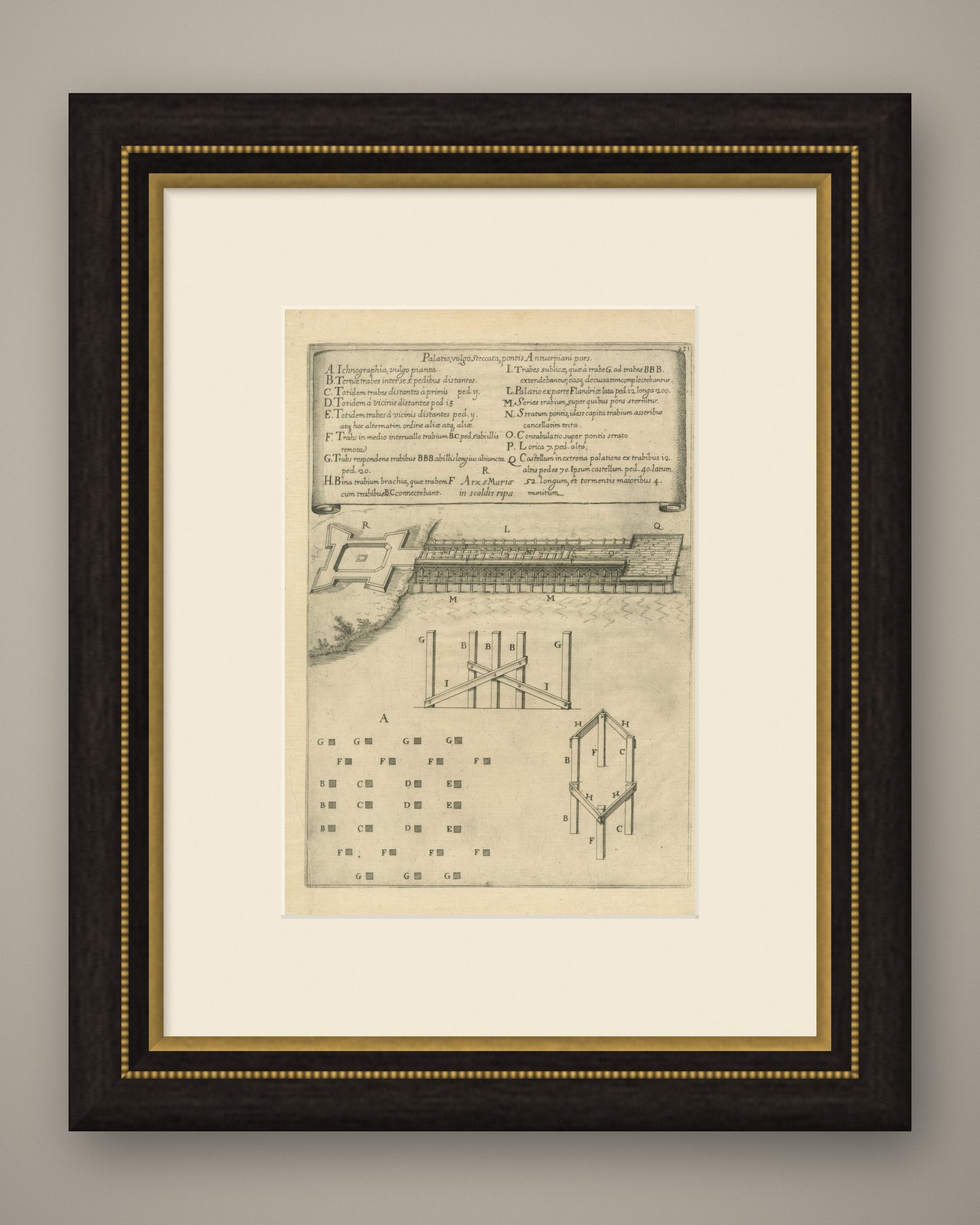
This is an original engraved print from 1585, depicting the construction plans for the ship bridge built by the Duke of Parma during the Siege of Antwerp in the Eighty Years' War.
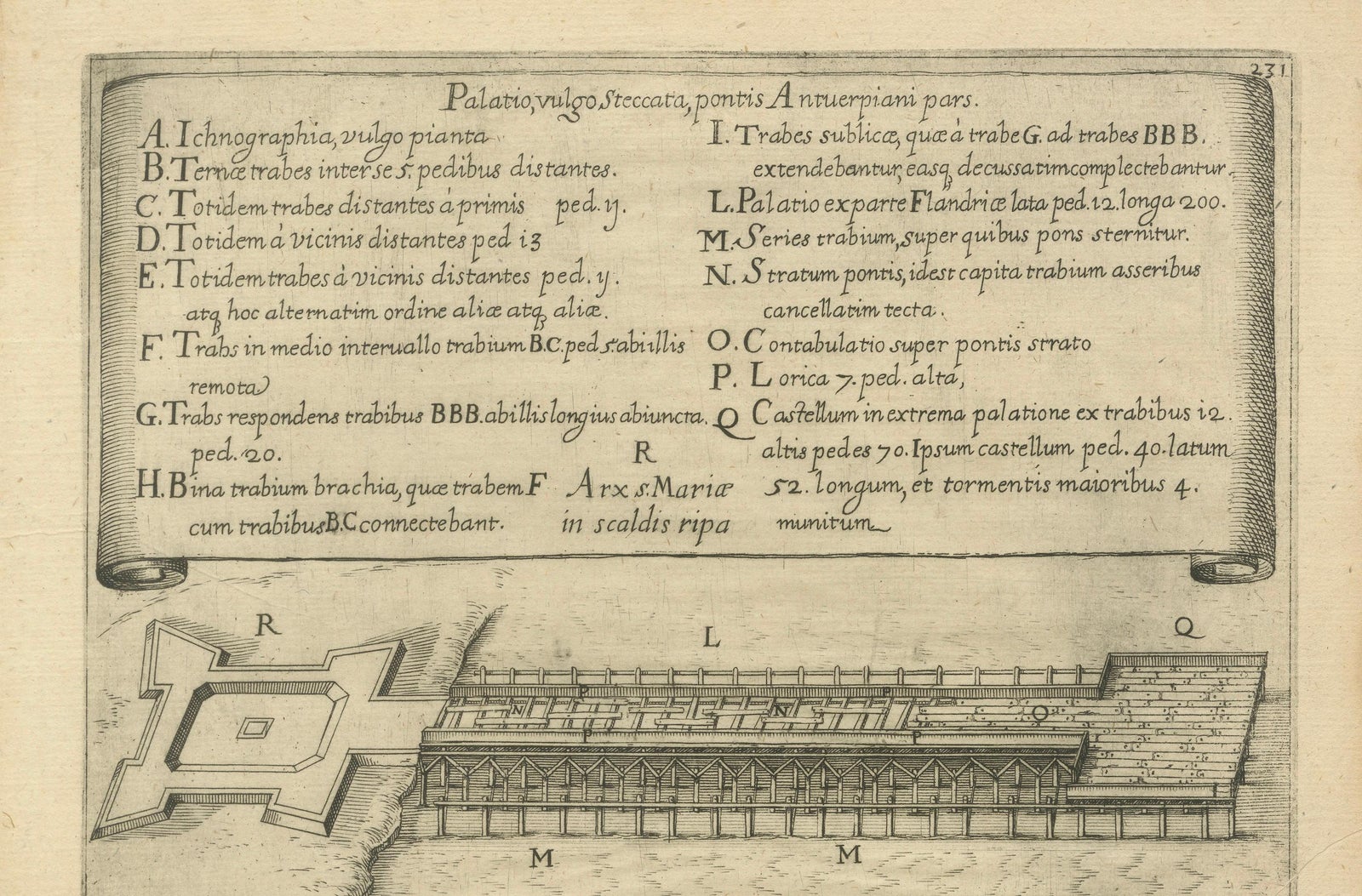
The image displays technical drawings of the bridge chassis (Palatio, Vulgo Steccata, Pontis Antverpiani Pars), a crucial structure used to control the Scheldt River and block access to Antwerp, a significant strategic move in the siege.
At the top of the engraving, we see structural details such as labeled parts (A-R) with a corresponding legend in Latin, providing explanations of each element. These labels likely refer to different parts of the bridge's construction, including timber framing, supports, and platform designs. The banderole in the lower part of the engraving contains additional information in Latin, likely offering instructions or clarifications on the design.
The drawing shows both a top-down view and a cross-sectional elevation of the bridge, offering insights into how the sections were assembled, including details of how the bridge sat over the river, supported by pontoons or piles. The fortifications on the side of the river, depicted at the bottom right, indicate the strategic placement of defenses near the bridge.
This siege bridge played a vital role in cutting off supplies to the city of Antwerp, leading to its eventual capitulation after a long and costly siege. The bridge's design and construction were major engineering feats of the time, representing advanced military strategy and logistical capability in the late 16th century.