Close-ups
Framed and on the wall
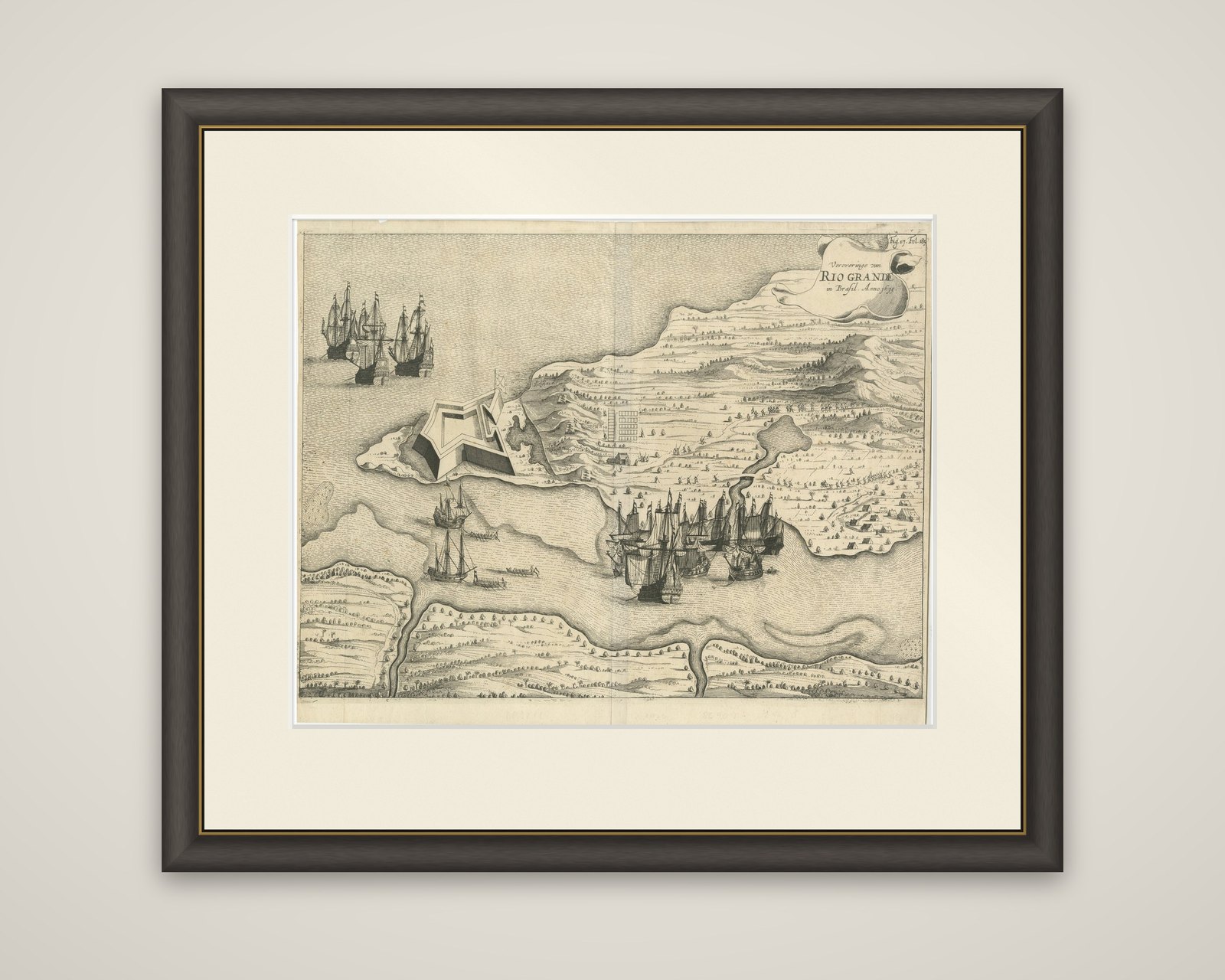
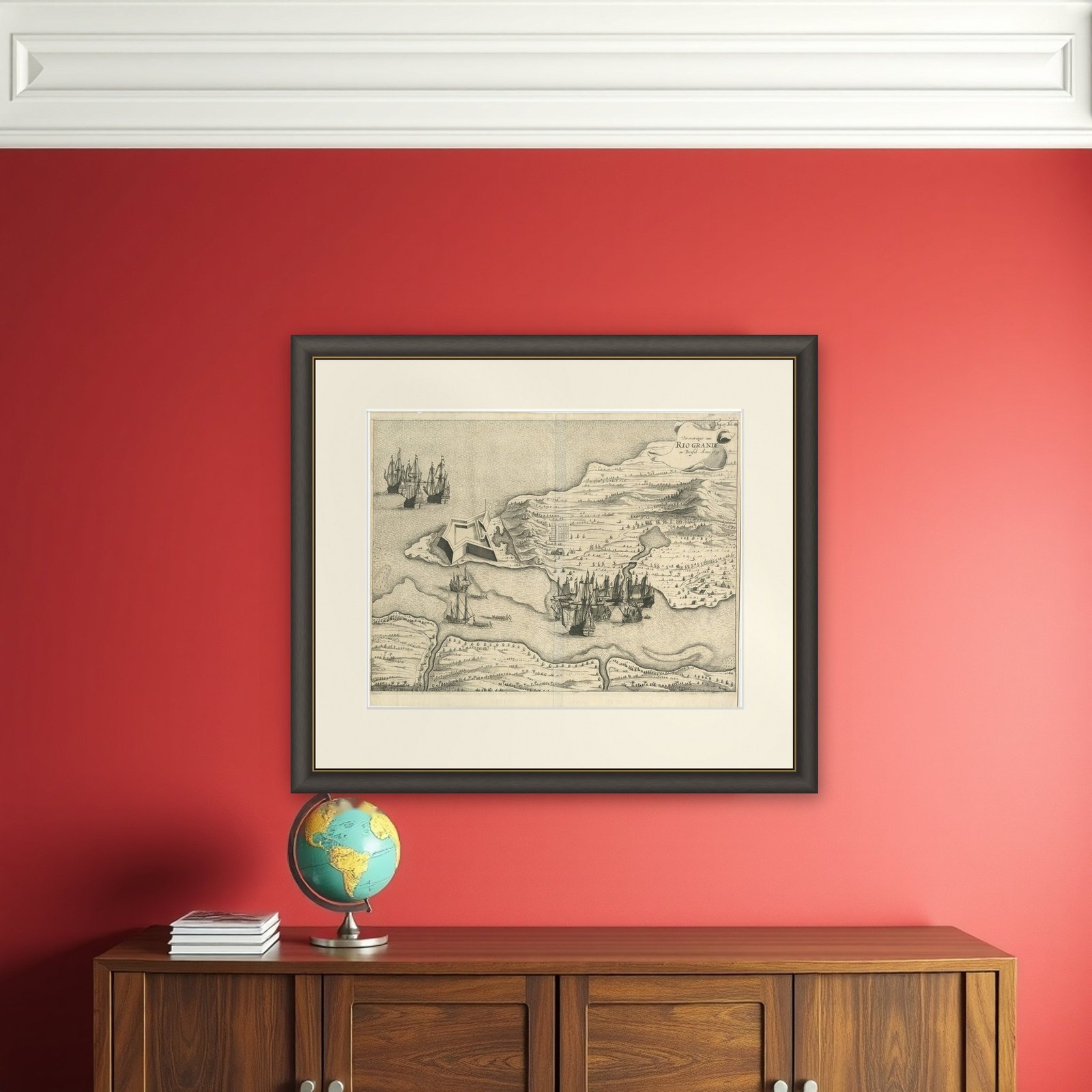
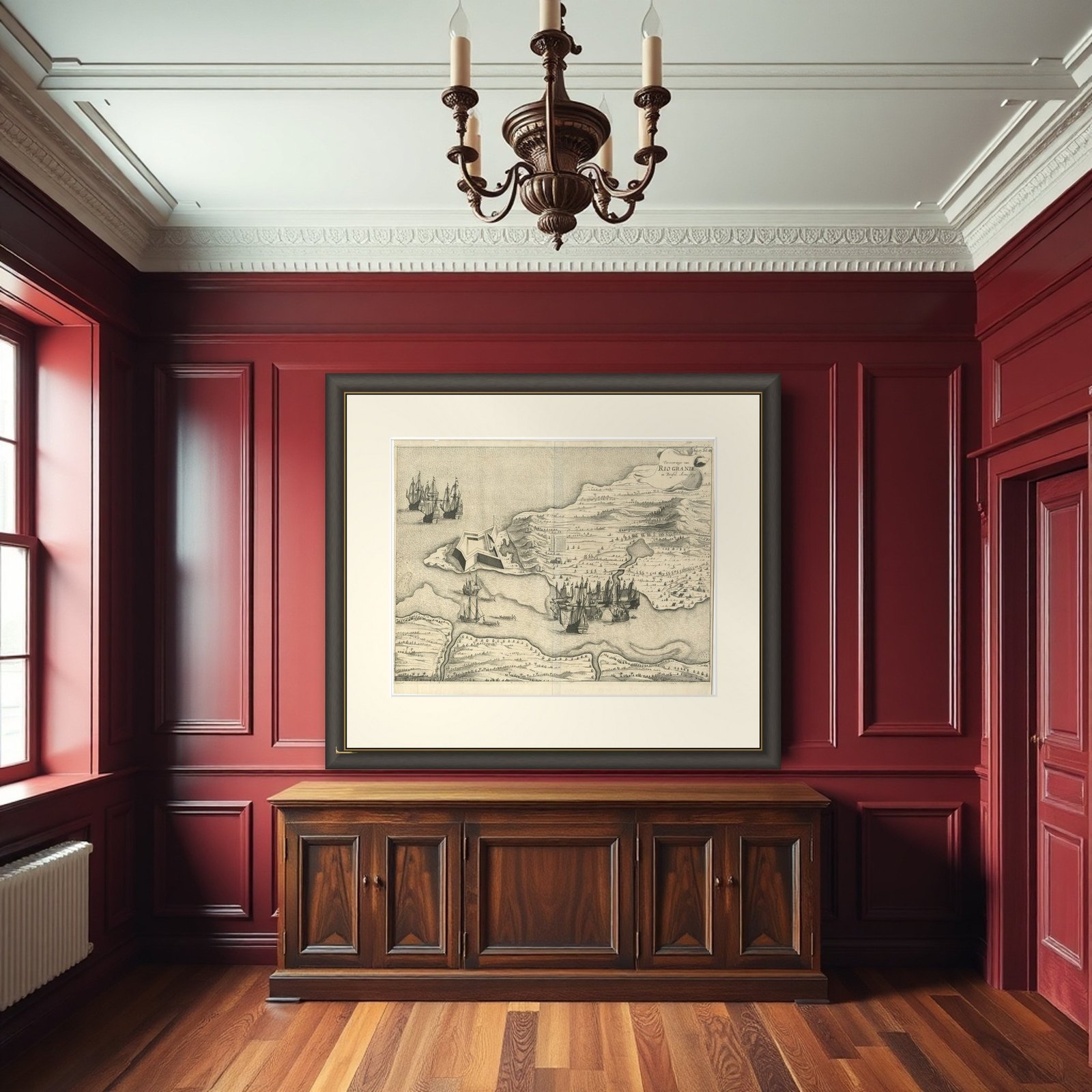
Frame and rooms are illustrations of how the piece could look; it is sold unframed unless the description says otherwise.
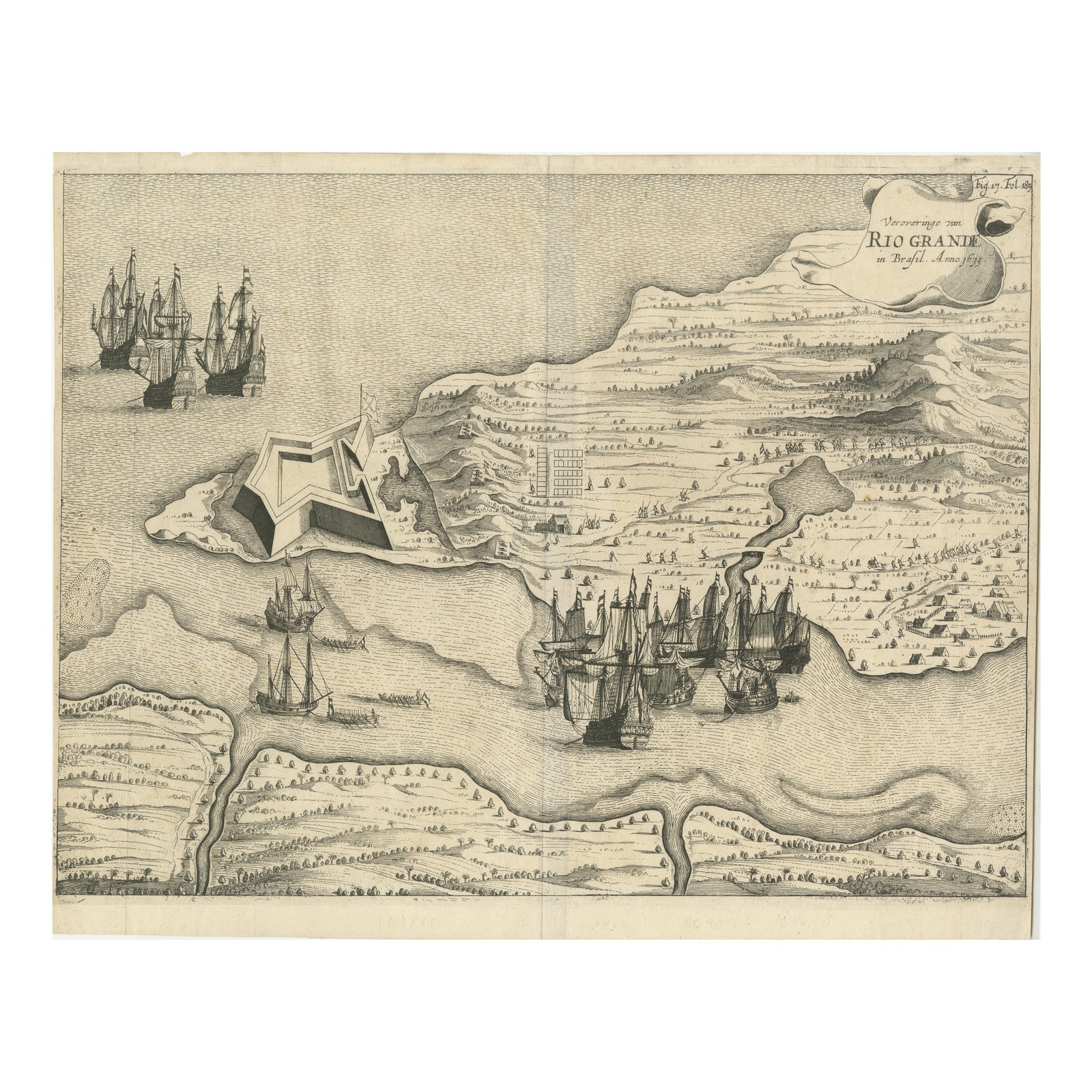
Dutch Conquest of Rio Grande, Brazil (1633) Under Prince Frederick Hendrick
$615
€550 · £460
Original print, not a reproduction.
Ships worldwide from the Netherlands, flat or rolled, insured and tracked. 14-day returns.
- Date
- 1633
- Sheet size
- 12 × 15 in (30.5 × 38 cm)
- Condition
- Good, given age. Folds as published. Left and right margin cut short. General age-related toning and/or occasional minor defects from handling. Study the images carefully.
- Collection
- Battle scenes
- Era
- Before 1700, Pike and siege
- Stock no.
- BG-13745-1
What the condition grades mean
- Excellent
- Bright and clean, with no faults worth mentioning.
- Very good
- Only light signs of age, such as faint toning.
- Good
- Normal signs of age for a sheet of this period: toning, some foxing, small marks or neat old repairs.
- Fair
- Clear faults such as staining, tears or repairs, priced to match.
Every fault we see is written in the condition note, and the whole sheet is shown uncropped in the photos.
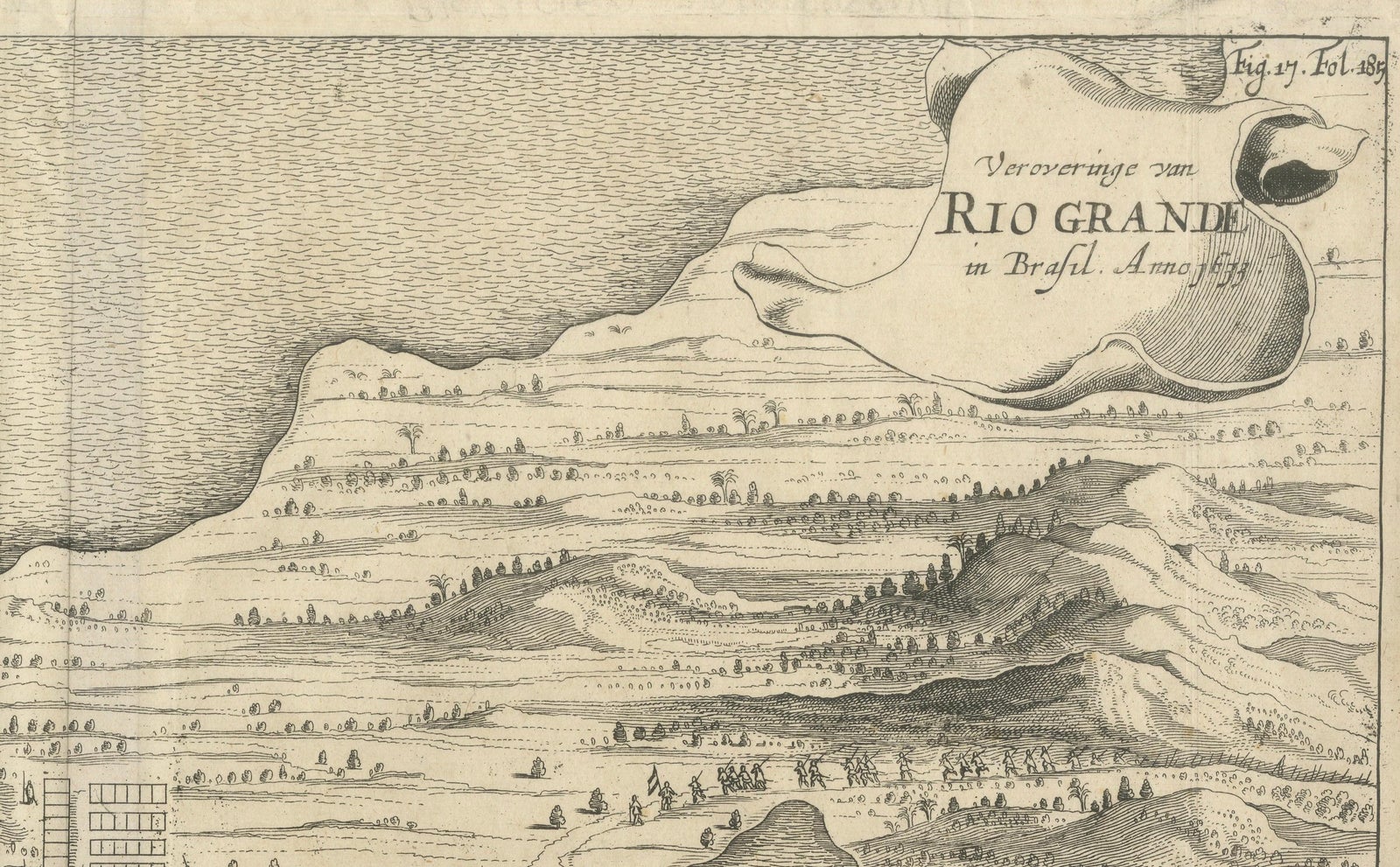
The Dutch capture of Rio Grande in Brazil in 1633, an original etched plate lettered "Veroveringe van Rio Grande in Brasil Anno 1633". It was printed in the seventeenth century on laid paper, in black.
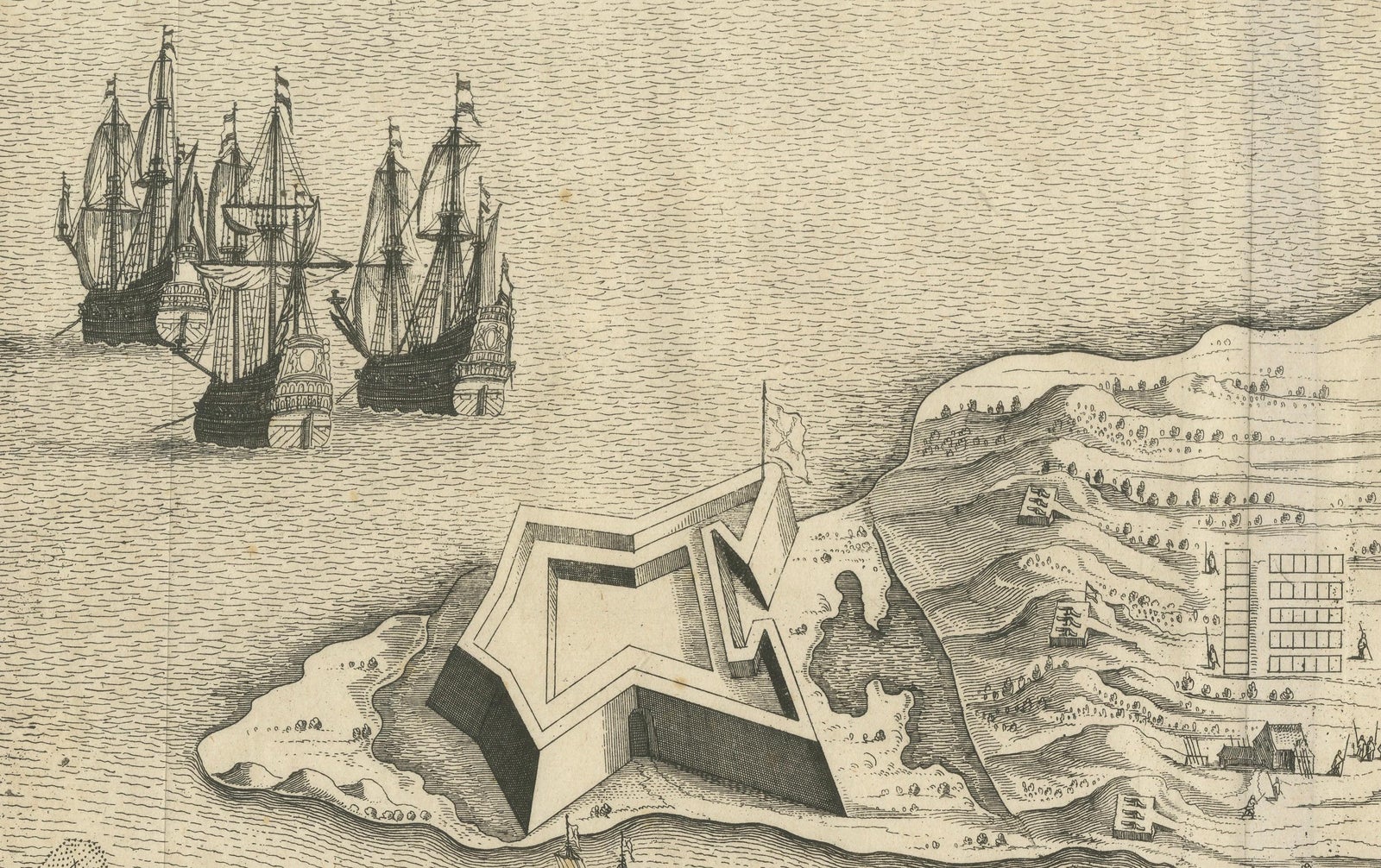
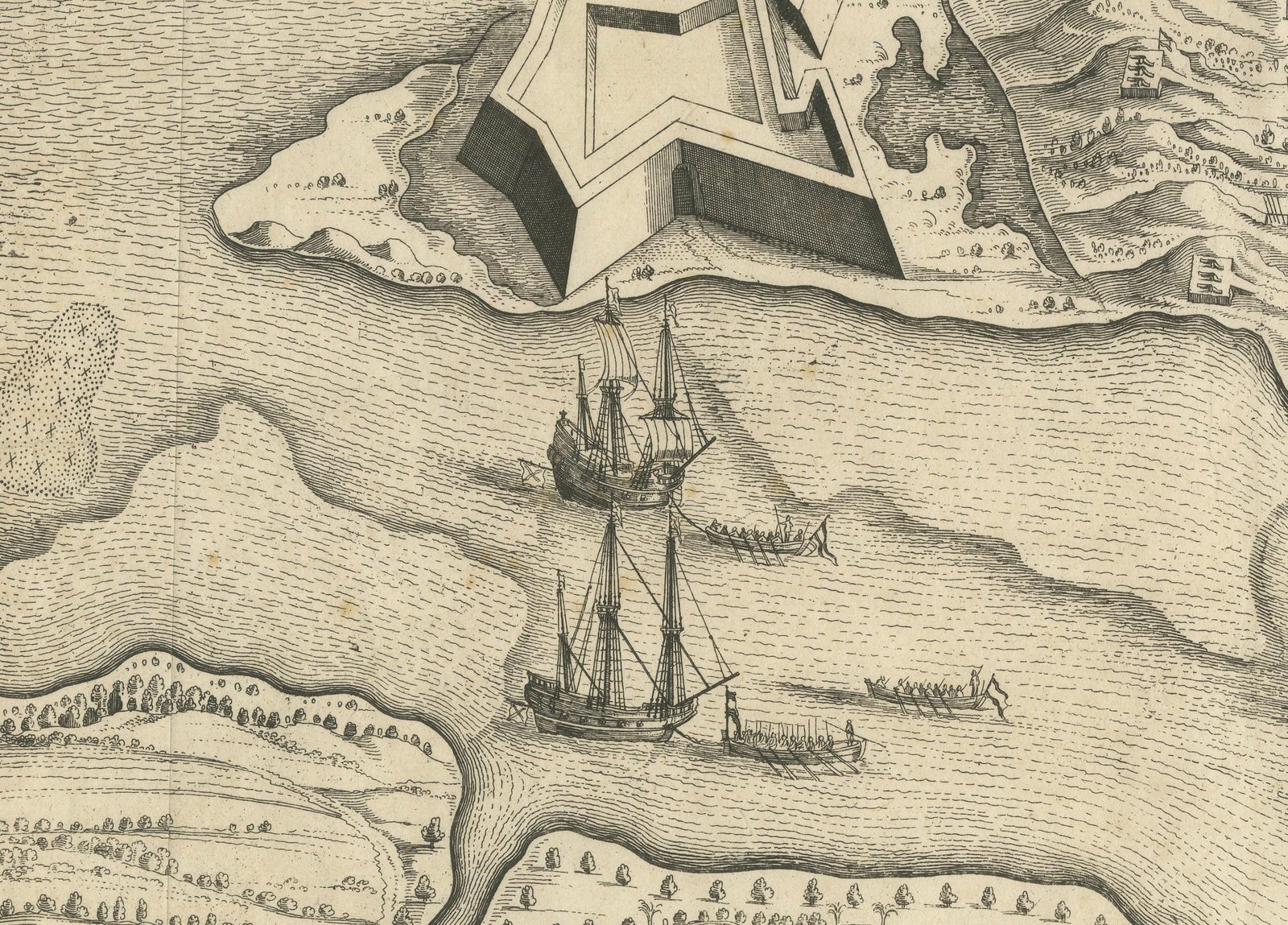
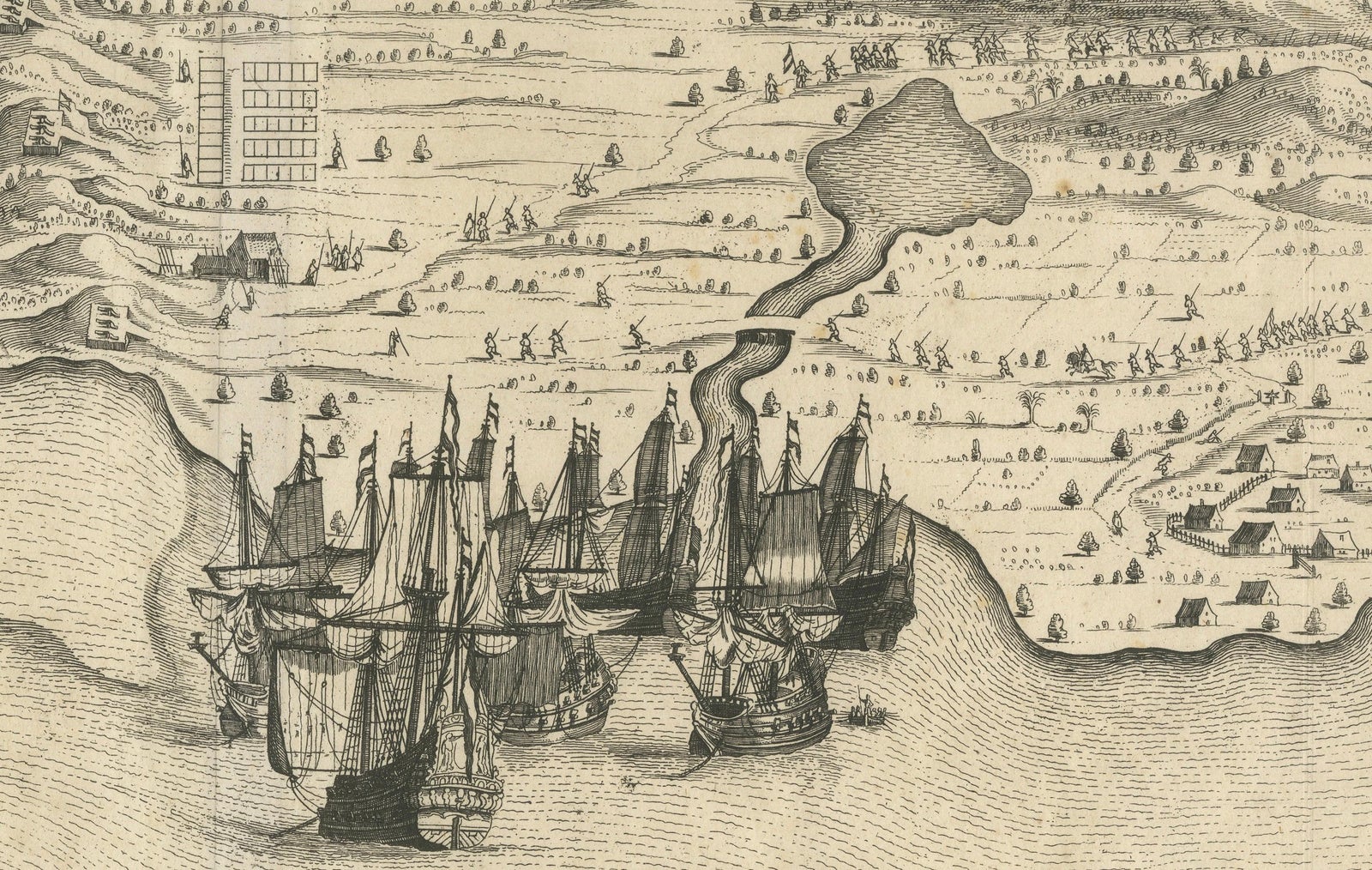
The plan shows a star-shaped Portuguese fortress on the headland at the mouth of the river, with its bastions drawn in perspective. A Dutch fleet is anchored in the channel at the center and lower center, with smaller boats and rowing launches approaching the shore, and more ships lie at the upper left. Tents of the landing force, a rectangular encampment and winding paths cover the hills to the right, and a pond or lagoon sits inland. The foreground at the bottom shows the opposite bank, with trees and a tributary entering the water.
The expedition was led under Frederik Hendrik, Prince of Orange, during the Dutch occupation of northeastern Brazil. The print is anonymous, made after a design attributed to Isaac Commelin, and it appeared in Gregorio Leti's Teatro Belgico.
EXPLORE