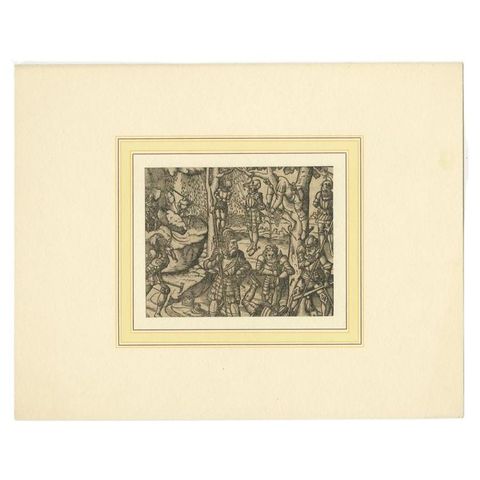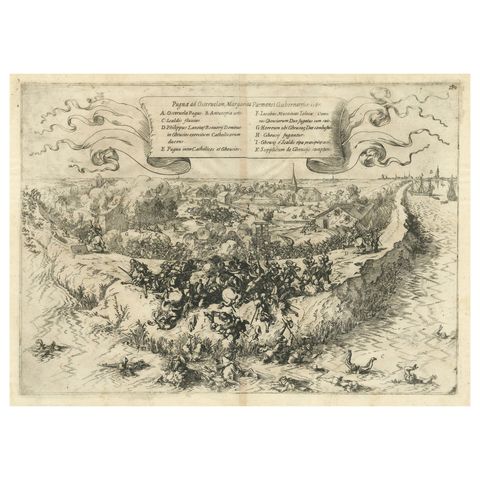
Close-ups
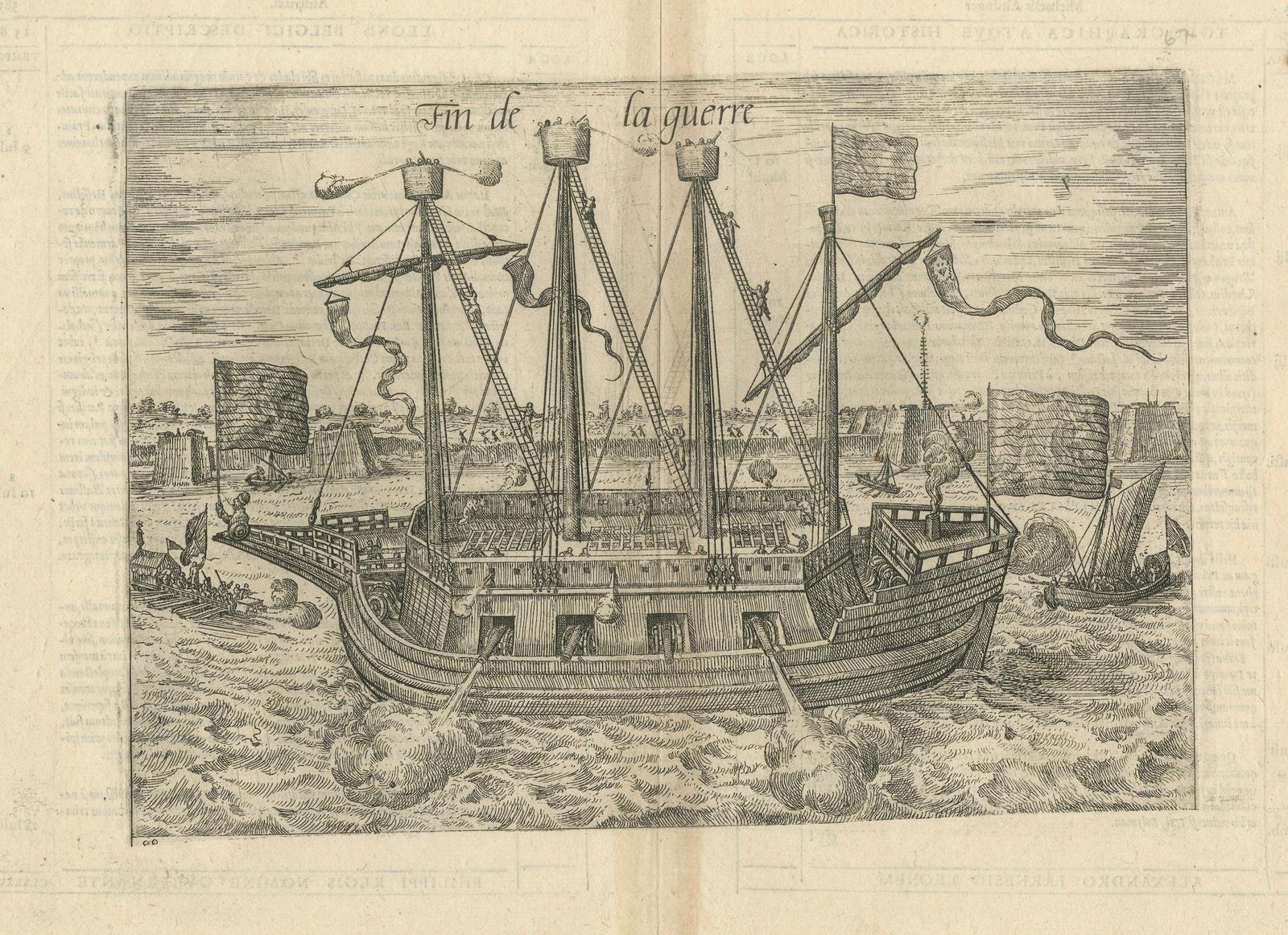
Framed and on the wall
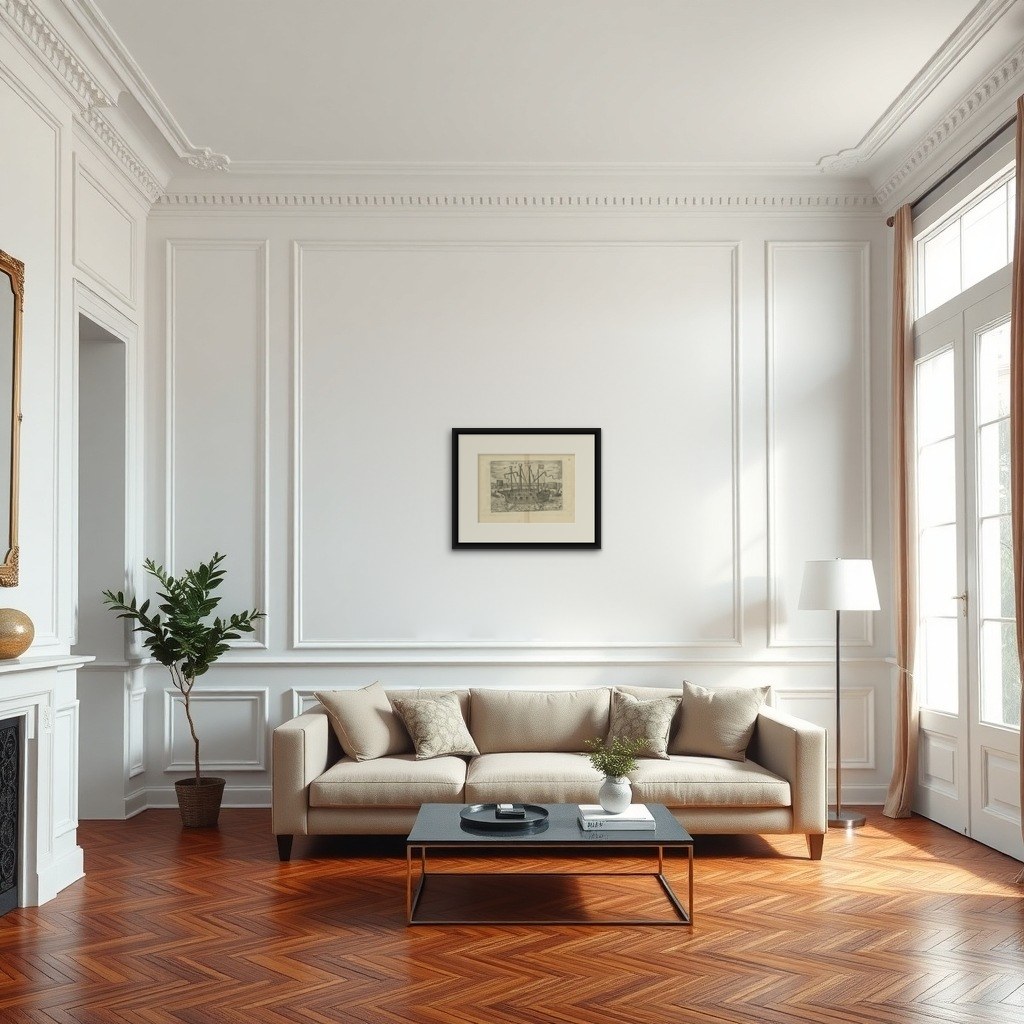
Frame and rooms are illustrations of how the piece could look; it is sold unframed unless the description says otherwise.
Fin de la Guerre: The Behemoth of the Siege of Antwerp, 1585
£545
$720 · €640
Original print, not a reproduction.
Ships worldwide from the Netherlands, flat, insured and tracked. 14-day returns. To buy, use Ask a question and we will reserve it for you.
- Date
- 1585
- Sheet size
- 11 × 15.4 in (28 × 39 cm)
- Condition
- Good, given age. Some creasing in top left corner. General age-related toning, a few spots in the margin and/or occasional minor defects from handling. Folding line as issued. Latin text on reverse. Please study scan carefully.
- Collection
- Battle scenes
- Era
- Before 1700, Pike and siege
- Stock no.
- f_41487002
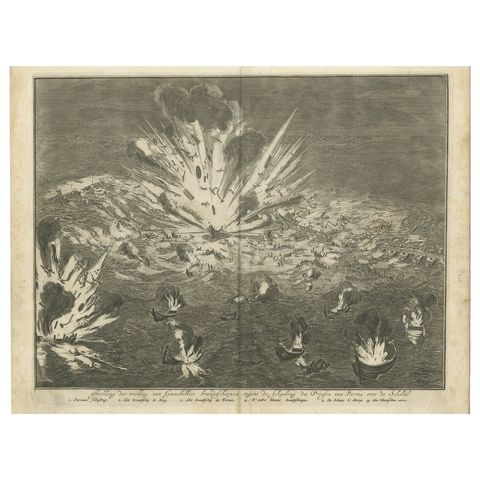
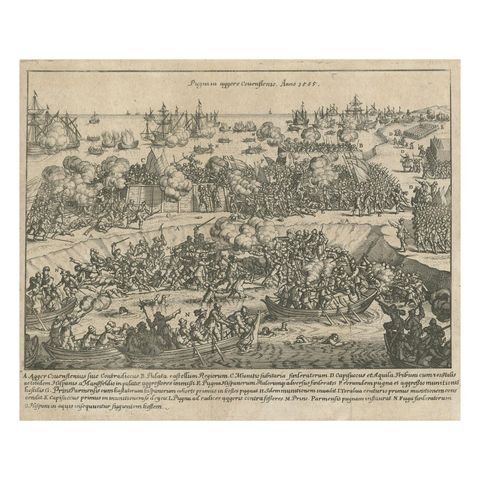
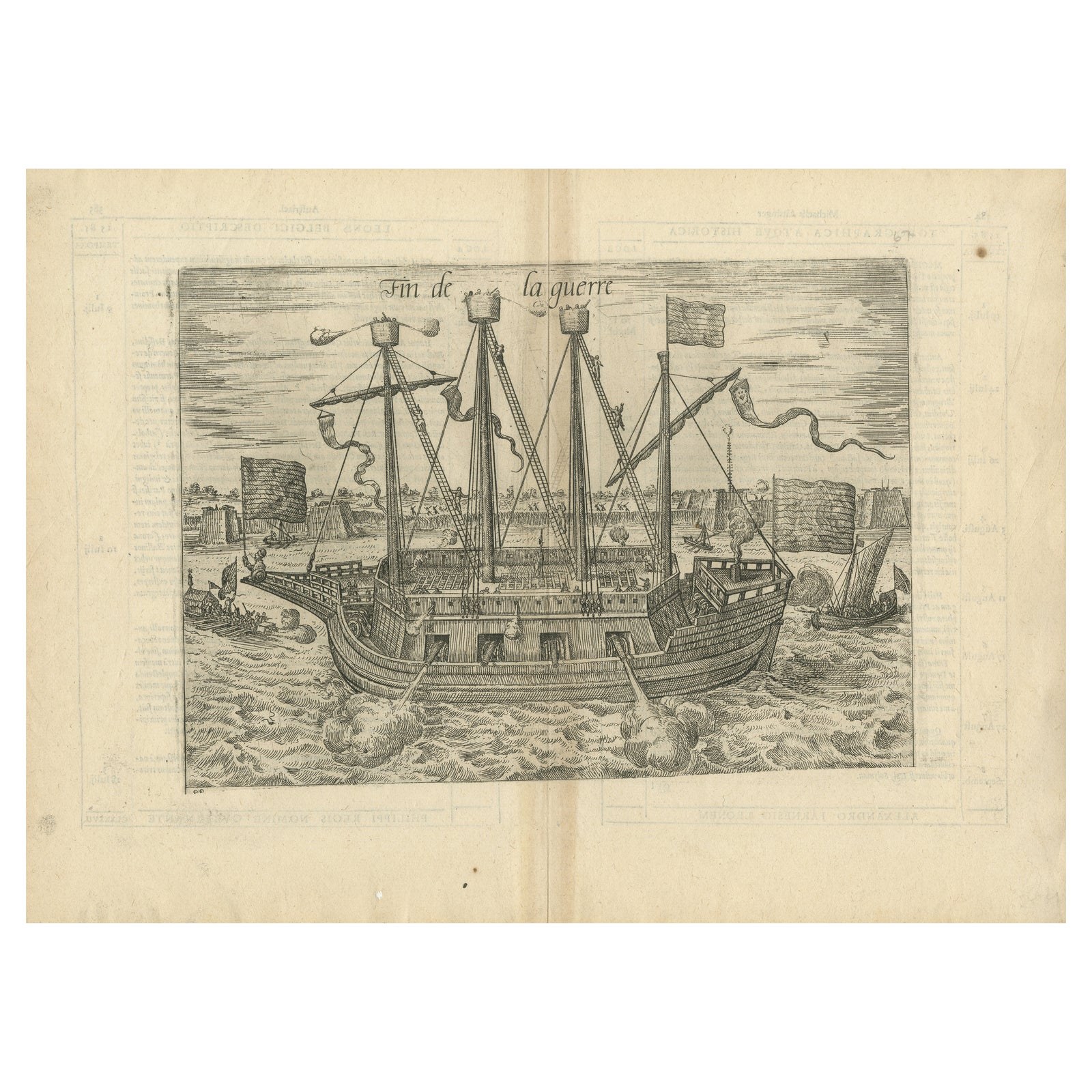
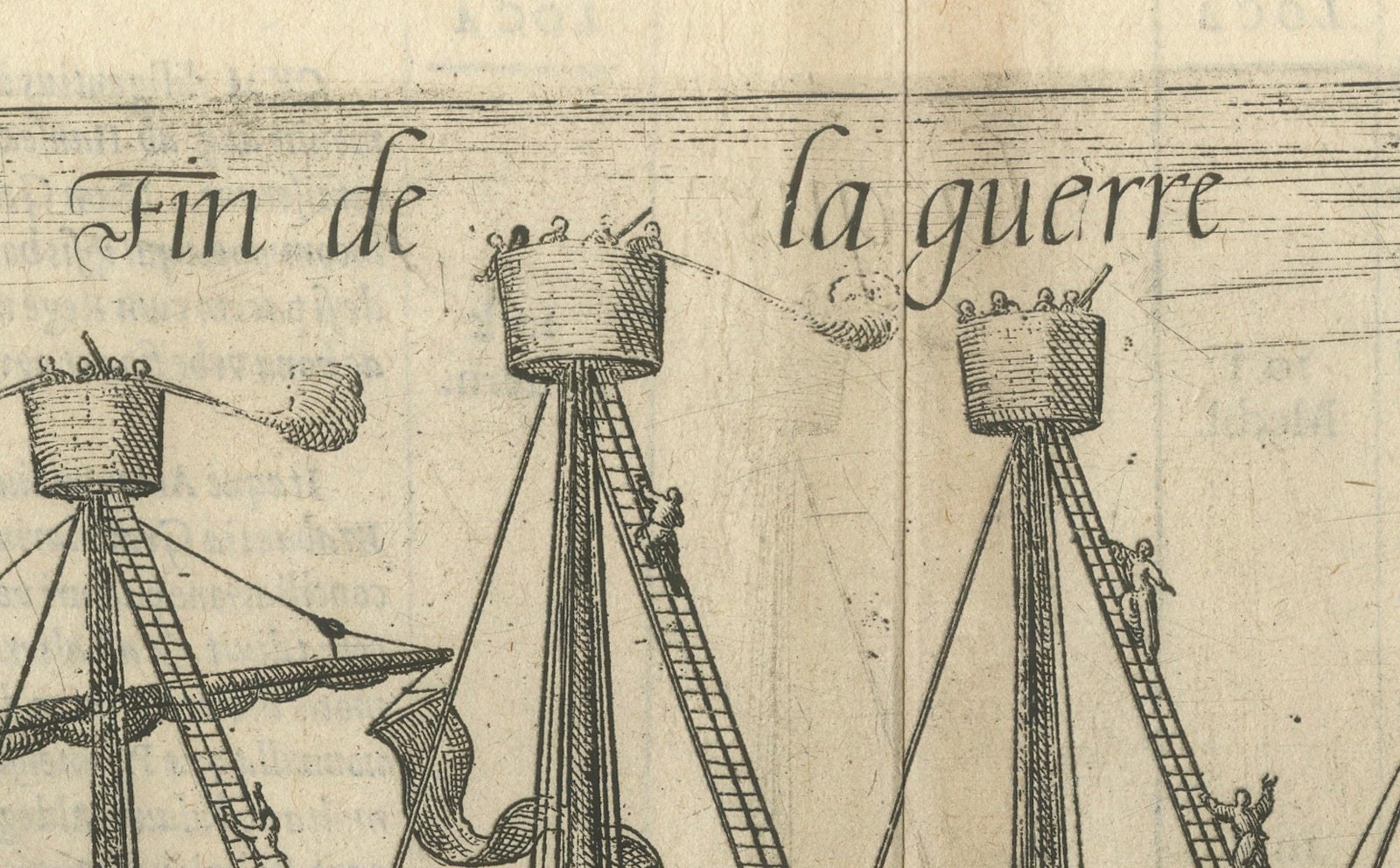
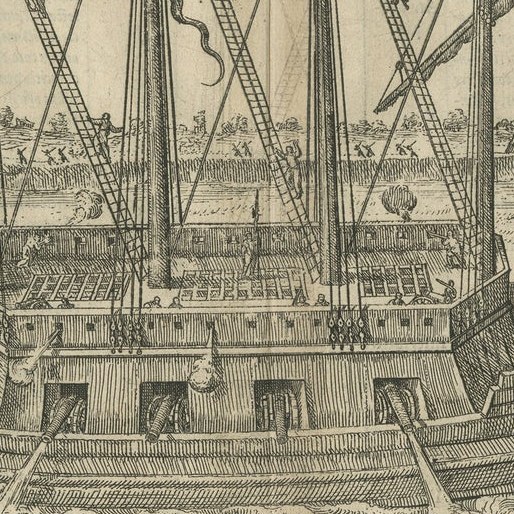
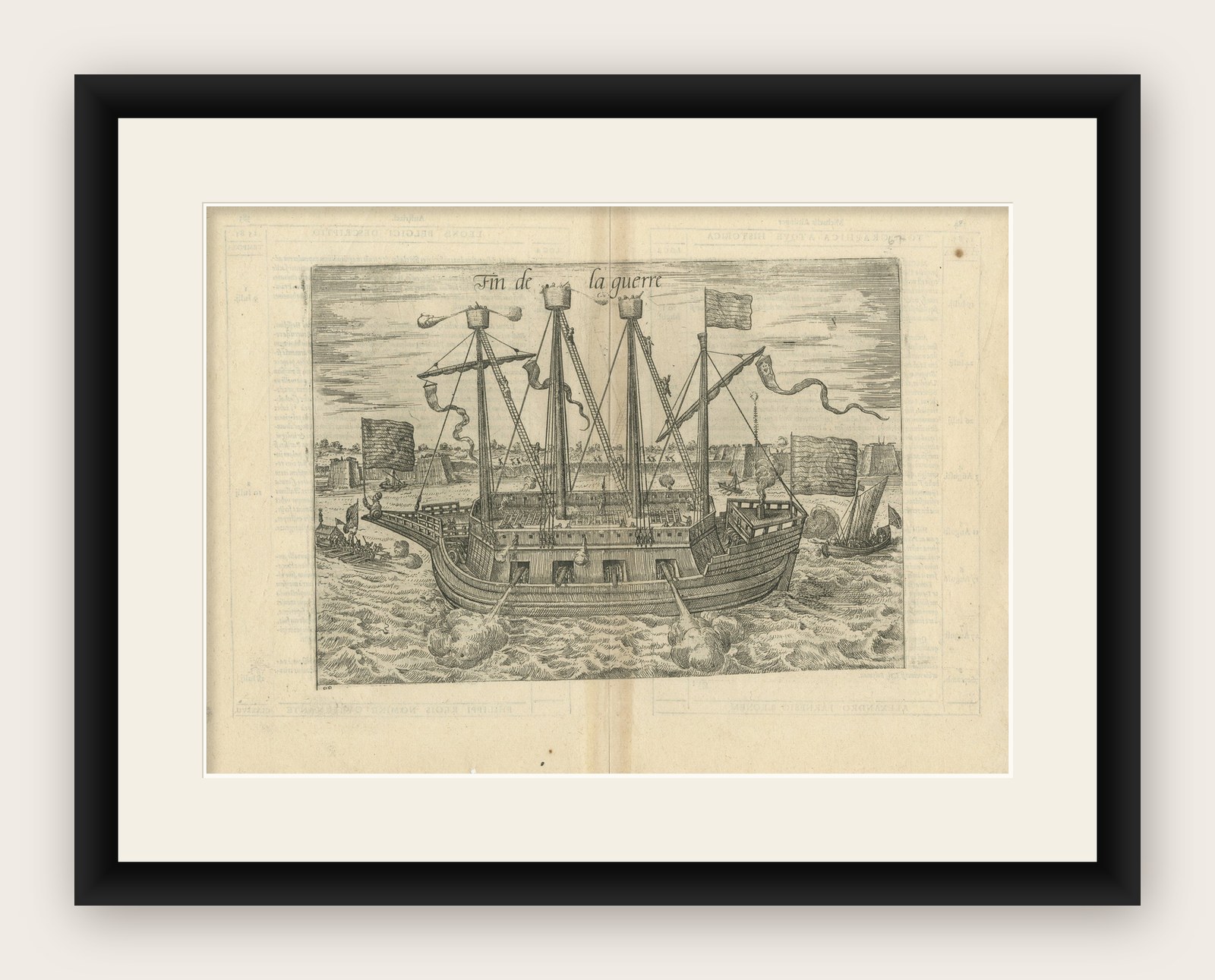
This print depicts the Antwerp warship Fin de la guerre, a massive vessel constructed during the Siege of Antwerp (1584-1585).
It is a copperplate-engraved oblique profile of the Dutch fighting ship "Fin de la Guerre". This large fortress-like, four masted ship saw action at the battle of Antwerp in 1585. The engraving is notable because the ship is much like a U.S. Civil war monitor or WWI battleship with a design emphasis on firepower and protection for the fighting forces. The vessel is shown firing cannon as it is attacked by smaller vessels including at least one small galley or galliot. Attributed to Hogenberg and Michael Aitzinger.
The engraving showcases the imposing structure of this floating fortress, which was designed to end the war by overpowering enemy fortifications. Its almost square hull, stuffed with hay and straw, and equipped with reinforced double bulwarks, made it unique. The ship had four bulletproof masts, three rudders, and twenty-four heavy cannons. The enormous ship was manned by five hundred hidden musketeers, ready to fire from their concealed positions.
The engraving portrays this ship, which was a symbol of both hope and failure for the besieged people of Antwerp. Despite its grand design and enormous costs (over one hundred thousand guilders), the ship proved to be uncontrollable due to its weight. On its maiden voyage, it became stuck in the sand near the drowned village of Oordam. Its immobility allowed the troops of the Duke of Parma to easily capture and dismantle it. The citizens of Antwerp sarcastically nicknamed the ship the Elephant, Noah’s Ark, or Lost Cost, mocking the wasted effort and resources.
This print is special because it captures a moment of inventive desperation during a critical time in the Eighty Years' War. The Fin de la guerre symbolizes the grandeur and failure of over-ambitious engineering projects in wartime, particularly when weighed down by financial and practical miscalculations.
Key words for discovery:
Antwerp, Siege of Antwerp, Fin de la guerre, 1585, warship, naval history, Eighty Years' War, historical engraving, floating fortress, Duke of Parma, military history