Close-ups
Framed and on the wall


Frame and rooms are illustrations of how the piece could look; it is sold unframed unless the description says otherwise.
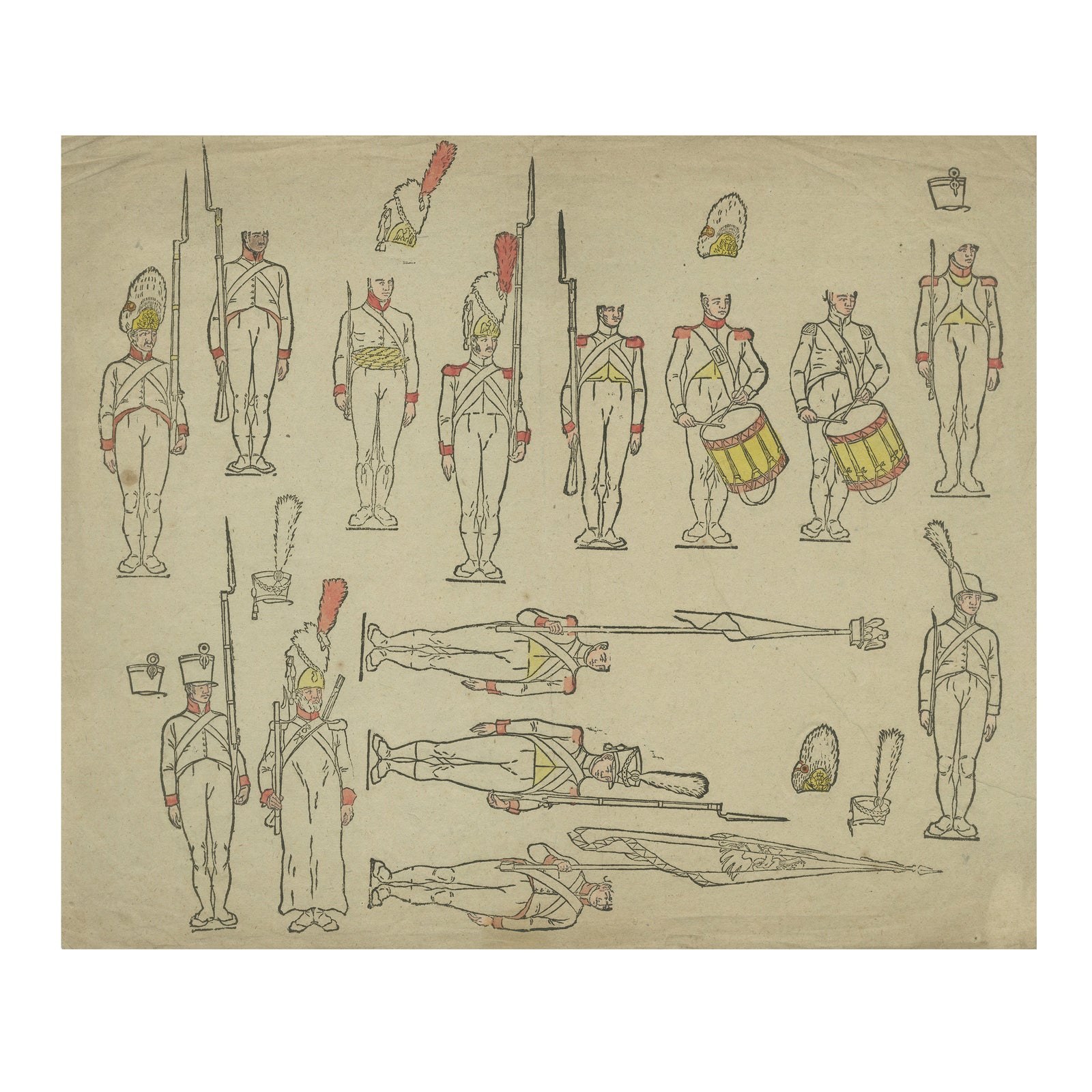
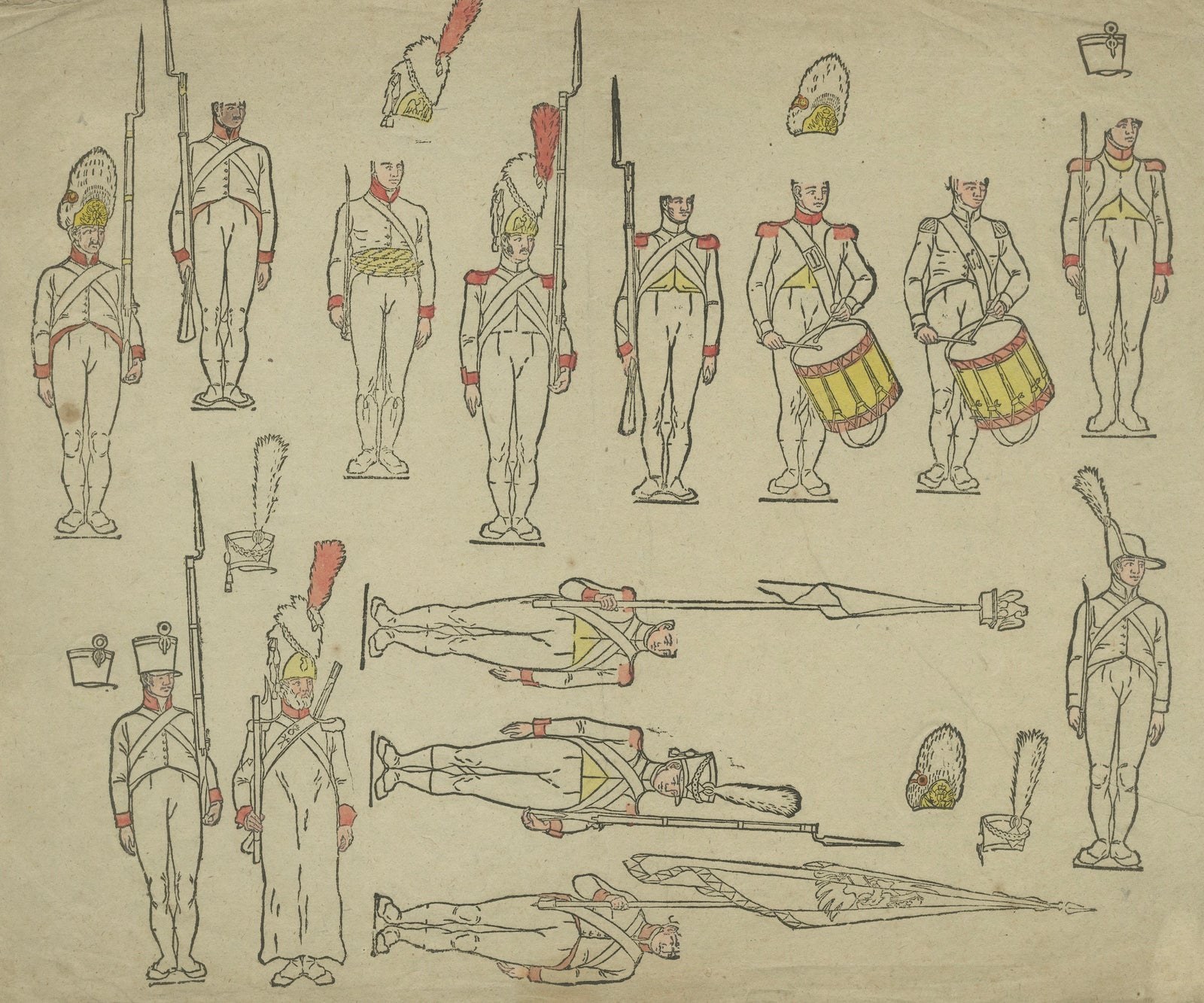
French Revolutionary Infantry, Uniforms, Drummers and Standards, c.1795
$325
€290 · £245
Original print, not a reproduction.
Ships worldwide from the Netherlands, flat, insured and tracked. 14-day returns. To buy, use Ask a question and we will reserve it for you.
- Date
- 1795
- Sheet size
- 13.6 × 16.3 in (34.5 × 41.5 cm)
- Condition
- Fair. Fair overall condition. Pronounced age toning and surface wear consistent with late 18th-century paper. Minor creases, edge wear, and small losses at the margins. Hand coloring remains visible and coherent.
- Collection
- Uniforms & regiments
- Era
- 1790 to 1815, Napoleonic wars
- Stock no.
- f_47986342
French Revolutionary Infantry, Uniforms, Drummers and Standards, c.1795
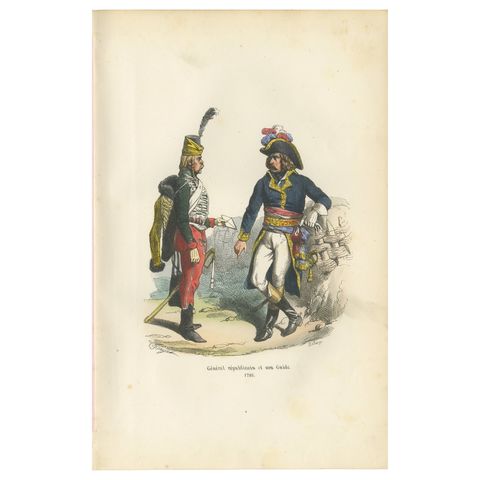
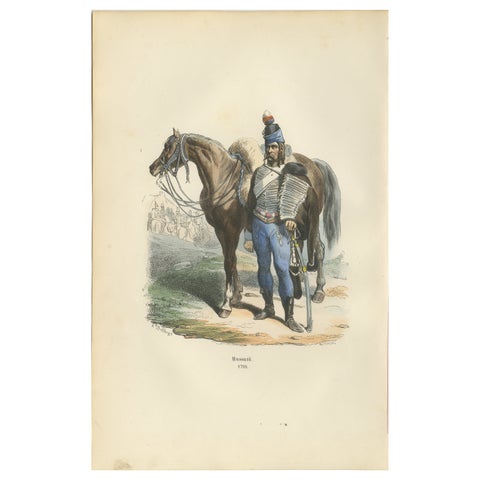
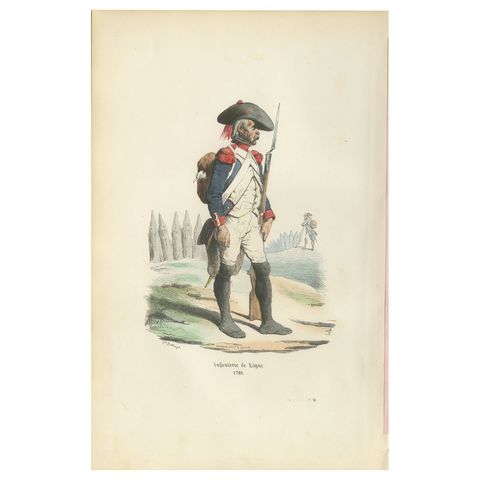
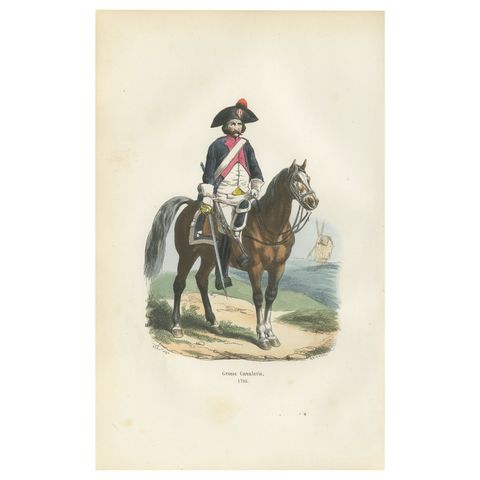
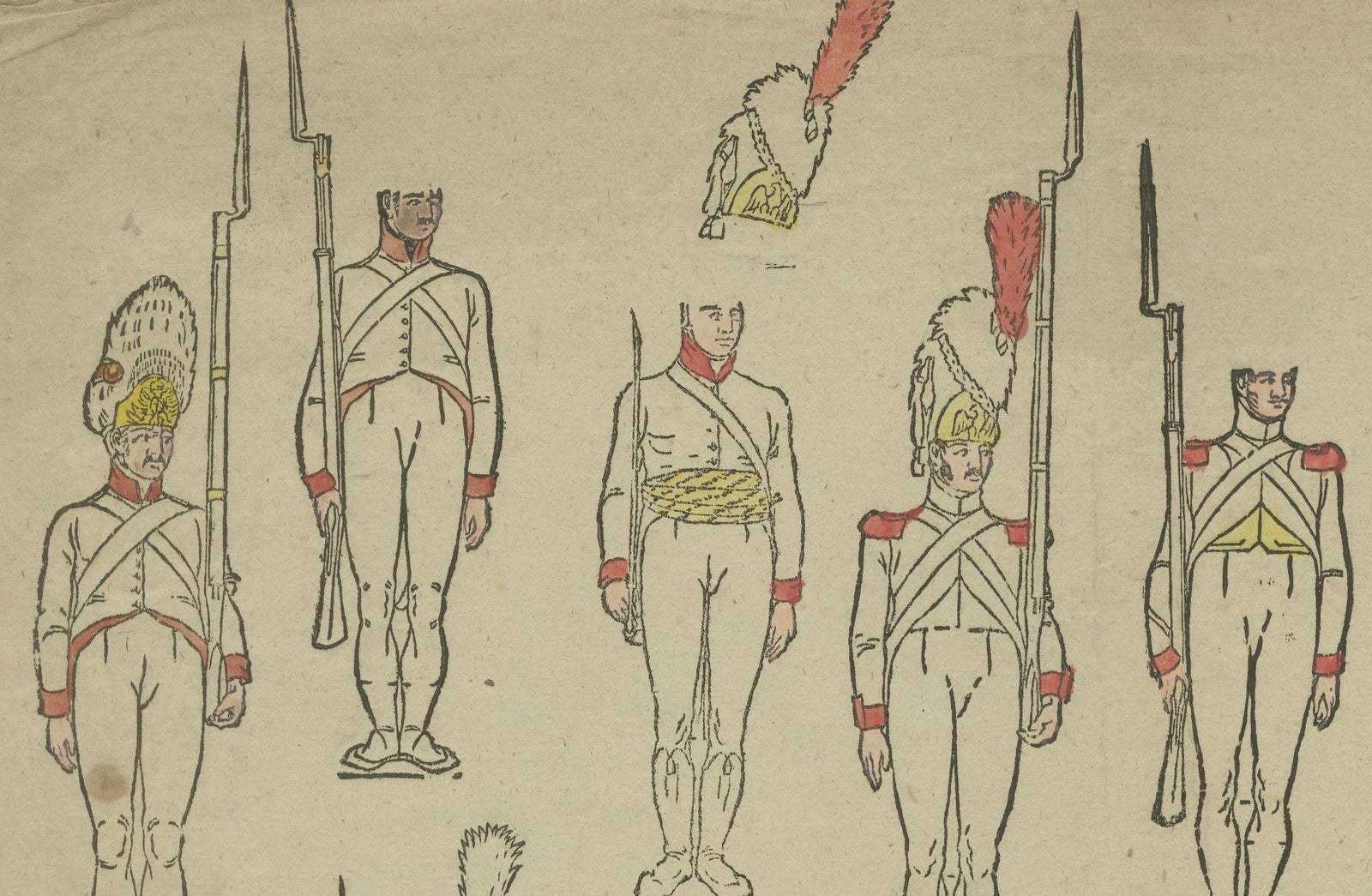
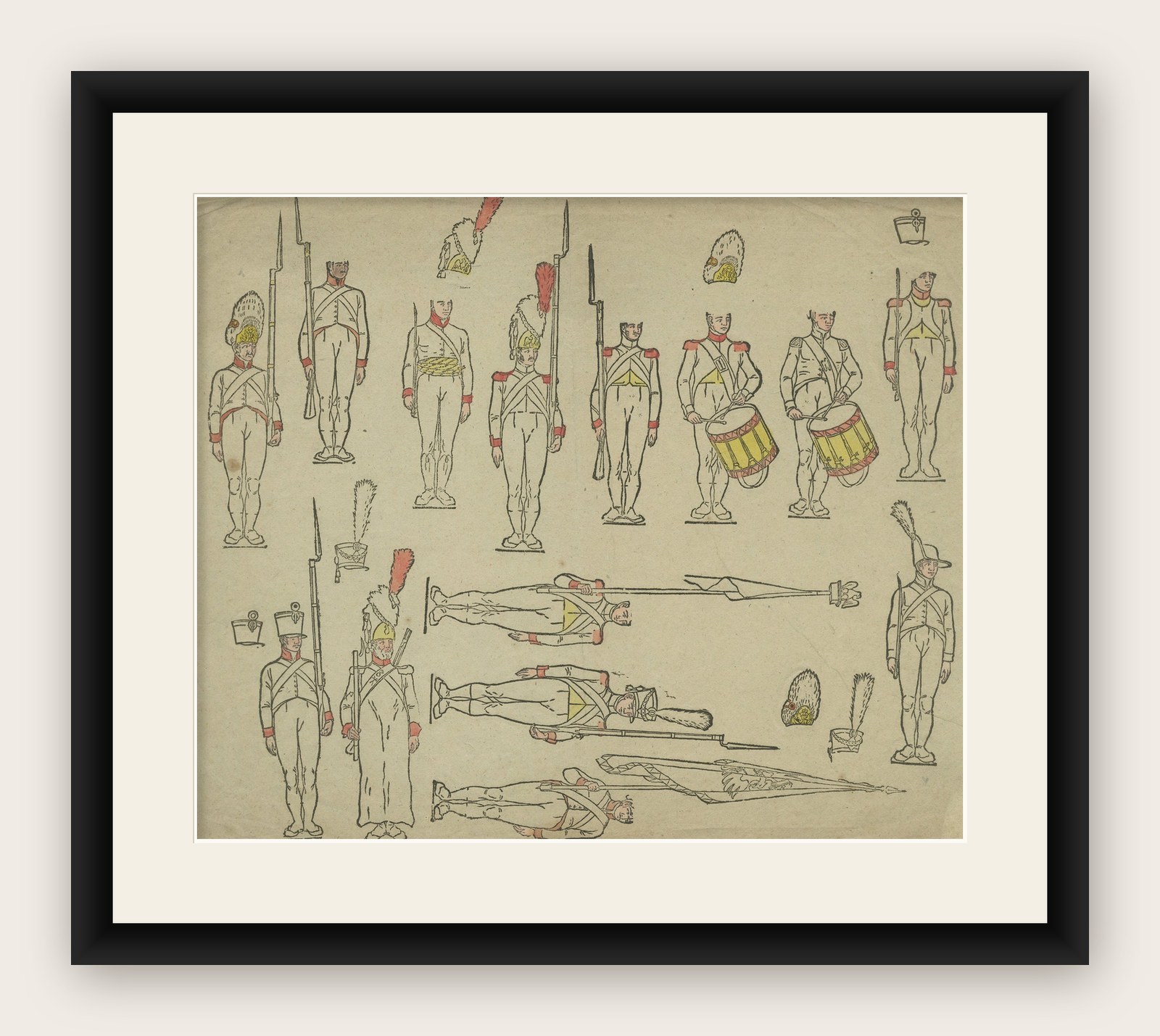
This rare and finely hand-colored military print illustrates French Revolutionary infantry uniforms and equipment from the late 18th century, presenting soldiers, drummers, and standard bearers in a systematic and instructional layout. Produced during the Revolutionary period, the sheet reflects the transitional moment in French military dress as the ancien régime gave way to the citizen army of the Republic.
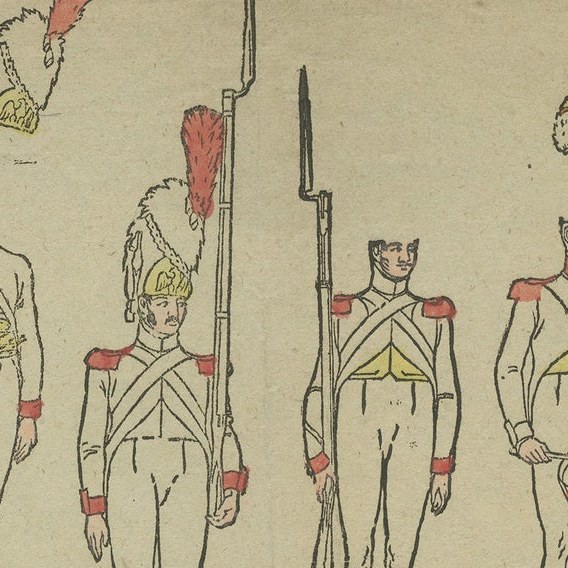
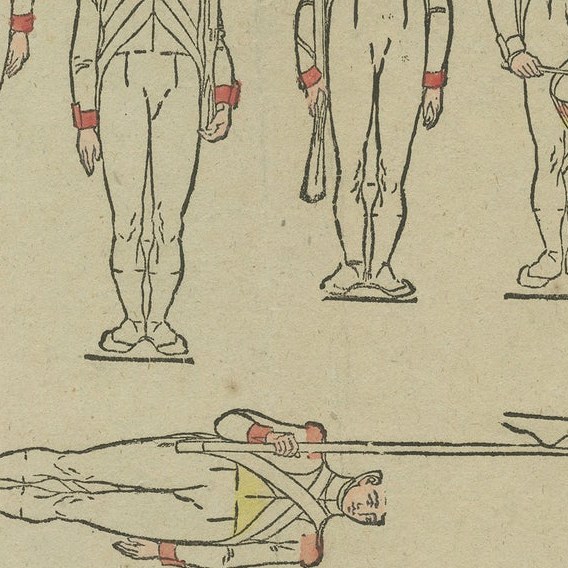
The composition displays multiple figures arranged across the sheet, each shown in full length and isolated for clarity. Infantrymen are depicted standing at attention with muskets and bayonets, while drummers appear with regulation drums and accoutrements. Several figures are shown alongside or accompanied by regimental standards and equipment details, allowing close study of dress, posture, and ceremonial objects. Additional details such as shakos, plumes, belts, and headgear are drawn separately, emphasizing their importance within the uniform system.
The soldiers wear light-colored coats with red facings and crossbelts, typical of the Revolutionary period, before the full standardization of Napoleonic uniforms. The restrained hand coloring highlights essential elements without overwhelming the composition, underscoring the print’s documentary purpose. Such sheets were commonly used as visual references for officers, military administrators, and collectors, serving both educational and archival functions.
This type of early Revolutionary uniform print is scarcer than later Napoleonic examples, as many were produced quickly and on modest paper for practical use rather than long-term preservation. As a result, surviving examples provide valuable insight into the evolving identity of the French army during one of the most transformative periods in European military history.
The print is particularly appealing to collectors of Revolutionary and Napoleonic material, military uniform studies, early French iconography, and historical costume. Its balanced composition and muted palette also make it a refined decorative object, suitable for both scholarly collections and elegant interiors.
Condition
Fair overall condition. Pronounced age toning and surface wear consistent with late 18th-century paper. Minor creases, edge wear, and small losses at the margins. Hand coloring remains visible and coherent. Overall an honest and attractive survival of a working military reference print.
Framing tips
A wide, neutral mat in off-white or light beige will complement the aged paper and separate the figures visually. A simple dark wood or natural walnut frame enhances the historical character without distraction. Museum or UV-filtering glass is recommended due to the paper’s age and sensitivity.
Technique: Hand-colored engraving
Maker: French school, late 18th century, c.1795