Close-ups
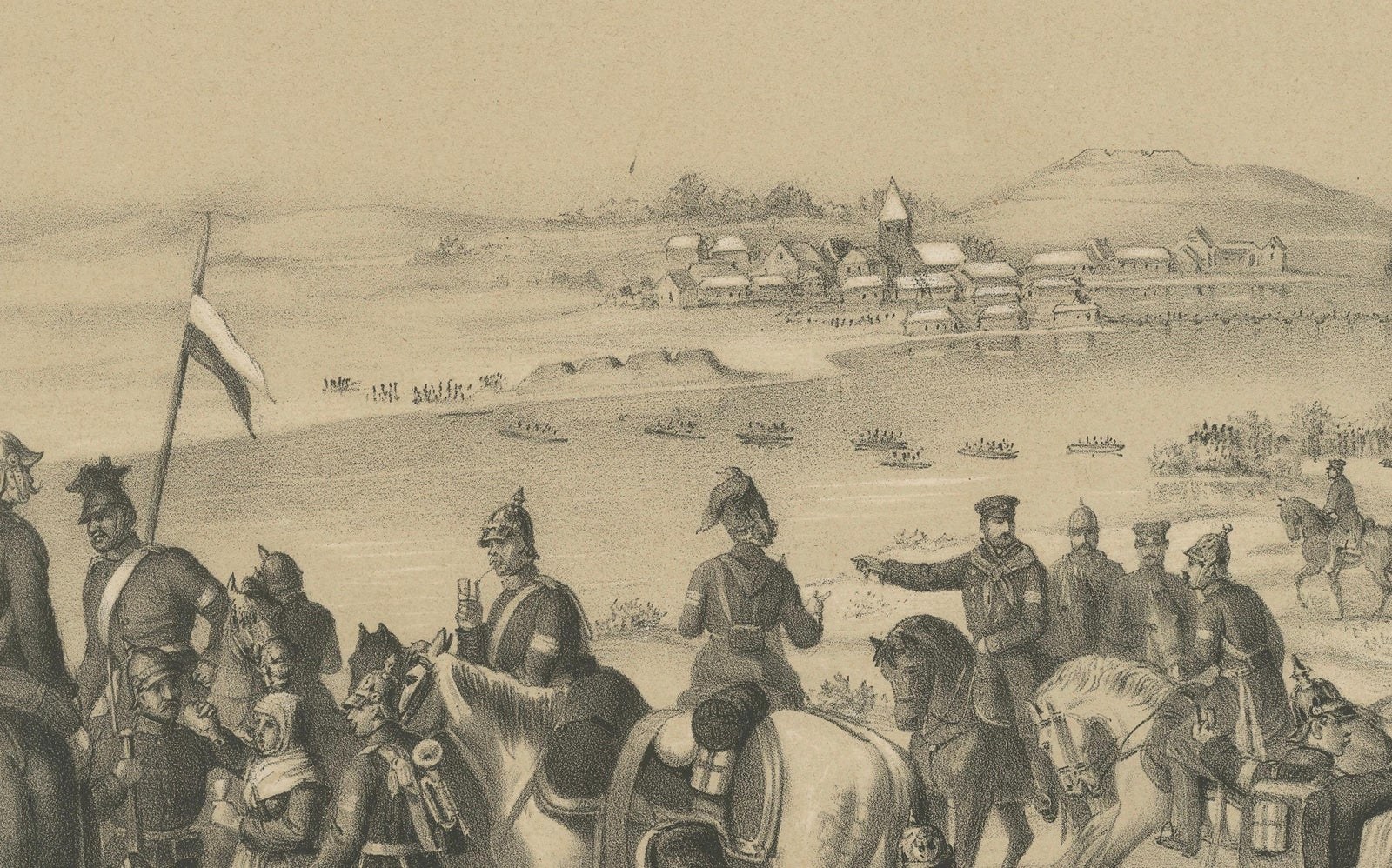
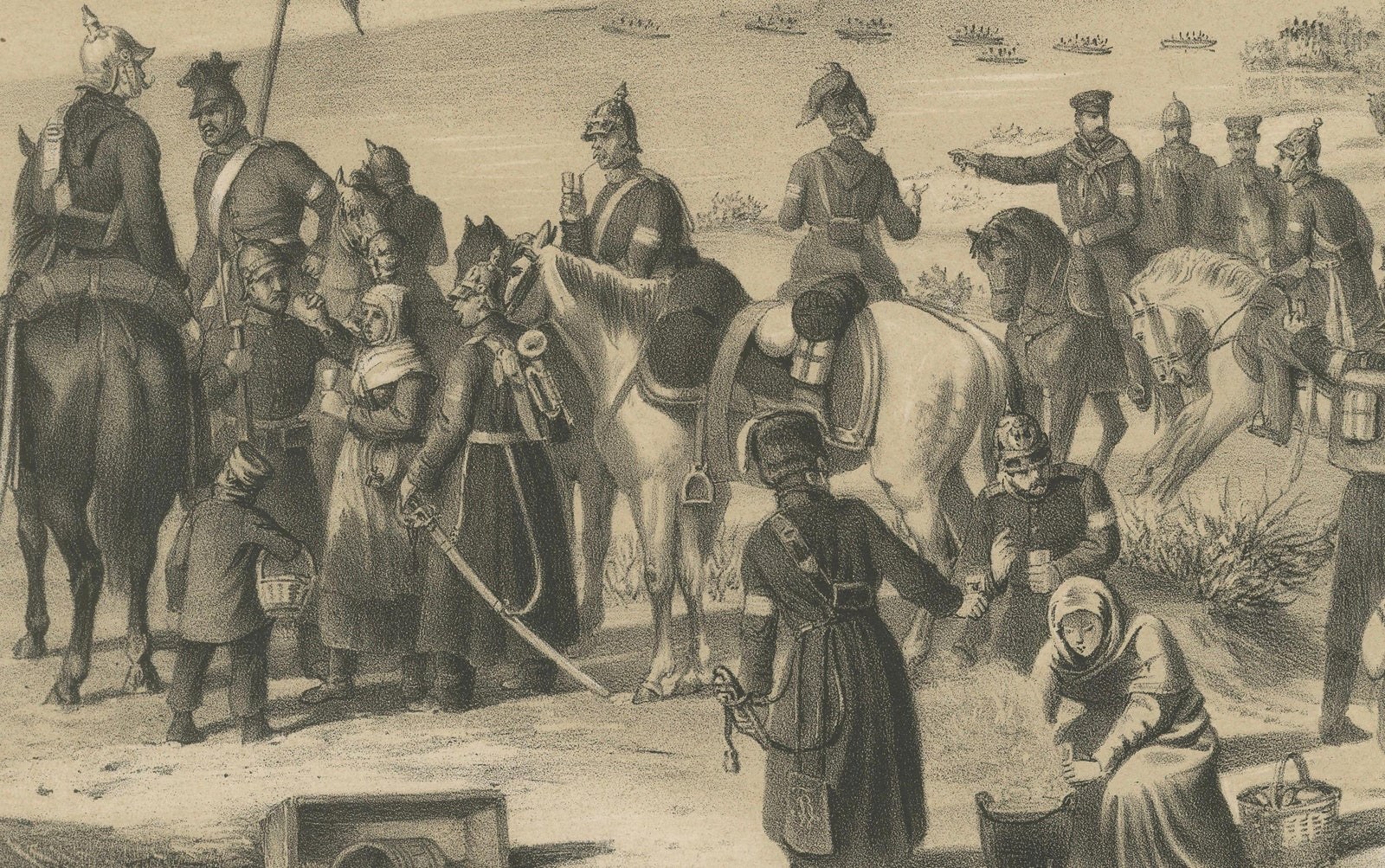
Framed and on the wall
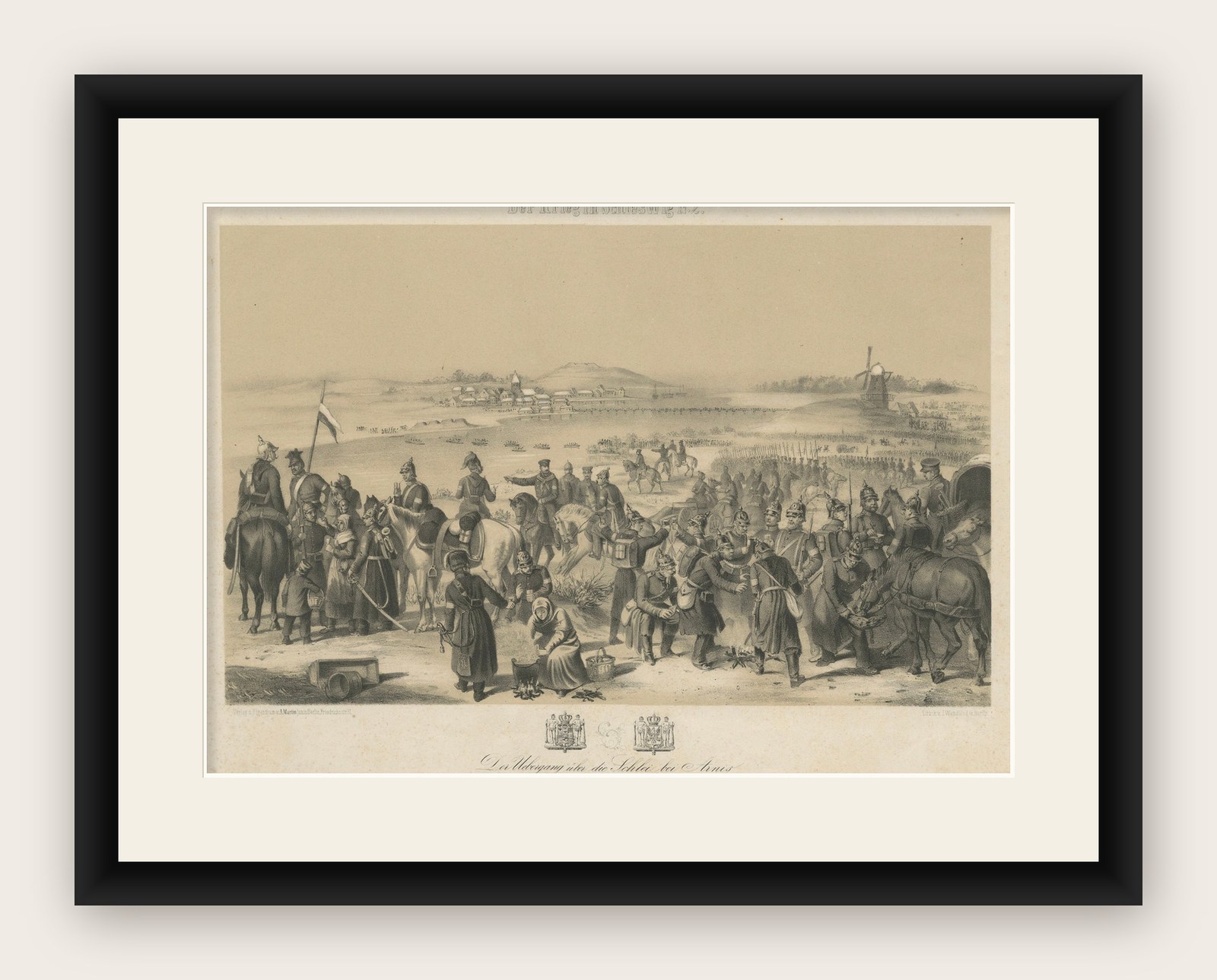

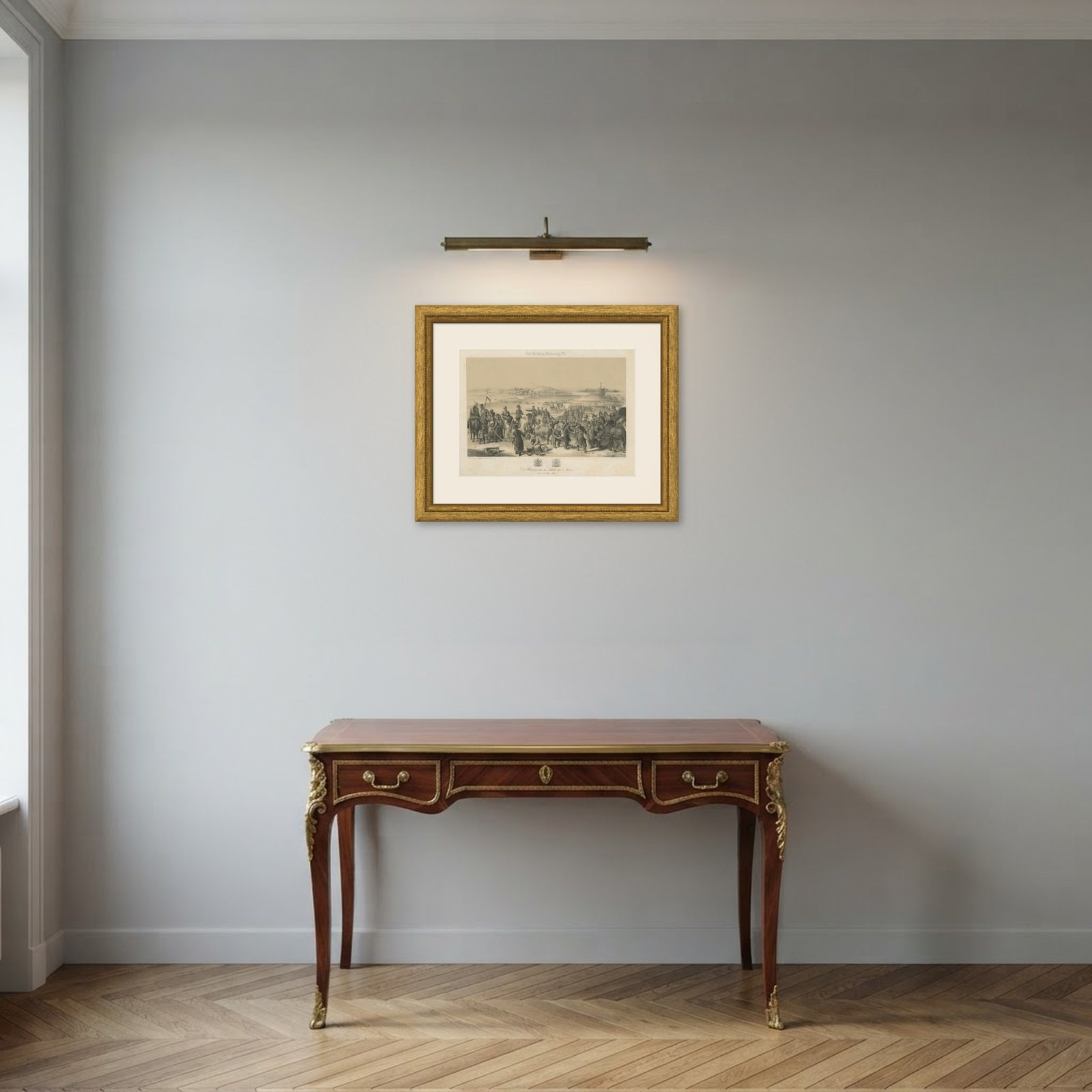
Frame and rooms are illustrations of how the piece could look; it is sold unframed unless the description says otherwise.
German Lithograph of the Schleswig War Crossing at the Schlei Near Arnis, 1864
£285£20030% off
$260 · €238
Original print, not a reproduction.
Ships worldwide from the Netherlands, flat or rolled, insured and tracked. 14-day returns.
- Date
- 1864
- Sheet size
- 14.4 × 18.9 in (36.5 × 48 cm)
- Condition
- Good. Overall impression with mild spotting and light age toning around the margins; image area clean; no major tears or repairs. Suitable for framing.
- Collection
- Battle scenes
- Era
- 1816 to 1899, Empire and industry
- Stock no.
- BG-14177-4
What the condition grades mean
- Excellent
- Bright and clean, with no faults worth mentioning.
- Very good
- Only light signs of age, such as faint toning.
- Good
- Normal signs of age for a sheet of this period: toning, some foxing, small marks or neat old repairs.
- Fair
- Clear faults such as staining, tears or repairs, priced to match.
Every fault we see is written in the condition note, and the whole sheet is shown uncropped in the photos.
Schleswig War Lithograph Crossing of the Schlei Near Arnis German Military 1864
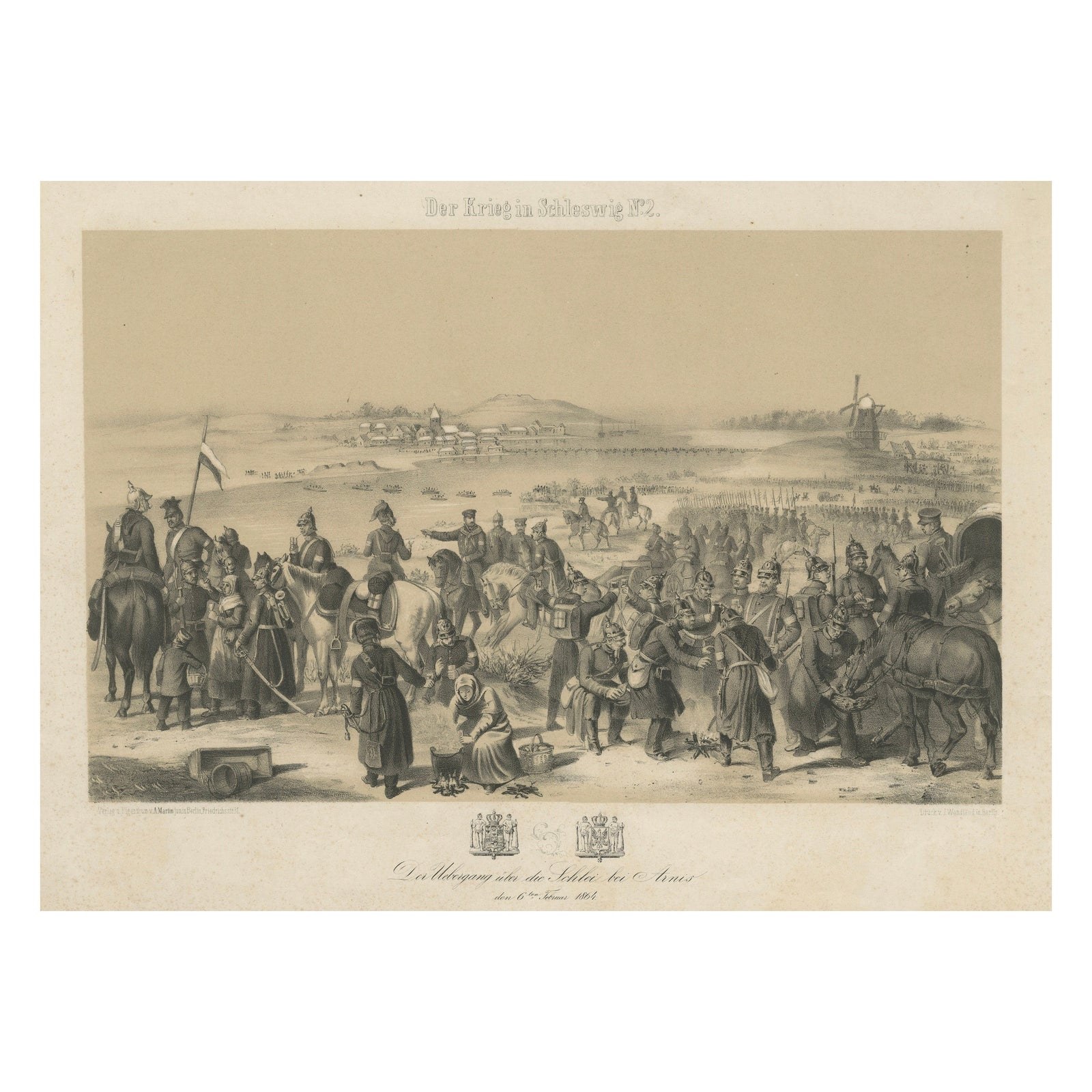
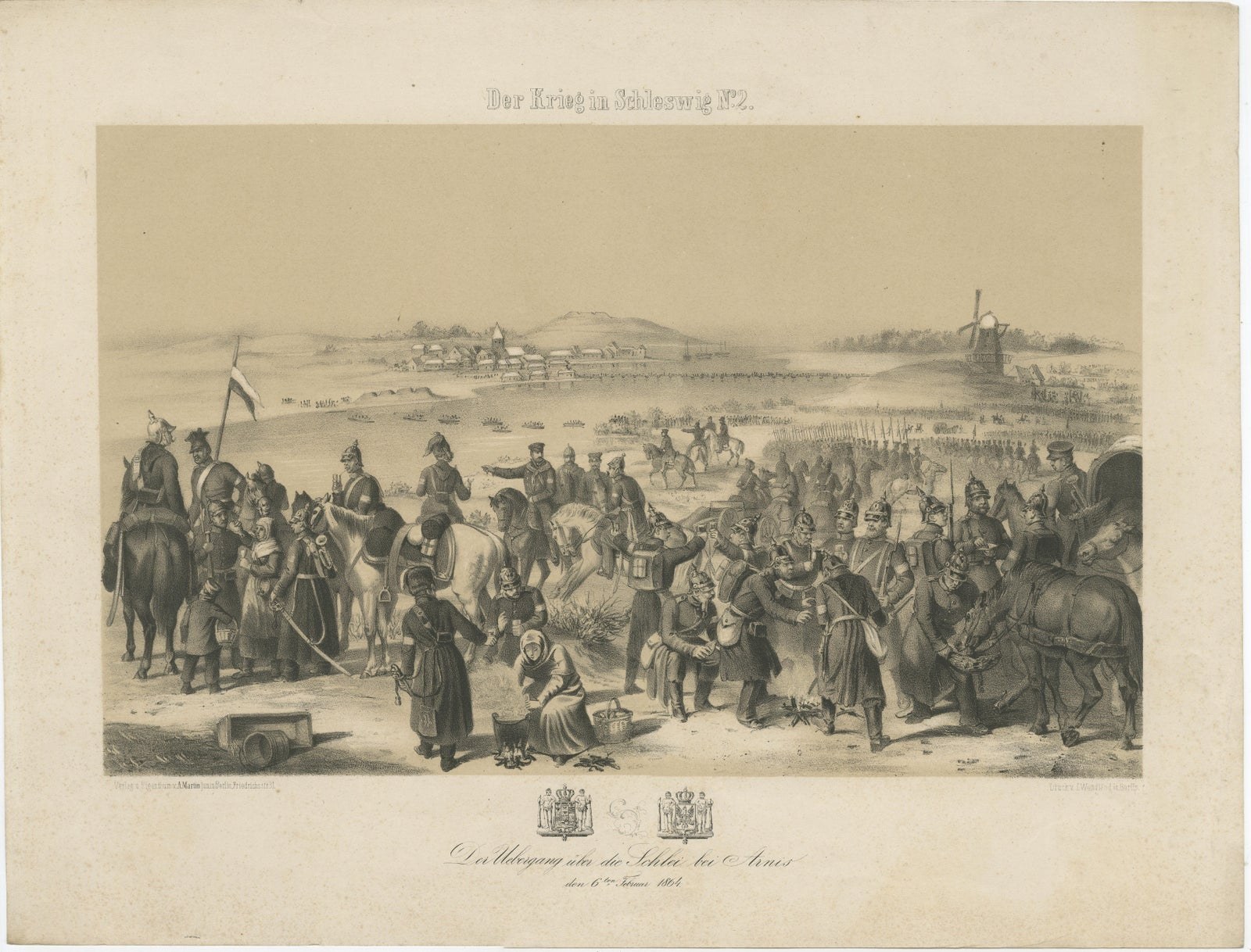
A detailed large-format lithograph documenting an episode from the Second Schleswig War of 1864. The scene shows Prussian forces preparing to cross the Schlei near the town of Arnis on 6 February 1864. Soldiers, officers, cavalry units and supply wagons are arranged across a broad landscape, with distant troop formations and a windmill marking the northern terrain of Schleswig-Holstein. The composition belongs to a series titled “Der Krieg in Schleswig,” published shortly after the campaign and issued to commemorate key actions in the conflict.
The print captures the mixture of winter hardship, military routine and logistical coordination characteristic of the Schleswig War. Uniform details, horses and equipment are rendered with precision, while the tinted background creates depth across the sweeping panorama. These documentary lithographs were produced in Berlin in the mid-19th century and remain sought after by collectors of military history and Northern European historical prints.
Framing: Best in a thin black, charcoal, or walnut frame with a pale archival mat to balance the cool tones of the lithograph. Museum glass recommended to reduce reflection and highlight fine detail.
Technique: Lithograph
Maker: German publisher, after eyewitness sketches, c.1864