Framed and on the wall
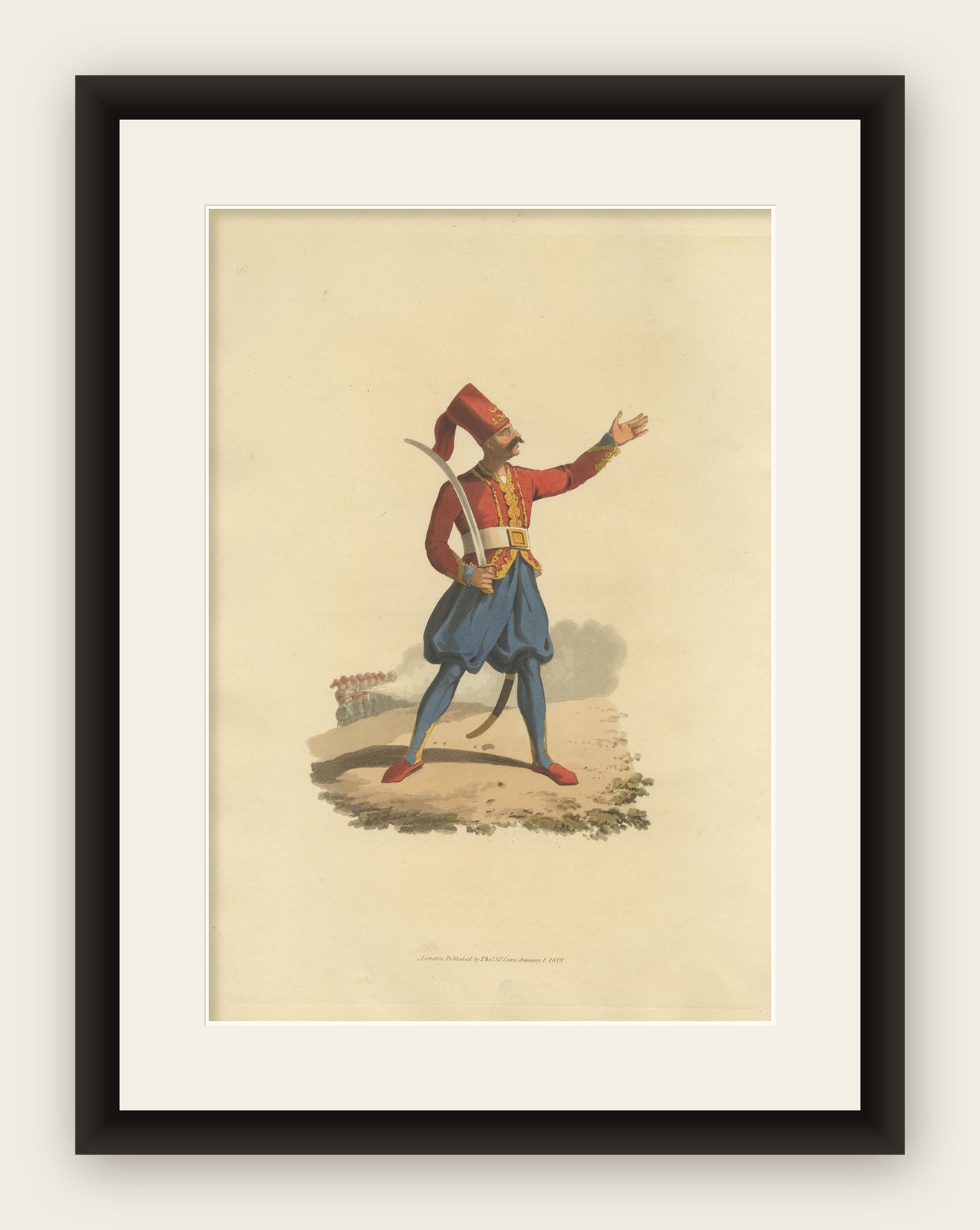


Frame and rooms are illustrations of how the piece could look; it is sold unframed unless the description says otherwise.
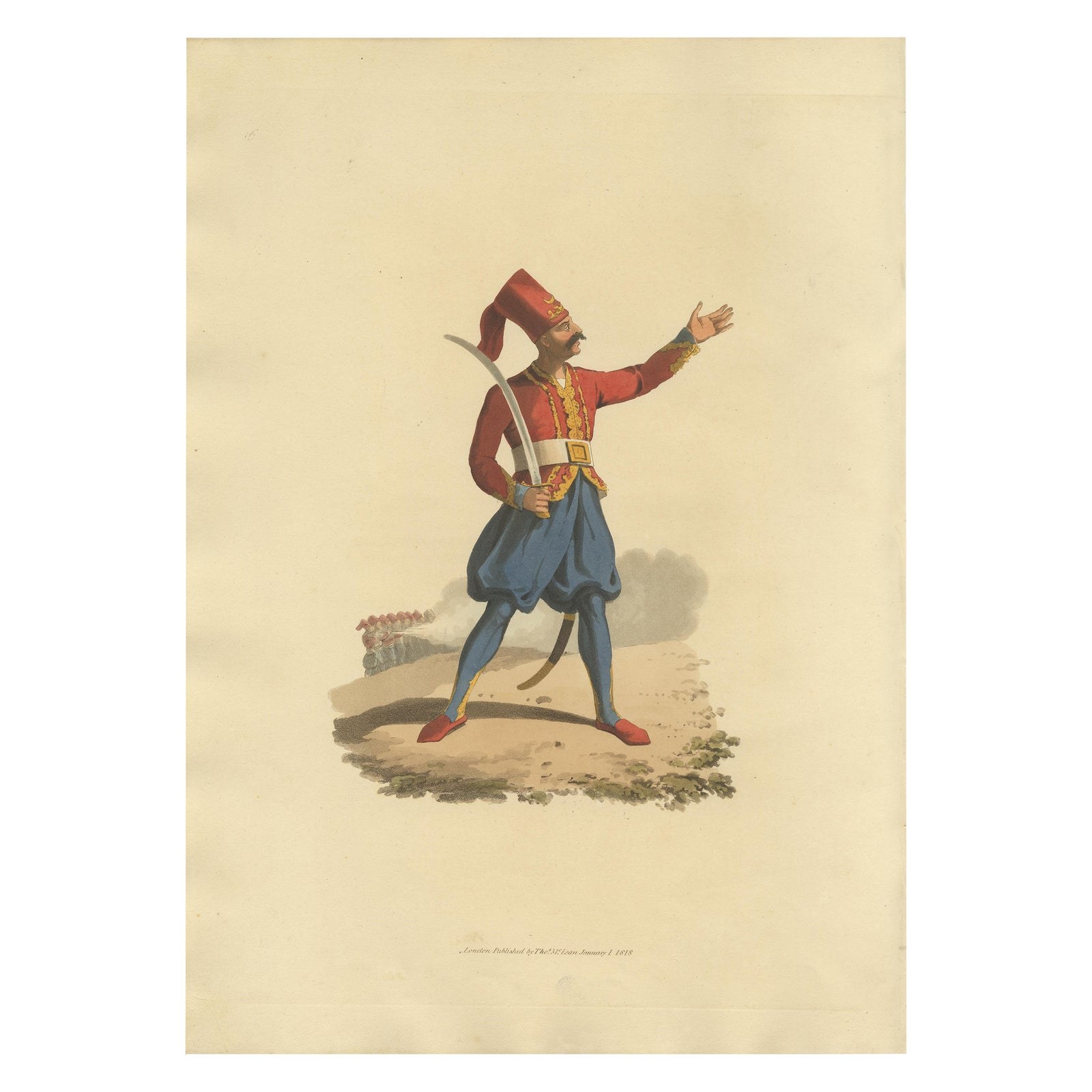
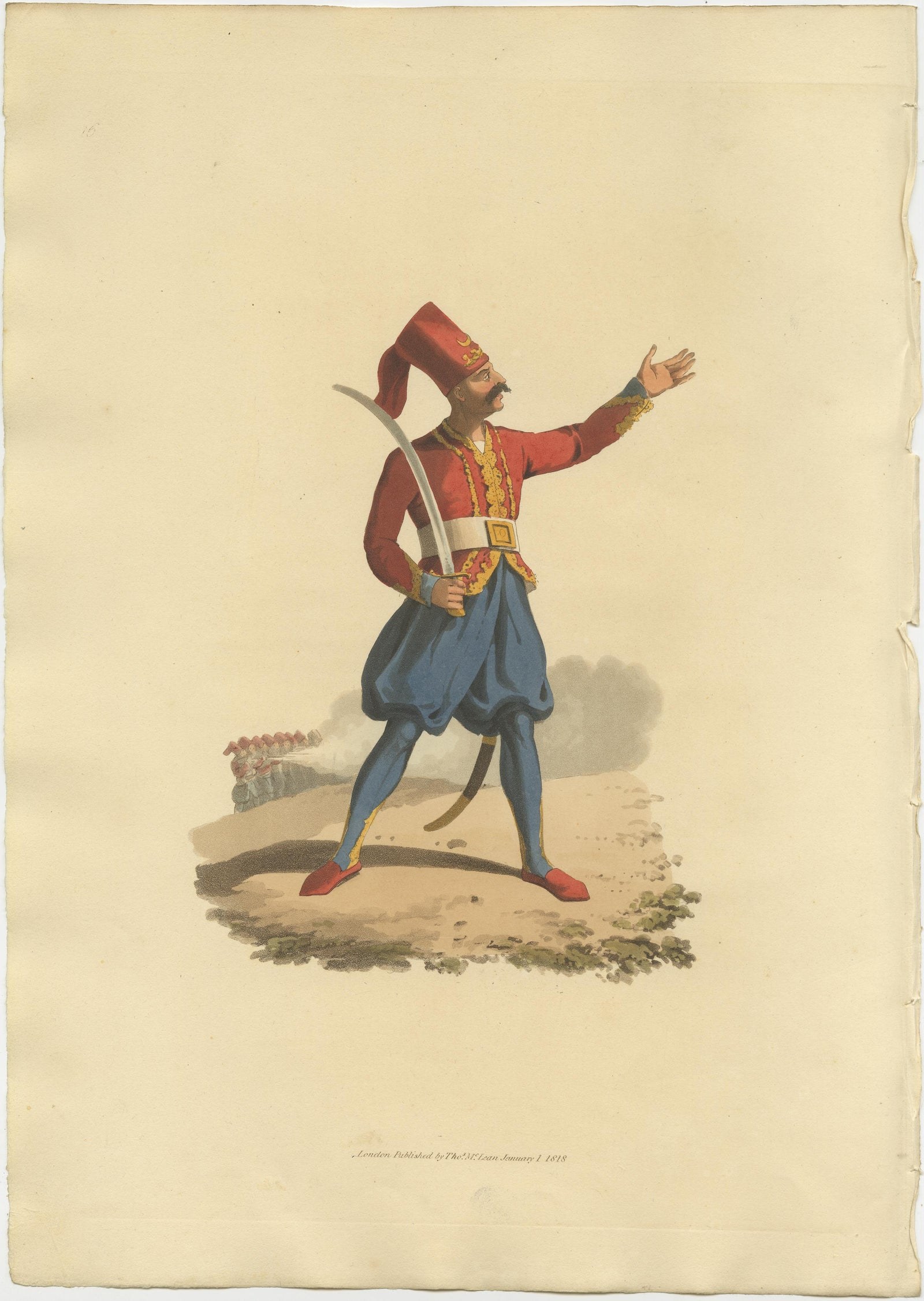
Hand-Colored Aquatint of European Infantry Officer, 1818
$730
€650 · £550
Original print, not a reproduction.
Ships worldwide from the Netherlands, flat, insured and tracked. 14-day returns. To buy, use Ask a question and we will reserve it for you.
- Date
- 1818
- Sheet size
- 15 × 10.6 in (38 × 27 cm)
- Condition
- Good. Original/contemporary hand coloring. General age-related toning, some foxing. Minor wear and soiling, blank verso. Please study image carefully.
- Collection
- Uniforms & regiments
- Era
- 1816 to 1899, Empire and industry
- Stock no.
- f_25993692
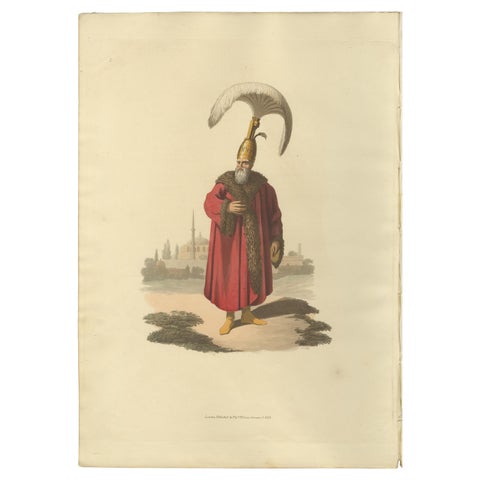
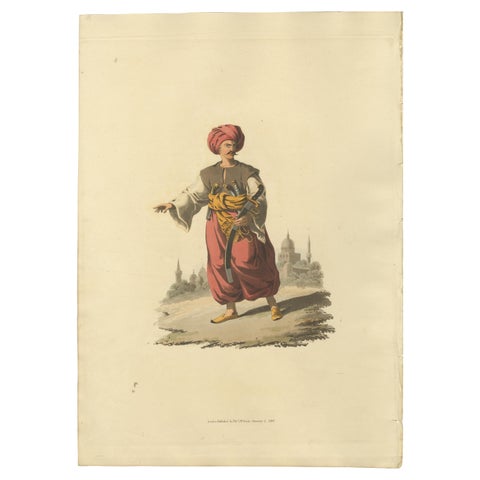
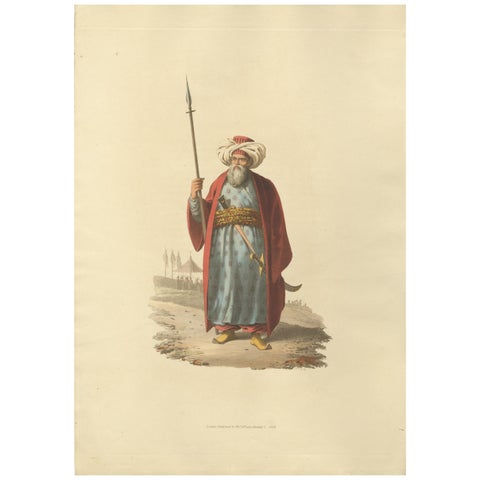
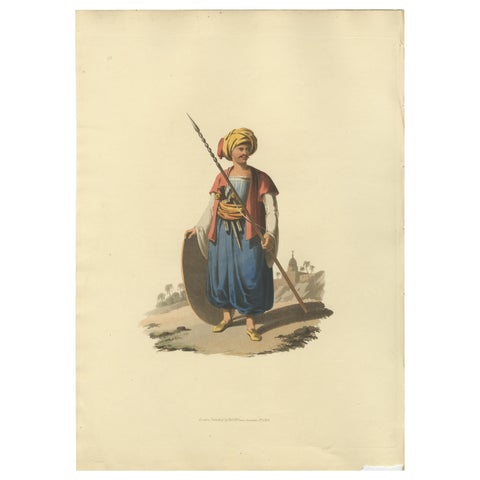
This print is from 'The Military Costume of Turkey. Illustrated by A Series of Engravings. From Drawings made on the Spot. Dedicated by Permission to His Excellency the Minister of the Ottoman Porte to his Britannic Majesty.'
London, Published by Thomas M'Lean, Haymarket, (1818). Folio. One of 29 fine handcoloured aquatint plates . Very light offsetting from plate. The original accompanying text of this print is as follows:
'In the year 1796, the Turkish military force was improved, by a levy of twelve thousand men, who were armed and instructed in a manual exercise and field movements, on the principles of those adopted in Great Britain. It seems to have been the intention to detach them as much as possible from the Janizaries, on whose mutinies they would act as a check, since it was resolved they should belong nominally to the corps of Bostangis; at home, they wear the large red cap, which distinguishes that body; but on service, they wear a lighter one, as being better suited to field duty.'