Framed and on the wall

Frame and rooms are illustrations of how the piece could look; it is sold unframed unless the description says otherwise.
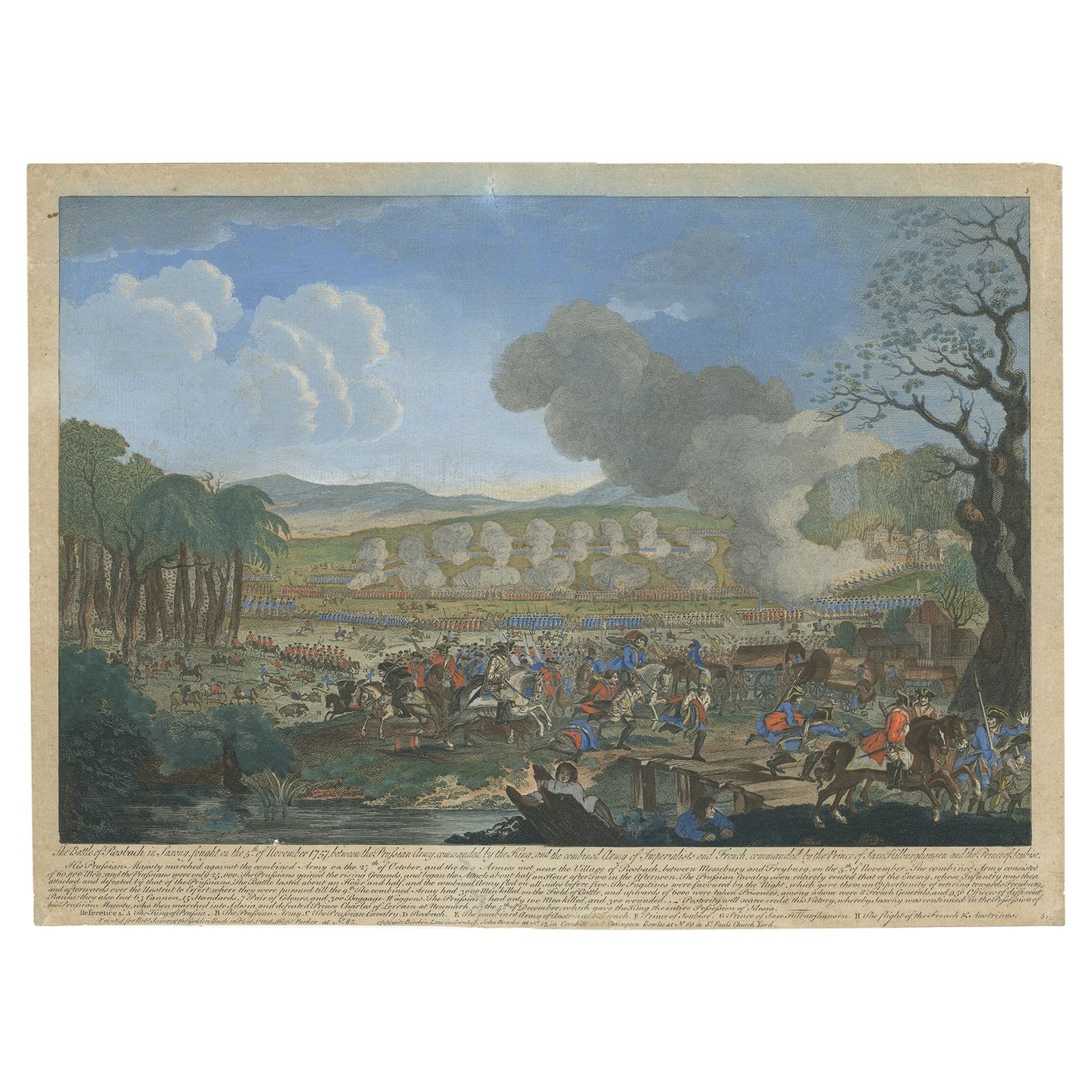
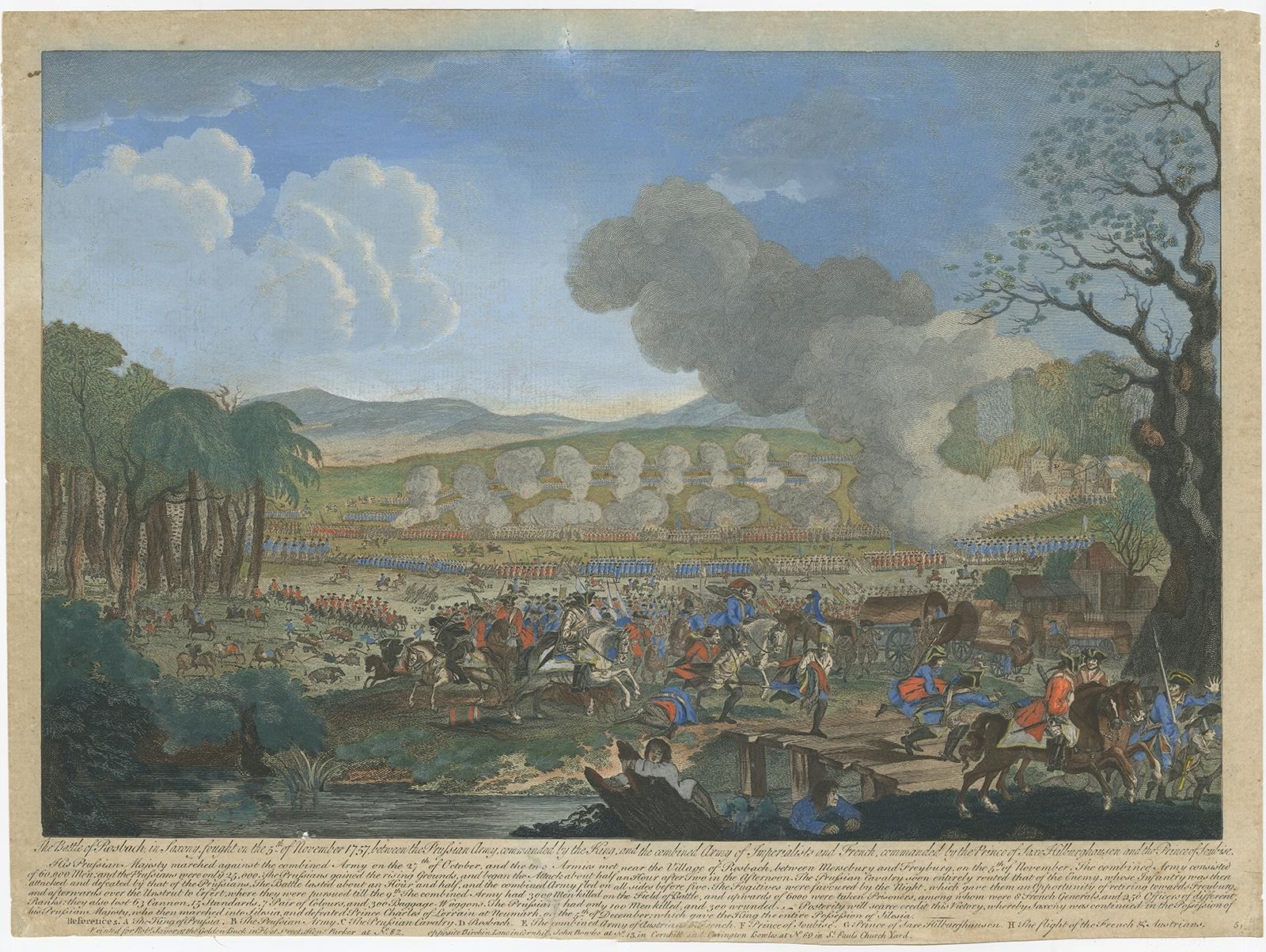
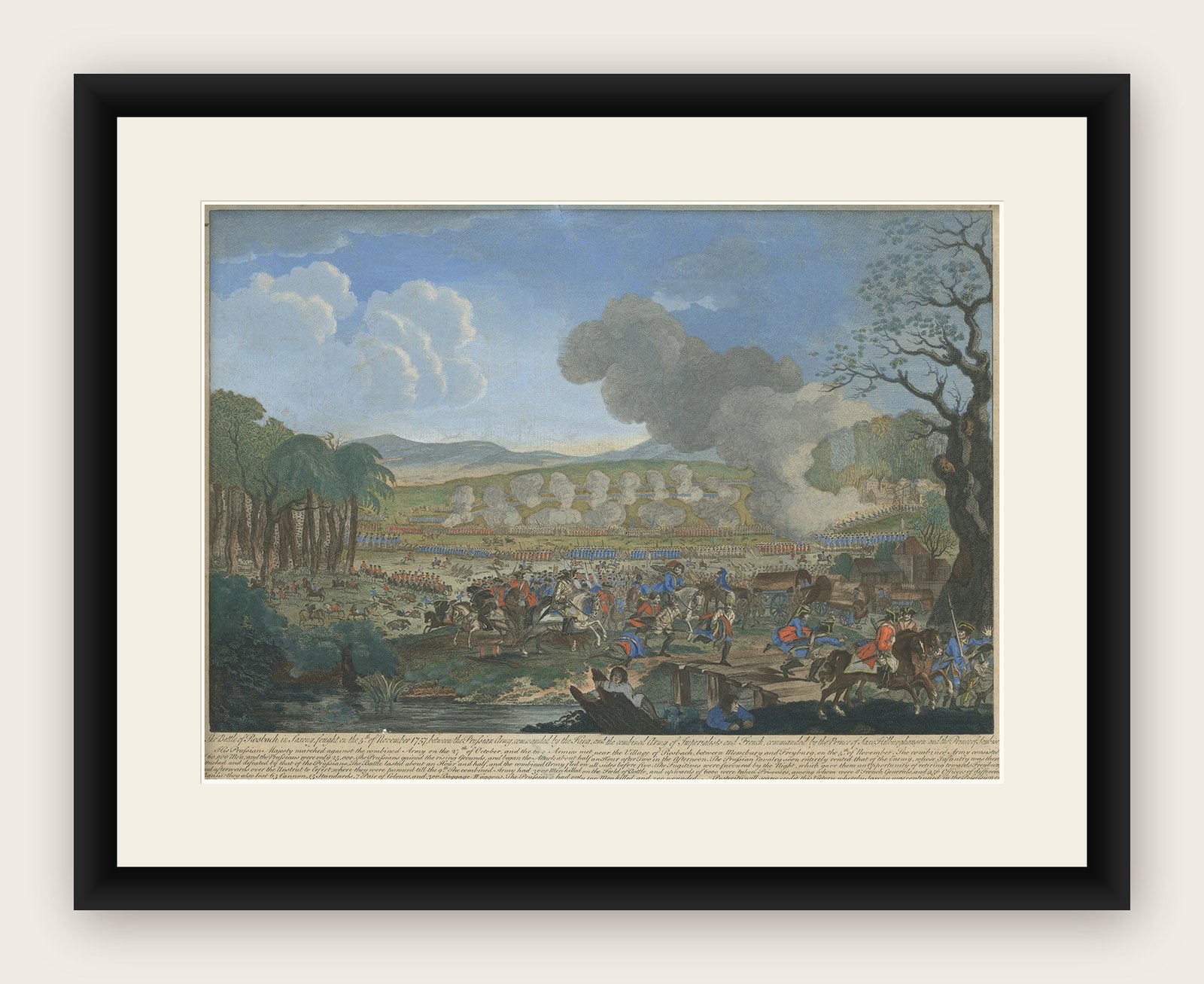
Old Battle Print of Rossbach in Prussian Saxony, ca.1790
$935
€830 · £705
Original print, not a reproduction.
Ships worldwide from the Netherlands, flat, insured and tracked. 14-day returns. To buy, use Ask a question and we will reserve it for you.
- Date
- 1790
- Sheet size
- 13.8 × 18.5 in (35 × 47 cm)
- Condition
- Fair. Age-related toning.
- Collection
- Battle scenes
- Era
- 1790 to 1815, Napoleonic wars
- Stock no.
- f_26809492
Antique print titled 'The Battle of Rosbach in Saxony, fought on the 5th of November 1757 (..)'.
Antique print depicting the Battle of Rossbach in Prussian Saxony. Frederick the Great defeated the allied armies of France and the Holy Roman/Austrian Empire.
The Battle of Rossbach took place on 5 November 1757 during the Third Silesian War (1756–1763, part of the Seven Years' War) near the village of Rossbach, in the Electorate of Saxony. It is sometimes called the Battle of, or at, Reichardtswerben, after a different nearby town. In this 90-minute battle, Frederick the Great, king of Prussia, defeated an Allied army composed of French forces augmented by a contingent of the Reichsarmee (Imperial Army) of the Holy Roman Empire. The French and Imperial army included 41,110 men, opposing a considerably smaller Prussian force of 22,000. Despite overwhelming odds, Frederick employed rapid movement, a flanking maneuver and oblique order to achieve complete surprise.
The Battle of Rossbach marked a turning point in the Seven Years' War, not only for its stunning Prussian victory, but because France refused to send troops against Prussia again and Britain, noting Prussia's military success, increased its financial support for Frederick. Following the battle, Frederick immediately left Rossbach and marched for 13 days to the outskirts of Breslau. There he met the Austrian army at the Battle of Leuthen; he employed similar tactics to again defeat an army considerably larger than his own.
Rossbach is considered one of Frederick's greatest strategic masterpieces. He crippled an enemy army twice the size of the Prussian force while suffering negligible casualties. His artillery also played a critical role in the victory, based on its ability to reposition itself rapidly responding to changing circumstances on the battlefield. Finally, his cavalry contributed decisively to the outcome of the battle, justifying his investment of resources into its training during the eight-year interim between the conclusion of the War of Austrian Succession and the outbreak of the Seven Years' War.
Artists and Engravers: Printed for R. Sayer.
Condition: Fair, age-related toning. Some defects, repairs and tears. Please study image carefully.