Close-ups
Framed and on the wall
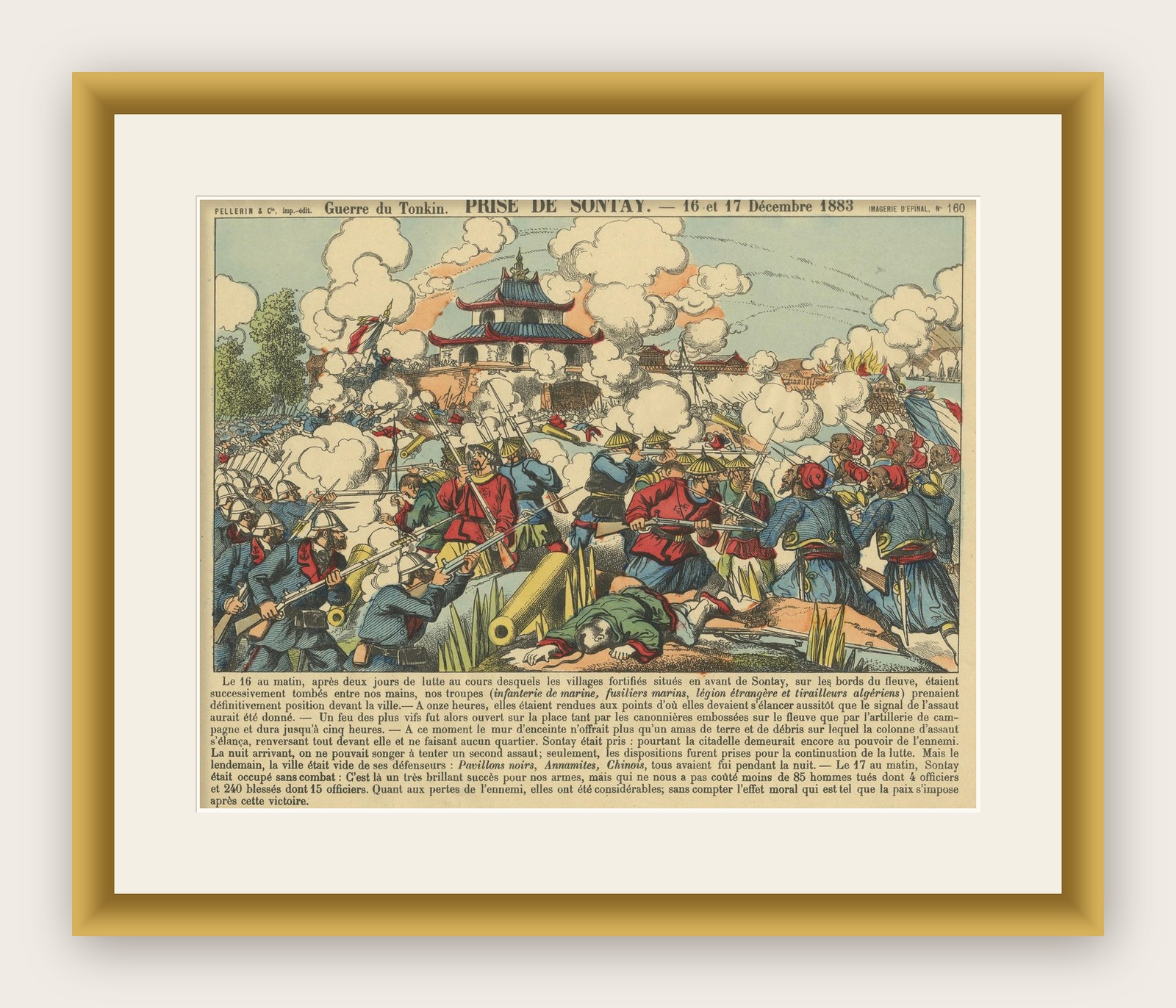
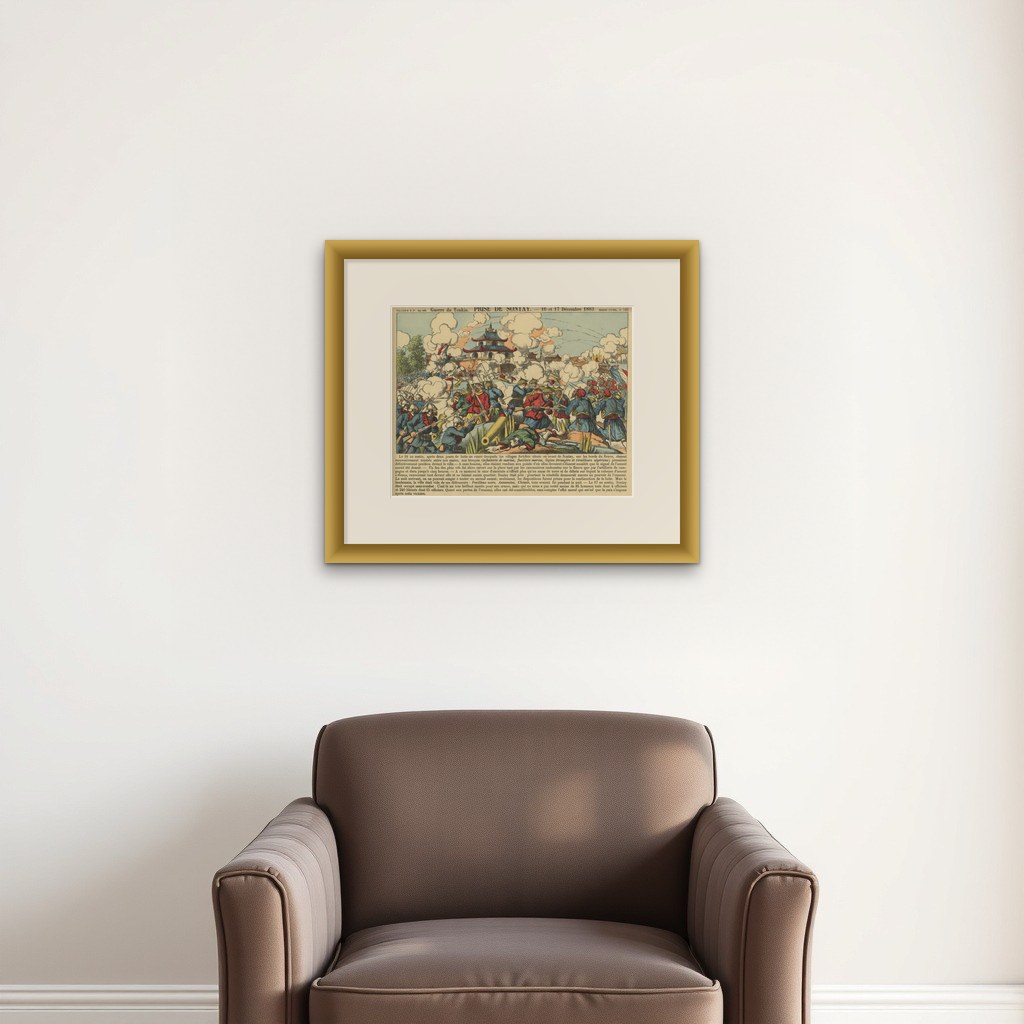

Frame and rooms are illustrations of how the piece could look; it is sold unframed unless the description says otherwise.
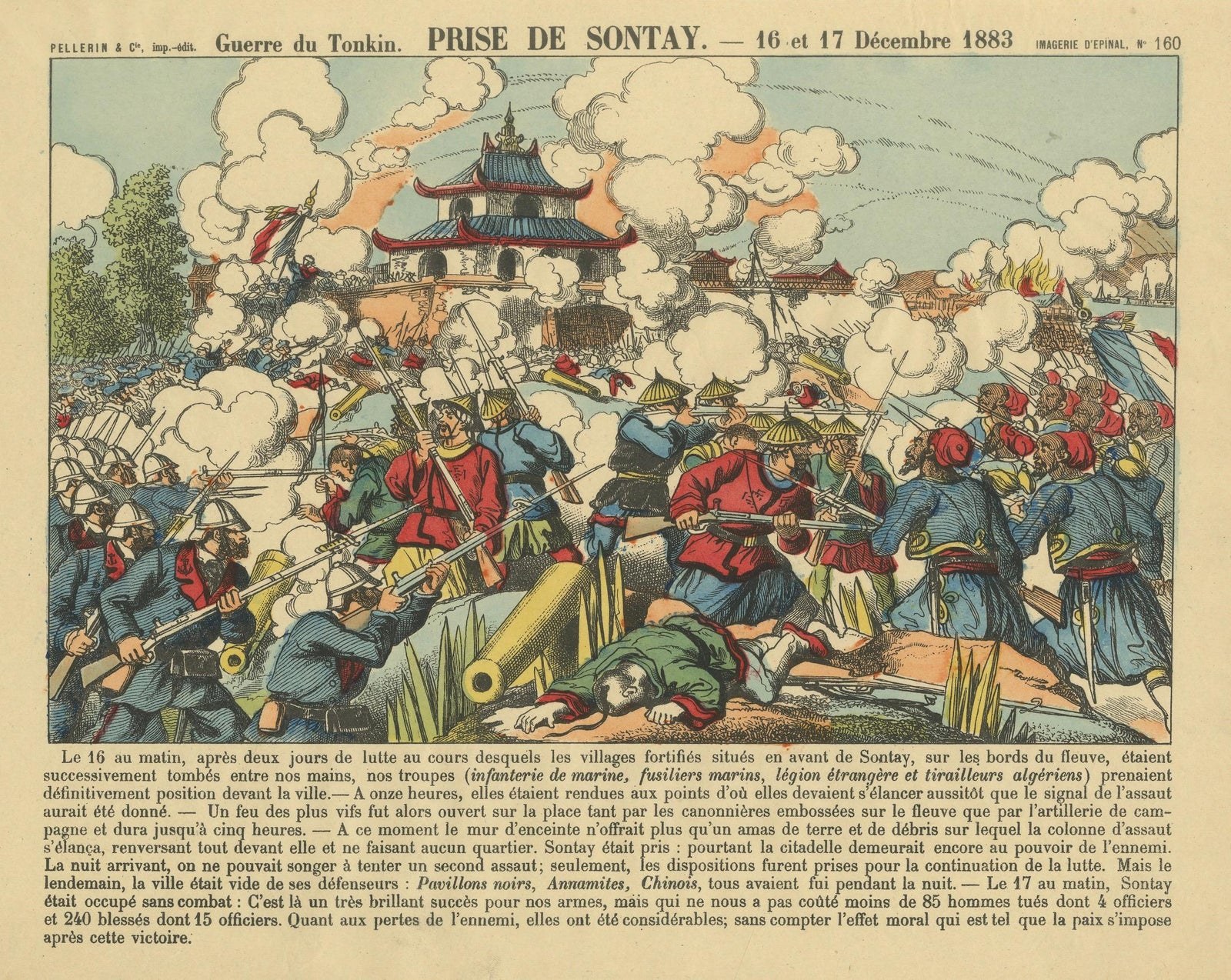
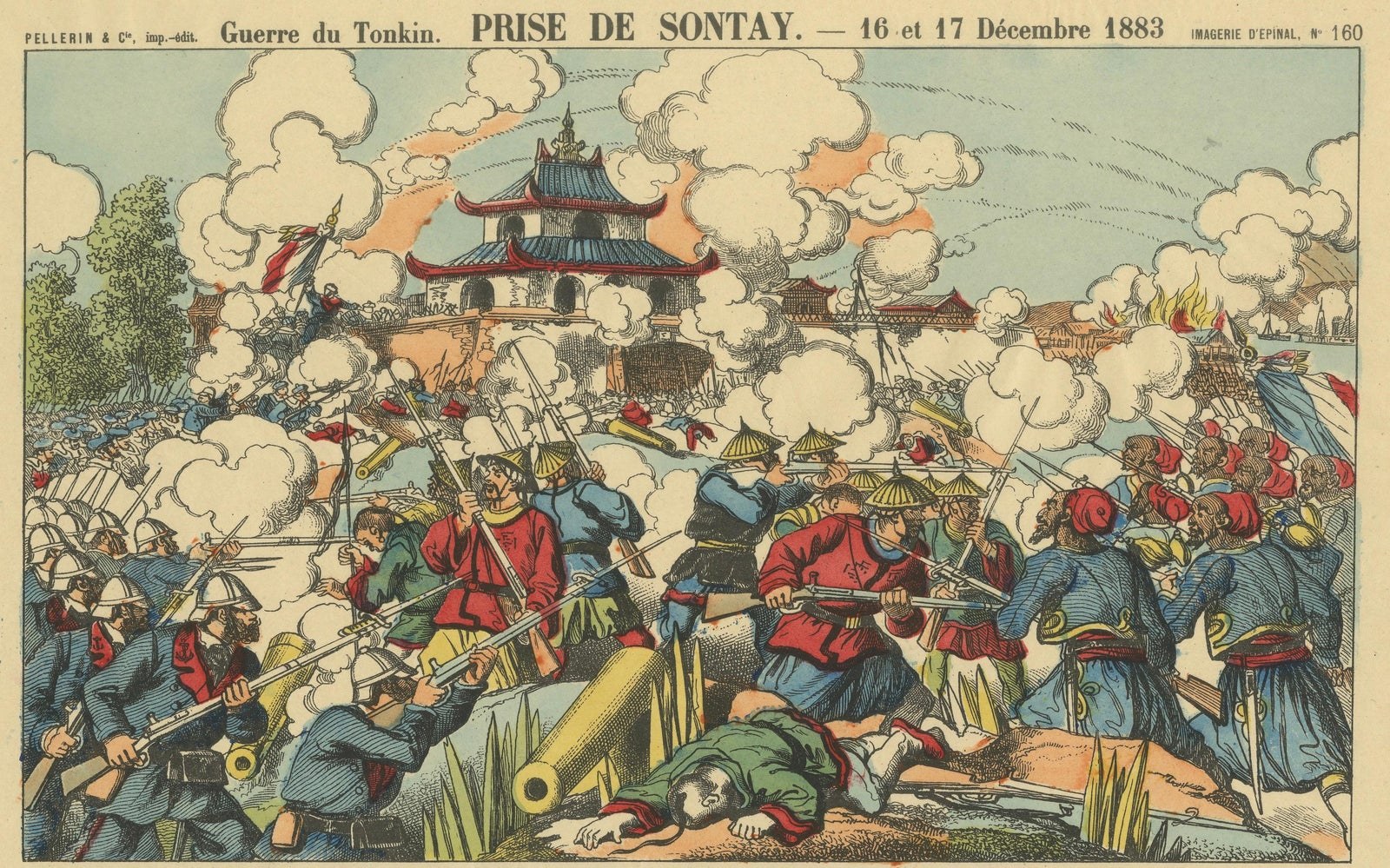
Prise de Sontay, an Épinal Print of a French Tonkin War Battle, 1883
€695
$785 · £590
Original print, not a reproduction.
Ships worldwide from the Netherlands, flat, insured and tracked. 14-day returns. To buy, use Ask a question and we will reserve it for you.
- Date
- 1883
- Sheet size
- 11.6 × 15.6 in (29.5 × 39.5 cm)
- Condition
- Good. Good overall condition for this type. Light age toning to the paper, with some handling wear and minor surface marks consistent with age. Original folds or faint creases may be visible. Colors remain strong and well preserved. Text fully legible.
- Collection
- Battle scenes
- Era
- 1816 to 1899, Empire and industry
- Stock no.
- f_47981362
Prise de Sontay, an Épinal Print of a French Tonkin War Battle, 1883
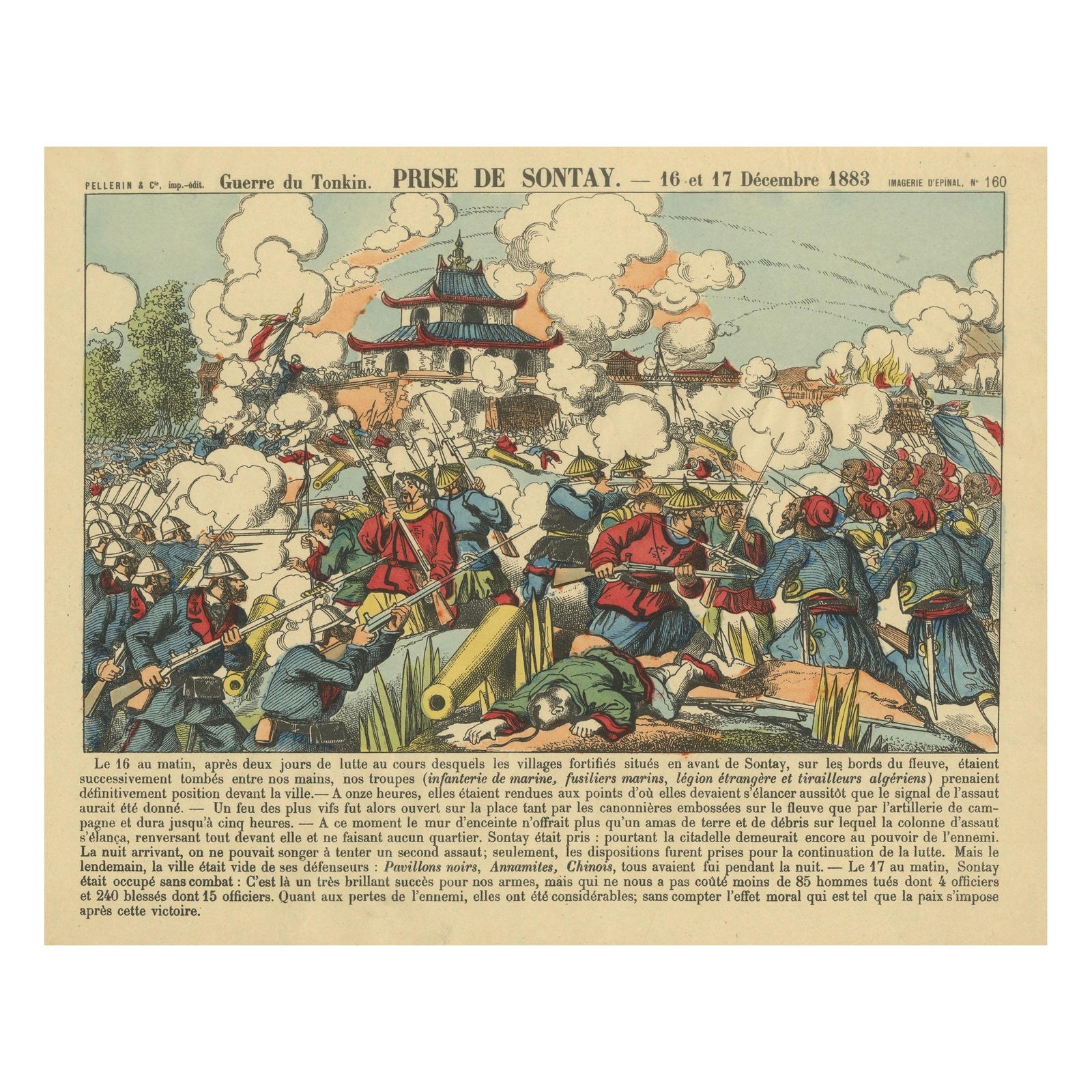
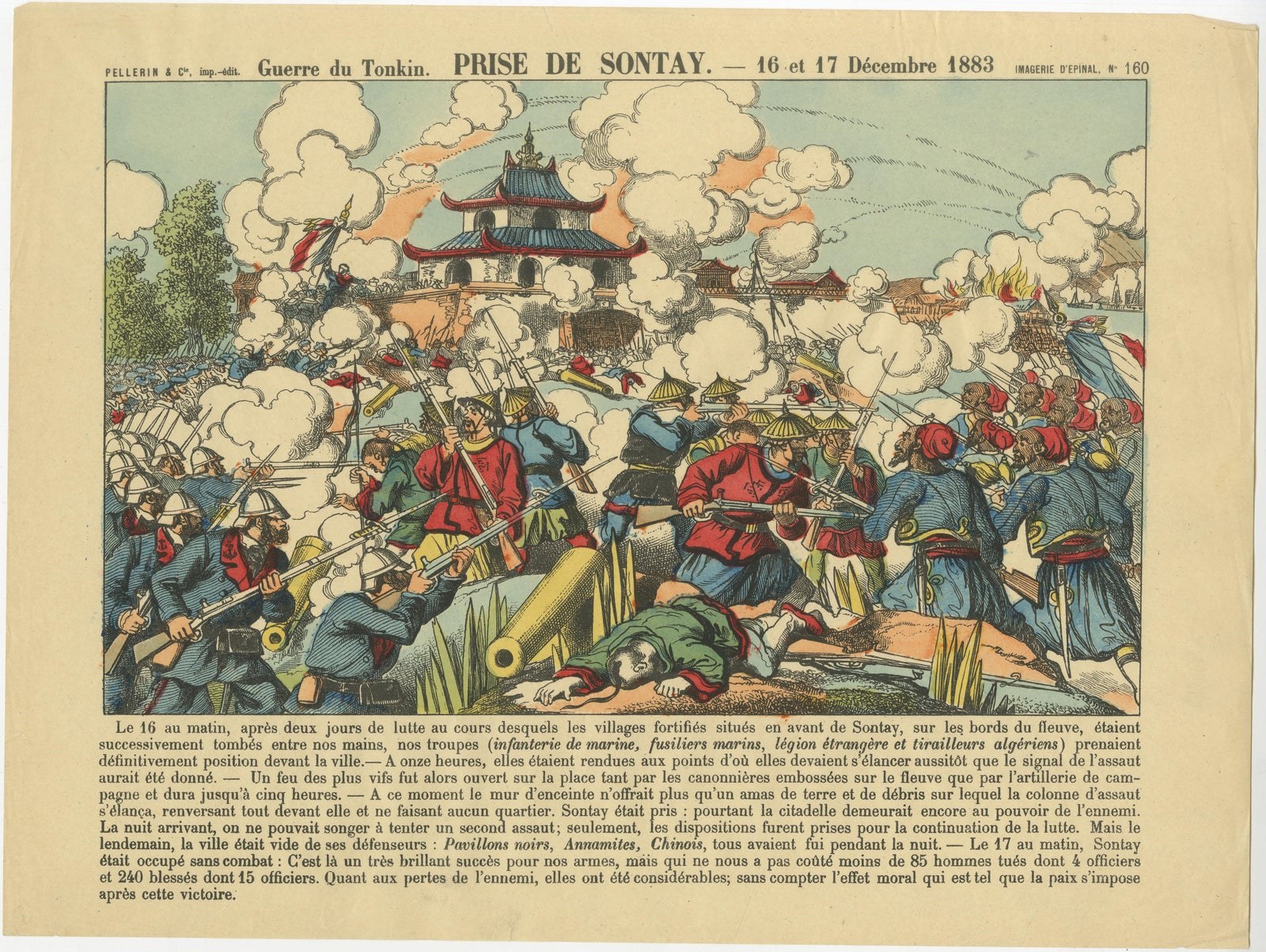
This vivid and dramatic French popular print depicts the capture of Sontay (Sơn Tây) during the Tonkin Campaign, fought on 16–17 December 1883 as part of France’s colonial expansion in northern Vietnam. Issued by Pellerin & Cie of Épinal, the leading producer of illustrated popular imagery in 19th-century France, the scene combines reportage, propaganda, and theatrical composition in the distinctive style of the Imagerie d’Épinal.
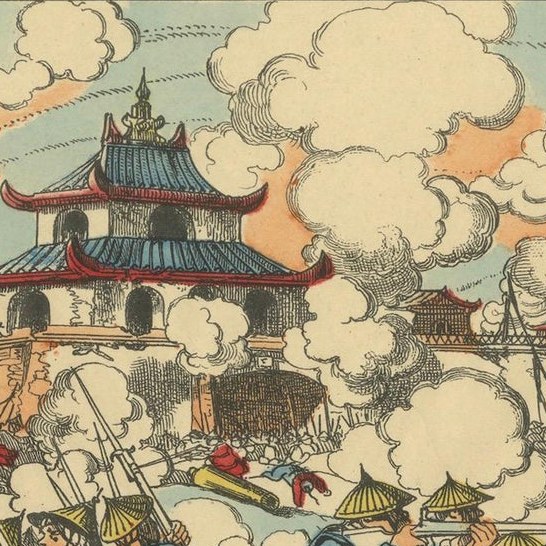
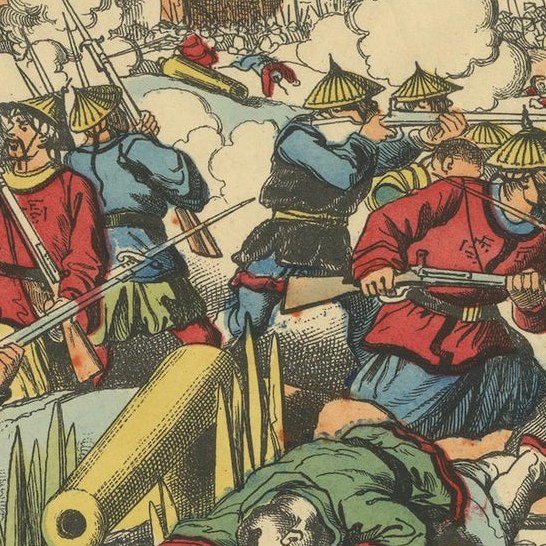
The composition shows the French assault at its height: infantry and marine fusiliers advance through dense clouds of gun smoke toward the fortified citadel, rendered with recognizably East Asian architectural forms. French troops in blue uniforms with red accents dominate the foreground, while opposing forces, identified in the accompanying French text as Pavillons noirs (Black Flag Army), Annamites, and Chinese, are shown retreating or fallen. Cannons, bayonets, and fluttering tricolour flags emphasize the violence and momentum of the attack, while fires burn within the town walls, reinforcing the narrative of conquest.
Beneath the image, the extensive original French caption provides a detailed account of the battle, including the chronology of the assault, troop types involved (infanterie de marine, fusiliers marins, légion étrangère, tirailleurs algériens), and casualty figures. This textual component is an essential part of the print’s historical value, anchoring the image firmly in the events of December 1883 and reflecting contemporary French military rhetoric and colonial ideology.
Such Épinal prints were widely circulated and intended for a broad audience, yet today they are increasingly appreciated as important visual documents of 19th-century conflicts, especially those outside Europe. This example is notable for its strong hand coloring, dynamic action, and unusually explicit battle narrative, making it a compelling piece for collectors of military history, colonial-era imagery, French popular prints, or early visual representations of Vietnam under French rule.
Condition
Good overall condition for this type. Light age toning to the paper, with some handling wear and minor surface marks consistent with age. Original folds or faint creases may be visible. Colors remain strong and well preserved. Text fully legible. No major losses or repairs observed.
Framing tips
This print presents best in a classic dark wood or ebonized frame with a wide off-white or light grey mat to balance the busy composition and preserve visual clarity. Museum glass is recommended to protect the hand coloring and reduce glare. A slightly deeper mat adds gravitas and suits both traditional and contemporary interiors.
Technique: Color lithograph (Imagerie d’Épinal)
Maker: Pellerin & Cie, Épinal, France, 1883
EXPLORE