Close-ups
Framed and on the wall
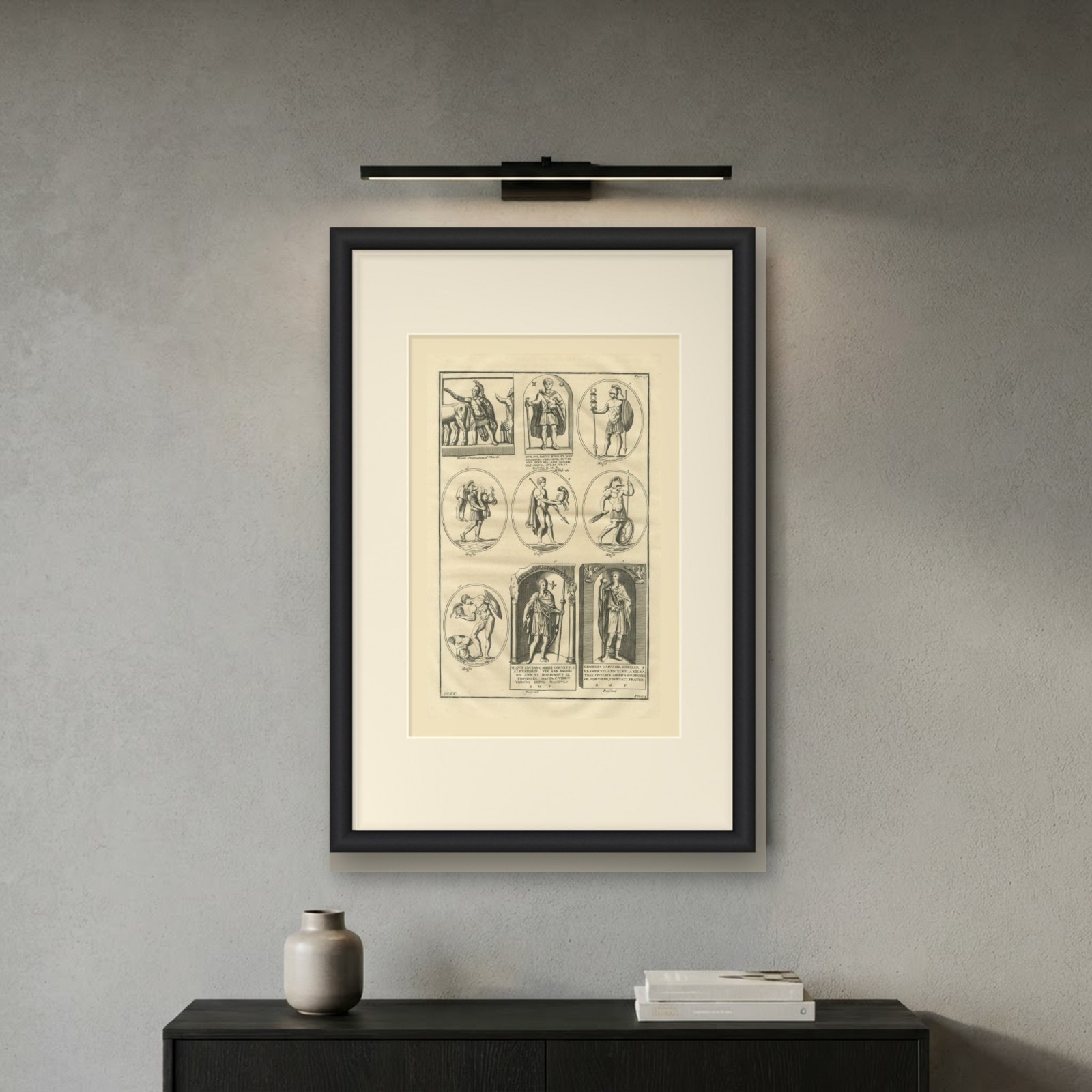

Frame and rooms are illustrations of how the piece could look; it is sold unframed unless the description says otherwise.
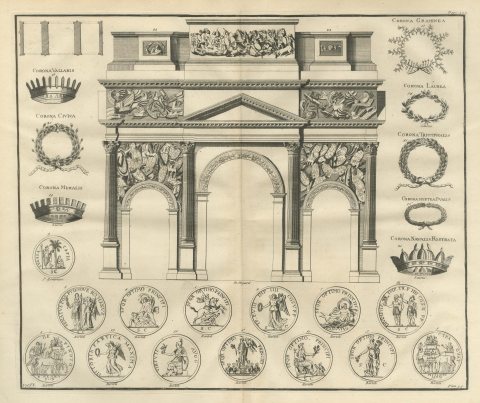
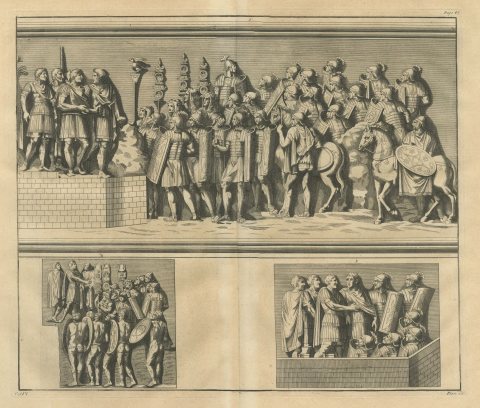
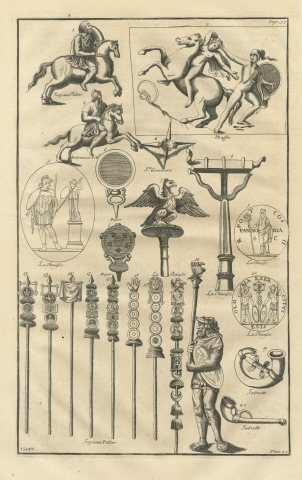
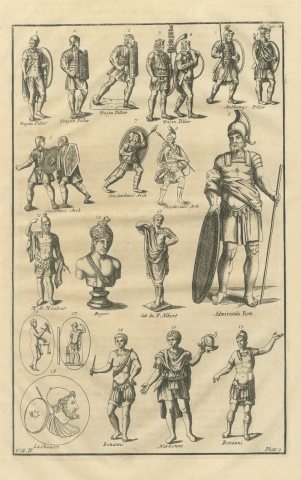
Roman Soldiers on Engraved Gems and Inscribed Tombstones, Montfaucon, 1722
€310
$345 · £260
Original print, not a reproduction.
Ships worldwide from the Netherlands, flat or rolled, insured and tracked. 14-day returns.
- Date
- 1722
- Technique
- Copper Engraving
- Coloring
- Uncolored
- Condition
- Good. Light handling wear to the bottom right corner; edges straight and without nicks. Light, uneven toning, soiled along the bottom, left and top edges. Foxing and several larger brown spots across much of the margin.
- Collection
- Uniforms & regiments
- Era
- 1700 to 1789, Wars of the line
- Stock no.
- BG-14184-4-4
What the condition grades mean
- Excellent
- Bright and clean, with no faults worth mentioning.
- Very good
- Only light signs of age, such as faint toning.
- Good
- Normal signs of age for a sheet of this period: toning, some foxing, small marks or neat old repairs.
- Fair
- Clear faults such as staining, tears or repairs, priced to match.
Every fault we see is written in the condition note, and the whole sheet is shown uncropped in the photos.
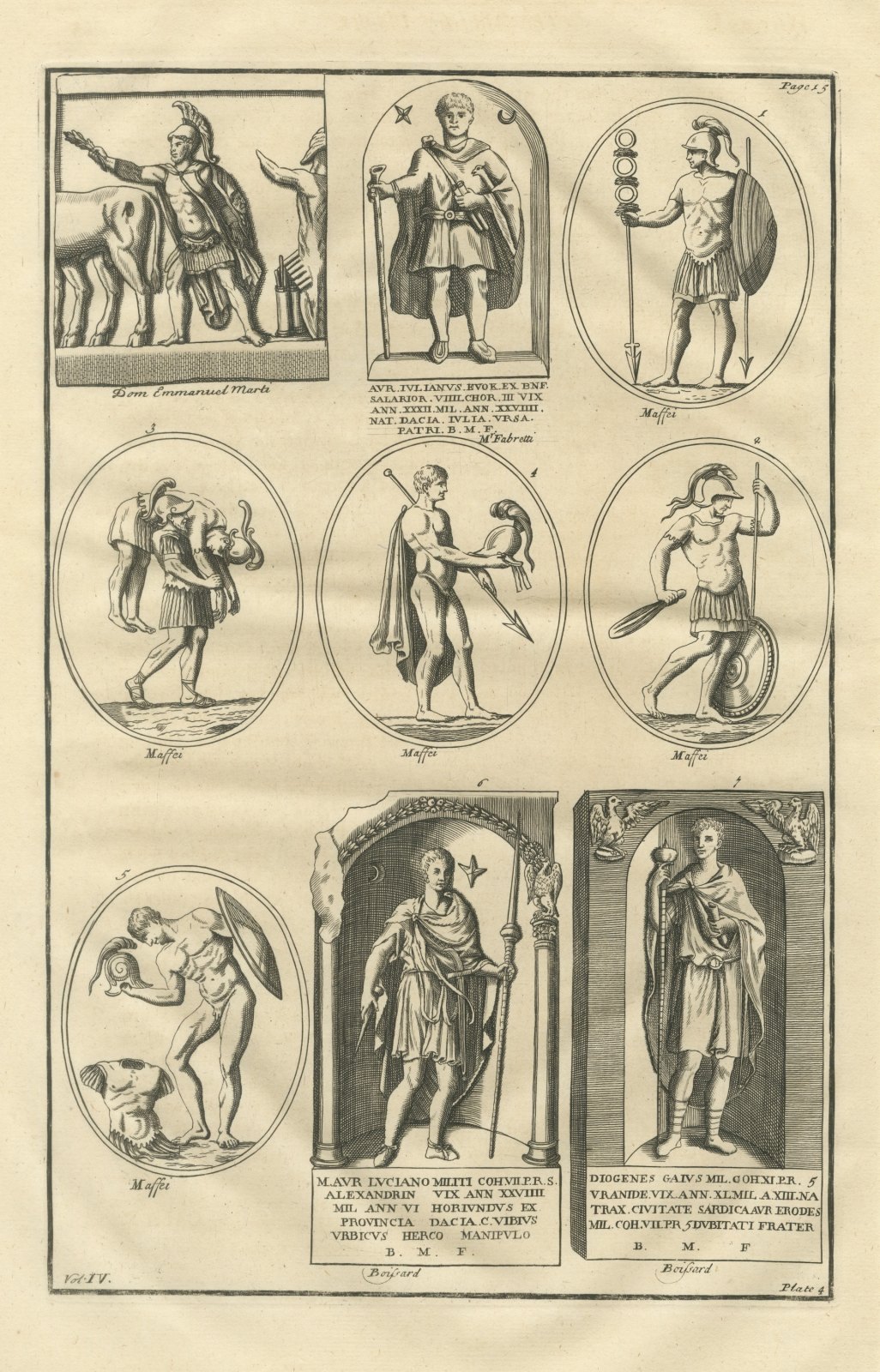
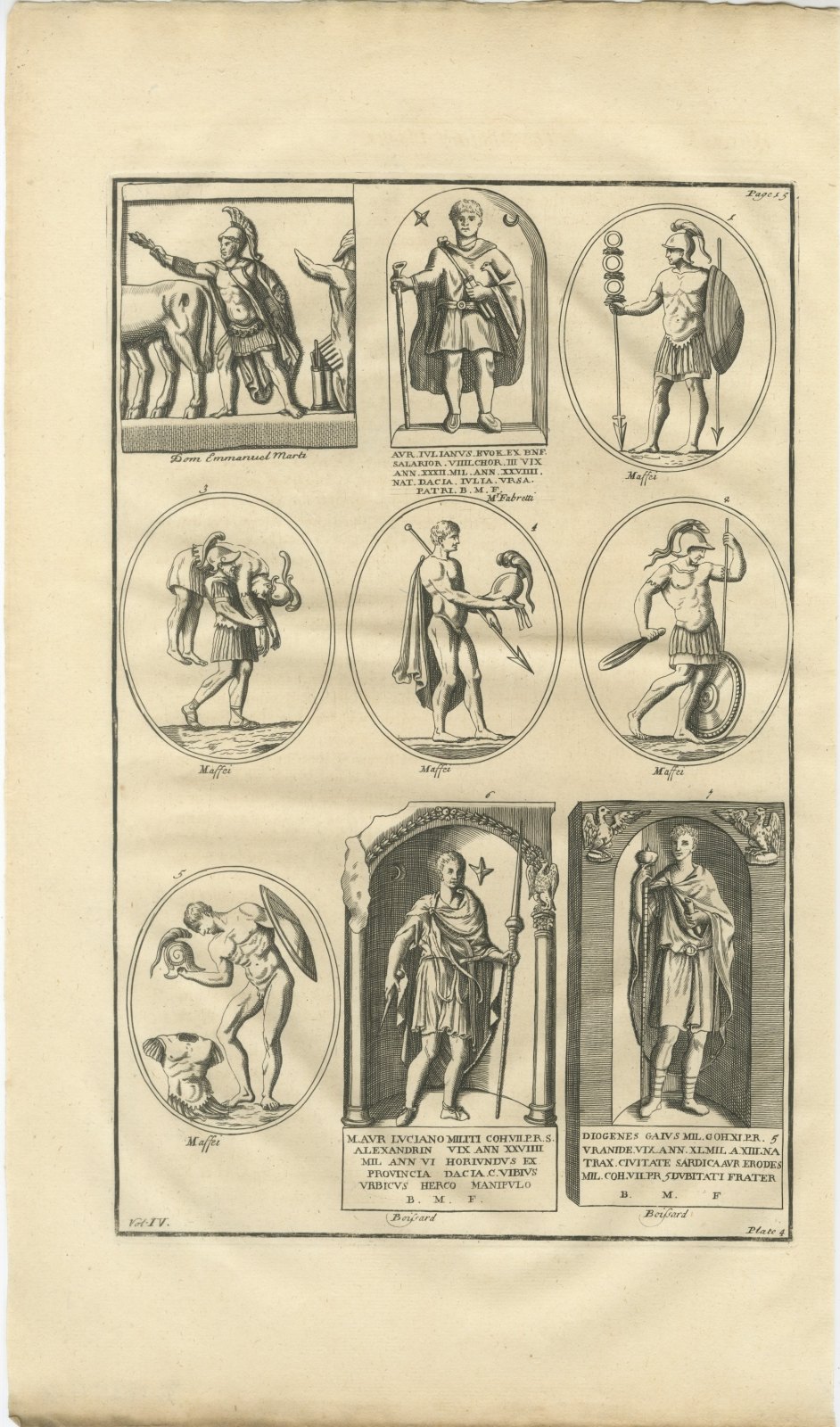
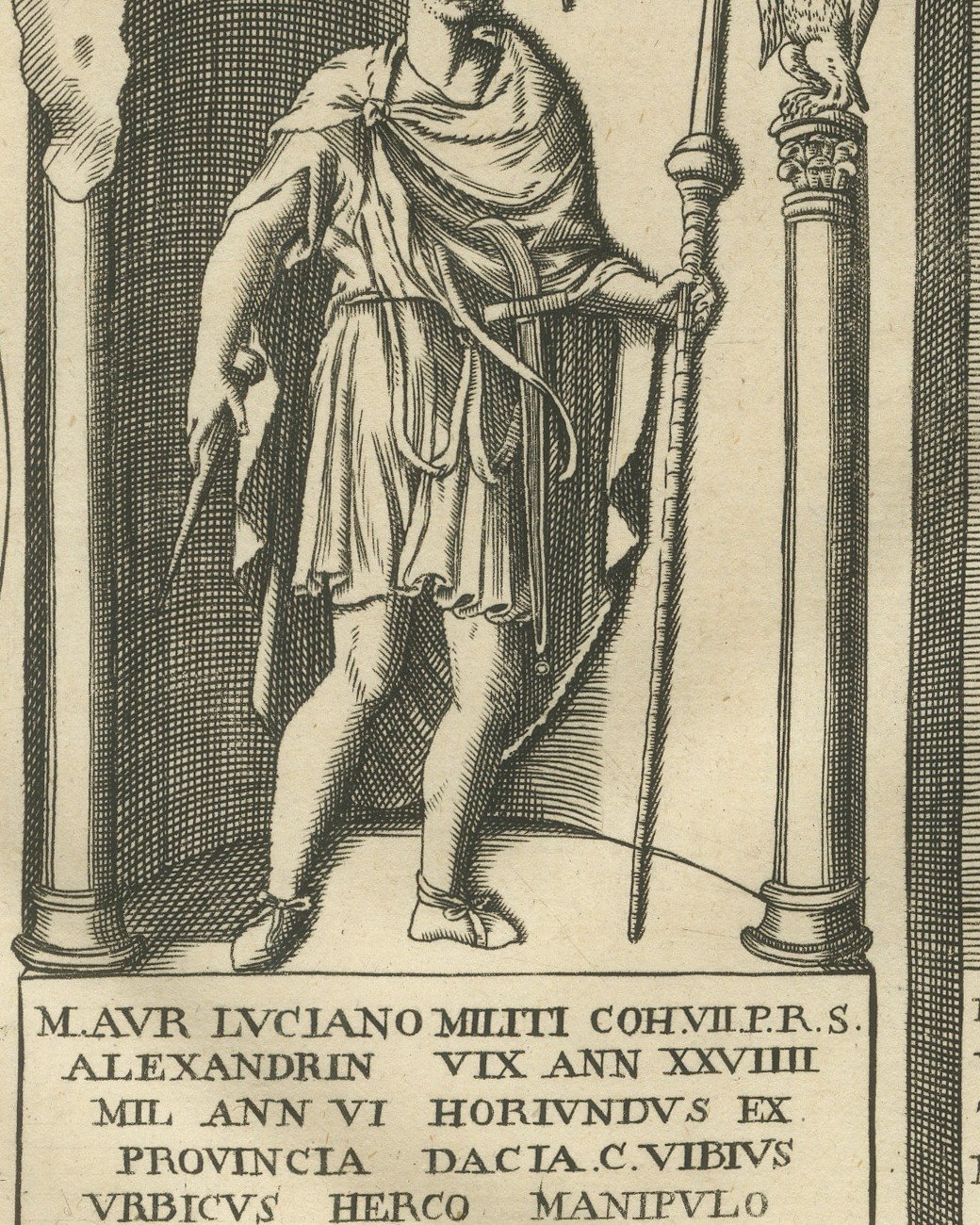
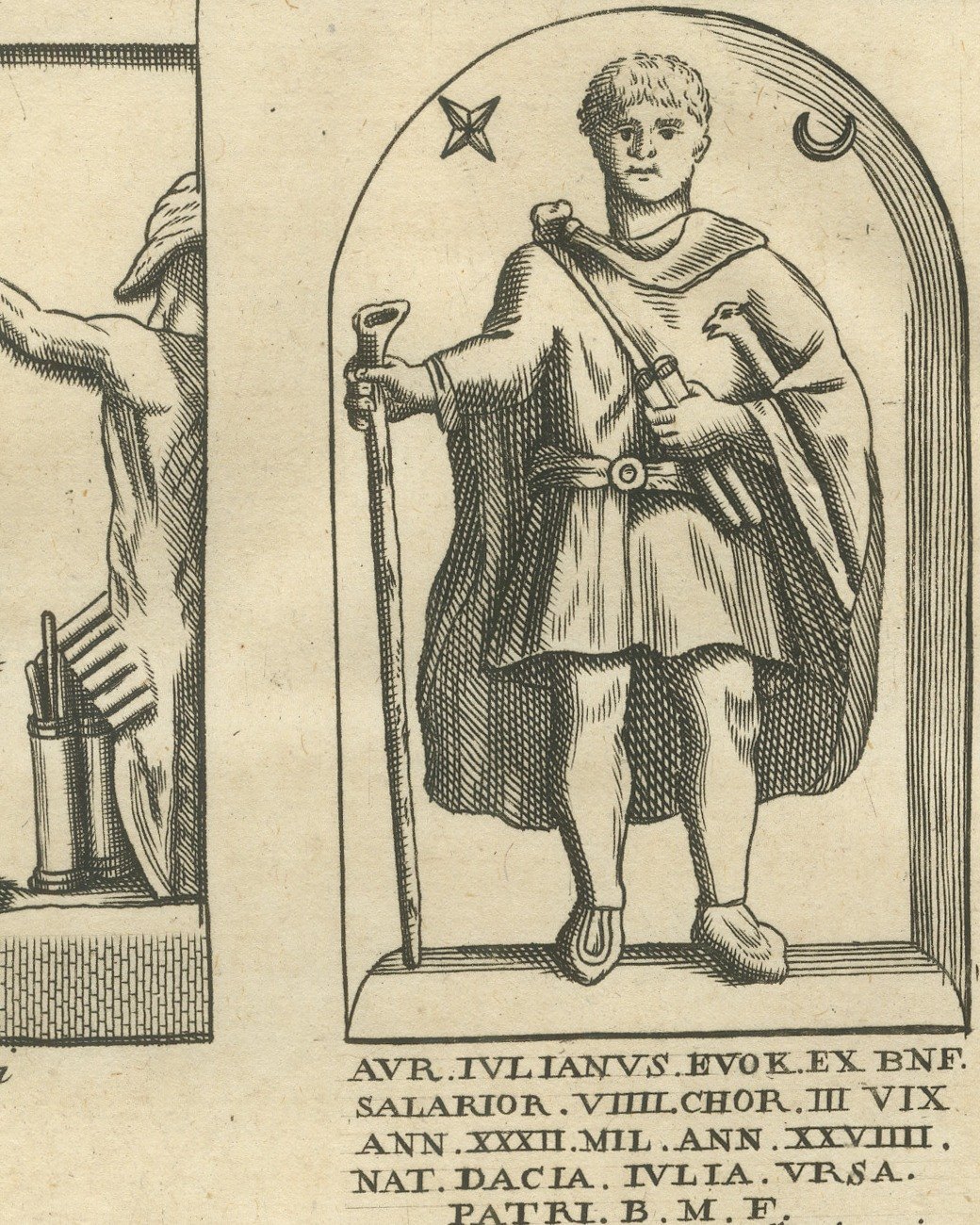
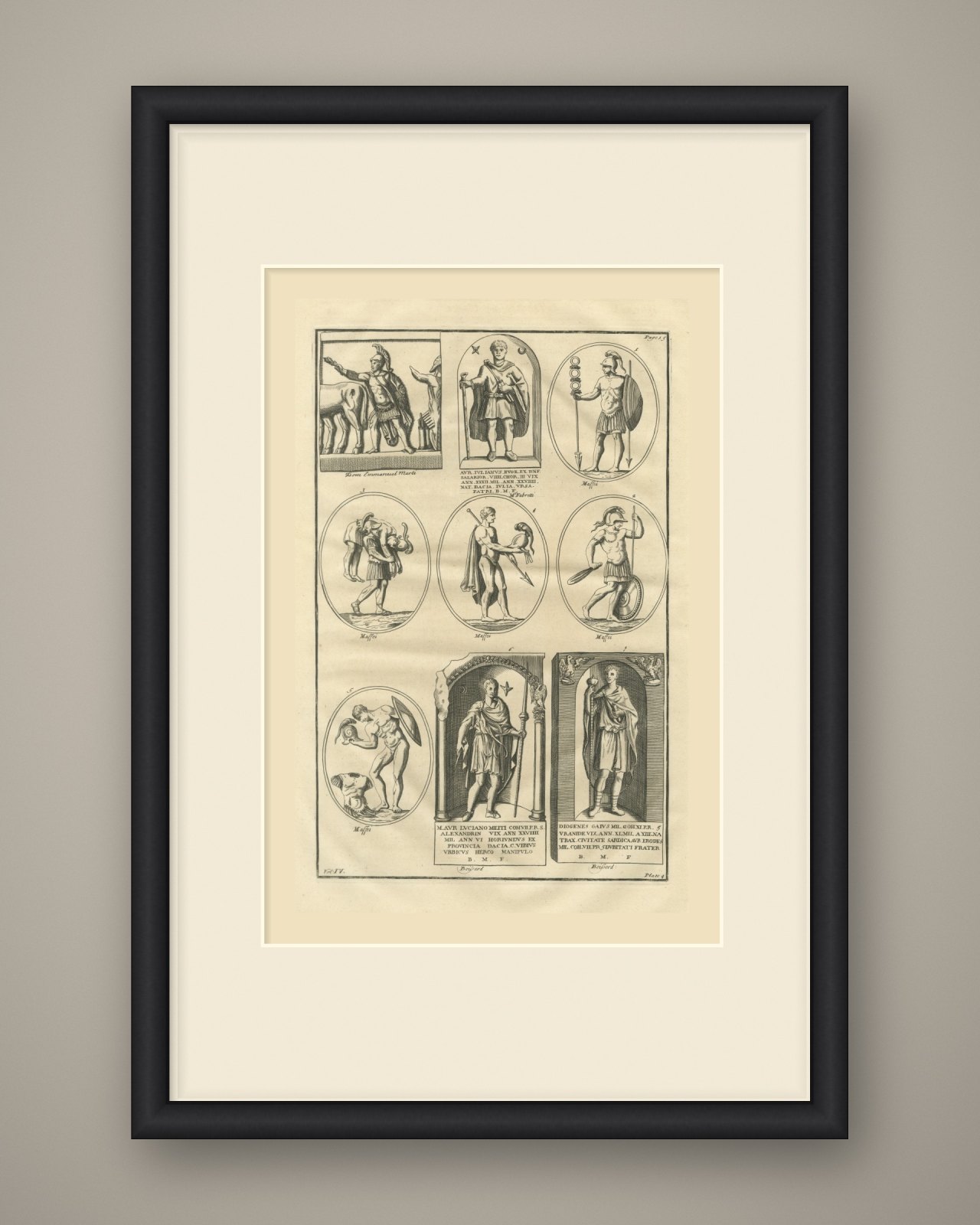
This is an original antique copper engraving, uncolored, a single page plate from the fourth volume of Montfaucon's Antiquity Explained, printed in London by J. Tonson and J. Watts in 1722. At top left is a relief of a soldier in plumed helmet, cuirass and cloak, one arm stretched out holding a branch, beside a horse, with part of a second figure at the edge. Next to it stands an arched tombstone with a man in tunic and cloak holding a staff, a star and a crescent above him. Five oval gems follow: a helmeted soldier with spear, shield and a standard of discs; a soldier carrying a body over his shoulders; a youth holding a helmet; a helmeted soldier with a shield; and a nude soldier with a shield bending over a helmet. At the foot are two tall tombstones, each with a soldier in tunic and cloak standing in a niche, one beside an eagle on a column, the other under two eagles.
The epitaph under the first tombstone reads AVR.IVLIANVS.EVOK.EX BNF. SALARIOR.VIIII.CHOR.III VIX ANN.XXXII.MIL.ANN.XXVIIII. NAT.DACIA.IVLIA.VRSA. PATRI.B.M.F. The second begins M.AVR LVCIANO MILITI COH.VII.P.R.S. ALEXANDRIN VIX ANN XXVIIII MIL ANN VI HORIVNDVS EX PROVINCIA DACIA, and the third begins DIOGENES GAIVS MIL.COH.XI.P.R. The captions read "Dom Emmanuel Marti", "Mr Fabretti", "Maffei" under each of the five gems, and "Boissard" under the two lower tombstones. Figure numbers run from 1 to 7. The corners read "Page 15", "Vol. IV." and "Plate 4".
Bernard de Montfaucon (1655 to 1741) was a French Benedictine monk and scholar whose L'Antiquité expliquée et représentée en figures appeared in Paris in 1719. This English translation by David Humphreys was printed in London by J. Tonson and J. Watts. Volume four deals with war, and Montfaucon set figures copied from monuments, coins, gems and earlier antiquaries side by side, naming each source.
With its full Latin epitaphs, it is a sheet that rewards reading at close range.
Condition: Light handling wear to the bottom right corner; edges straight and without nicks. Light, uneven toning, soiled along the bottom, left and top edges. Foxing and several larger brown spots across much of the margin.
This is an original antique print, not a modern reproduction. This item is sold unframed. Any framed or interior images are shown for presentation and inspiration only, unless the listing explicitly states that the item is sold framed.