Close-ups
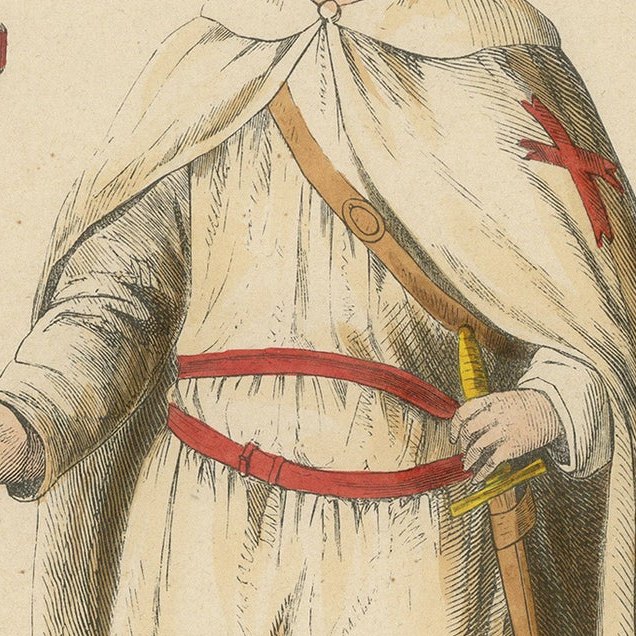
Framed and on the wall
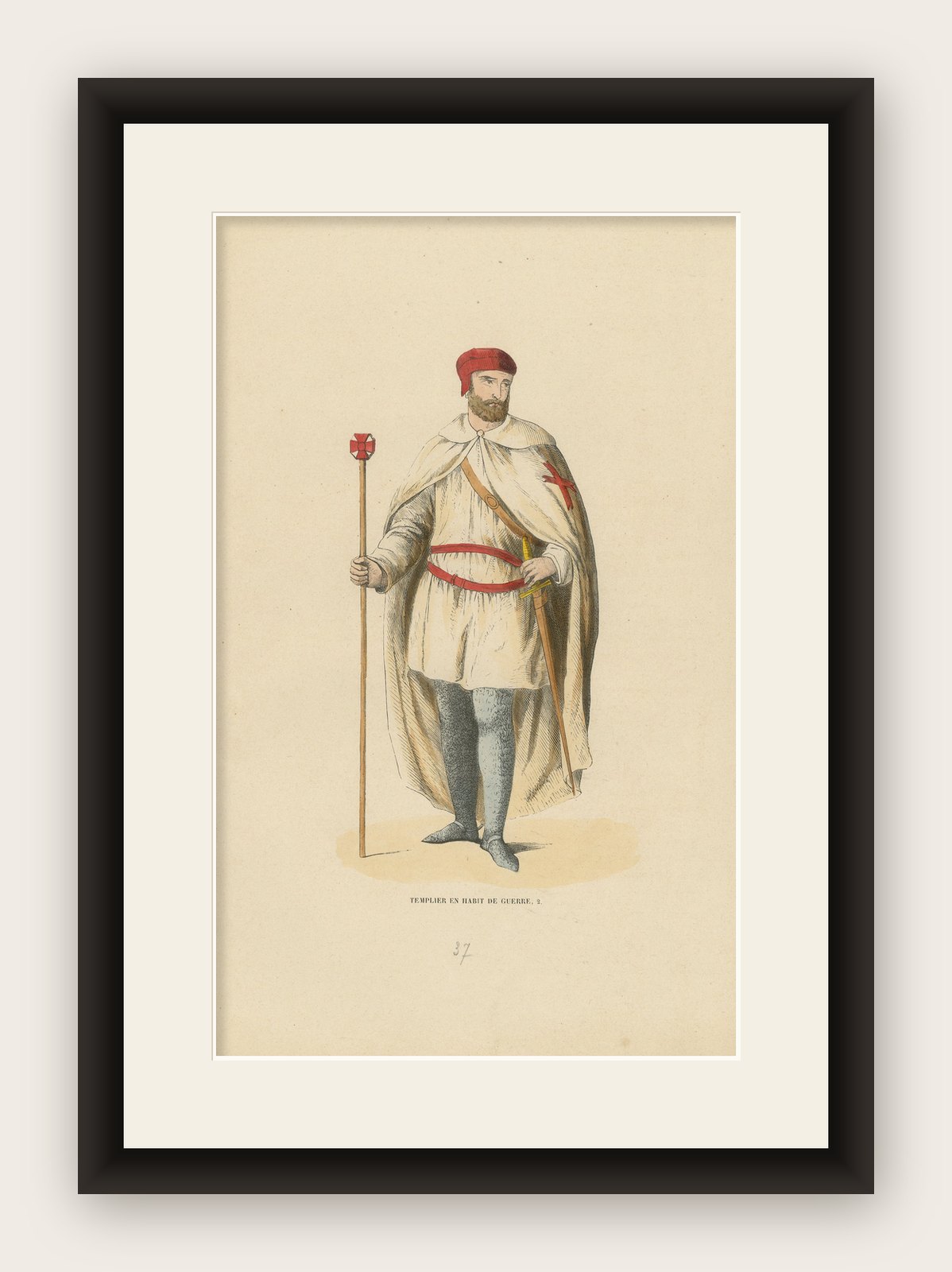


Frame and rooms are illustrations of how the piece could look; it is sold unframed unless the description says otherwise.
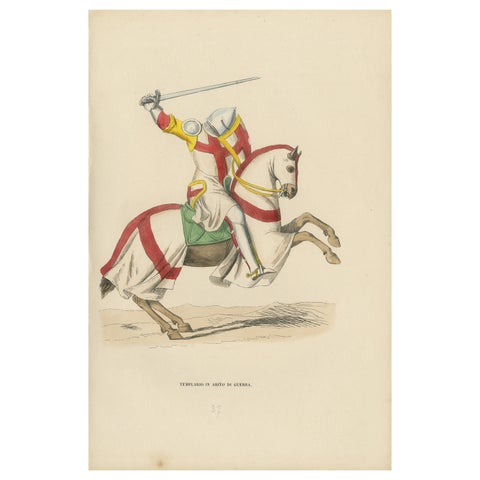
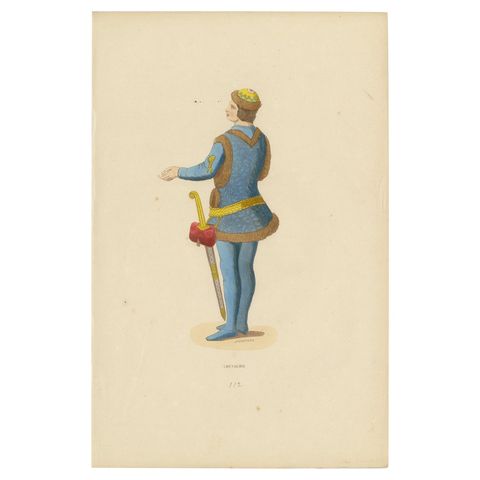
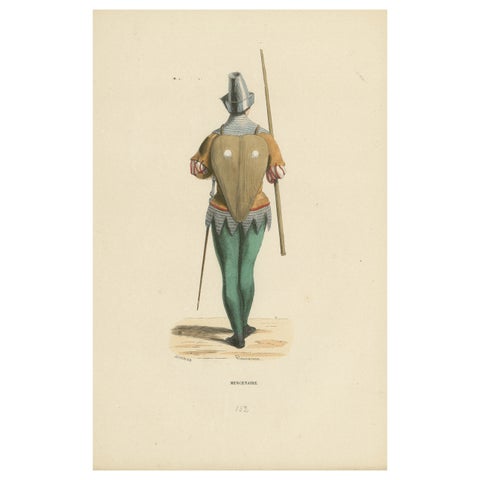
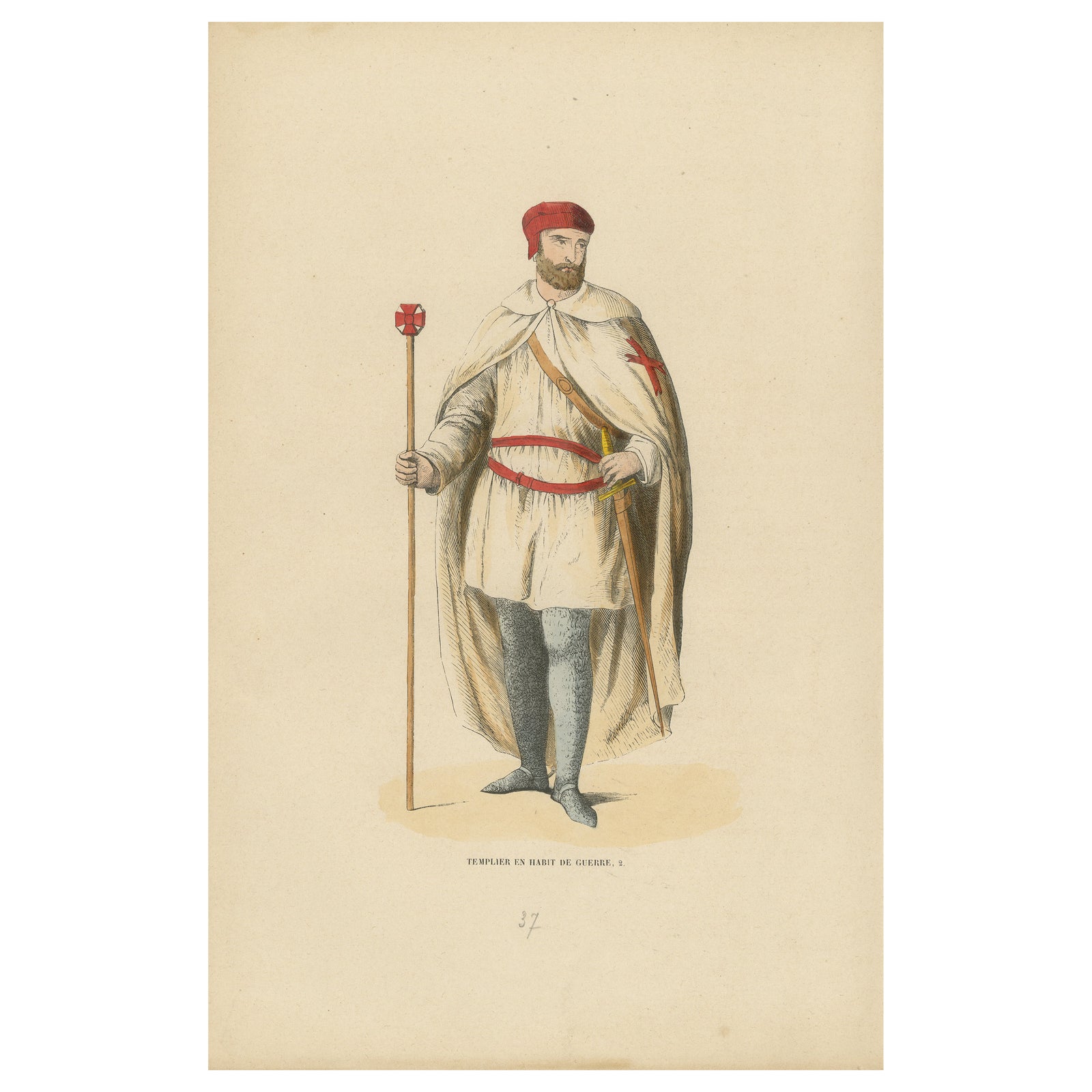
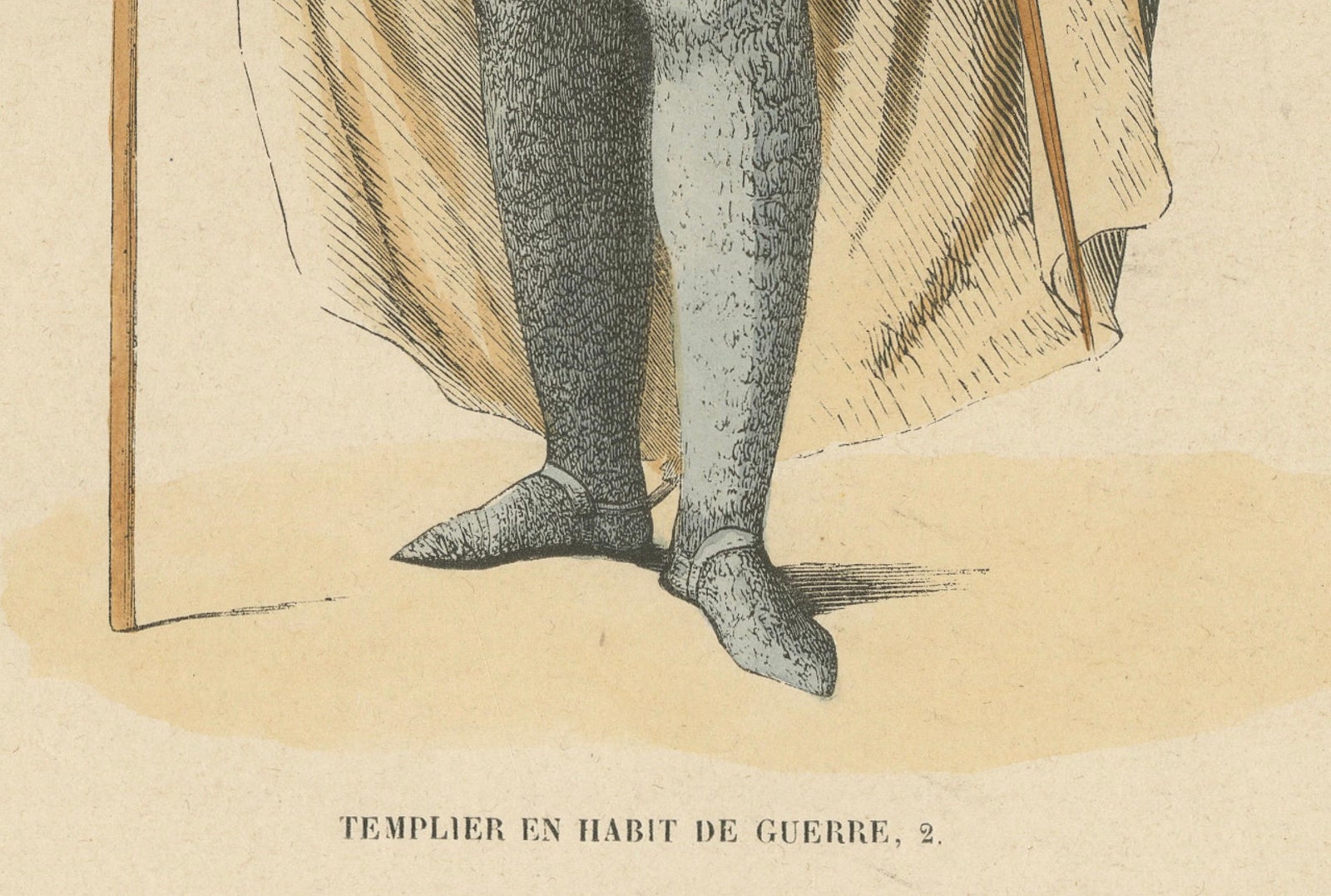
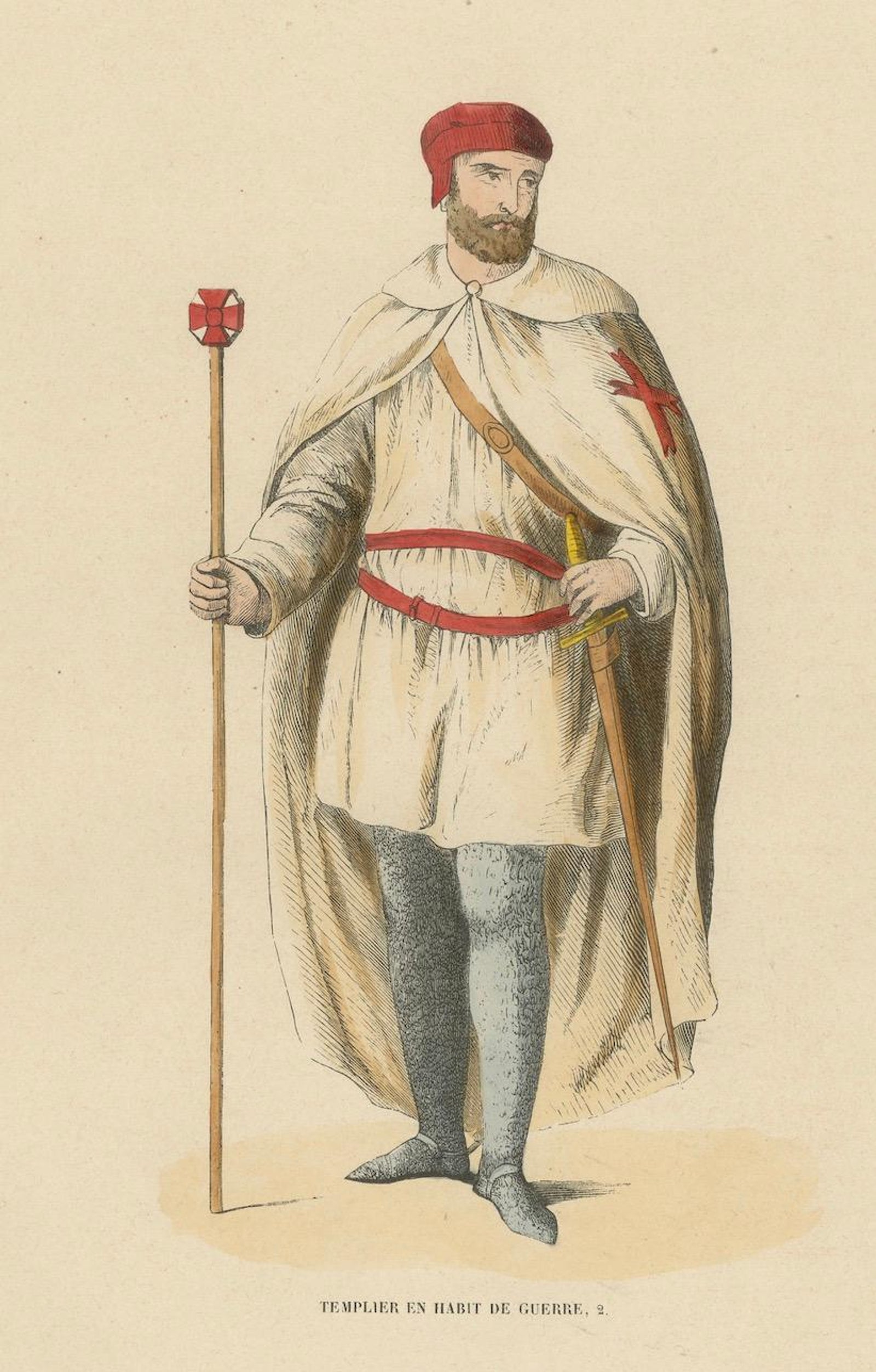
Templar in War Attire with Staff, Costume Di Moyen Age, 1847
$215
€190 · £160
Original print, not a reproduction.
Ships worldwide from the Netherlands, flat, insured and tracked. 14-day returns. To buy, use Ask a question and we will reserve it for you.
- Date
- 1847
- Sheet size
- 10.6 × 7.1 in (27 × 18 cm)
- Condition
- Good. Good. Overal very light toning and light soiling but the image itself clean and hand-colored almost 200 years ago and still in expliciet colors. Aged paper with typically warm, yellowish-brown hue, mostly around the edges.
- Collection
- Knights & armour
- Era
- 1816 to 1899, Empire and industry
- Stock no.
- f_37888192
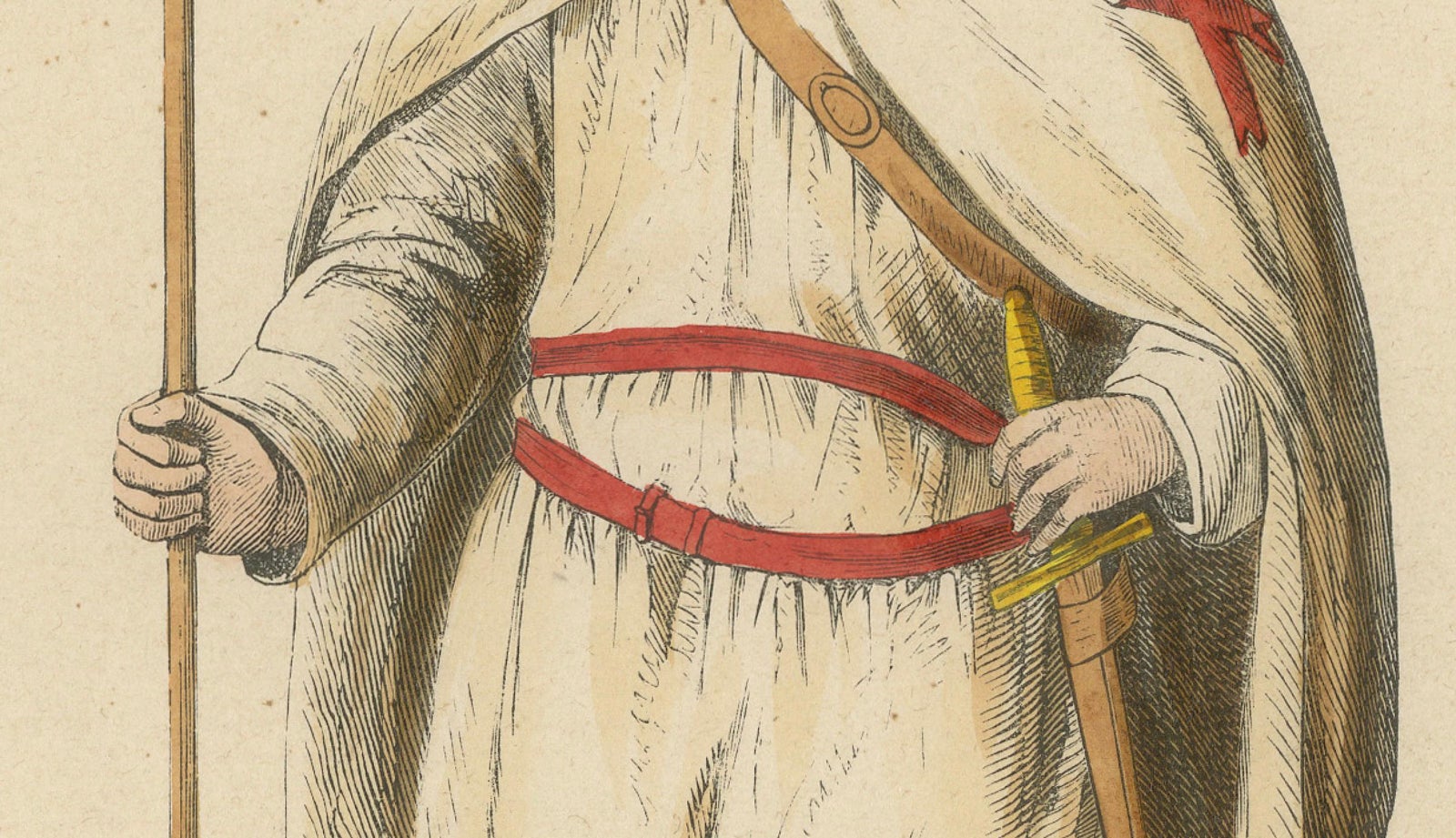
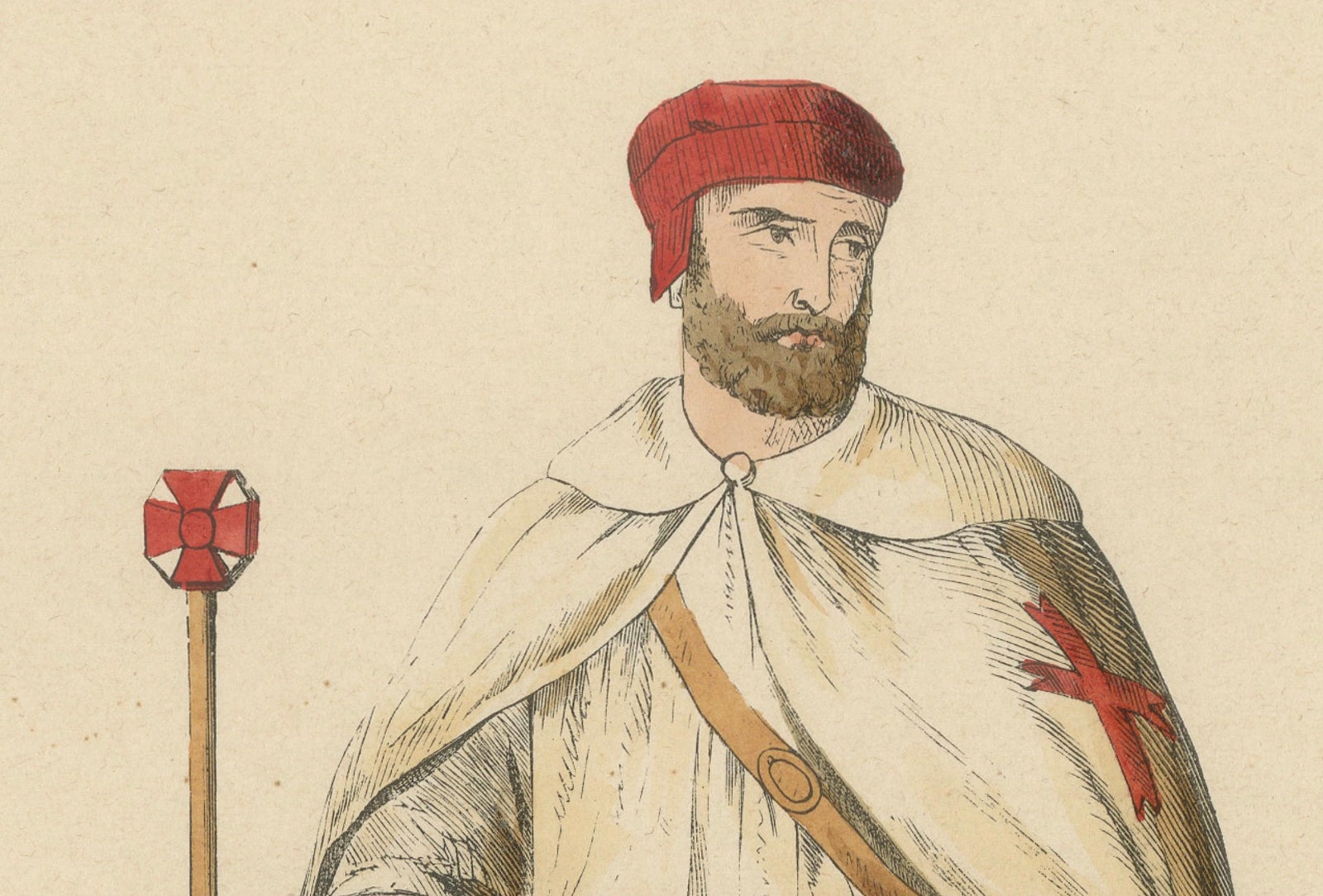
This print illustrates a Templar in a more subdued war attire compared to the fully armored depiction in another image of this series. He stands upright, holding a staff topped with a red emblem, wearing a long white robe emblazoned with a red cross, which is the iconic symbol of the Knights Templar. The garment's simplicity suggests functionality and perhaps a more routine, less ceremonious aspect of the Templar's life. His chainmail leggings and the sword at his belt imply readiness for combat, while the red cap and belt add a touch of color to the ensemble.
More about the vivid colors of this original hand-colored antique print:
The colors have a nice glow over them. Historically, egg whites, known as glair, and sometimes egg yolk were indeed used in illumination and painting, particularly in manuscripts, to give colors a brighter appearance and to add a sheen or gloss to the work. This technique was quite common during the Middle Ages and into the Renaissance.
Egg whites can be applied as a varnish over pigments to enhance their brightness and to protect the colors. This application could make the colors appear more vivid and also add a slight glossy sheen to the surface of the image.
Egg yolk, on the other hand, was commonly used as a binding agent in paint. It forms the basis of tempera paint, a medium that was widely used before the advent of oil painting. Egg yolk helps to create a durable and long-lasting color that adheres well to various surfaces.
In the context of the print from 1847, it's less likely that egg whites or yolks were used directly on the print, as by that time, commercial printing processes would have been more advanced and less reliant on such manual methods. However, if this print is a representation of an earlier style or is meant to mimic the appearance of hand-painted manuscripts, the original artists might have employed techniques or materials that gave a similar effect to those achieved with egg-based binders and varnishes.