Close-ups
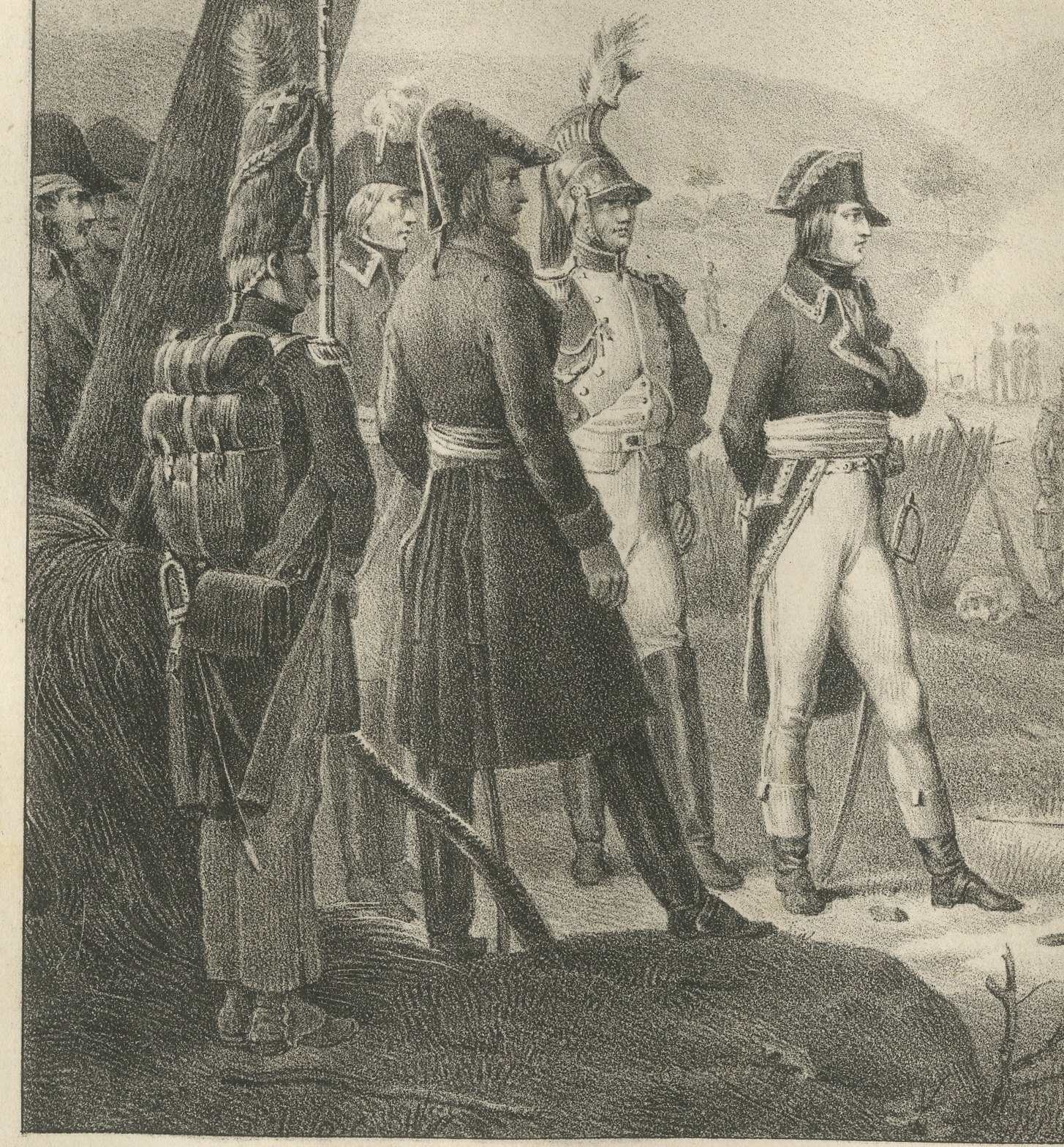
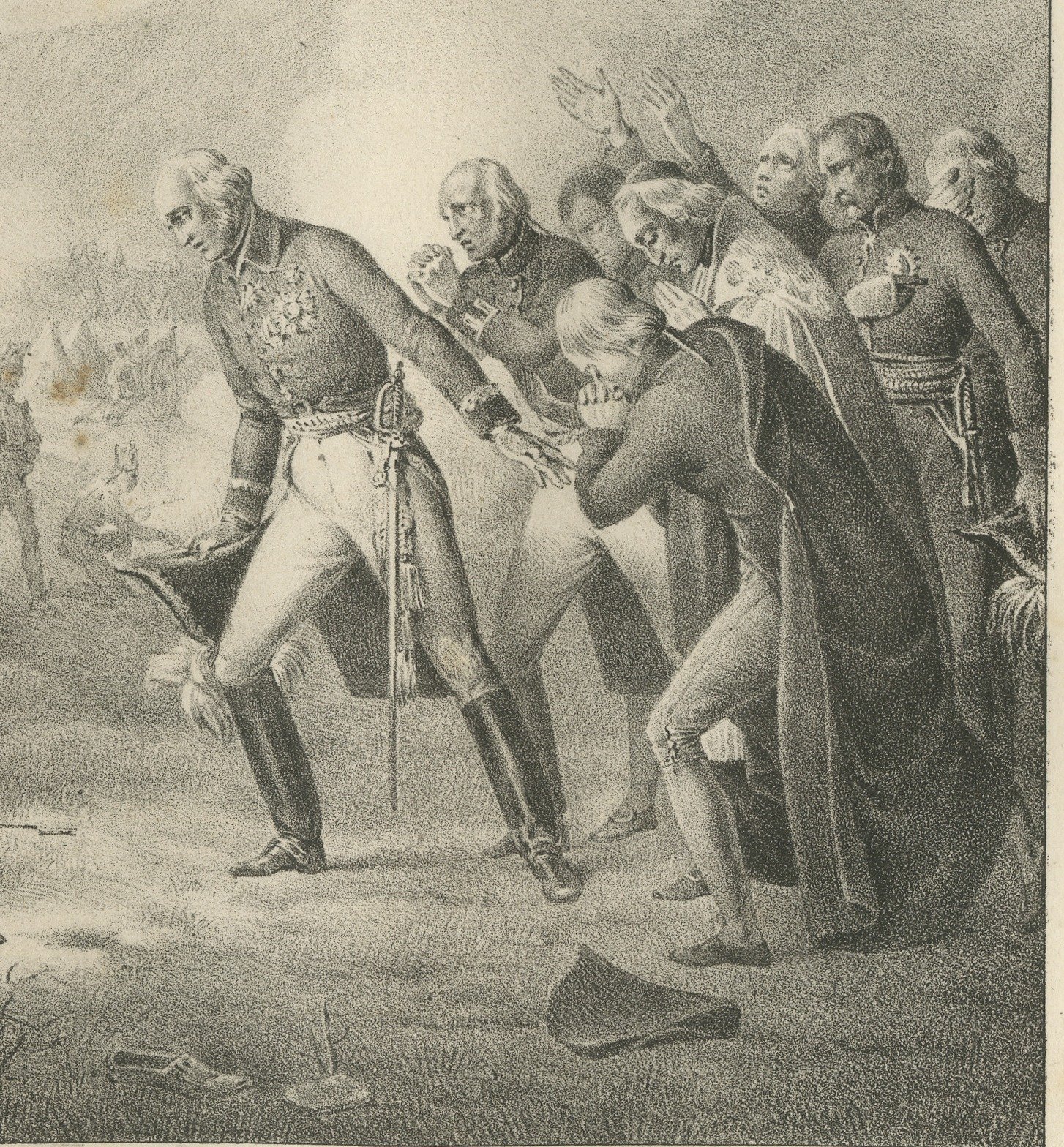
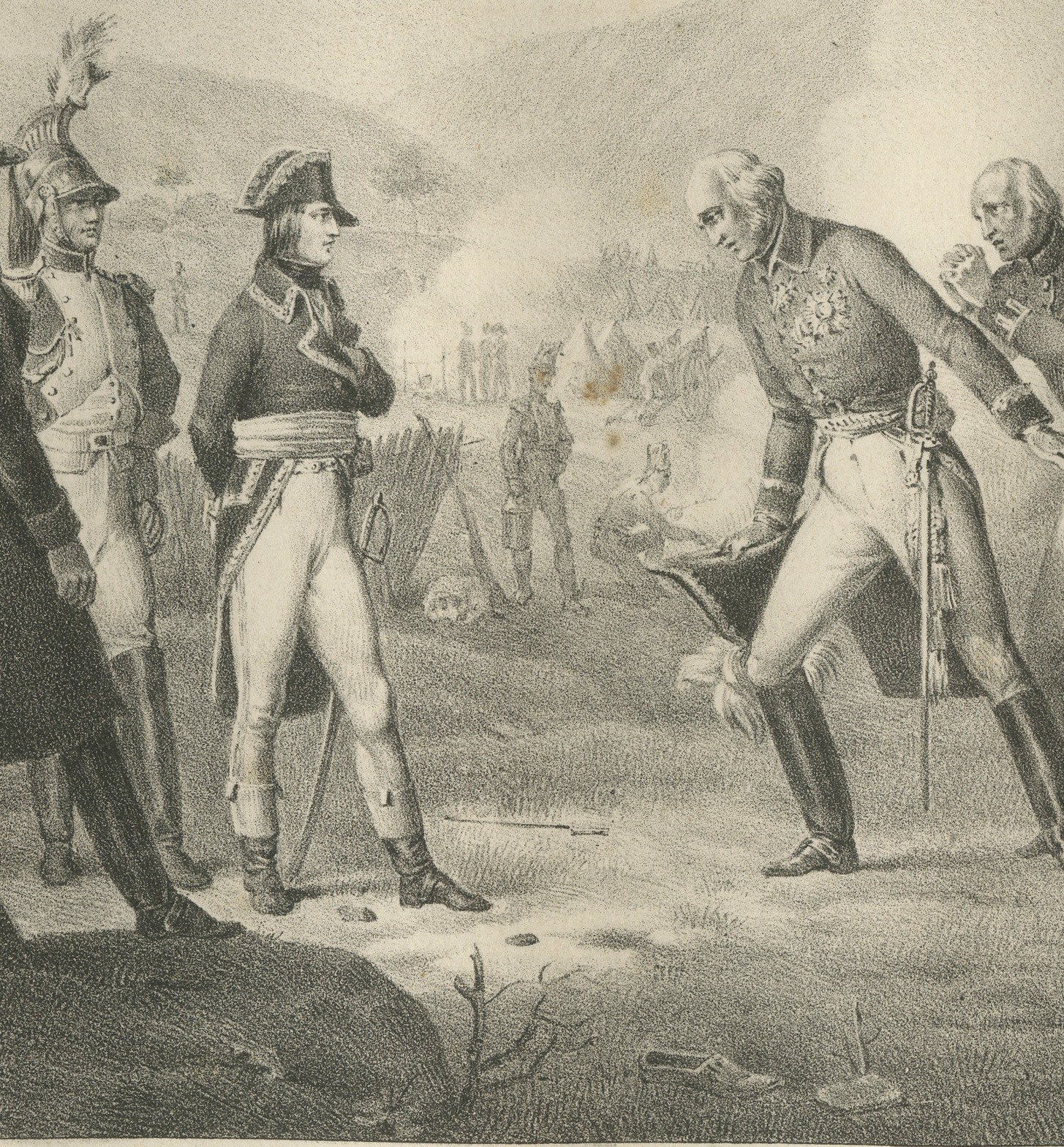
Framed and on the wall
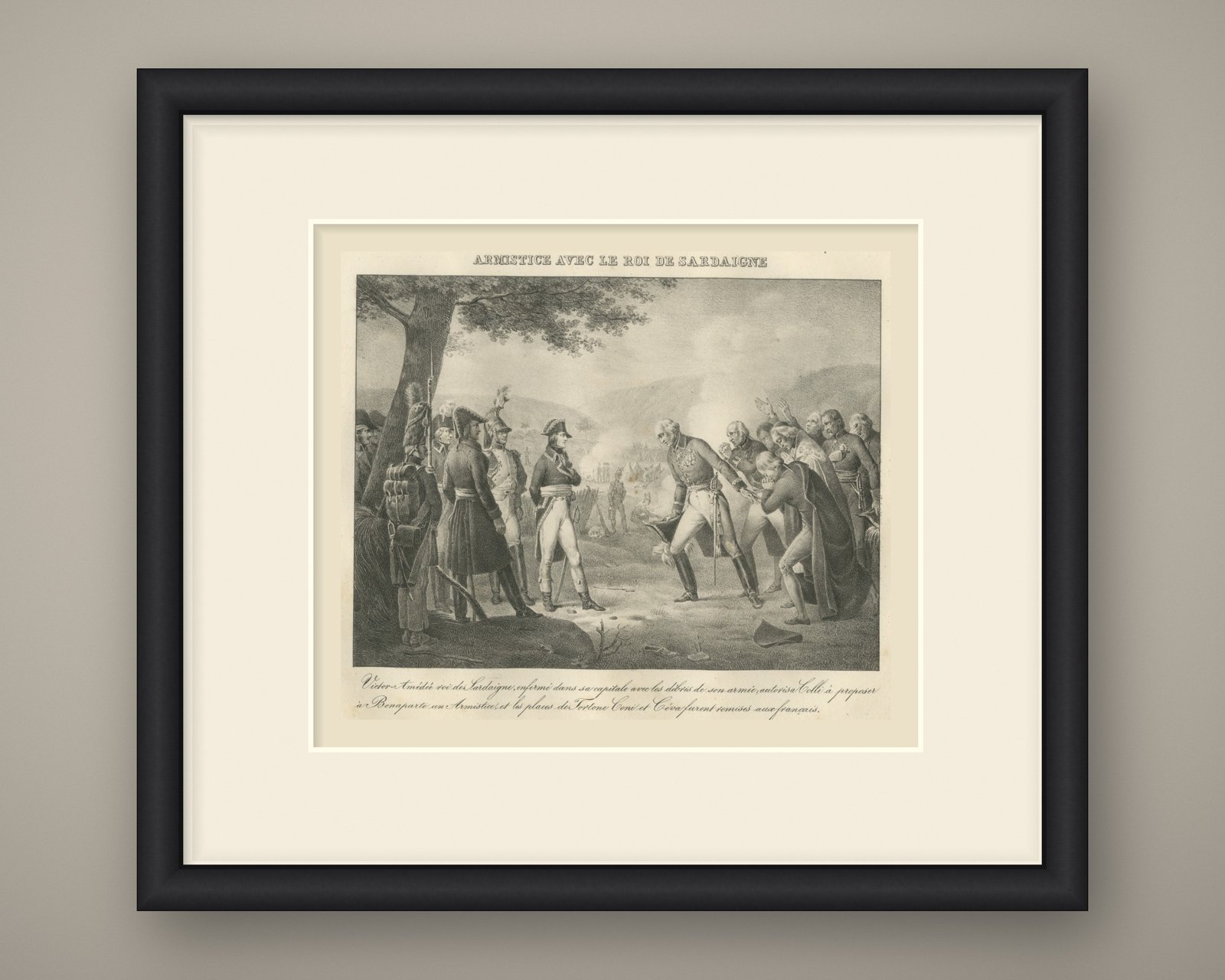
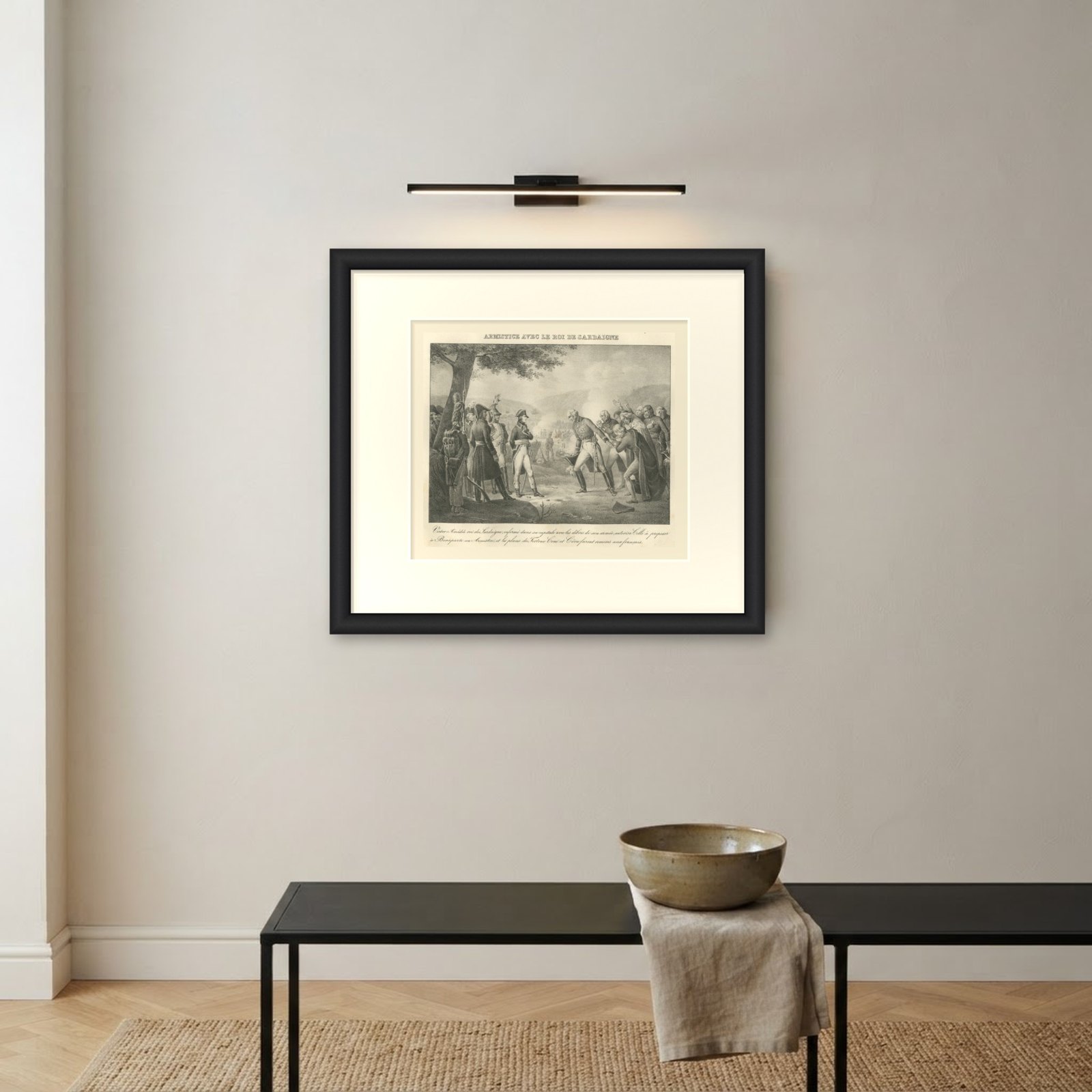
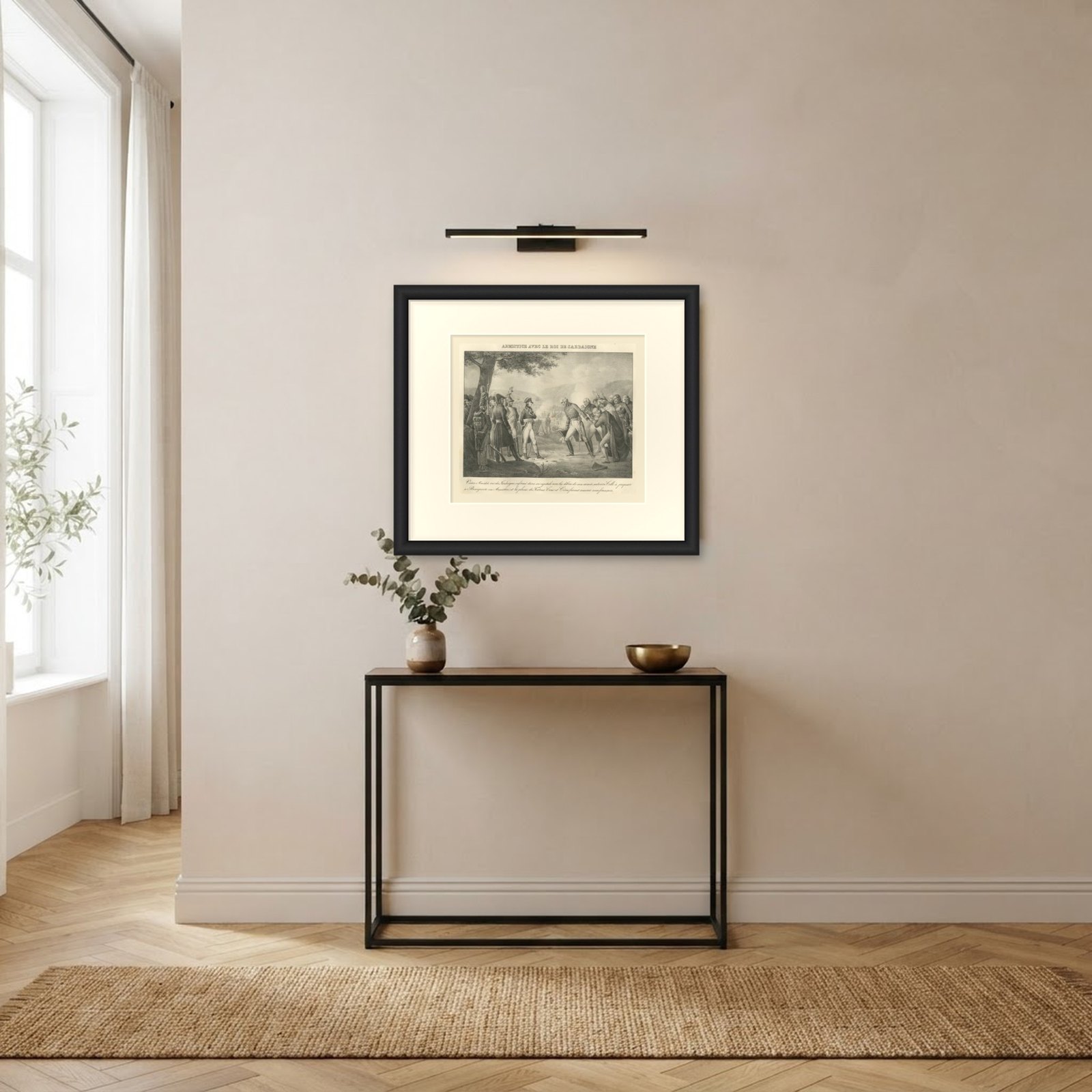
Frame and rooms are illustrations of how the piece could look; it is sold unframed unless the description says otherwise.
Victor Amadeus Sues for Armistice, Sardinia, Antique Madou Lithograph, 1827
€185
$205 · £155
Original print, not a reproduction.
Ships worldwide from the Netherlands, flat, insured and tracked. 14-day returns.
- Date
- 1827
- Technique
- Lithograph
- Coloring
- Uncolored
- Condition
- Good. Age toning, darker at the edges; handling soiling along the edges and scattered foxing in the margins. Printed image clean.
- Collection
- Battle scenes
- Era
- 1790 to 1815, Napoleonic wars
- Stock no.
- BG-14174-3-8
What the condition grades mean
- Excellent
- Bright and clean, with no faults worth mentioning.
- Very good
- Only light signs of age, such as faint toning.
- Good
- Normal signs of age for a sheet of this period: toning, some foxing, small marks or neat old repairs.
- Fair
- Clear faults such as staining, tears or repairs, priced to match.
Every fault we see is written in the condition note, and the whole sheet is shown uncropped in the photos.
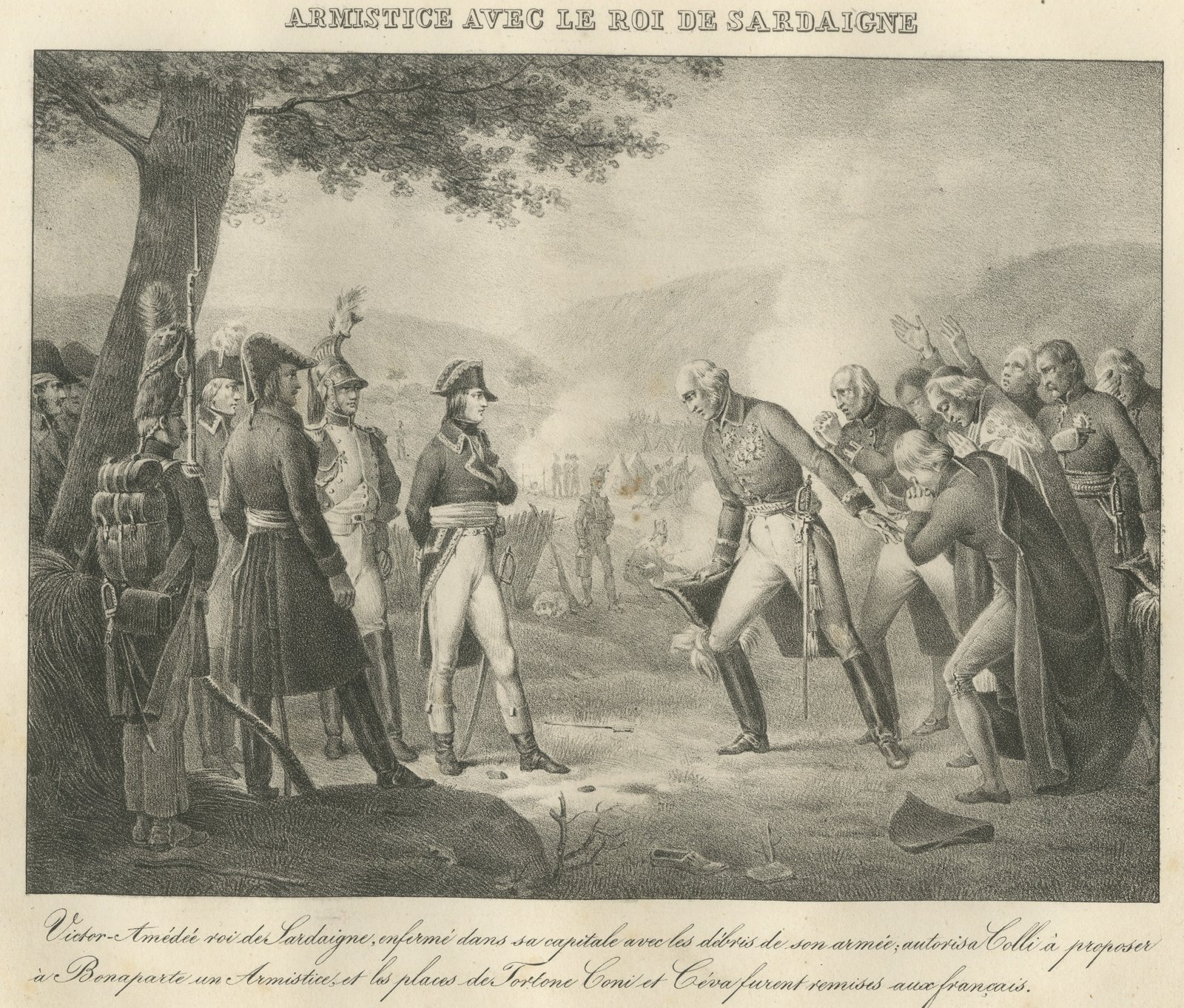
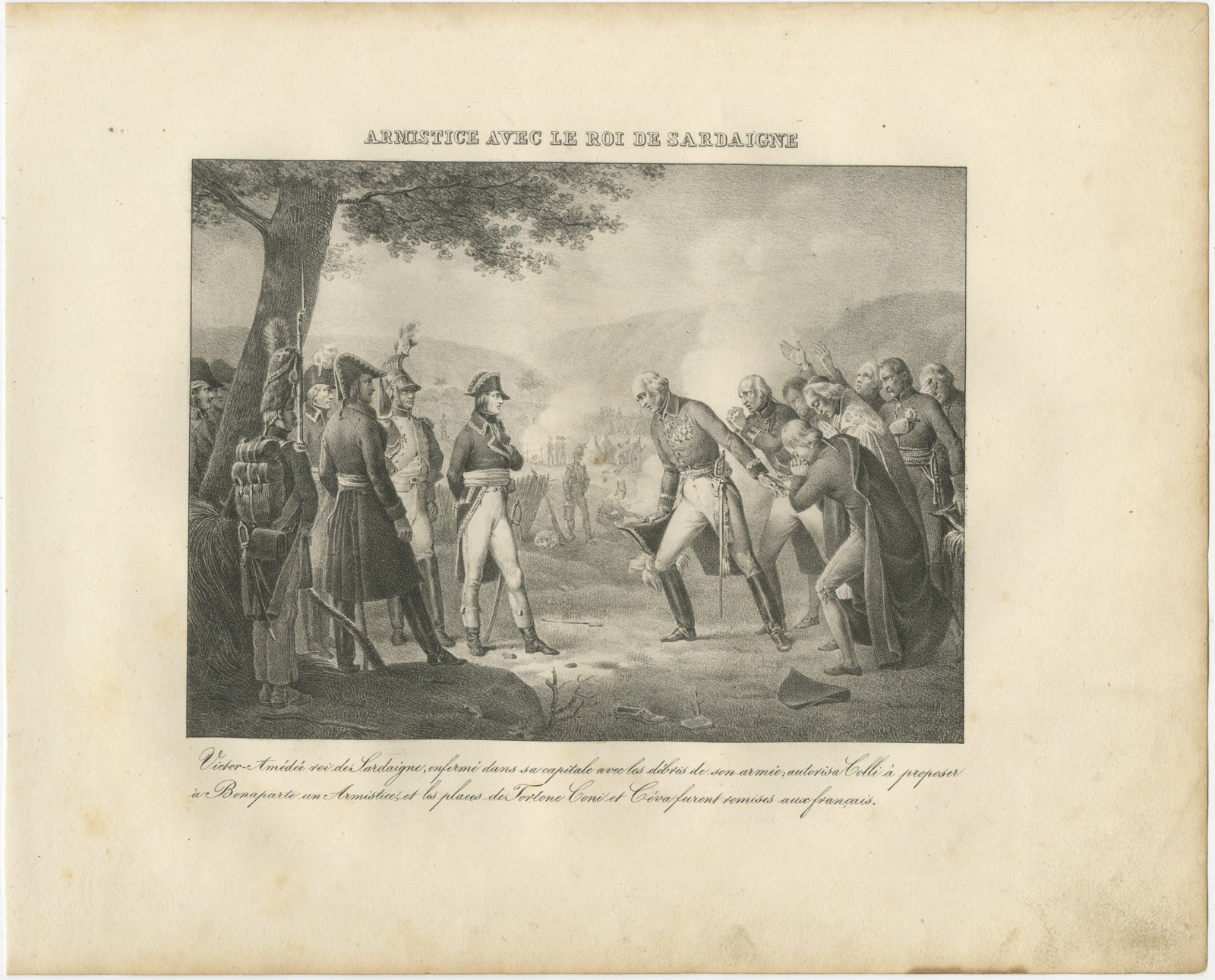
An original antique lithograph of the armistice between Bonaparte and the king of Sardinia, from Madou's Vie de Napoléon, published at Brussels in 1827. The sheet is lettered ARMISTICE AVEC LE ROI DE SARDAIGNE (Armistice with the King of Sardinia) above the image. Bonaparte stands with his officers and a grenadier under a tree at the left, while the elderly Sardinian envoys, in uniforms hung with orders, bow before him at the right, one covering his face, with the smoke and tents of the French camp in the distance between them.
The script caption below the image reads: Victor-Amédée roi de Sardaigne, enfermé dans sa capitale avec les débris de son armée; autorisa Colli à proposer à Bonaparte un Armistice, et les places de Tortone Coni et Céva furent remises aux français. In English: Victor Amadeus, king of Sardinia, shut up in his capital with the remnants of his army, authorized Colli to propose an armistice to Bonaparte, and the fortresses of Tortona, Cuneo and Ceva were handed over to the French.
Jean-Baptiste Madou, who lived from 1796 to 1877, was a Brussels lithographer who later made his name as a painter of genre scenes. Vie de Napoléon, published at Brussels in 1827 in two volumes by Marcellin Jobard's Lithographie royale, belongs to the first decade of his career.
The caption names the three fortresses surrendered under the armistice, signed at Cherasco in April 1796, which makes the sheet useful to anyone following the campaign on a contemporary map. The printing is lithographic, black on wove paper, and the sheet is uncolored.
Condition: Age toning, darker at the edges; handling soiling along the edges and scattered foxing in the margins. Printed image clean.
The oblong format hangs well over a desk or a mantelpiece, and because the plates share one format and one style of lettering, a group bought together reads as a set rather than as an assortment.
This is an original antique print, not a modern reproduction. This item is sold unframed. Any framed or interior images are shown for presentation and inspiration only, unless the listing explicitly states that the item is sold framed.