Close-ups
Framed and on the wall
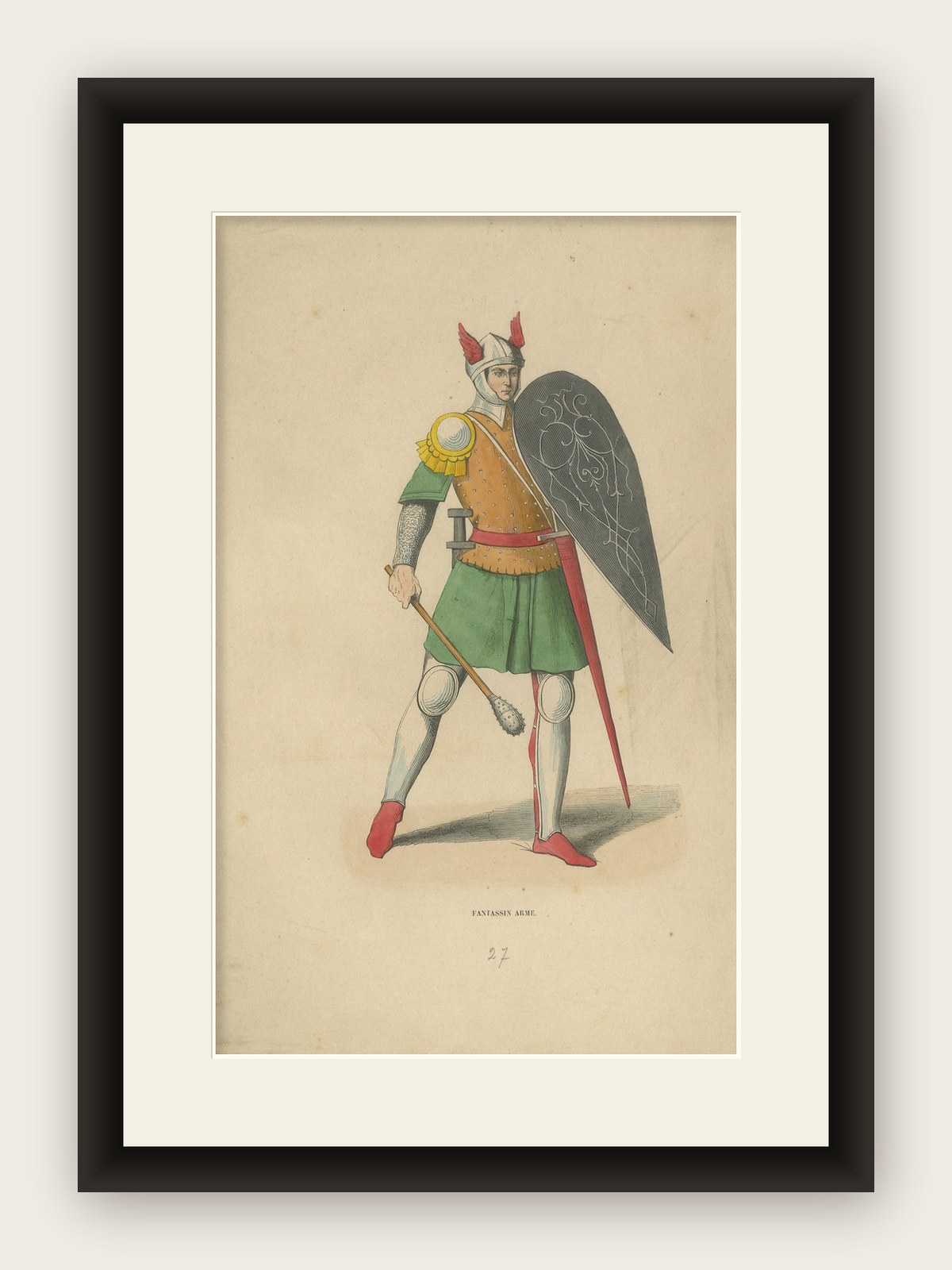


Frame and rooms are illustrations of how the piece could look; it is sold unframed unless the description says otherwise.
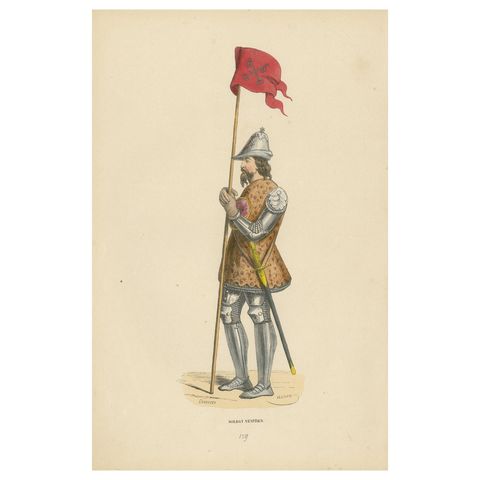
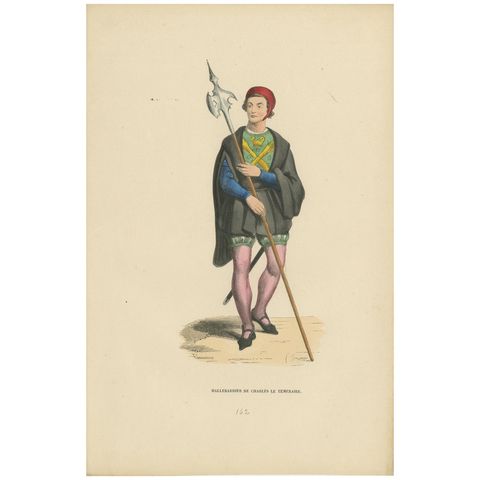
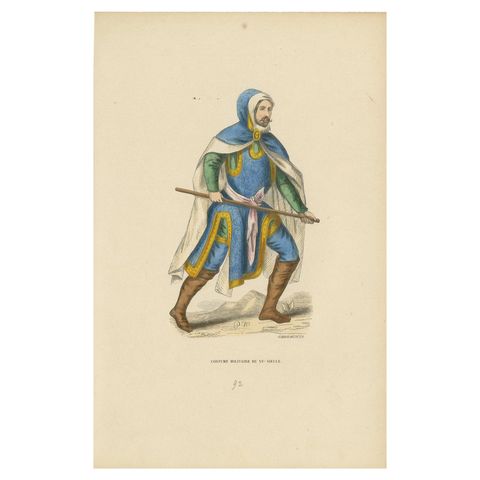
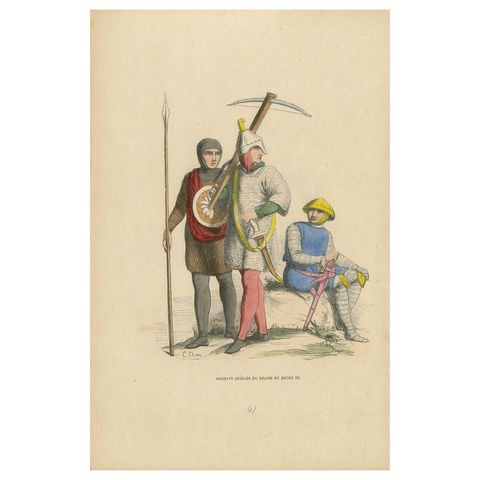
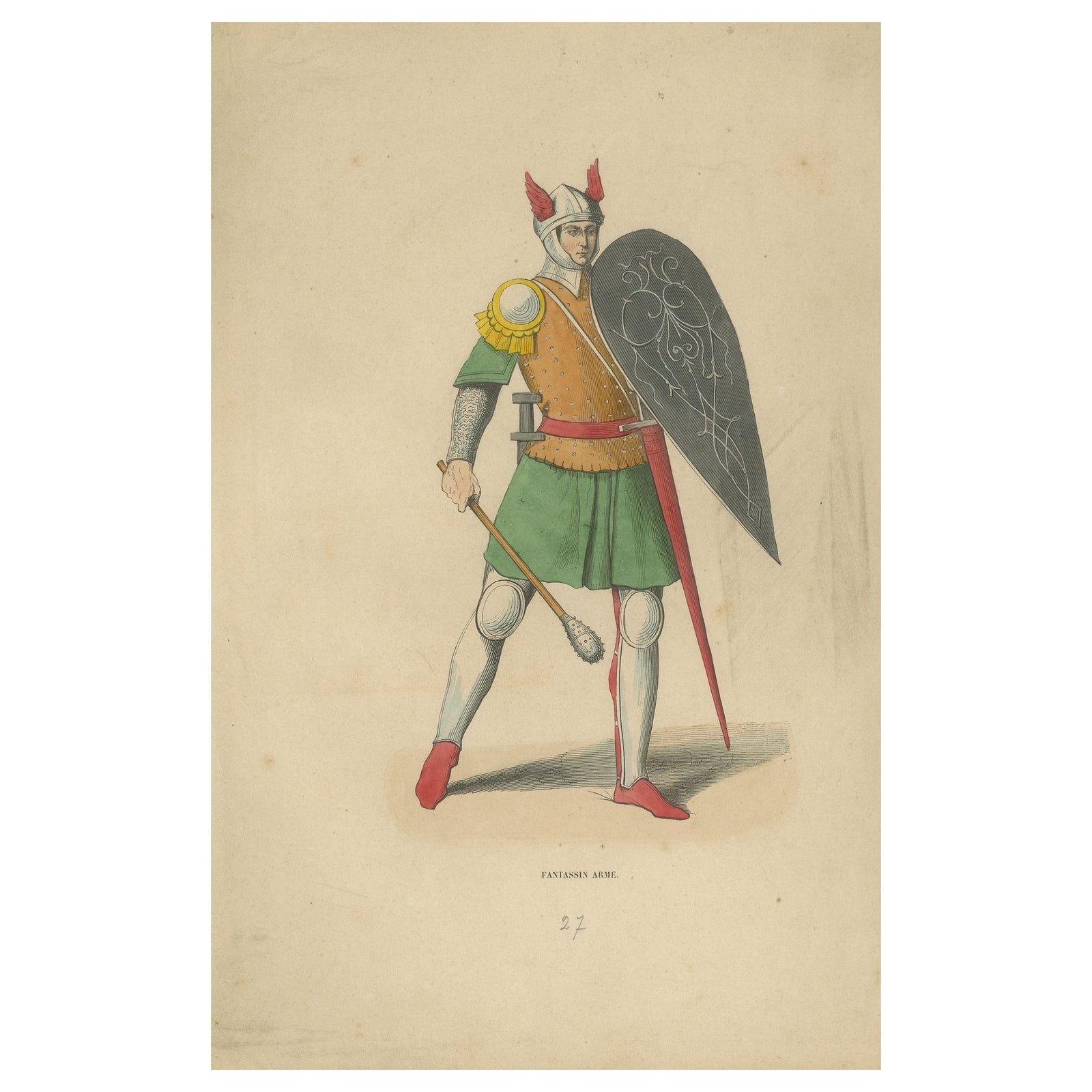
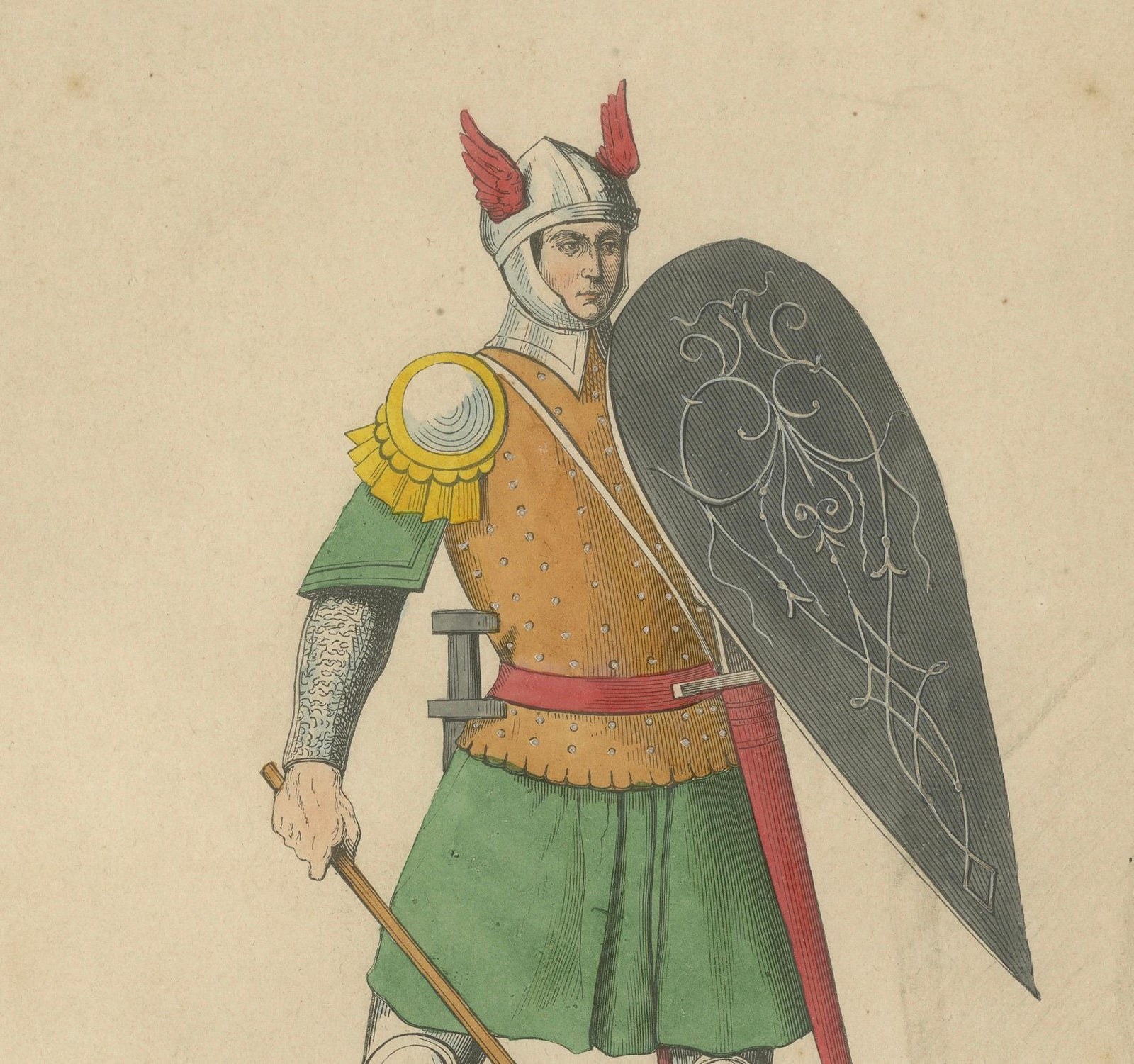
Vigilance in Arms: A Renaissance Infantryman Prepared for Battle, 1847
£145
$190 · €170
Original print, not a reproduction.
Ships worldwide from the Netherlands, flat, insured and tracked. 14-day returns. To buy, use Ask a question and we will reserve it for you.
- Date
- 1847
- Sheet size
- 10.6 × 7.1 in (27 × 18 cm)
- Condition
- Good. Good. Overal very light toning and light soiling but the image itself clean and hand-colored almost 200 years ago and still in expliciet colors. Aged paper with typically warm, yellowish-brown hue, mostly around the edges. Study the image carefully.
- Collection
- Uniforms & regiments
- Era
- 1816 to 1899, Empire and industry
- Stock no.
- f_37886852
The image for sale depicts a figure labeled "Fantassin armé," which translates to "Armed Infantryman." The infantryman is shown in a dynamic pose, holding a shield and a mace, indicating that he is ready for battle.
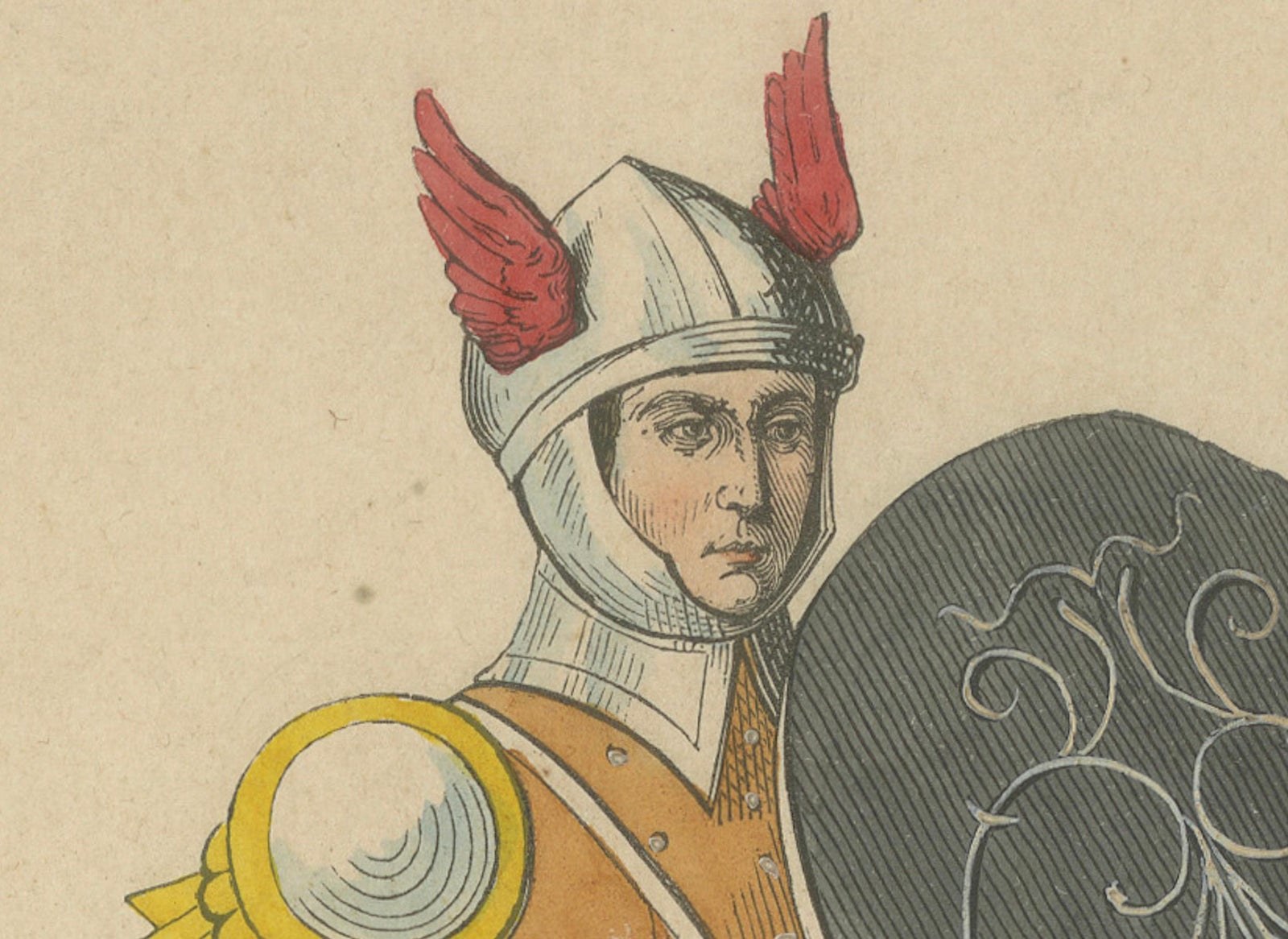
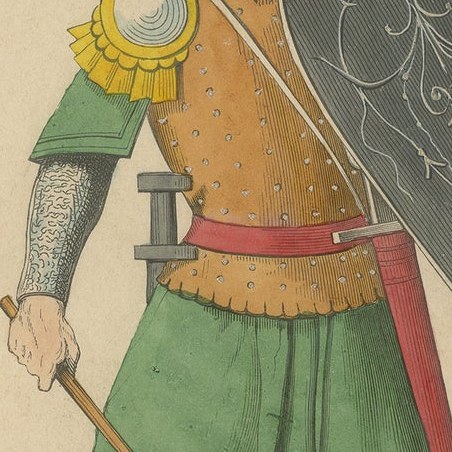
He is wearing a helmet adorned with wings, a feature that often signifies a high rank or an elite unit in various cultures' military traditions. His armor is comprised of a cuirass with shoulder pauldrons and chainmail sleeves, providing a combination of mobility and protection. The skirt-like garment over his armor is likely a gambeson, which is a padded defensive jacket worn by soldiers. The green color of his skirt and the red accents on his hose and shoes add to the visual distinction of his attire.
The shield is oval-shaped and decorated with a design indicative of his rank or affiliation. His stance, with one leg forward and the shield raised, suggests he is either in the midst of combat or prepared to engage.
The title captures the readiness and martial aspect of the figure.
More about the vivid colors of this original hand-colored antique print:
Egg whites can be applied as a varnish over pigments to enhance their brightness and to protect the colors. This application could make the colors appear more vivid and also add a slight glossy sheen to the surface of the image.
Egg yolk, on the other hand, was commonly used as a binding agent in paint. It forms the basis of tempera paint, a medium that was widely used before the advent of oil painting. Egg yolk helps to create a durable and long-lasting color that adheres well to various surfaces.
In the context of the print from 1847, it's less likely that egg whites or yolks were used directly on the print, as by that time, commercial printing processes would have been more advanced and less reliant on such manual methods. However, if this print is a representation of an earlier style or is meant to mimic the appearance of hand-painted manuscripts, the original artists might have employed techniques or materials that gave a similar effect to those achieved with egg-based binders and varnishes.