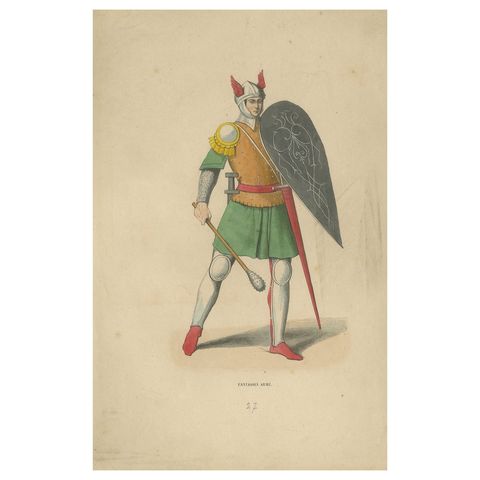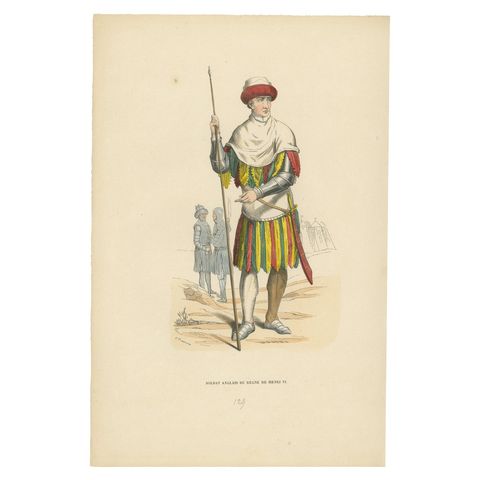
Close-ups
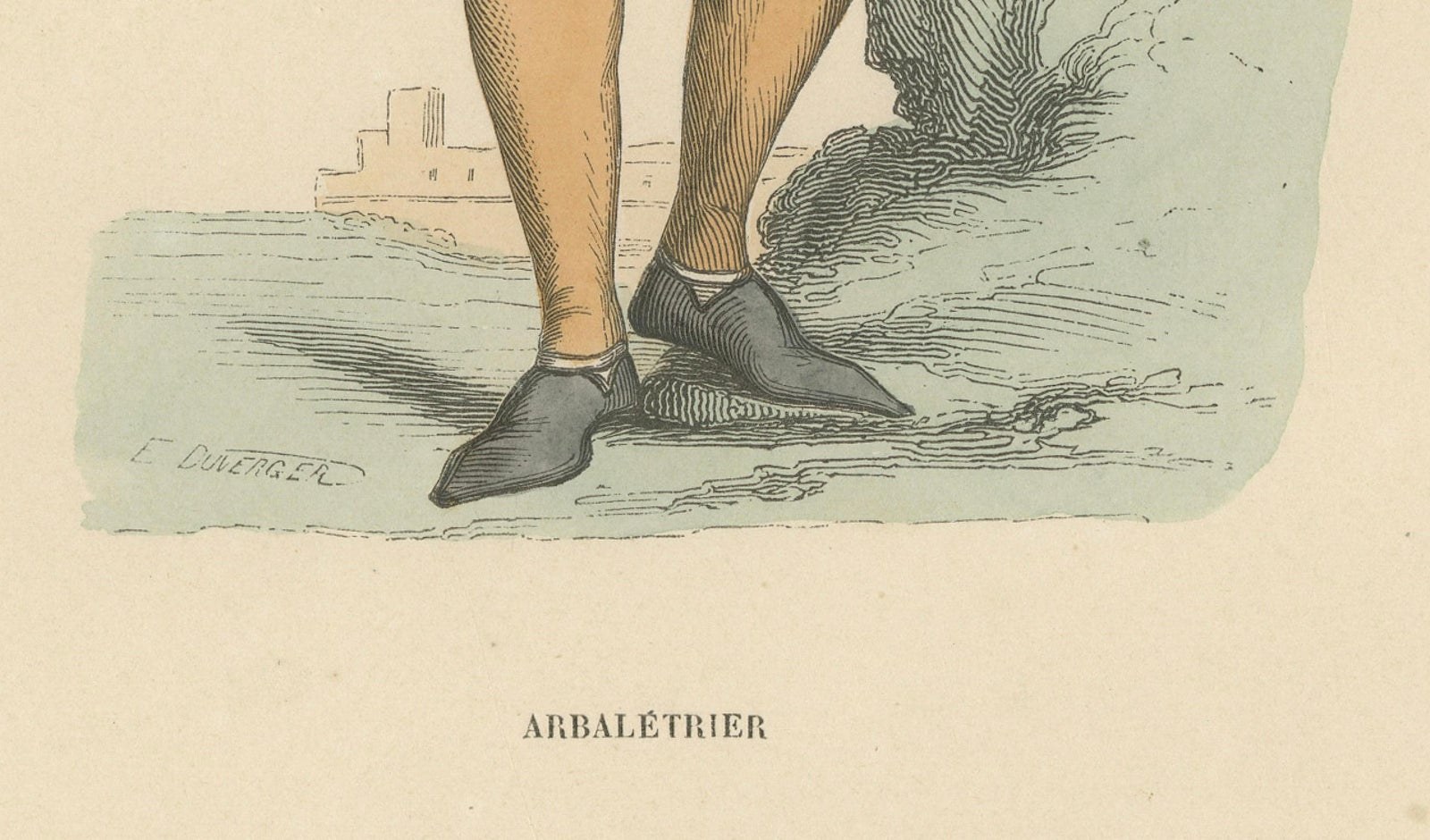
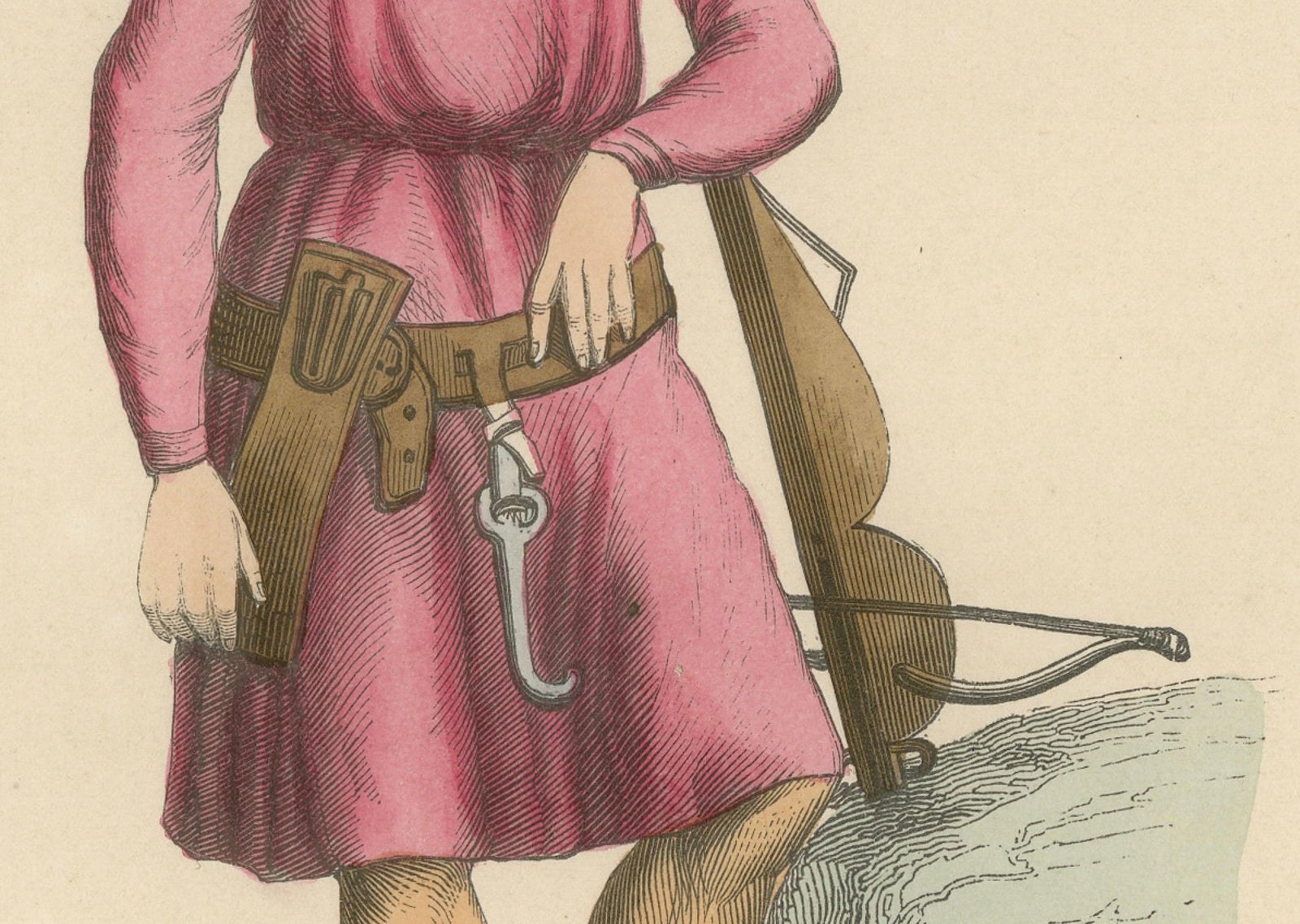
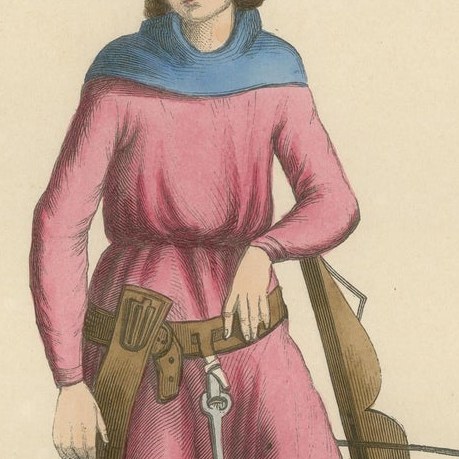
Framed and on the wall
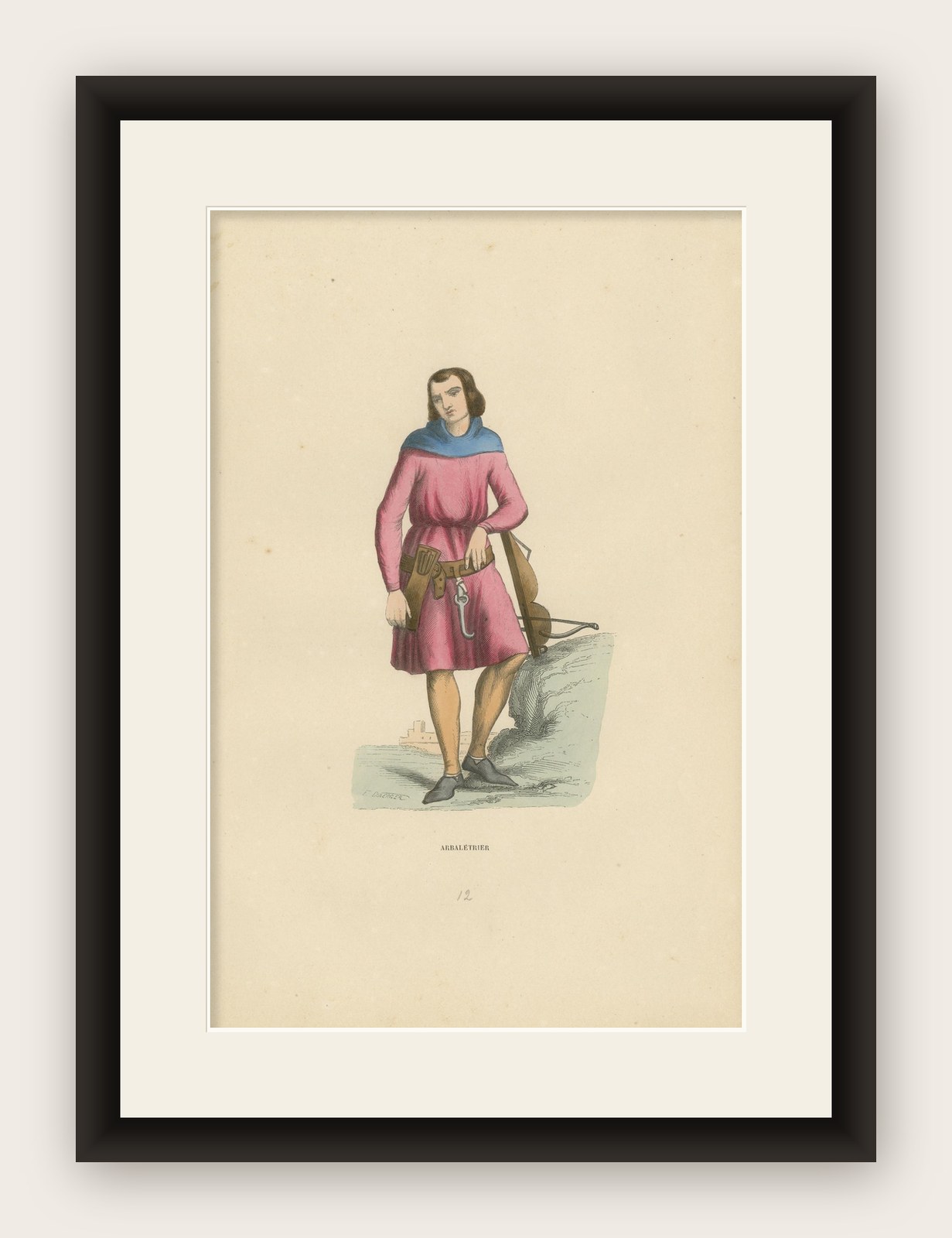


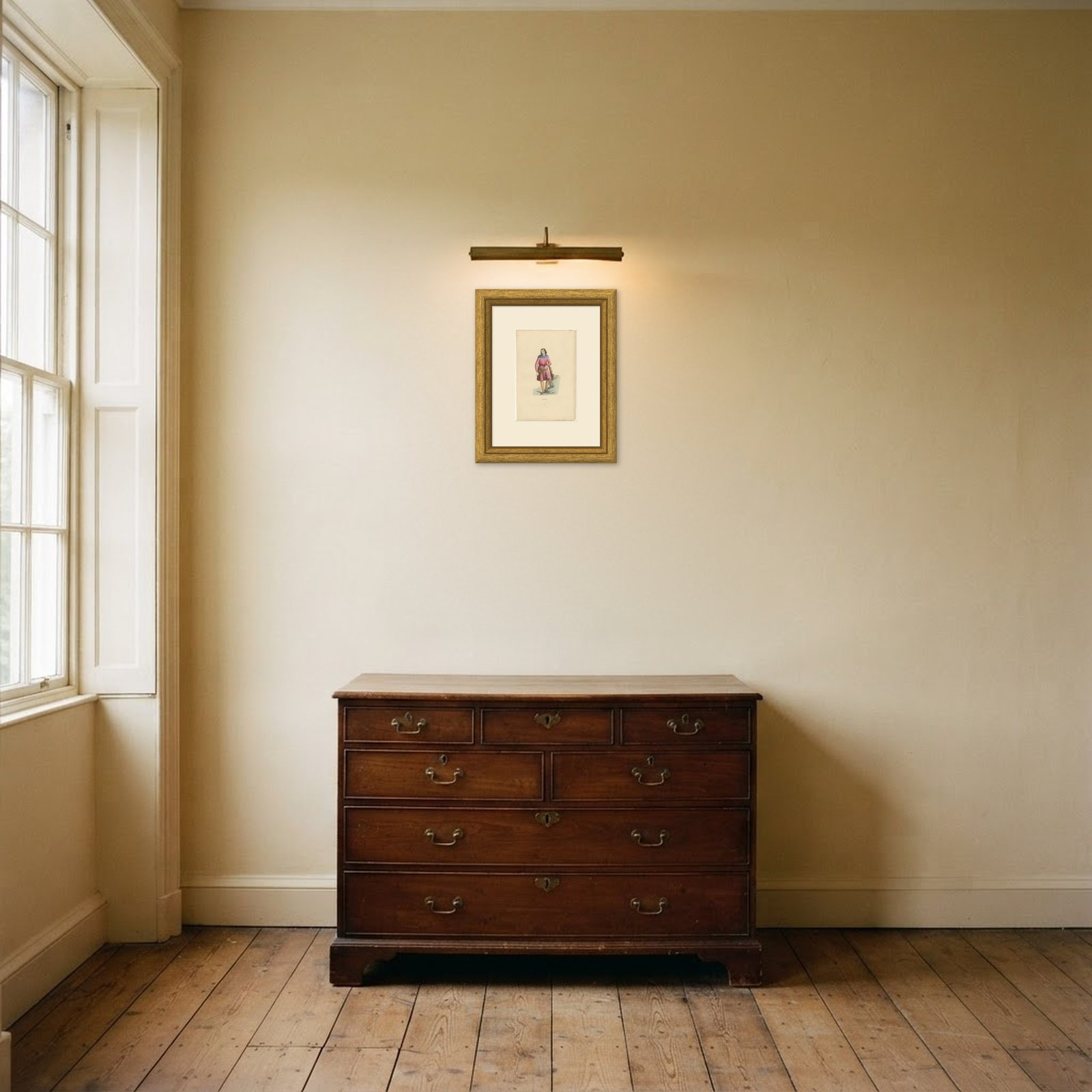
Frame and rooms are illustrations of how the piece could look; it is sold unframed unless the description says otherwise.
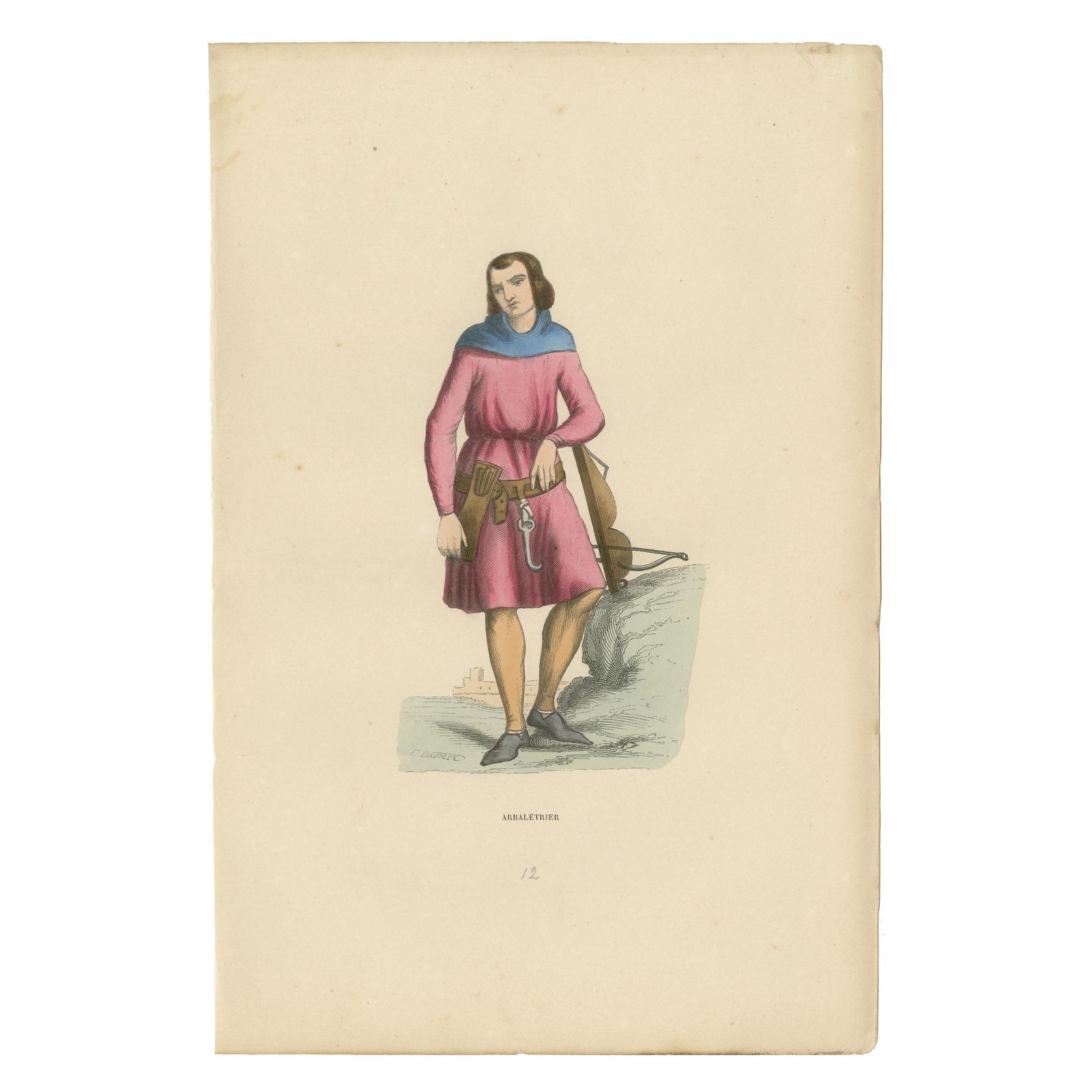
Engraving of a Guardian of the Fort: The Medieval Arbaletrier, 1847
£125£9030% off
$115 · €105
Original print, not a reproduction.
Ships worldwide from the Netherlands, flat or rolled, insured and tracked. 14-day returns.
- Date
- 1847
- Sheet size
- 10.6 × 7.1 in (27 × 18 cm)
- Condition
- Good. Good. Overal very light toning and light soiling but the image itself clean and hand-colored almost 200 years ago and still in expliciet colors. Aged paper with typically warm, yellowish-brown hue, mostly around the edges. Study the image carefully.
- Collection
- Uniforms & regiments
- Era
- 1816 to 1899, Empire and industry
- Stock no.
- BG-13635-7
What the condition grades mean
- Excellent
- Bright and clean, with no faults worth mentioning.
- Very good
- Only light signs of age, such as faint toning.
- Good
- Normal signs of age for a sheet of this period: toning, some foxing, small marks or neat old repairs.
- Fair
- Clear faults such as staining, tears or repairs, priced to match.
Every fault we see is written in the condition note, and the whole sheet is shown uncropped in the photos.
The image is labeled "Arbaletrier," which is French for crossbowman. It depicts a medieval soldier equipped for battle.
The crossbowman is dressed in a pink tunic with a blue collar, which stands out boldly against the simpler tunics often worn by soldiers of the time. His outfit is practical for combat, allowing for movement while providing some level of protection. He has a belt with a pouch and what appears to be a key, and he is carrying a crossbow, indicative of his role as an arbaletrier. His shoes are simple and functional, appropriate for marching or standing on uneven ground during battle.
His stance is confident, with the crossbow held in one hand and his weight shifted onto one leg, perhaps indicating readiness for action or a moment of rest. The presence of a castle or fortified town in the background suggests he may be standing guard or preparing for a siege.
The colors have a nice glow over them. Historically, egg whites, known as glair, and sometimes egg yolk were indeed used in illumination and painting, particularly in manuscripts, to give colors a brighter appearance and to add a sheen or gloss to the work. This technique was quite common during the Middle Ages and into the Renaissance.
Egg whites can be applied as a varnish over pigments to enhance their brightness and to protect the colors. This application could make the colors appear more vivid and also add a slight glossy sheen to the surface of the image.
Egg yolk, on the other hand, was commonly used as a binding agent in paint. It forms the basis of tempera paint, a medium that was widely used before the advent of oil painting. Egg yolk helps to create a durable and long-lasting color that adheres well to various surfaces.
In the context of the print from 1847, it's less likely that egg whites or yolks were used directly on the print, as by that time, commercial printing processes would have been more advanced and less reliant on such manual methods. However, if this print is a representation of an earlier style or is meant to mimic the appearance of hand-painted manuscripts, the original artists might have employed techniques or materials that gave a similar effect to those achieved with egg-based binders and varnishes.