Close-ups
Framed and on the wall
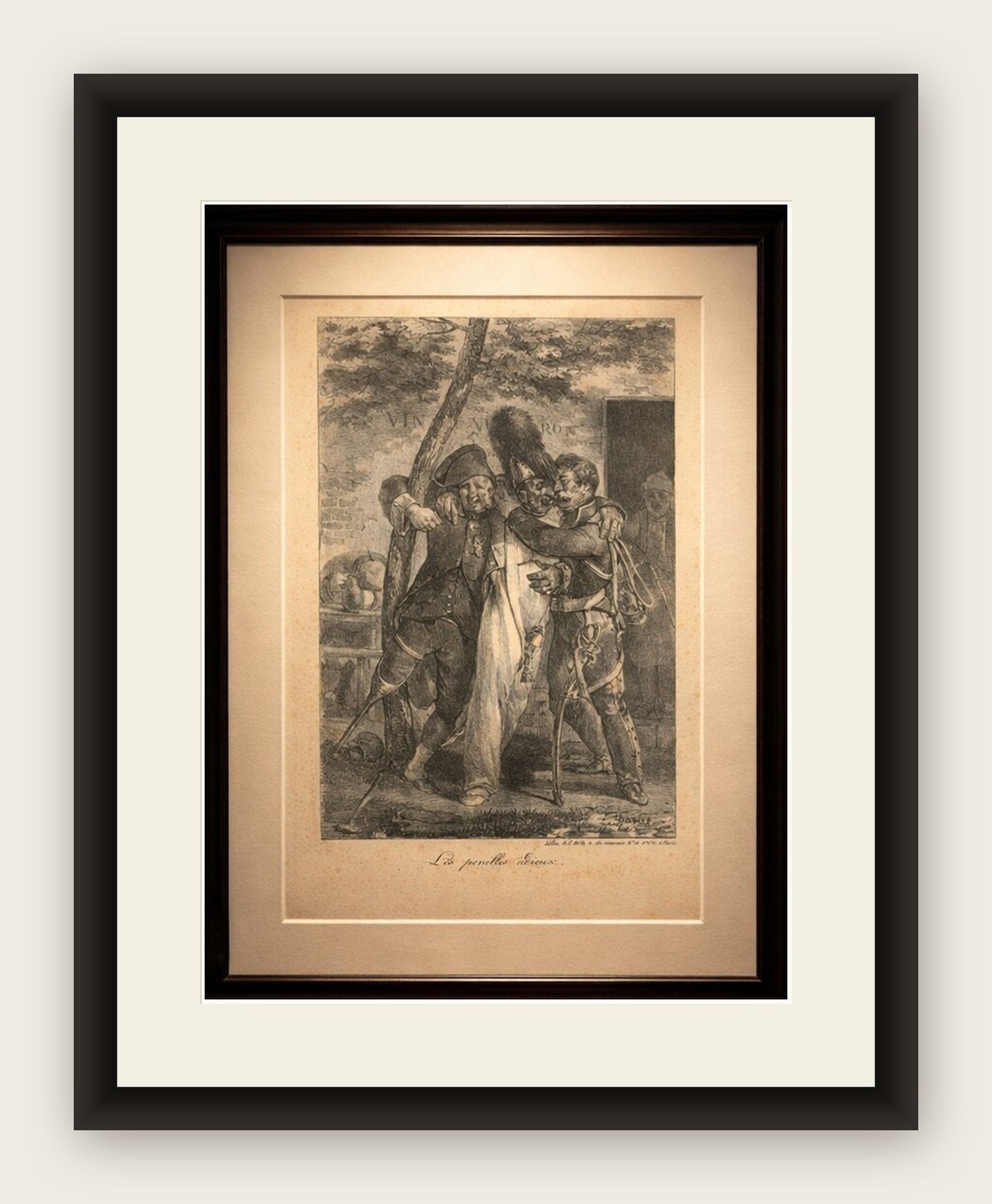
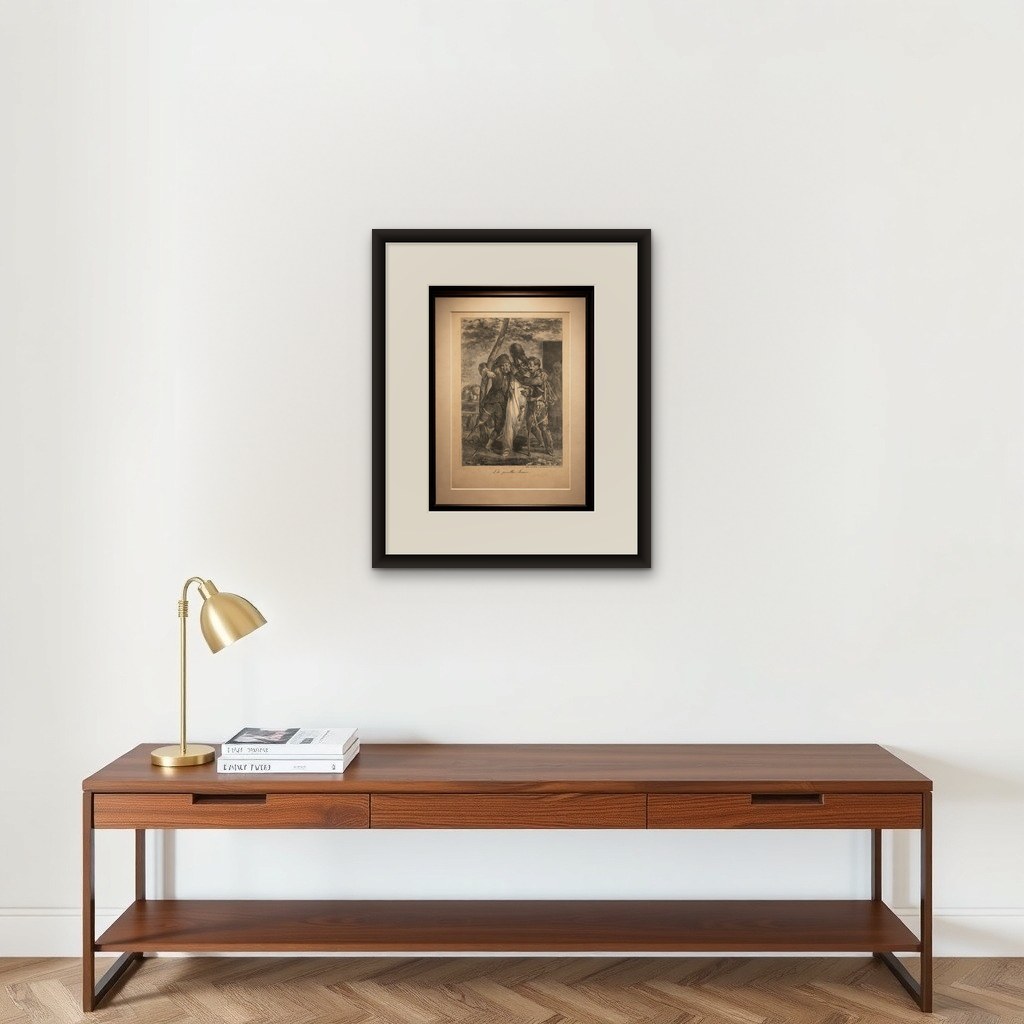

Frame and rooms are illustrations of how the piece could look; it is sold unframed unless the description says otherwise.
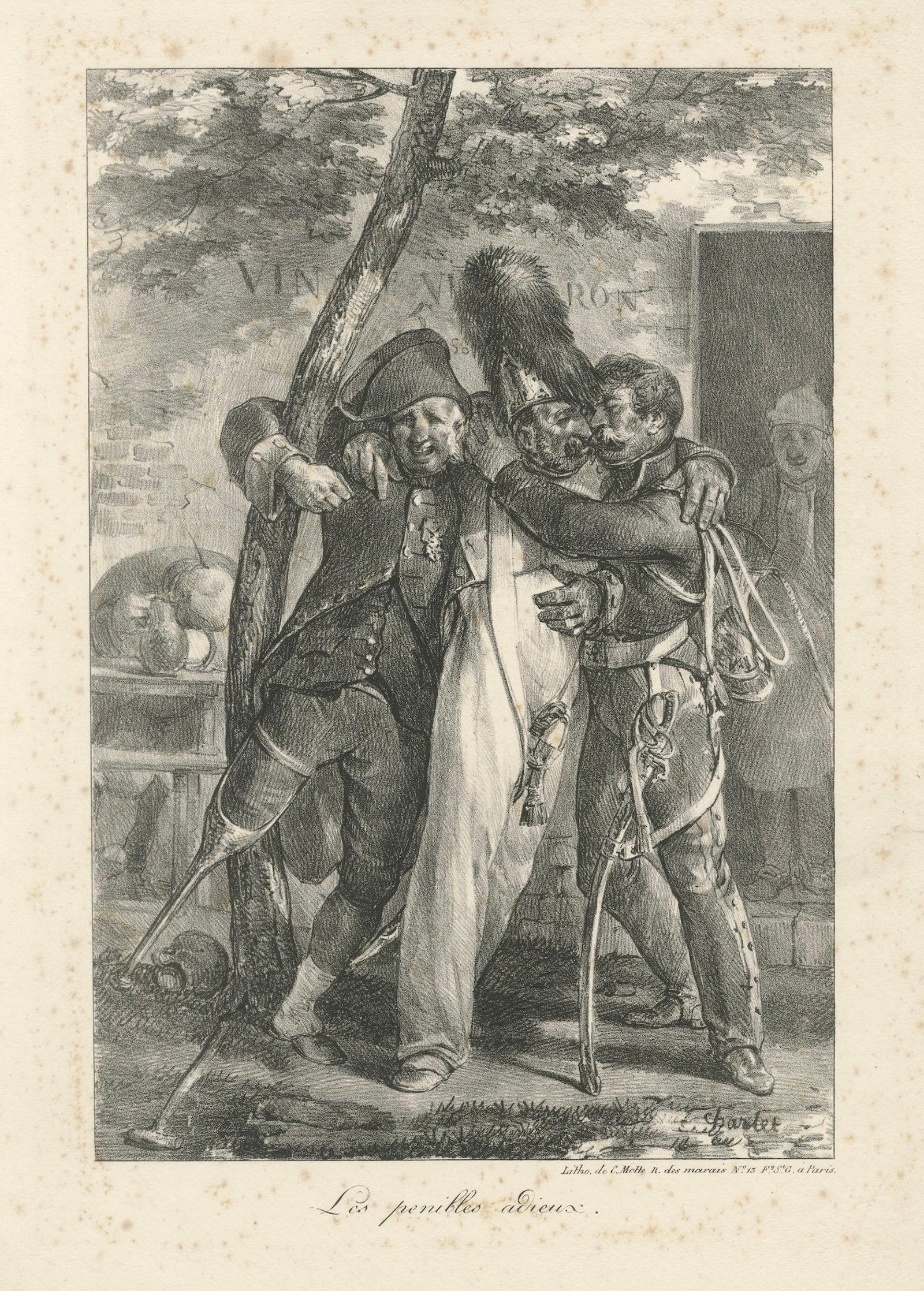
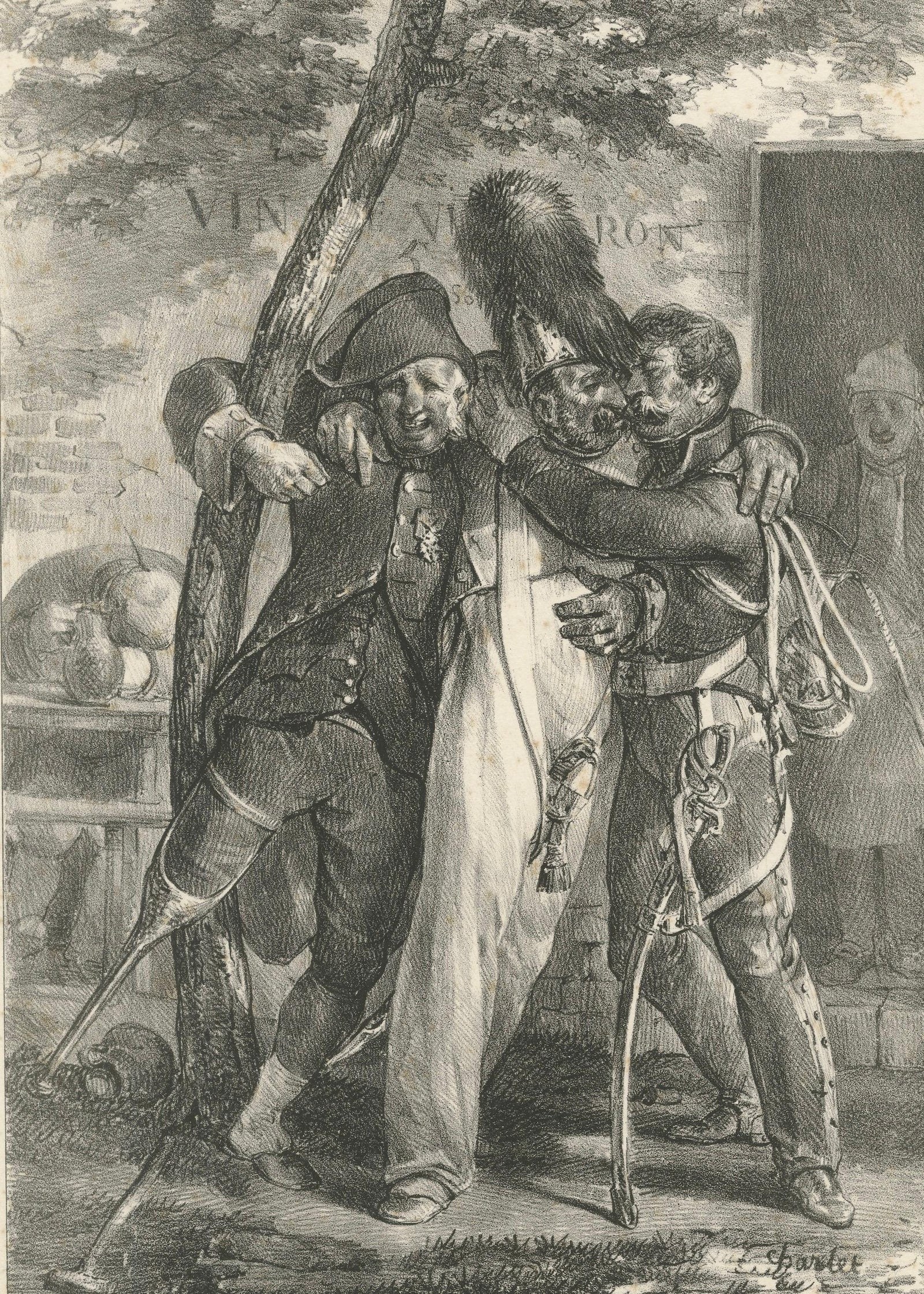
Les pénibles adieux, Charlet Napoleonic Soldiers Lithograph, c.1825
$240
€215 · £180
Original print, not a reproduction.
Ships worldwide from the Netherlands, flat, insured and tracked. 14-day returns. To buy, use Ask a question and we will reserve it for you.
- Date
- 1825
- Sheet size
- 16.8 × 11.3 in (42.7 × 28.6 cm)
- Condition
- Fair. Fair to good impression with clear detail. Visible foxing and age-related spotting throughout the sheet, consistent with 19th-century paper. Minor handling wear to the margins wiht one repaired tear touching the margins.
- Collection
- Uniforms & regiments
- Era
- 1816 to 1899, Empire and industry
- Stock no.
- f_49292212
Les pénibles adieux, Charlet Napoleonic Soldiers Lithograph, c.1825
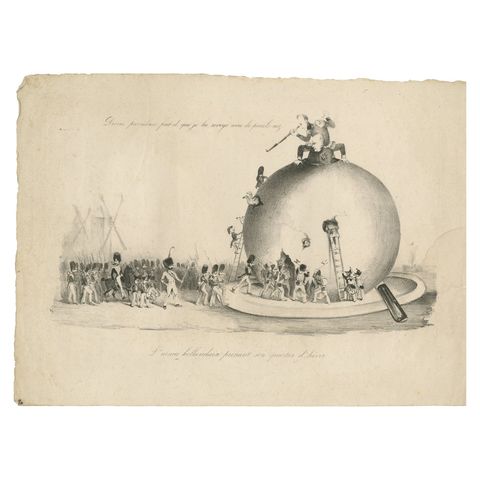
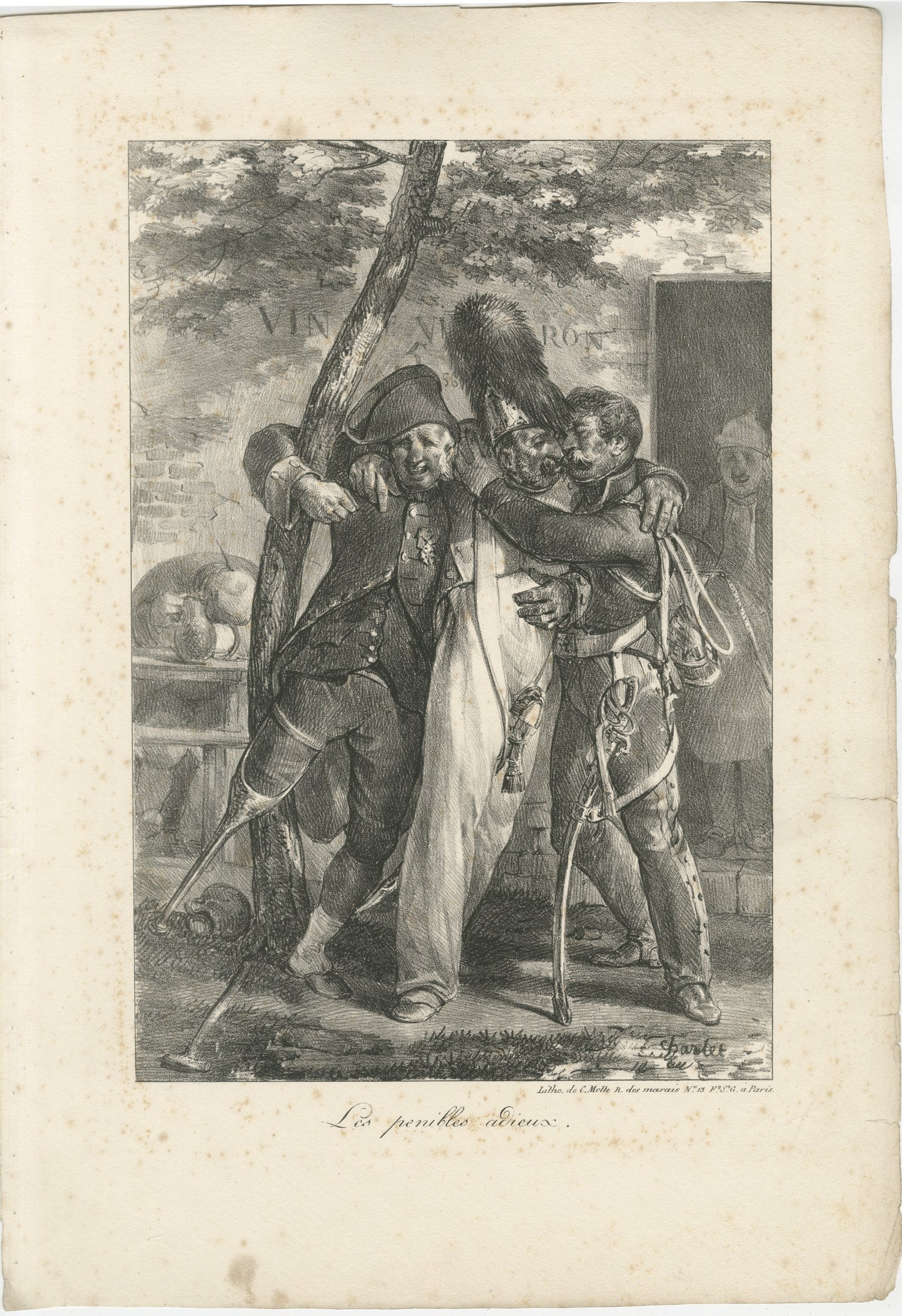
A finely executed 19th-century French lithograph titled Les pénibles adieux (“The Painful Farewells”), after Nicolas-Toussaint Charlet, one of the most recognized artists of the Napoleonic era. Printed in Paris by the noted lithographer Charles Motte, this evocative composition captures a deeply human moment of parting among soldiers, reflecting the emotional weight and physical toll of military life in the aftermath of the Napoleonic Wars.
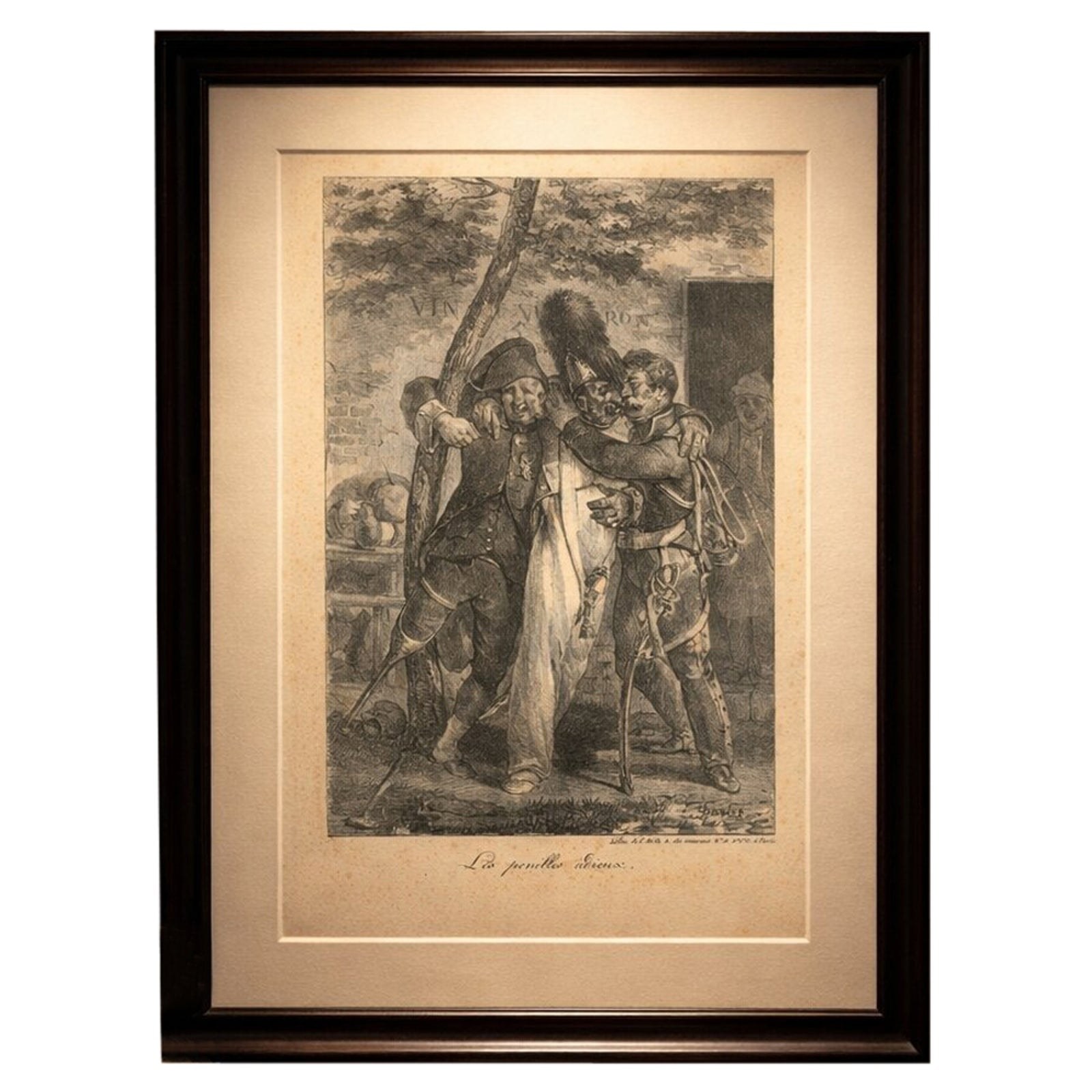
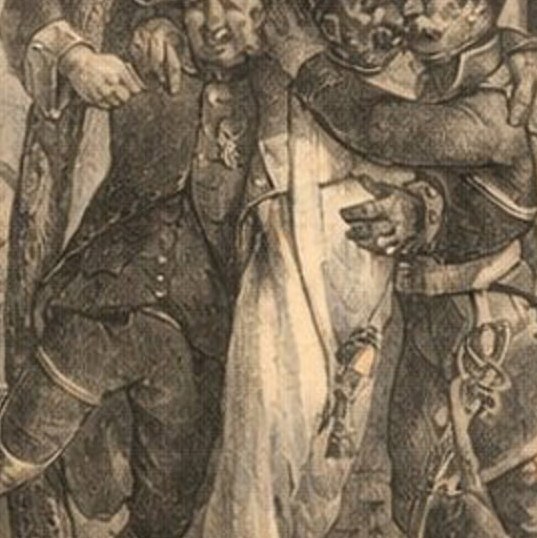
The scene depicts a group of veterans in a moment of intimate farewell, rendered with Charlet’s characteristic blend of realism and sentiment. The central figures, dressed in military attire, embrace with visible emotion, while subtle details, such as the wooden leg of one soldier, underscore the lasting impact of war. Charlet was widely admired for his ability to humanize soldiers, portraying not only their bravery but also their vulnerability, hardship, and camaraderie.
Executed in lithography, a technique that allowed for softer tonal transitions and expressive line work, the print demonstrates a strong sense of atmosphere and narrative. The composition balances movement and stillness, with carefully observed gestures and expressions that draw the viewer into the scene. Works such as this were highly popular in early 19th-century France, resonating with a public still shaped by the legacy of Napoleon and his armies.
Charlet’s prints remain highly collectible for their historical significance and decorative appeal, particularly among collectors of military subjects and French Romantic-era art. This example, with its strong storytelling and period authenticity, is well suited for both collectors and interior settings seeking a refined historical accent.
Condition: Fair to good impression with clear detail. Visible foxing and age-related spotting throughout the sheet, consistent with 19th-century paper. Minor handling wear to the margins wiht one repaired tear touching the margins. Overall in stable and presentable condition.
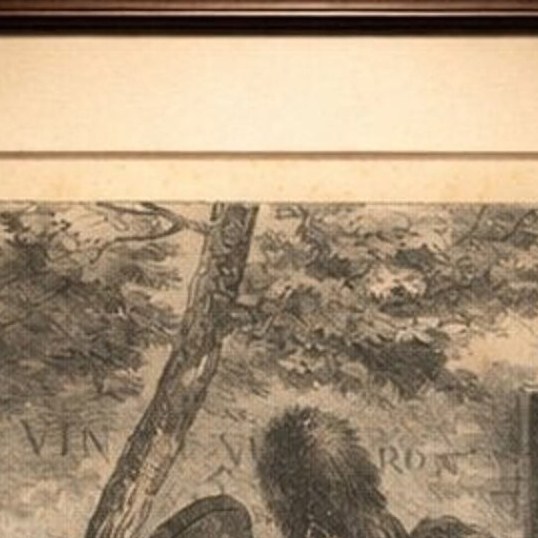
Framing: Displays well in a dark wood or black frame with a warm ivory mat, which helps balance the toning and enhances the contrast of the image. Museum glass is recommended. Suitable for display in a study, hallway, or classic interior setting.
Note: This lithograph is an original antique print and not a reproduction. It is offered unframed. Frame shown for presentation purposes only.
Technique: Lithograph
Maker: Nicolas-Toussaint Charlet / Charles Motte, France, c.1825