Close-ups
Framed and on the wall

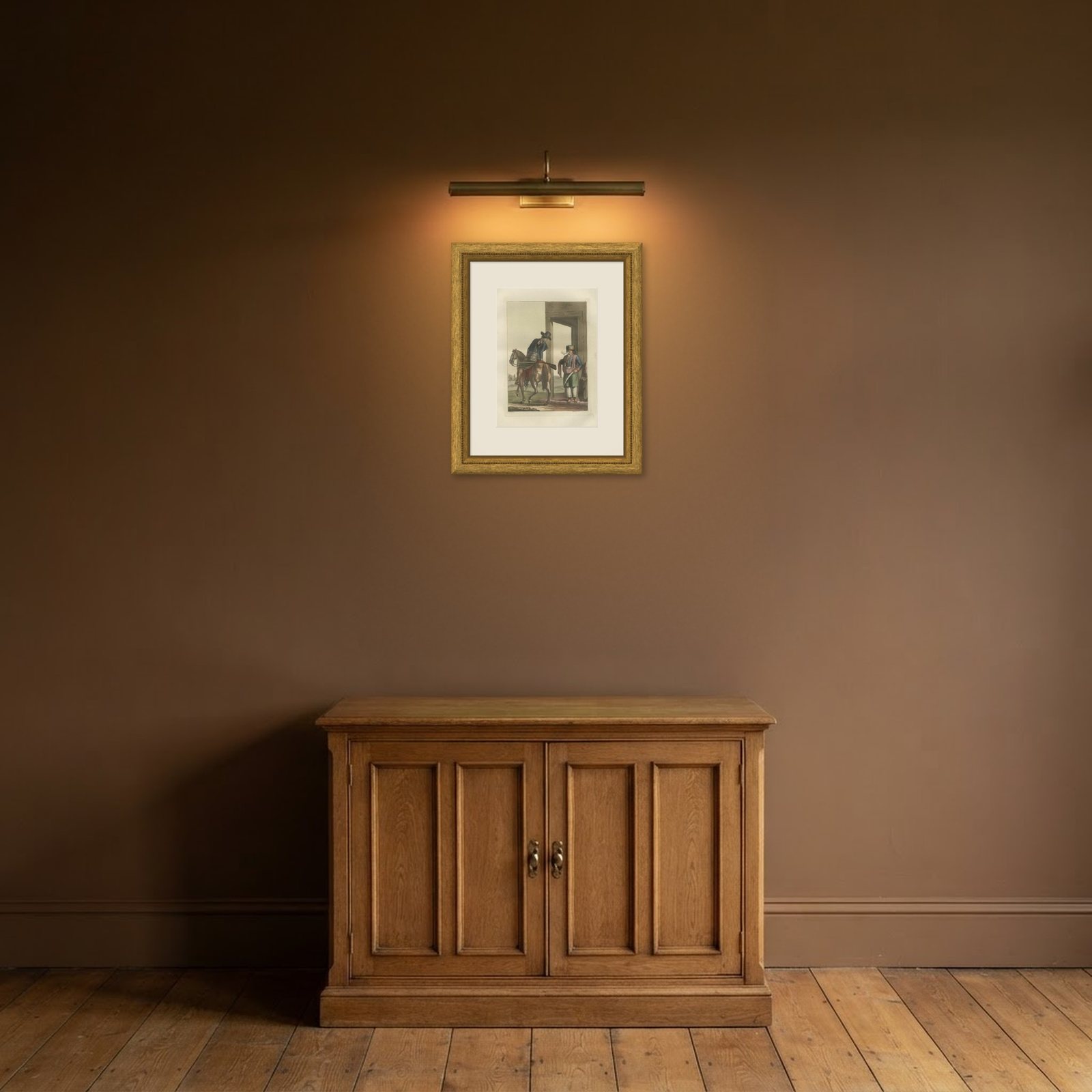

Frame and rooms are illustrations of how the piece could look; it is sold unframed unless the description says otherwise.
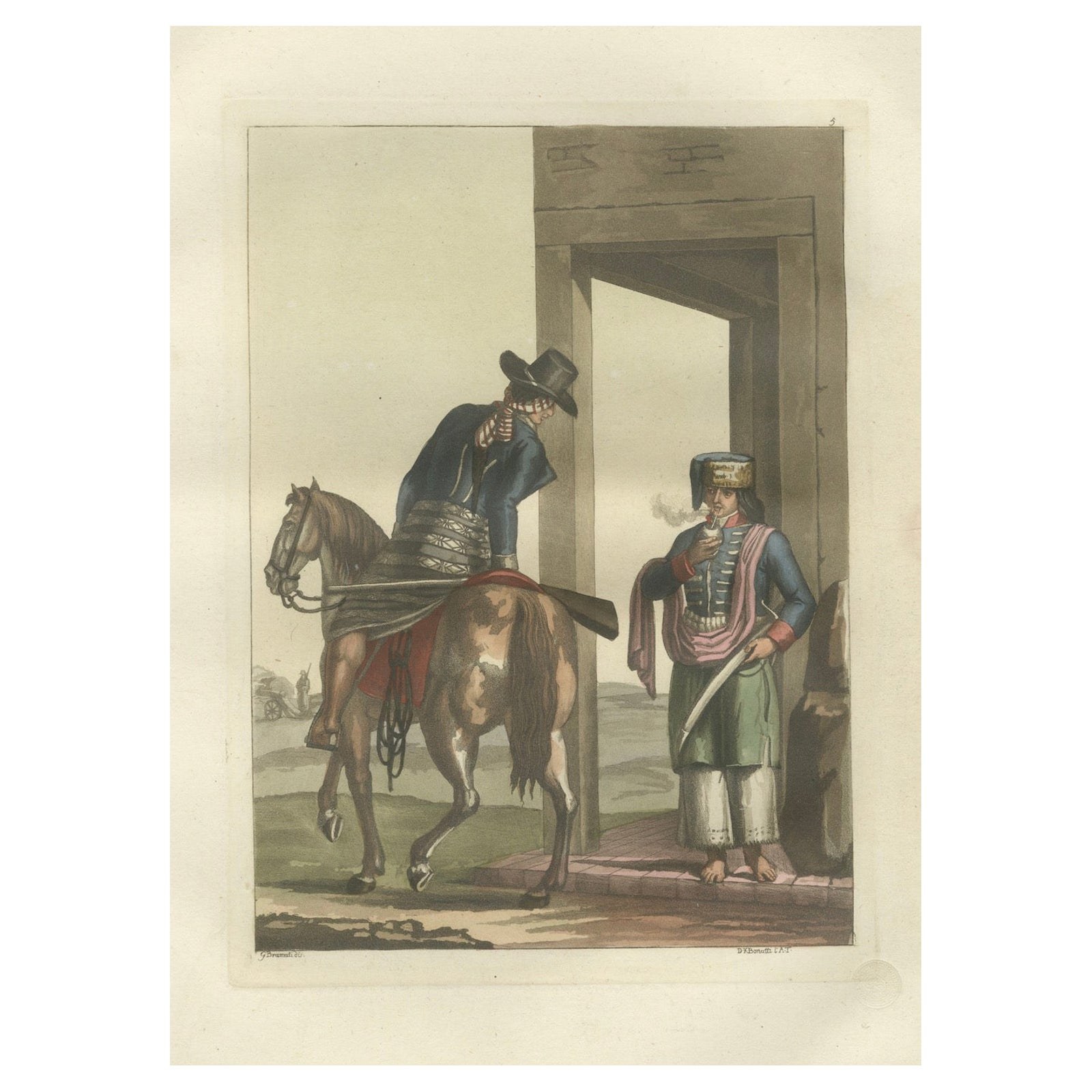
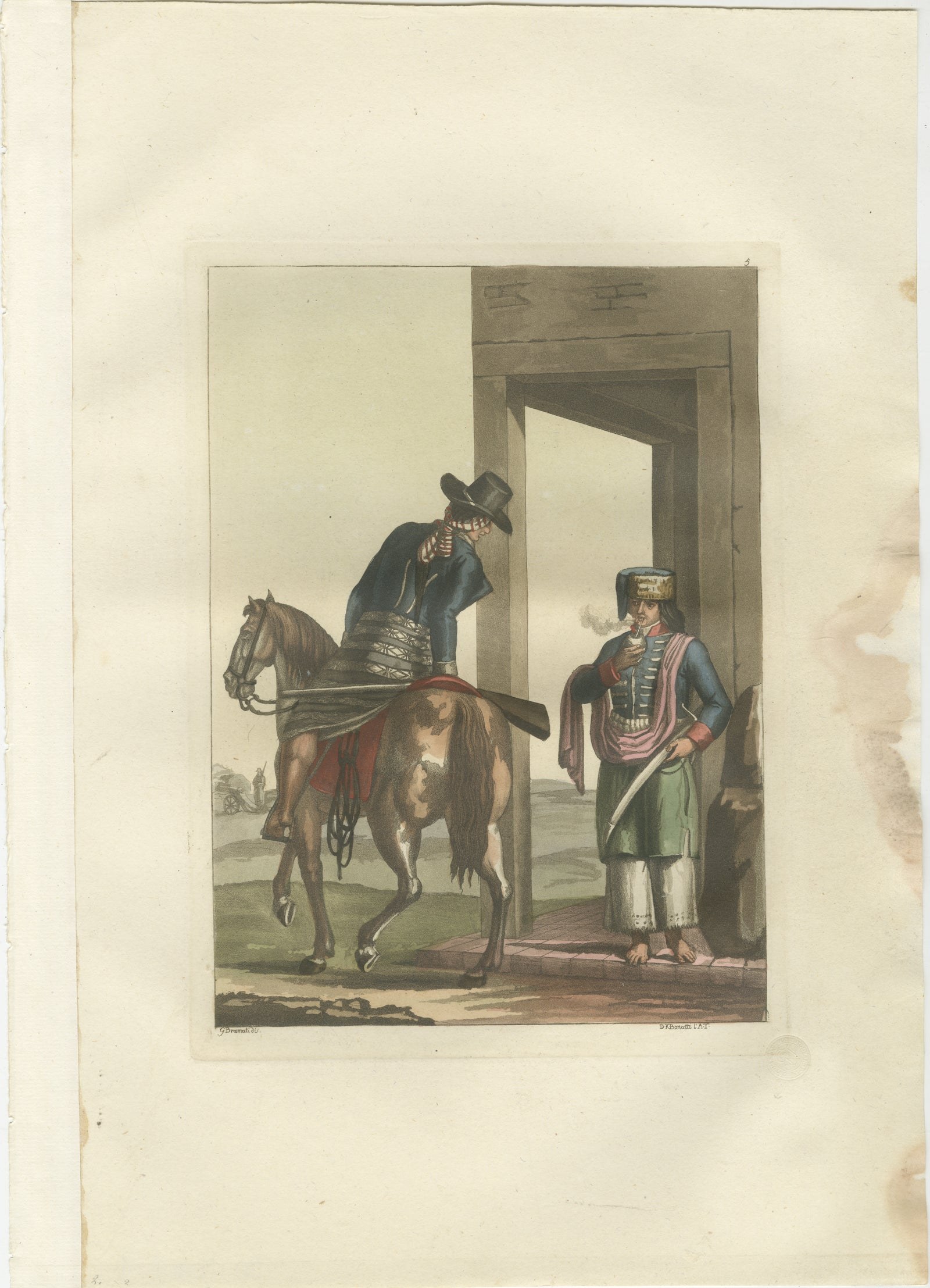
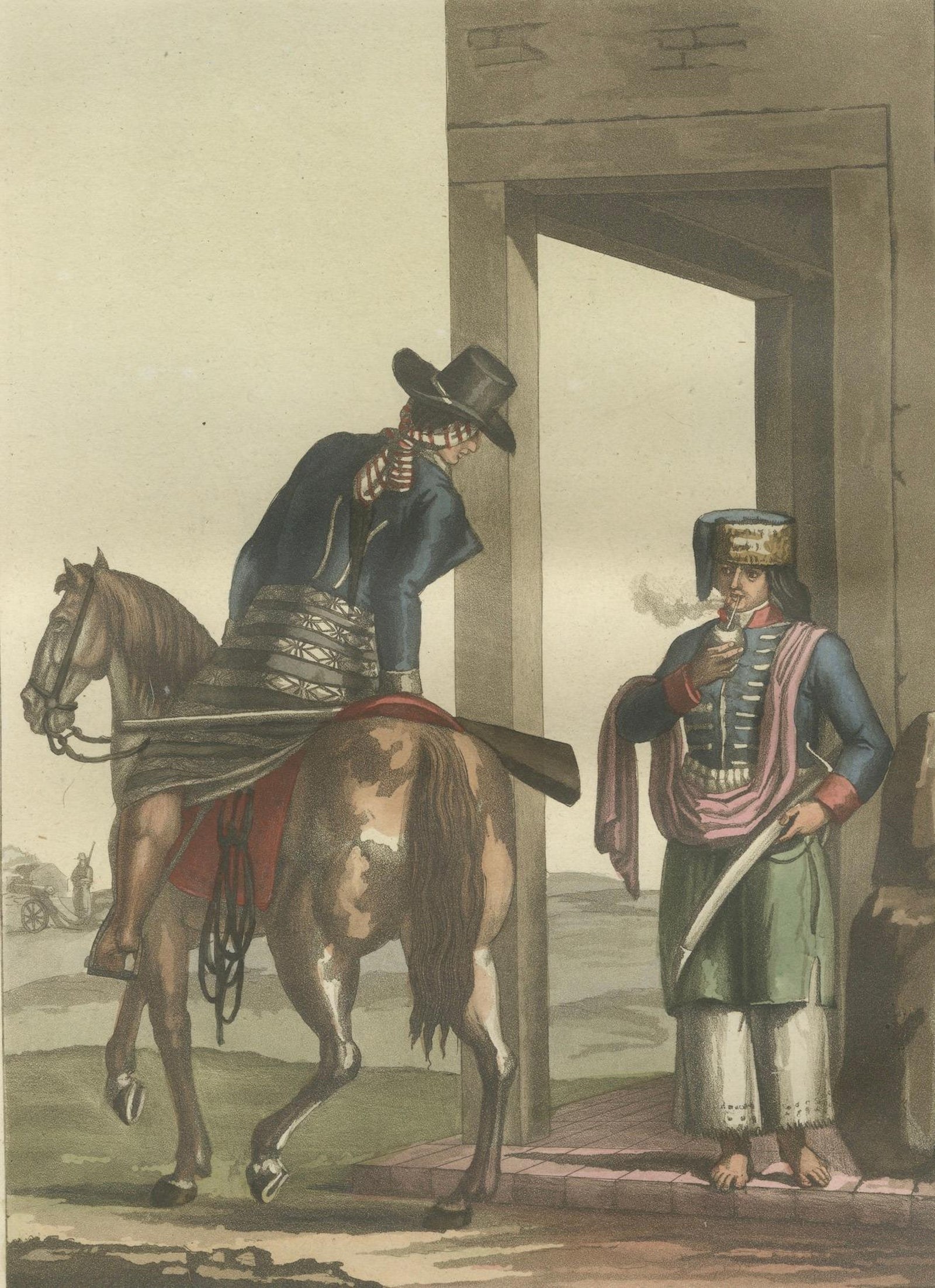
Soldiers at Rio de la Plata, Eastern Beach in Argentina by Ferrario-Bonatti 1821
$210$14530% off
€133 · £110
Original print, not a reproduction.
Ships worldwide from the Netherlands, flat or rolled, insured and tracked. 14-day returns.
- Date
- 1821
- Sheet size
- 14.4 × 10.2 in (36.5 × 26 cm)
- Condition
- Fair. Given age. Light soiling. Remains of paper strip from binding at left margin. Blind stamp as issued at right bottom. General age-related toning and an old damp spot in the right margin. not in the image. Please study scans carefully.
- Collection
- Uniforms & regiments
- Era
- 1816 to 1899, Empire and industry
- Stock no.
- BG-13806-1
What the condition grades mean
- Excellent
- Bright and clean, with no faults worth mentioning.
- Very good
- Only light signs of age, such as faint toning.
- Good
- Normal signs of age for a sheet of this period: toning, some foxing, small marks or neat old repairs.
- Fair
- Clear faults such as staining, tears or repairs, priced to match.
Every fault we see is written in the condition note, and the whole sheet is shown uncropped in the photos.
Soldiers of the eastern bank of the Río de la Plata, a hand-colored aquatint with etched outlines by D. K. Bonatti, from Giulio Ferrario's Il Costume Antico e Moderno, published in Milan, dated 1821. The plate is signed by Bonatti as engraver.
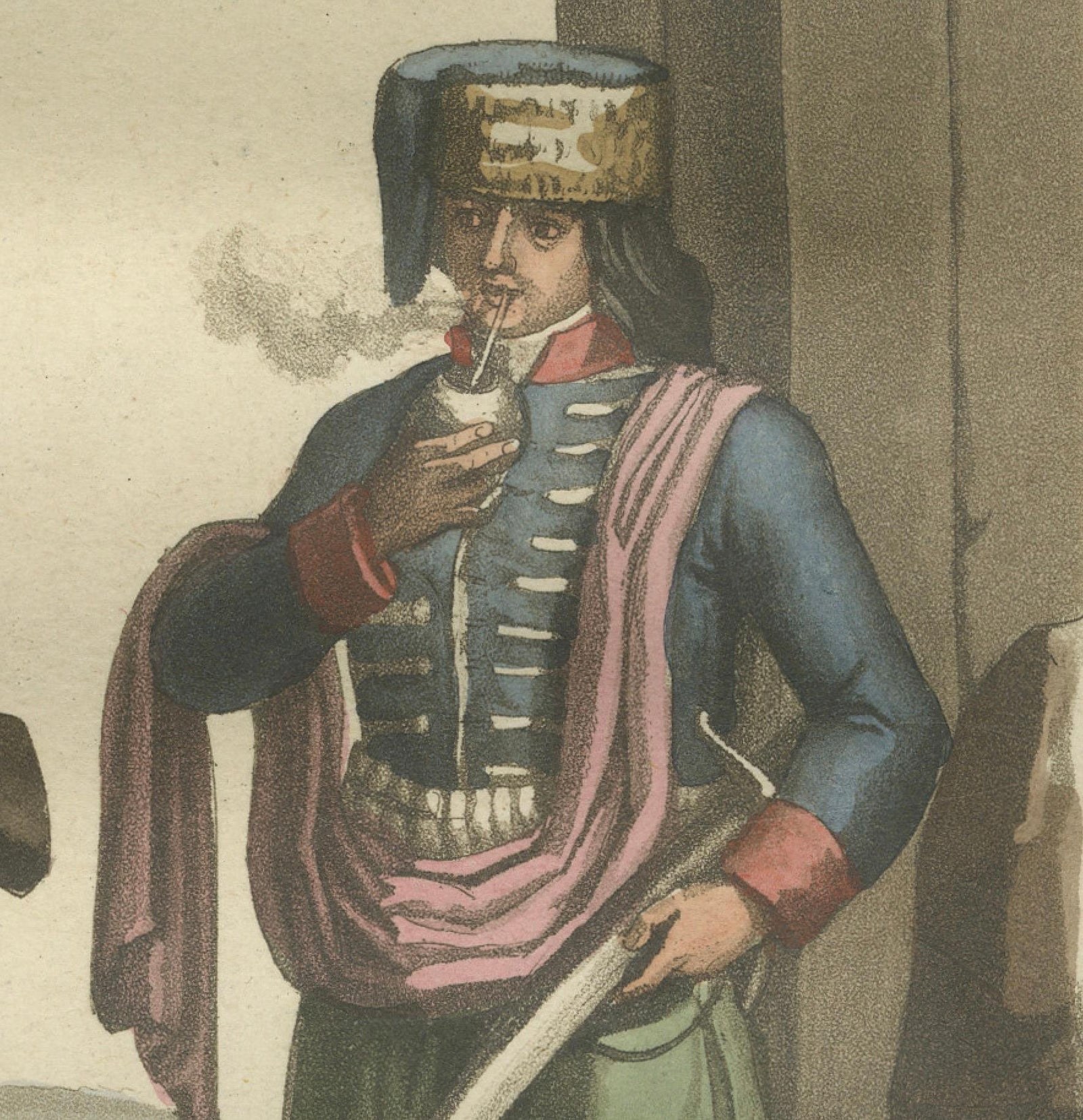
Two men are shown outside a stone doorway. A rider in a blue jacket, black hat and wide patterned sash leans from his saddle toward the second man, with a long gun slung across the horse's back and a coiled lasso at the saddle. The second man stands on the pavement in a fur cap, a short blue jacket with a pink scarf over the shoulder and loose white trousers, holding a sword and smoking a cigar. A grassy plain with a small cart and a distant figure opens behind them.
Ferrario's work, issued in Milan in 17 volumes between about 1815 and 1826, surveyed the dress and customs of the peoples of the world, and its American volumes drew on explorers and scholars such as Humboldt.