Close-ups
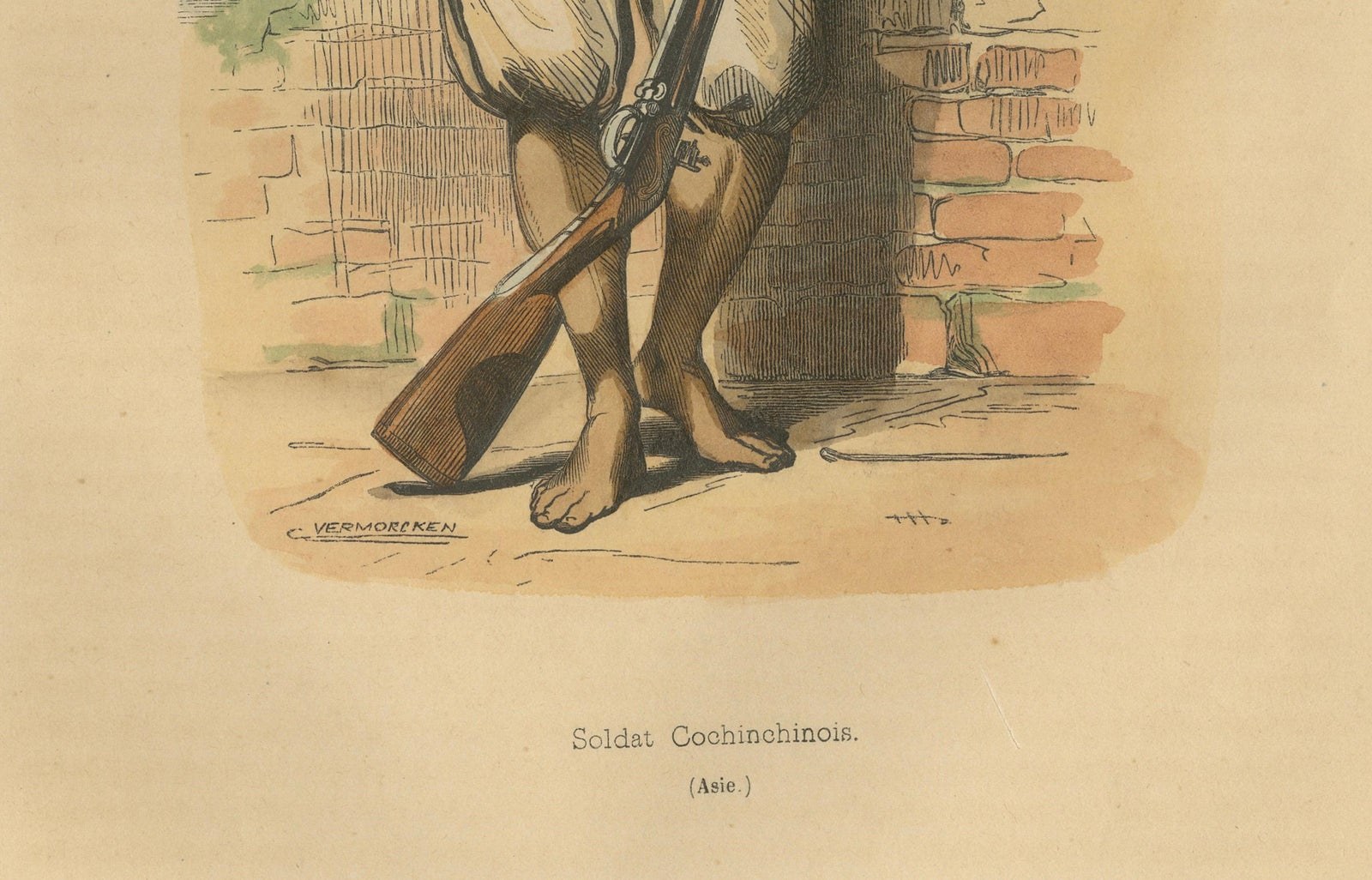
Framed and on the wall

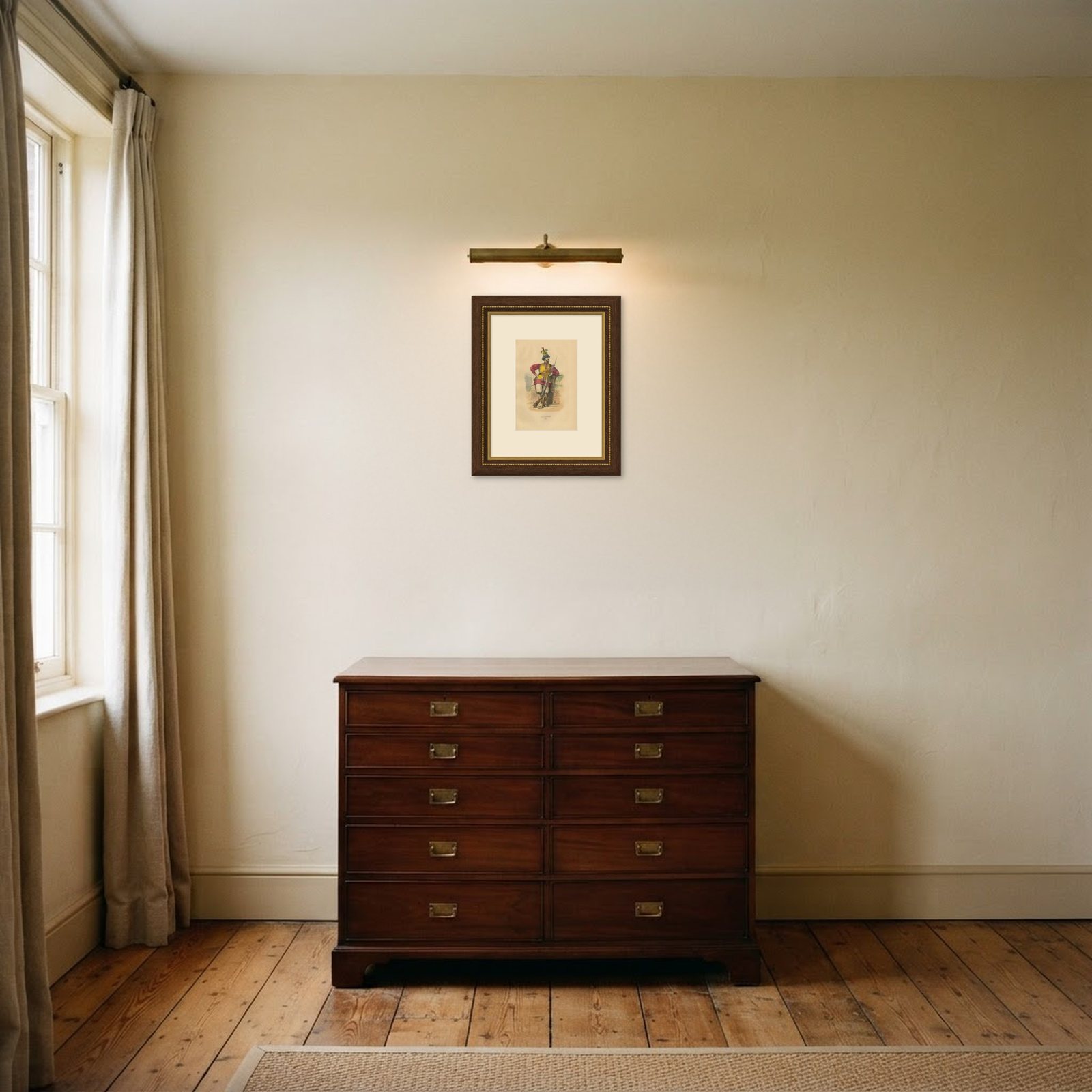
Frame and rooms are illustrations of how the piece could look; it is sold unframed unless the description says otherwise.
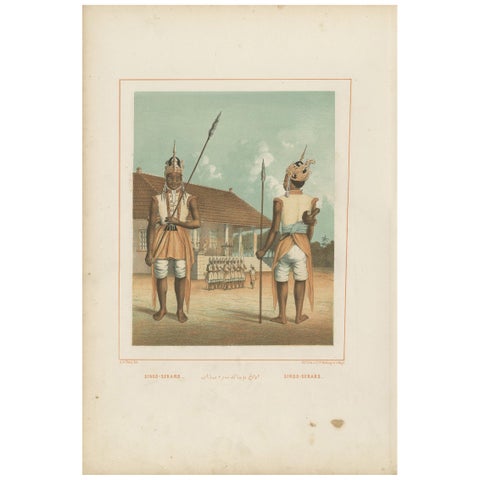
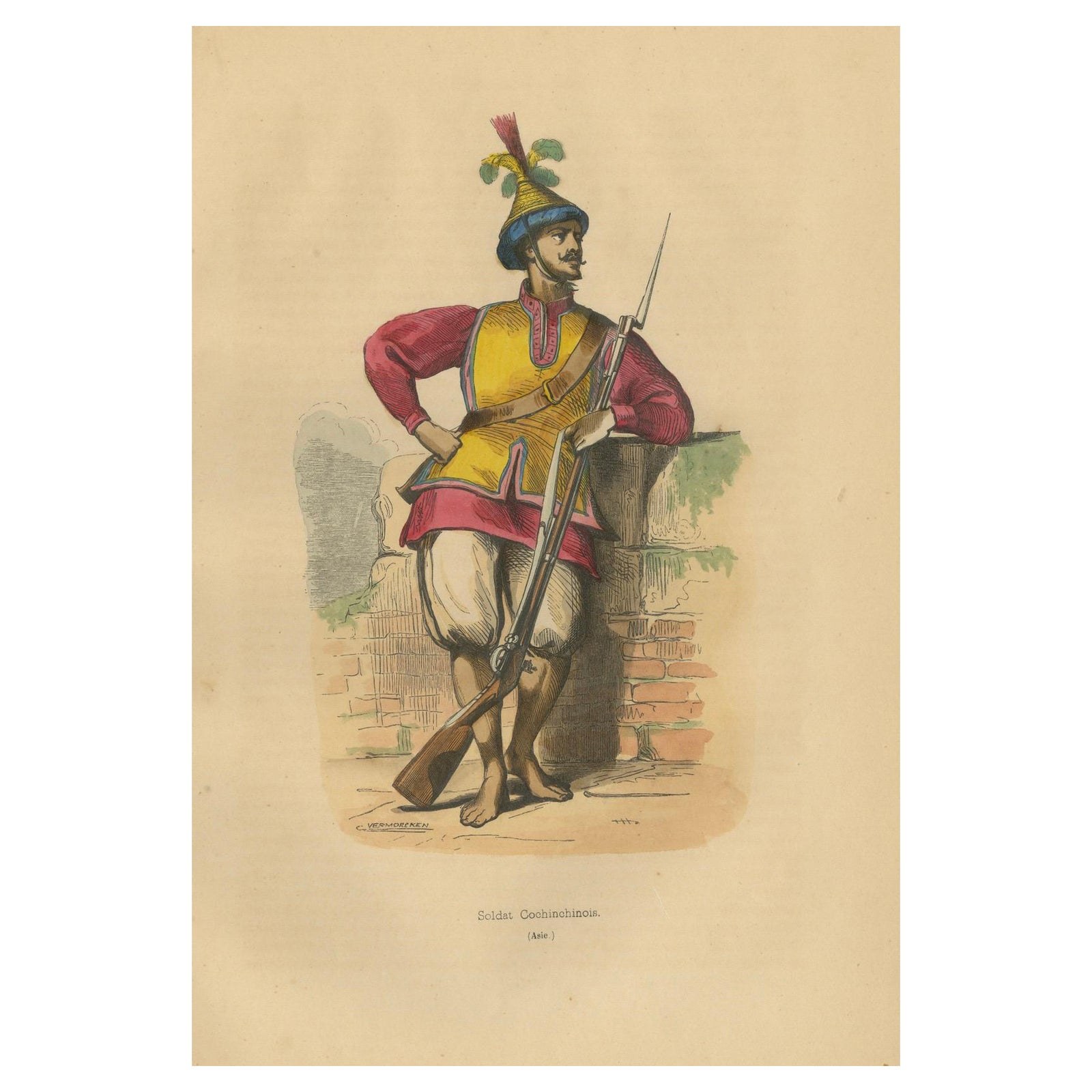
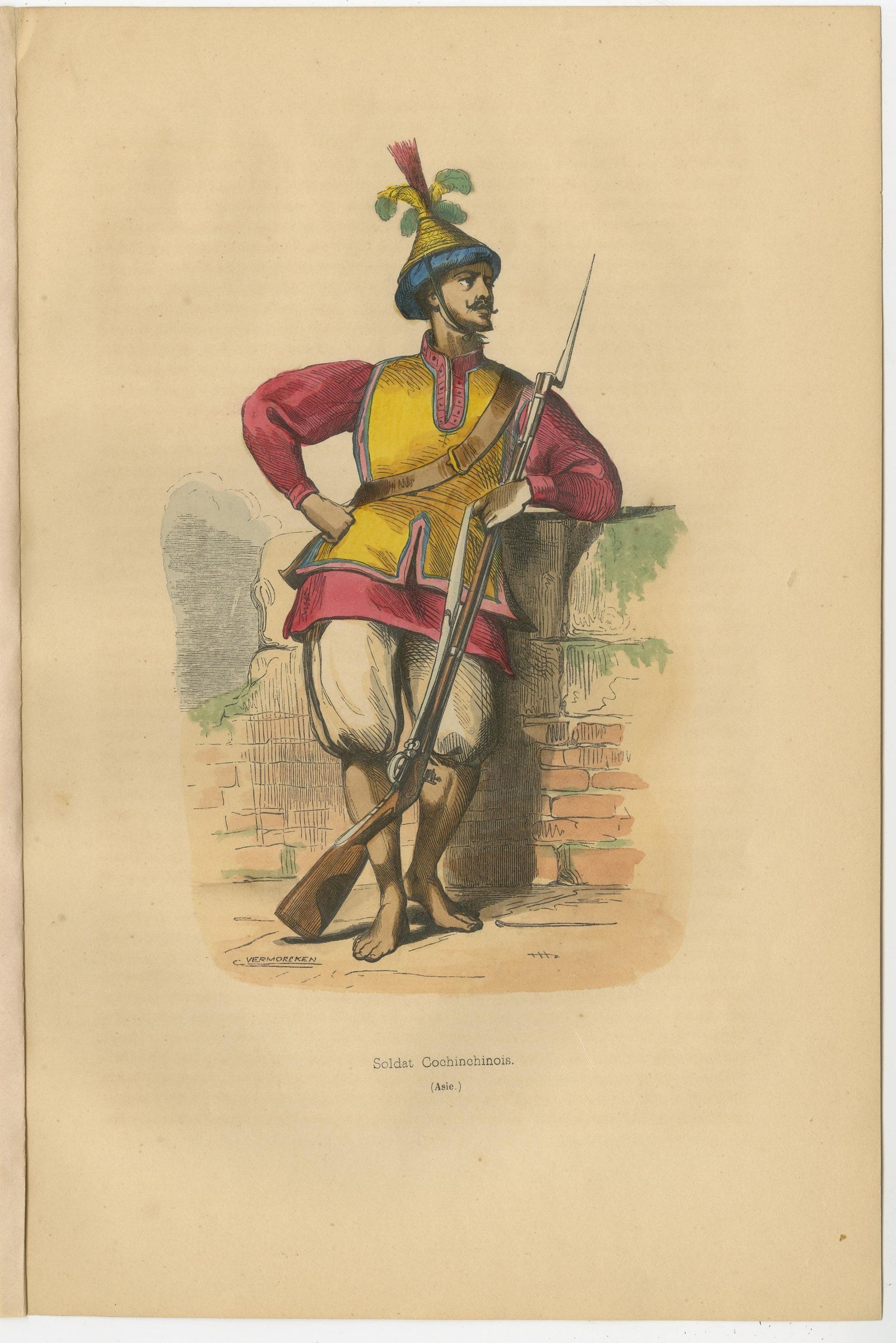
Striking 19th-Century Lithograph of a Cochin Soldier by Auguste Wahlen
$200$14030% off
€126 · £105
Original print, not a reproduction.
Ships worldwide from the Netherlands, flat or rolled, insured and tracked. 14-day returns.
- Date
- Not stated
- Sheet size
- 10.1 × 6.7 in (25.7 × 17 cm)
- Condition
- Good. Given age. Faintly browned, and with some small stains. Some glue remains (from binding) in the far left margin (not affecting image). General age-related toning and/or occasional minor defects from handling. Please study the scans.
- Collection
- Uniforms & regiments
- Stock no.
- BG-12722-14
What the condition grades mean
- Excellent
- Bright and clean, with no faults worth mentioning.
- Very good
- Only light signs of age, such as faint toning.
- Good
- Normal signs of age for a sheet of this period: toning, some foxing, small marks or neat old repairs.
- Fair
- Clear faults such as staining, tears or repairs, priced to match.
Every fault we see is written in the condition note, and the whole sheet is shown uncropped in the photos.
Title: "Striking 19th-Century Lithograph of a Cochin Soldier by Auguste Wahlen"
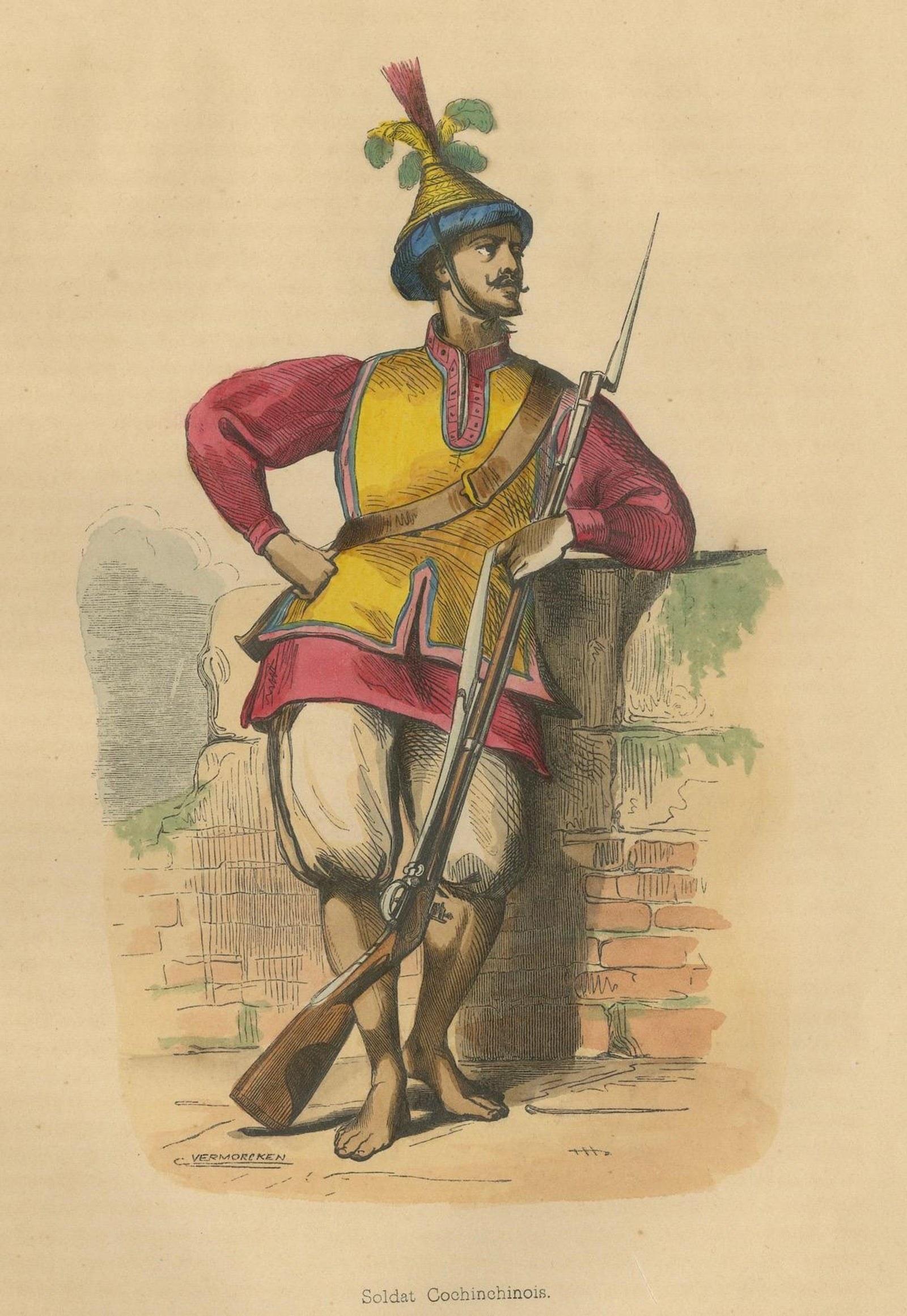
This colorful lithograph, part of Auguste Wahlen's renowned work "Moeurs, Usages et Costumes de tous les Peuples de Monde" (Customs, Manners and Dress of All the Peoples of the World), depicts a Cochin soldier standing guard. Dressed in a vividly colored uniform with an ornamental hat, this image captures the unique military attire and stance, highlighted against a backdrop of traditional architecture.
The lithograph was skillfully created by an unknown engraver, published in 1843 in Paris by the collaborative efforts of publishers Poiree, Pilout, Duterte, and Martinon.
Utilizing handcolored lithography, the technique vividly portrays the textures and colors, making the figure nearly lifelike. These prints are sought after for their artistic quality and their detailed portrayal of historical costumes and settings, which appeal to collectors and historians alike.