Close-ups
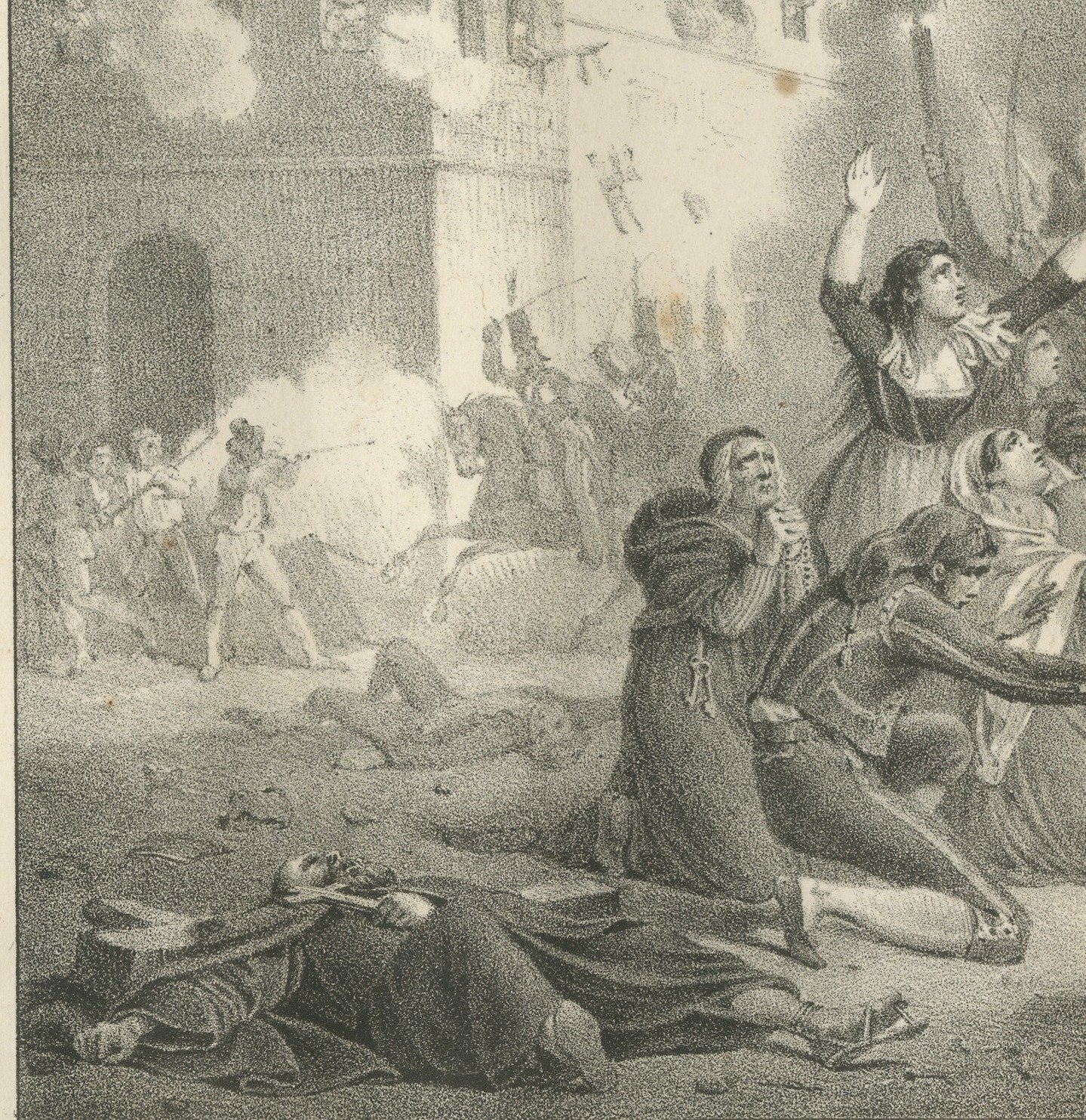
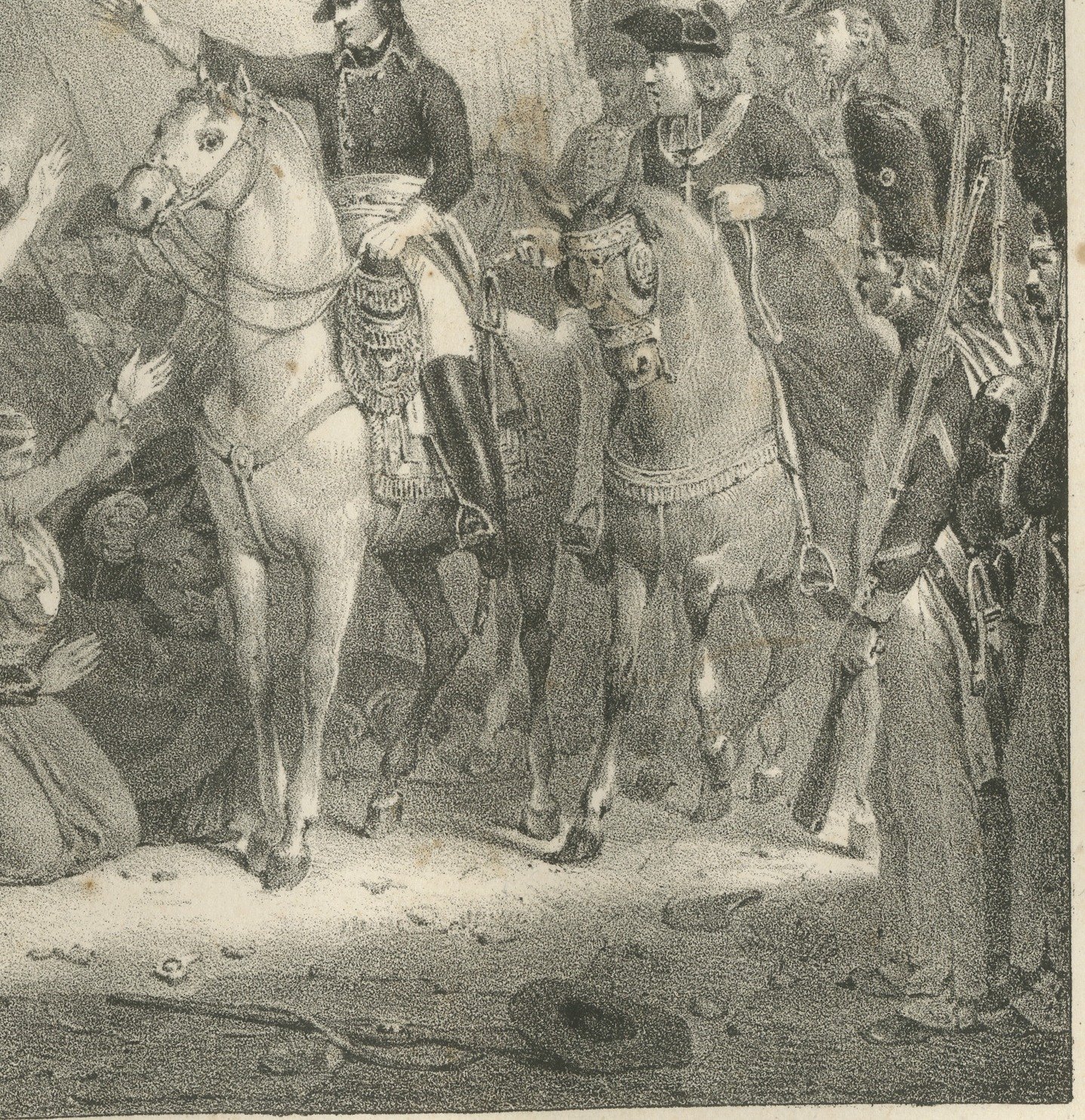
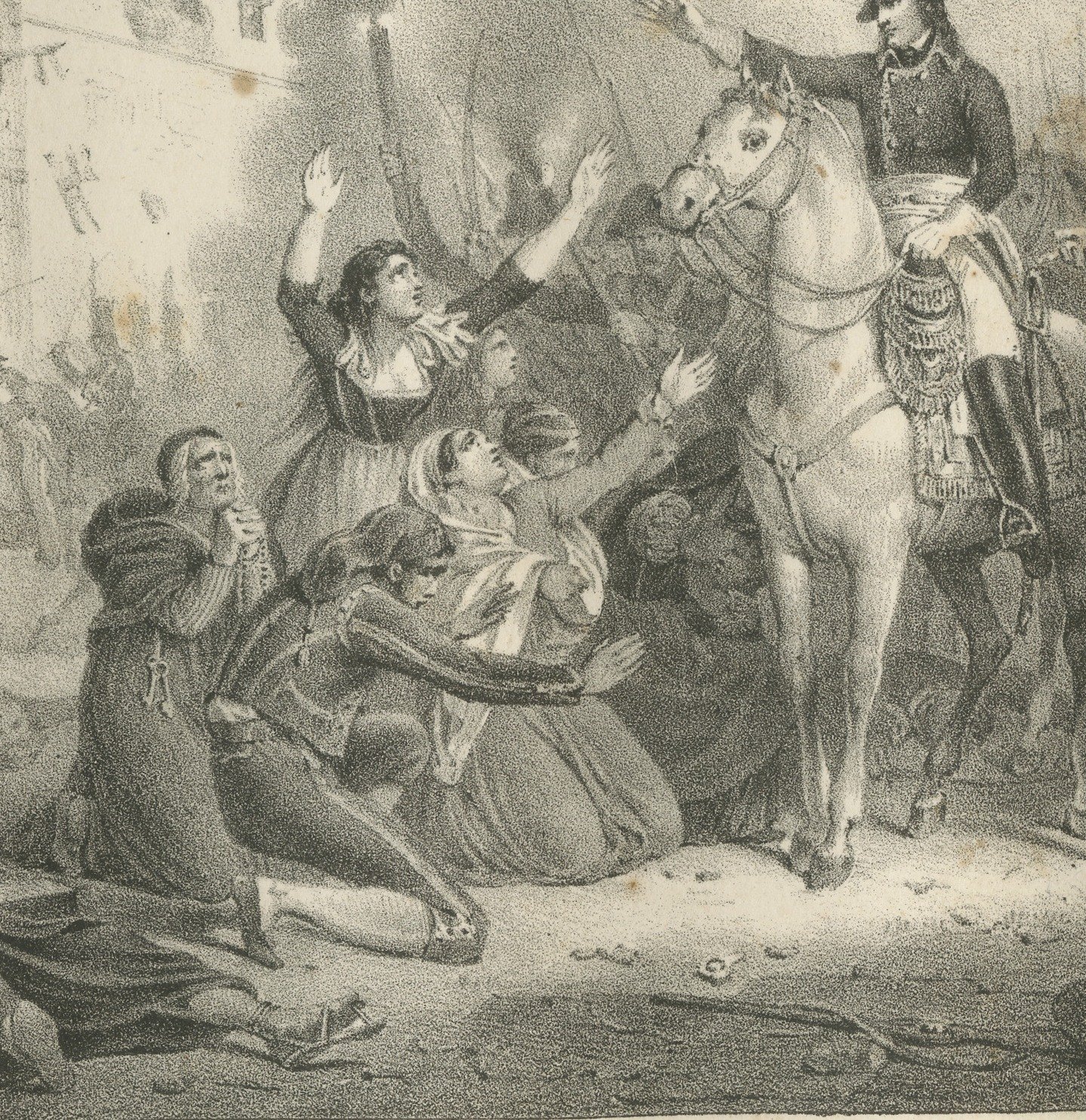
Framed and on the wall
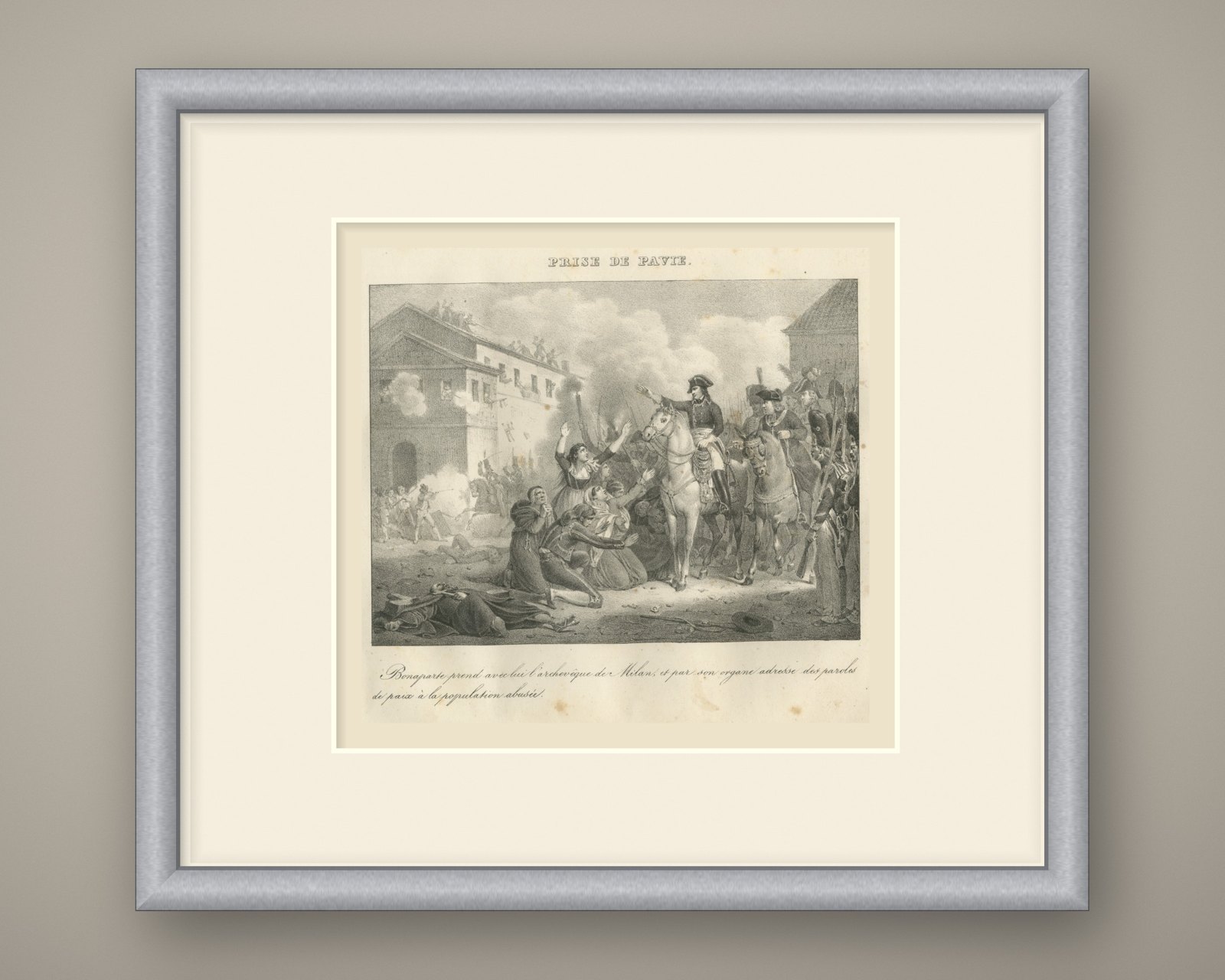
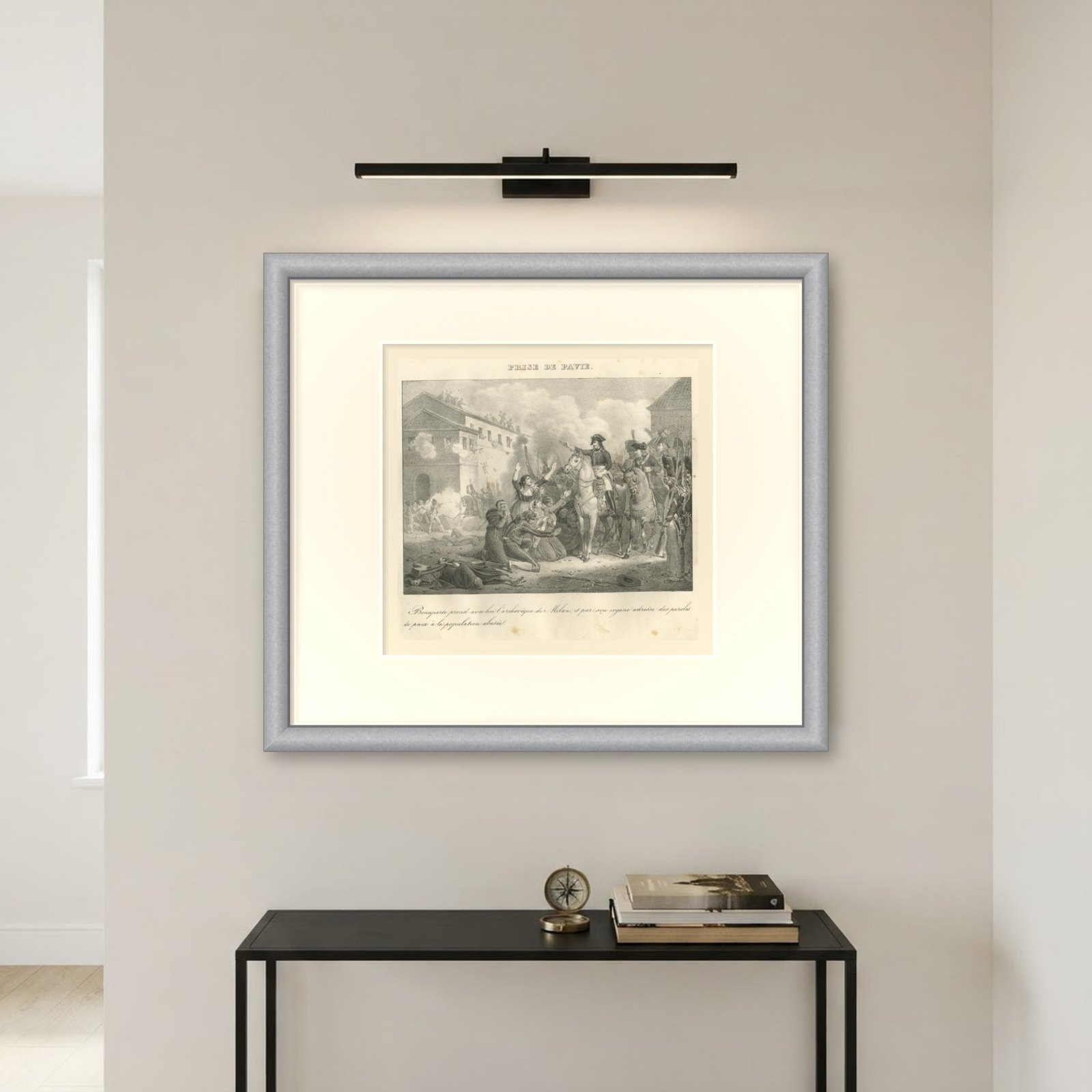
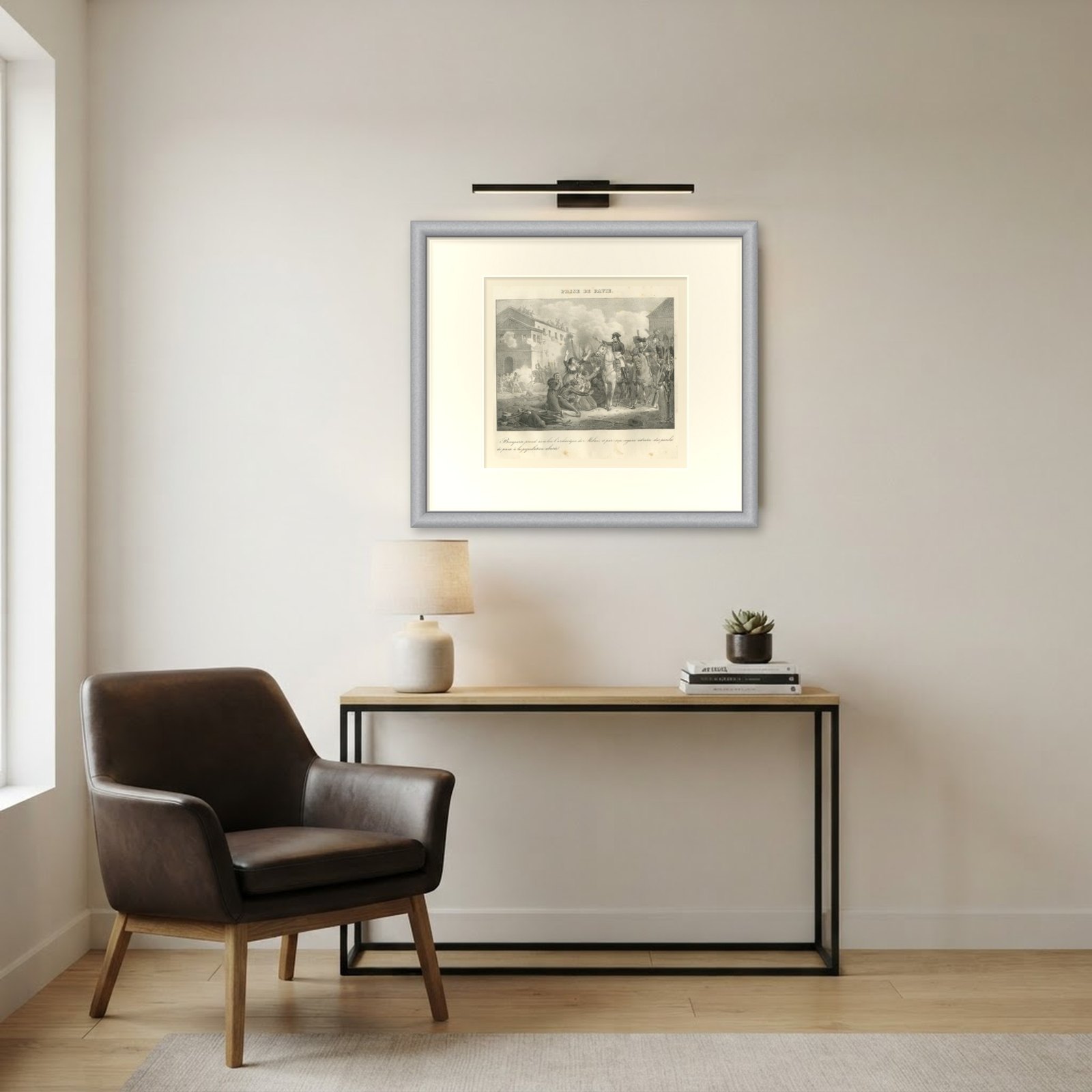
Frame and rooms are illustrations of how the piece could look; it is sold unframed unless the description says otherwise.
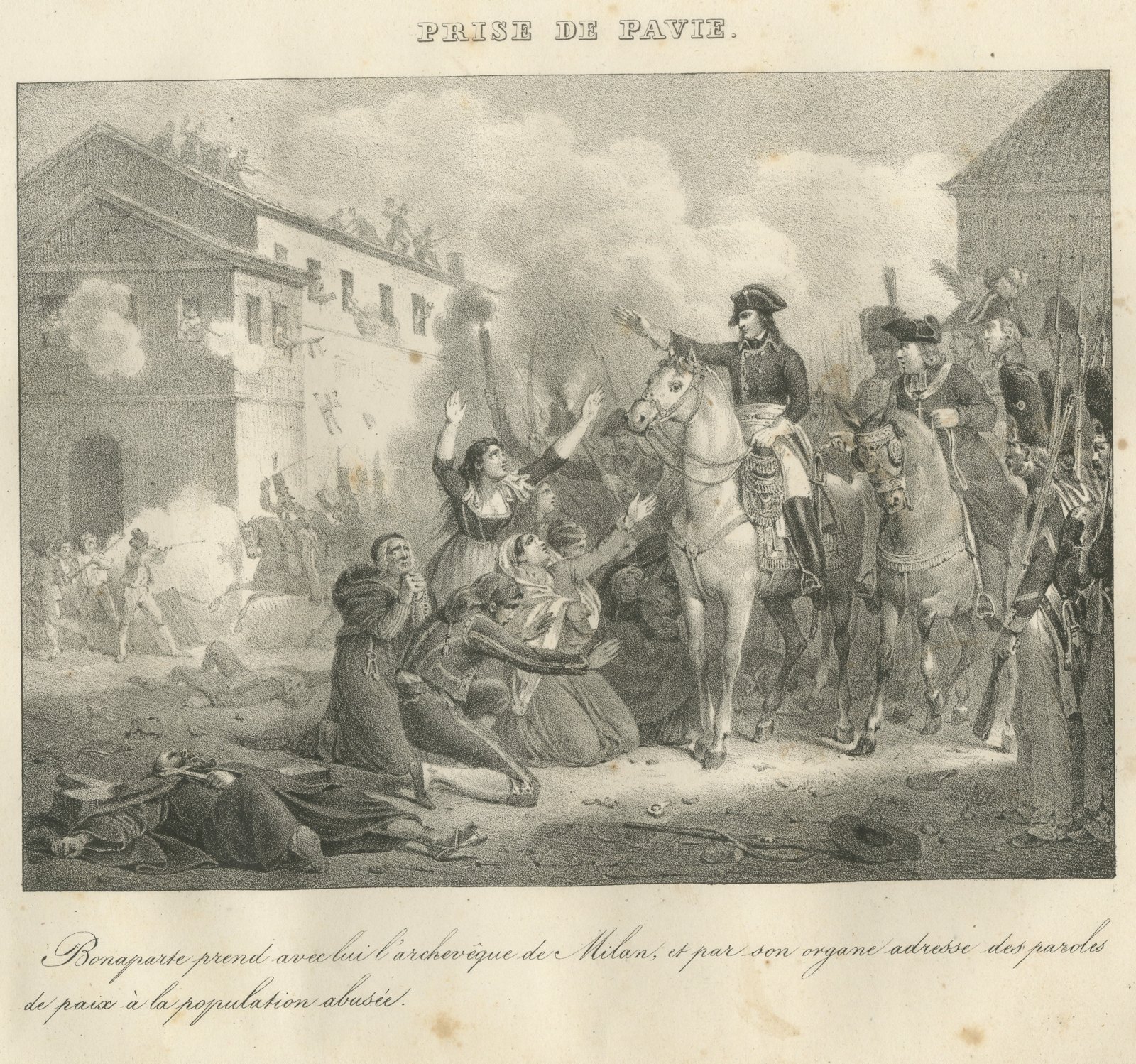
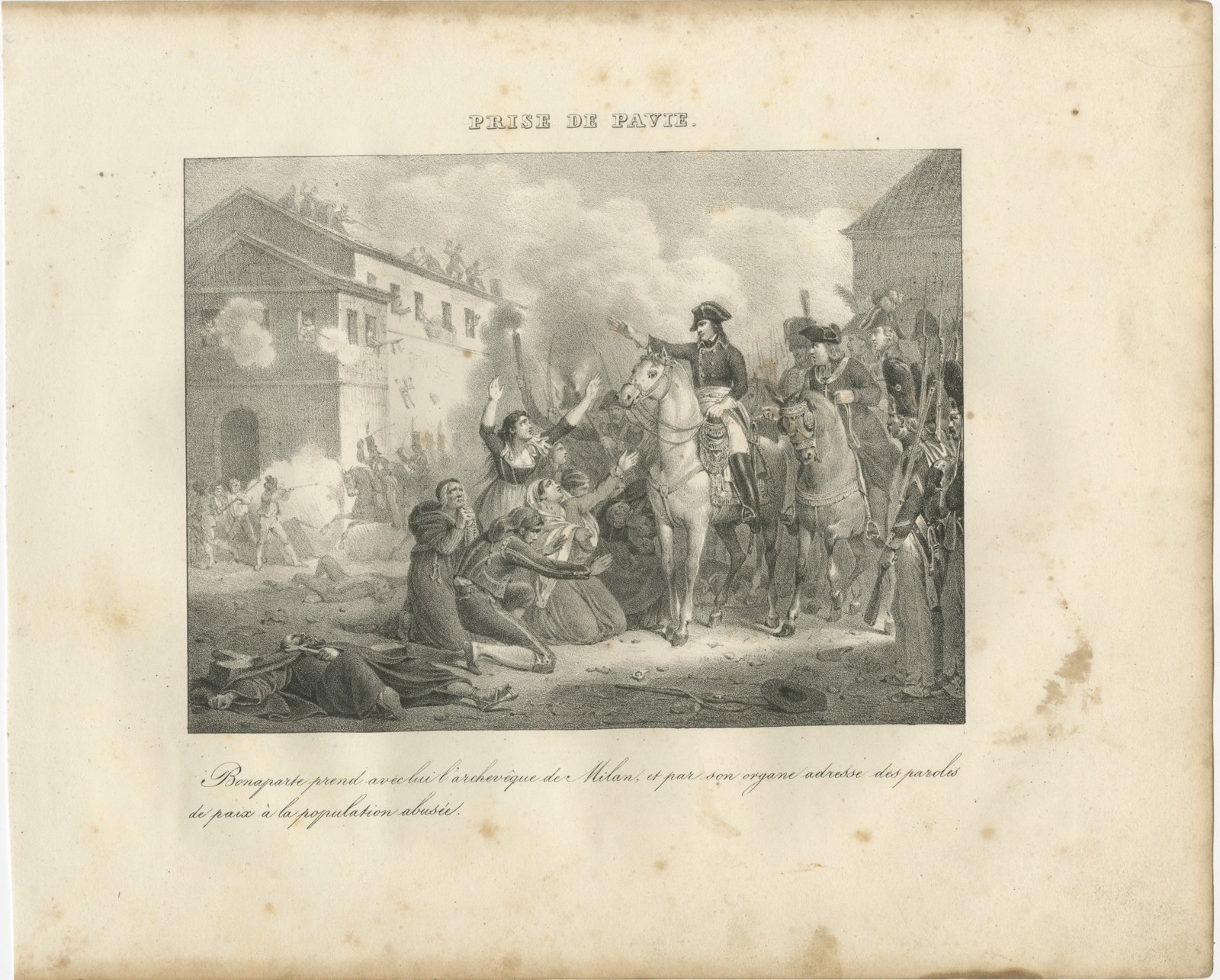
The Taking of Pavia, the Archbishop of Milan, Antique Madou Lithograph, 1827
£155
$205 · €185
Original print, not a reproduction.
Ships worldwide from the Netherlands, flat, insured and tracked. 14-day returns.
- Date
- 1827
- Technique
- Lithograph
- Coloring
- Uncolored
- Condition
- Good. Light wear to the bottom left corner; minor nicks to the left edge. Age toning, darker at the edges; handling soiling along the edges and scattered foxing in the margins. Printed image clean.
- Collection
- Sieges & fortresses
- Era
- 1790 to 1815, Napoleonic wars
- Stock no.
- BG-14174-3-13
What the condition grades mean
- Excellent
- Bright and clean, with no faults worth mentioning.
- Very good
- Only light signs of age, such as faint toning.
- Good
- Normal signs of age for a sheet of this period: toning, some foxing, small marks or neat old repairs.
- Fair
- Clear faults such as staining, tears or repairs, priced to match.
Every fault we see is written in the condition note, and the whole sheet is shown uncropped in the photos.
An original antique lithograph of the taking of Pavia, from Vie de Napoléon, published at Brussels in 1827. The sheet is lettered PRISE DE PAVIE in capitals above the image. In a street of the town under fire, kneeling women raise their arms to Bonaparte, who sits a white horse with his hand lifted; his escort and a file of grenadiers close in at the right, a body lies in the left foreground, and townsmen fire from the rooftops and windows behind.
The printed caption below the image reads: Bonaparte prend avec lui l'archevêque de Milan, et par son organe adresse des paroles de paix à la population abusée. In English: Bonaparte takes the Archbishop of Milan with him and, through him, addresses words of peace to the misled population.
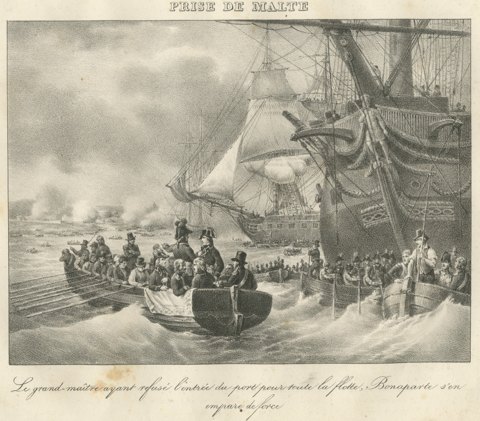
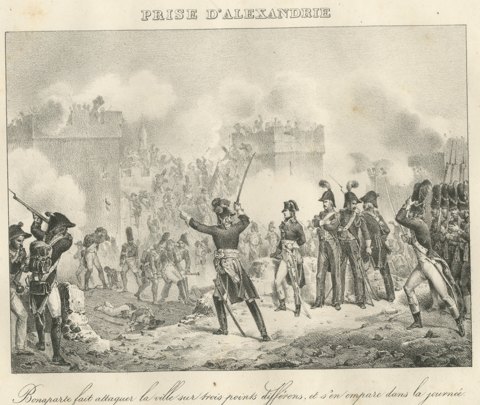
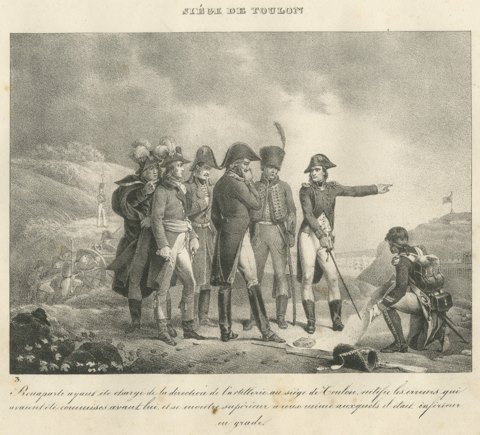
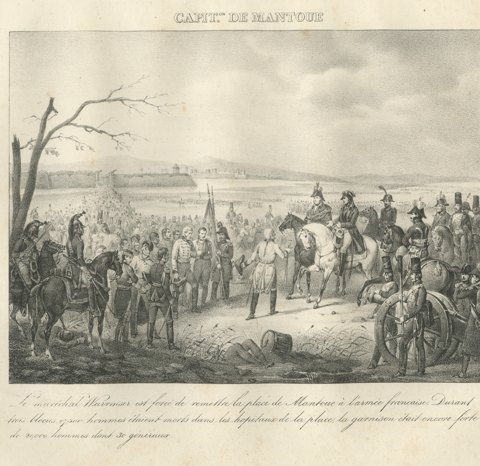
Vie de Napoléon was published at Brussels in 1827 in two volumes by the Lithographie royale de Jobard, the press of Marcellin Jobard, with a text written by a society of men of letters from the new documents dictated and corrected by Napoleon himself at Saint Helena. Its lithographs are credited to Jean-Baptiste Madou (1796 to 1877), who later became the best known Belgian genre painter of his generation.
Pavia rose against the French in May 1796, and the town was stormed and given over to the troops for a day before order was restored. The caption chooses to remember the conciliation rather than the reprisal, and much of the interest of the sheet lies in that choice. It is a crayon lithograph printed in black, uncolored as issued, with the lettered title above the image and the caption in script below.
Condition: Light wear to the bottom left corner; minor nicks to the left edge. Age toning, darker at the edges; handling soiling along the edges and scattered foxing in the margins. Printed image clean.
Hung at eye level where the caption can be read, the plate makes a natural gift for a reader of Napoleonic history or a collector of early lithography.
This is an original antique print, not a modern reproduction. This item is sold unframed. Any framed or interior images are shown for presentation and inspiration only, unless the listing explicitly states that the item is sold framed.