Close-ups
Framed and on the wall
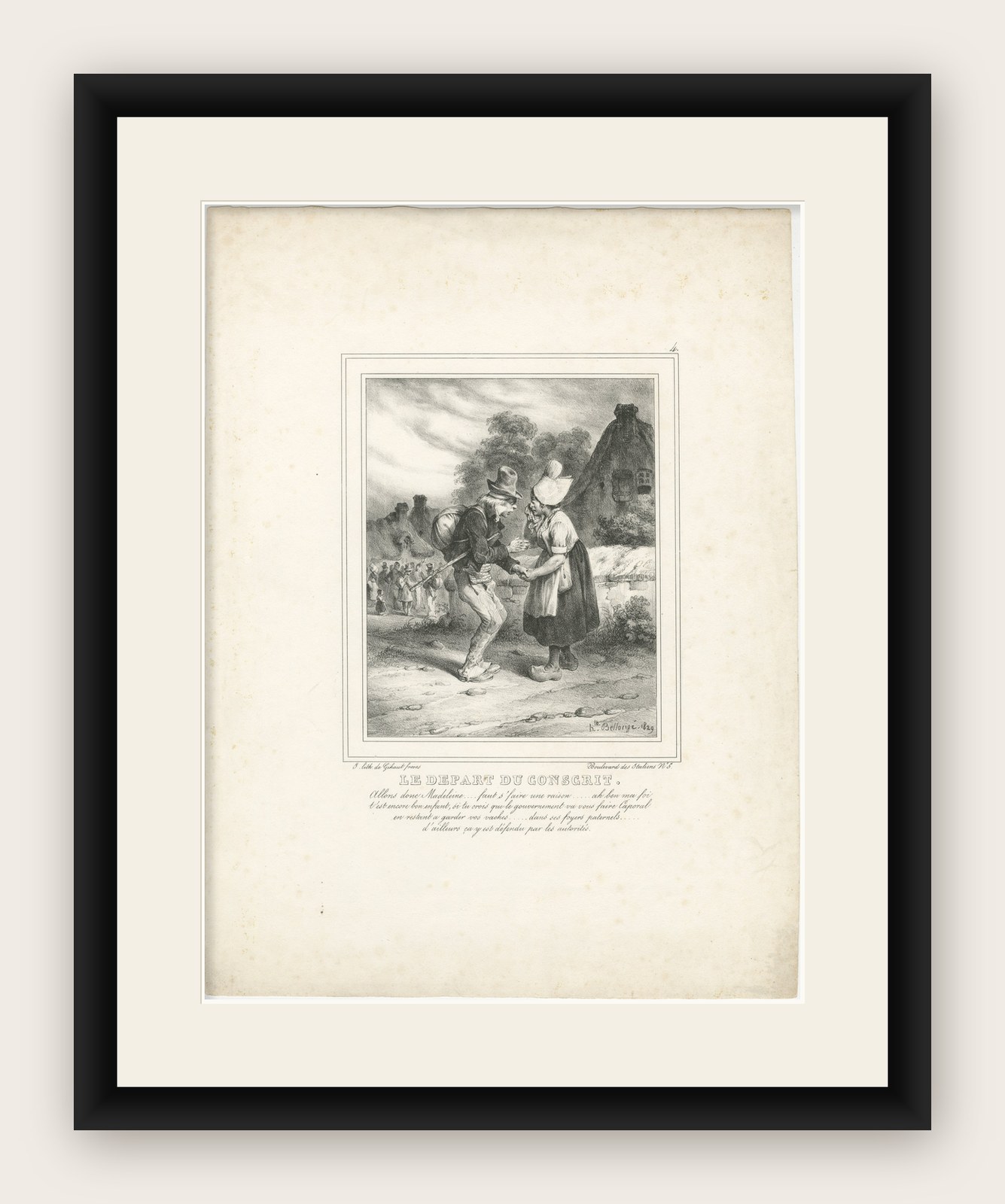
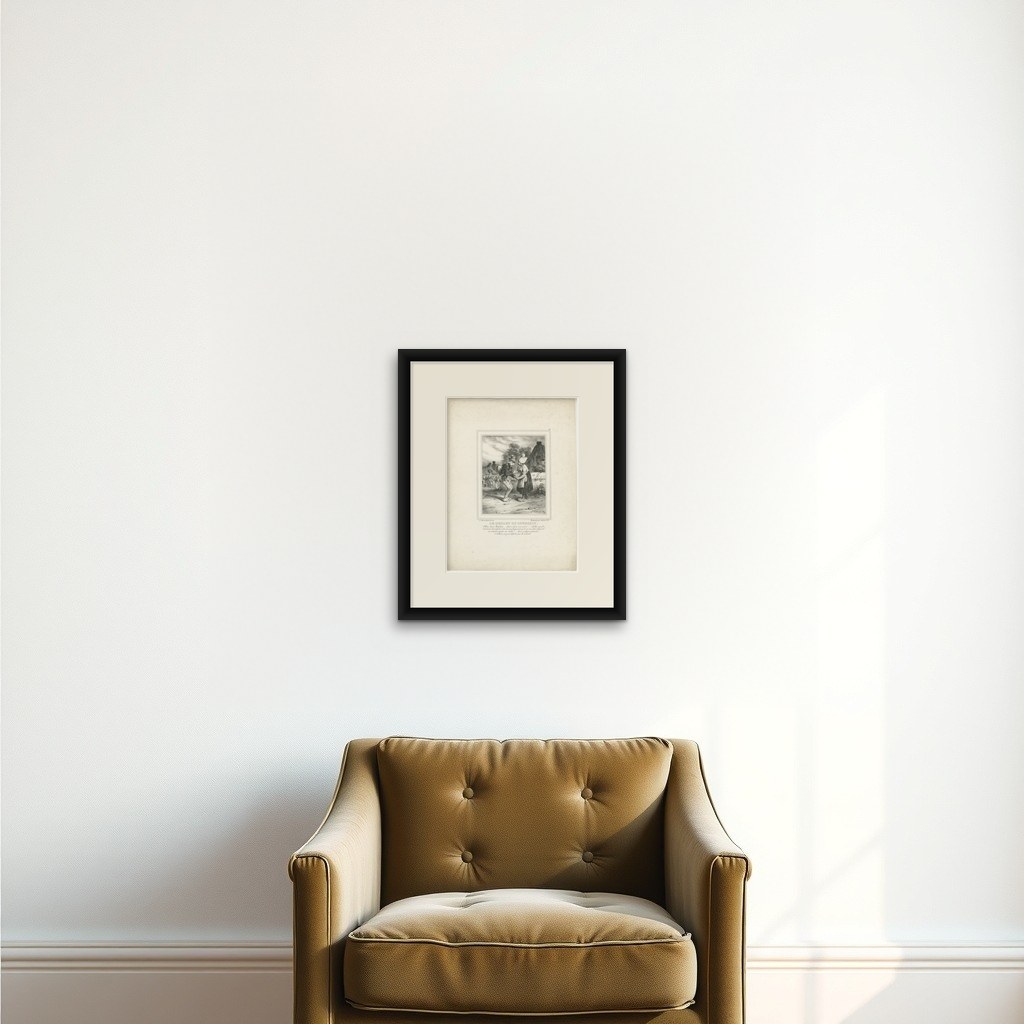

Frame and rooms are illustrations of how the piece could look; it is sold unframed unless the description says otherwise.
Young Soldier Saying Farewell to Sweetheart, Romantic French Lithograph c.1830
$315
€279 · £235
Original print, not a reproduction.
Ships worldwide from the Netherlands, flat, insured and tracked. 14-day returns. To buy, use Ask a question and we will reserve it for you.
- Date
- 1830
- Sheet size
- 14.2 × 10.7 in (36 × 27.2 cm)
- Condition
- Good. Good condition with light age toning and scattered foxing, mainly visible in the margins and typical for lithographs of this period. The printed image remains clear with good contrast. Wide original margins preserved.
- Collection
- Uniforms & regiments
- Era
- 1816 to 1899, Empire and industry
- Stock no.
- f_49206232
Young Soldier Saying Farewell to Sweetheart, Romantic French Lithograph c.1830
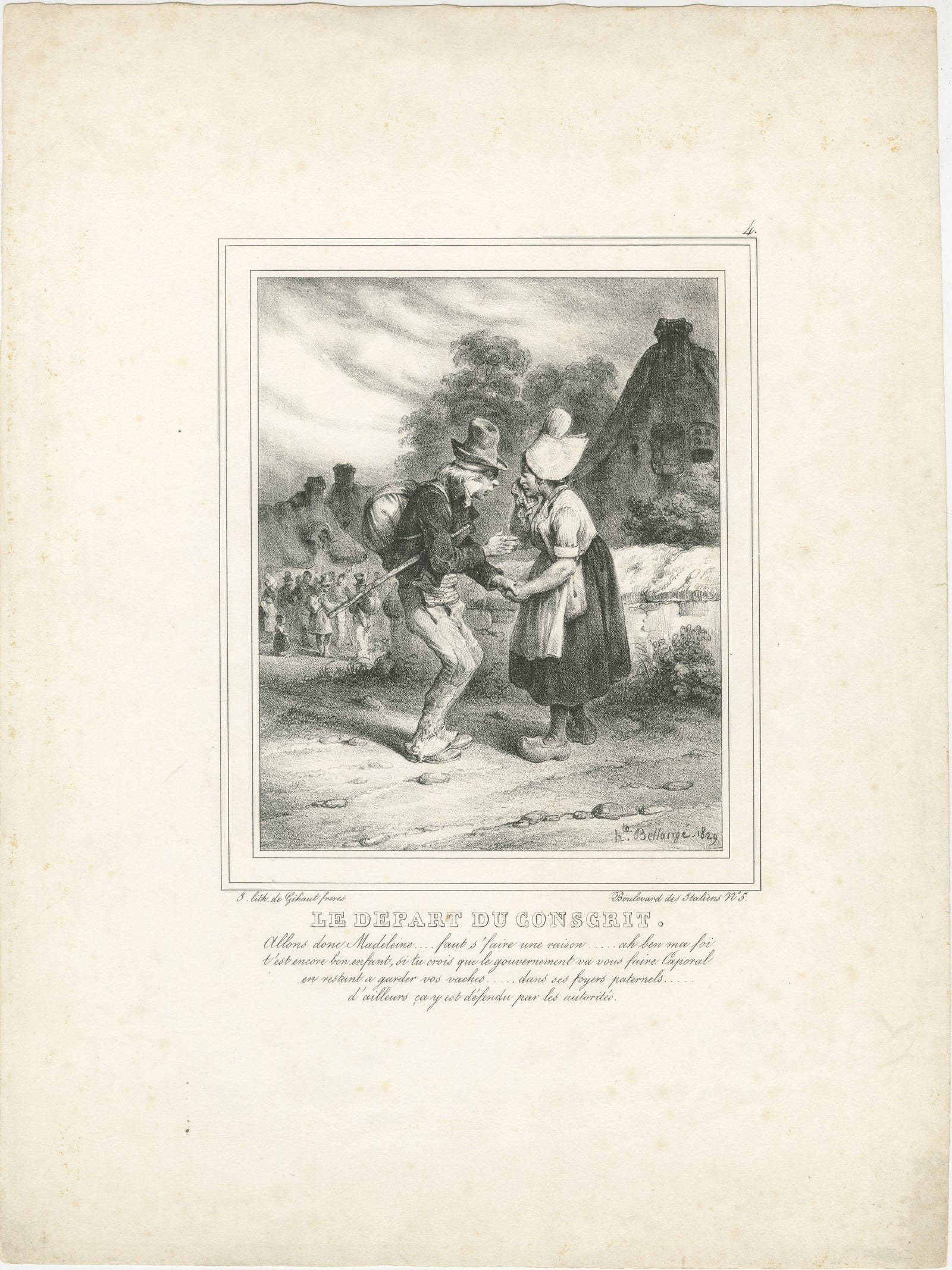
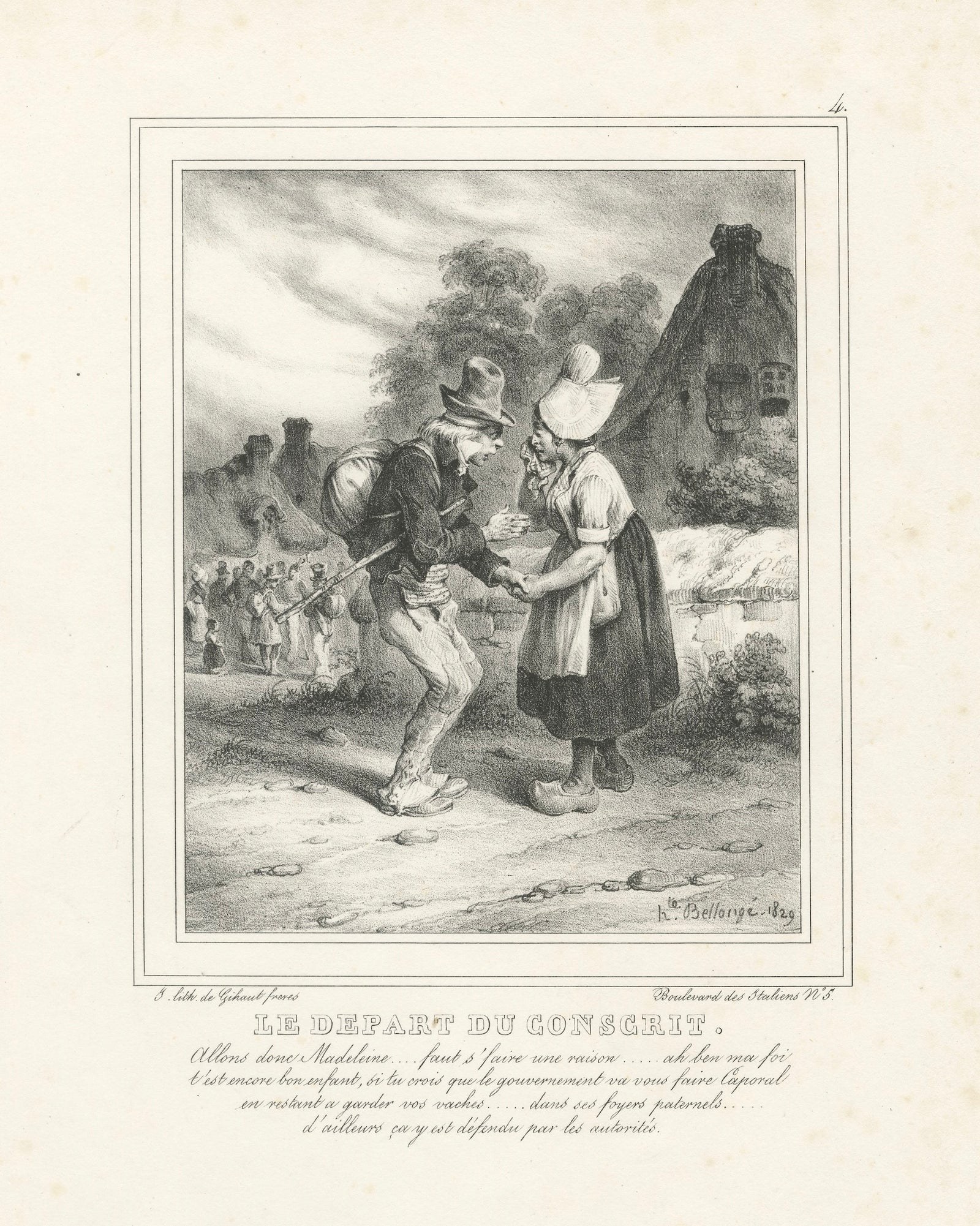
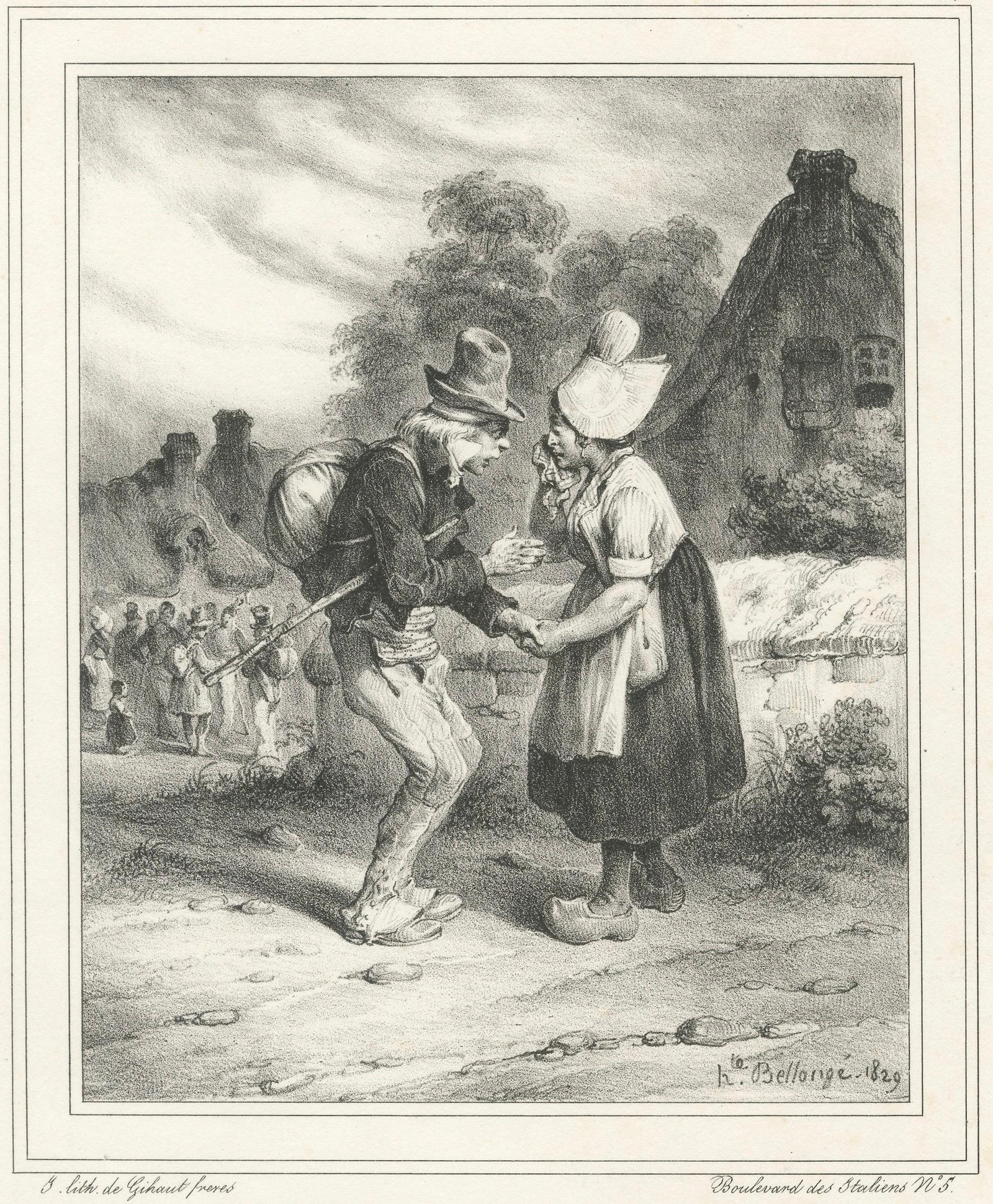
This expressive early nineteenth-century lithograph depicts a touching farewell scene between a young conscript departing for military service and a woman who appears to be his sweetheart or a close family member. The print was created by the French artist Joseph Louis Hippolyte Bellangé (1800–1866), one of the most important illustrators of military life during the Romantic period. The work dates to around 1828–1830 and was published in Paris by Gihaut frères as plate number 4 in the Album Lithographique pour 1830.
Bellangé became widely known for his ability to portray the emotional reality of military service. While many artists of his time focused on dramatic battle scenes, Bellangé often turned his attention to the quieter and more personal moments that surrounded military life. Scenes of departure, reunion, camaraderie, and everyday soldierly experience formed an important part of his artistic output and were highly appreciated by contemporary audiences.
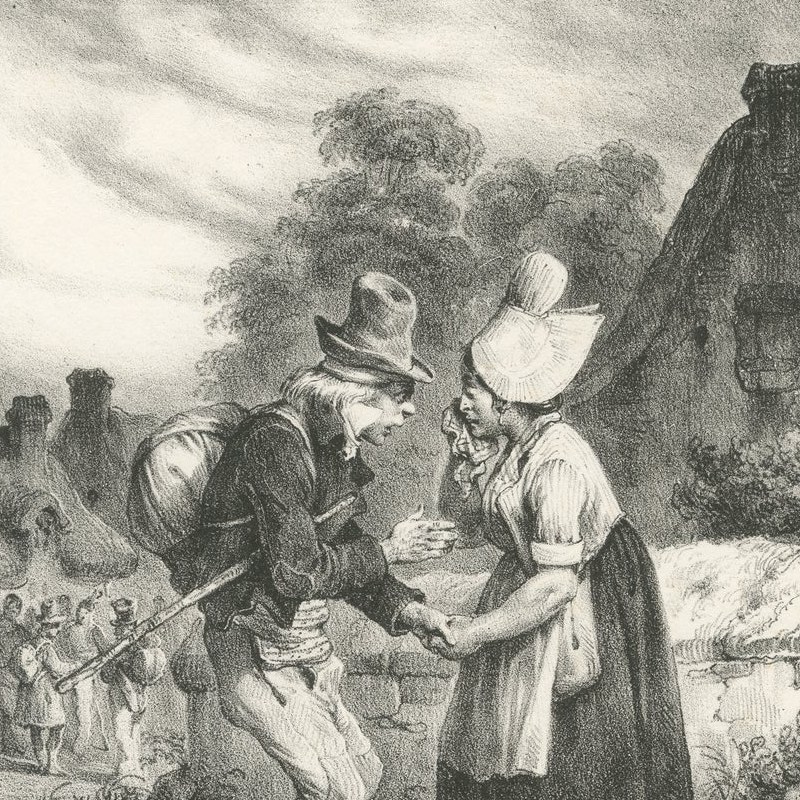
The composition centers on a young recruit preparing to leave his village. Equipped with a travel pack and gear, he leans forward while holding the hands of a young woman. Their body language suggests hesitation and tenderness, capturing the difficult moment when personal affection confronts the duty of military service. The emotional exchange between the figures is rendered with subtle gestures and expressive facial features, emphasizing the human side of conscription.
Behind the couple the wider village scene unfolds. A line of other recruits gathers in the distance, preparing to march away together. Their presence reinforces that the intimate farewell taking place in the foreground is part of a much larger national experience. During the early nineteenth century, conscription deeply affected rural communities throughout France, sending young men from villages like this one into the army.
The rustic setting, with its thatched cottage and gently rolling landscape, anchors the scene firmly in the French countryside. Bellangé’s sensitive lithographic technique allows for a remarkable range of tonal gradations, from the softly shaded sky to the carefully detailed figures. The artist’s confident draftsmanship and narrative clarity make the image both visually engaging and historically evocative.
The printed dialogue beneath the image further emphasizes the narrative dimension of the scene, reflecting the conversation between the departing soldier and the woman he leaves behind. Such captions were typical of early nineteenth-century lithographic albums produced in Paris, which combined storytelling with refined graphic art.
Today this lithograph is appreciated both as an example of early Romantic printmaking and as a moving representation of everyday life and military duty in nineteenth-century France. Works by Bellangé remain highly collectible for their artistic quality and their vivid portrayal of the social realities of the period.
This original antique print is offered unframed, allowing the buyer full freedom of framing choice.
Condition report:
Good condition with light age toning and scattered foxing, mainly visible in the margins and typical for lithographs of this period. The printed image remains clear with good contrast. Wide original margins preserved.
Framing tips:
This print displays beautifully in a dark walnut or ebonized frame with a generous ivory or cream mat. The wide margins allow for a refined museum-style presentation that highlights the tonal richness of the lithograph. A warm neutral mat color enhances the romantic atmosphere of the scene.
Technique: Lithograph
Maker: Joseph Louis Hippolyte Bellangé, France, circa 1830
Keywords:
antique lithograph, French lithograph, Bellange print, Joseph Louis Hippolyte Bellange, military scene print, soldier farewell scene, romantic era print, French village scene, nineteenth century print, conscription scene, soldier leaving home, emotional farewell artwork, antique military art, early lithography, Paris lithograph, Gihaut frères publisher, romantic narrative print, historical military illustration, collectible French print, nineteenth century France art
EXPLORE