Close-ups
Framed and on the wall


Frame and rooms are illustrations of how the piece could look; it is sold unframed unless the description says otherwise.
Belgrade Bombardment 1914, Color WWI Battle Print, Austrian-Serbian Front
€220
$250 · £185
Original print, not a reproduction.
Ships worldwide from the Netherlands, flat, insured and tracked. 14-day returns. To buy, use Ask a question and we will reserve it for you.
- Date
- 1914
- Sheet size
- 13.4 × 16.5 in (34 × 42 cm)
- Condition
- Good. Printed on thin wartime paper, as issued. Even age-related toning throughout, with soft handling creases and light edge wear consistent with ephemeral material of this type. No major losses. Overall well preserved for a fragile First WW illustration.
- Collection
- Battle scenes
- Era
- 1900 and after, The world wars
- Stock no.
- f_48219892
Belgrade Bombardment 1914, Color WWI Battle Print, Austrian-Serbian Front
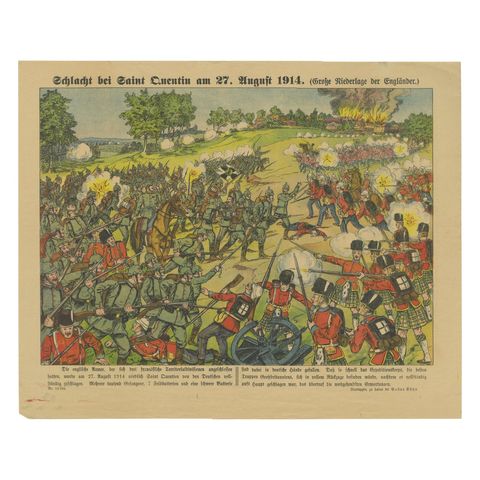
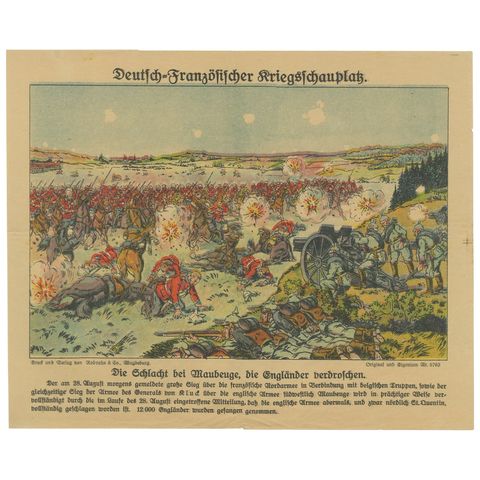
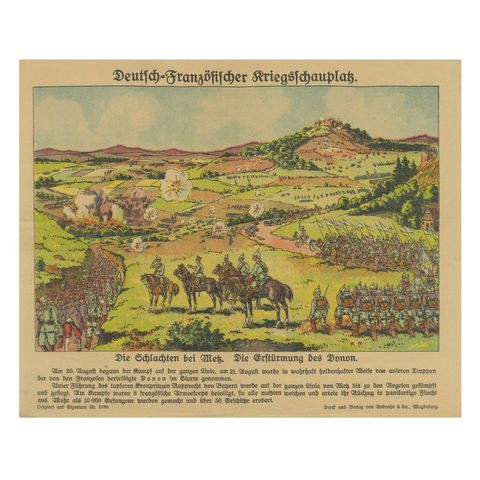
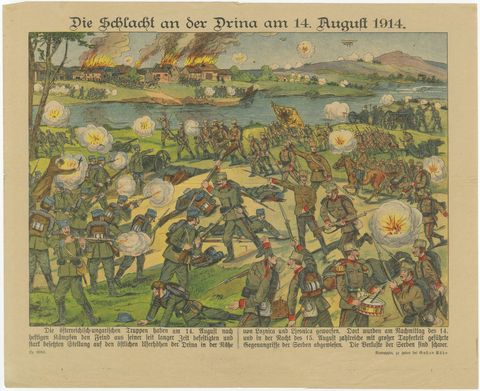
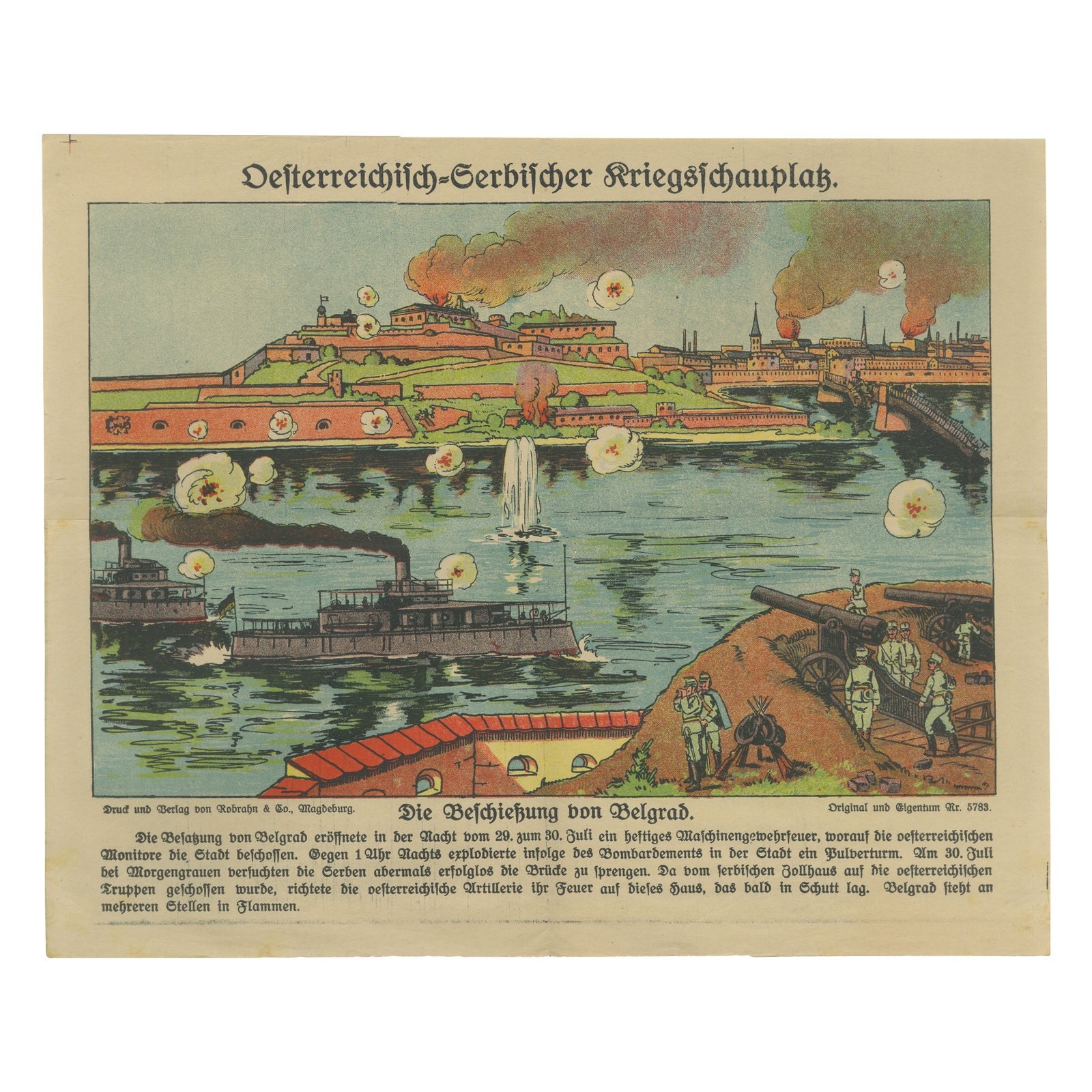
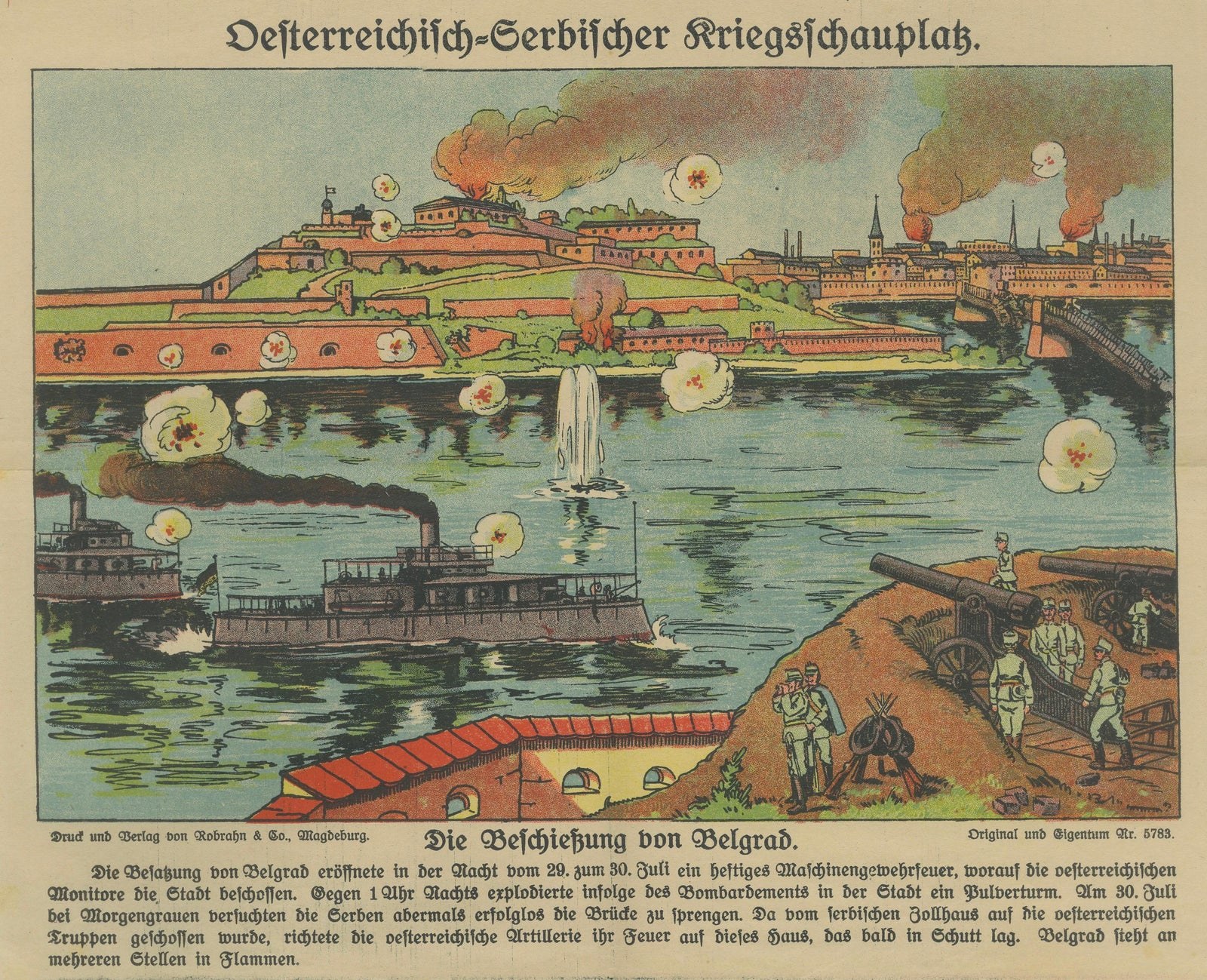
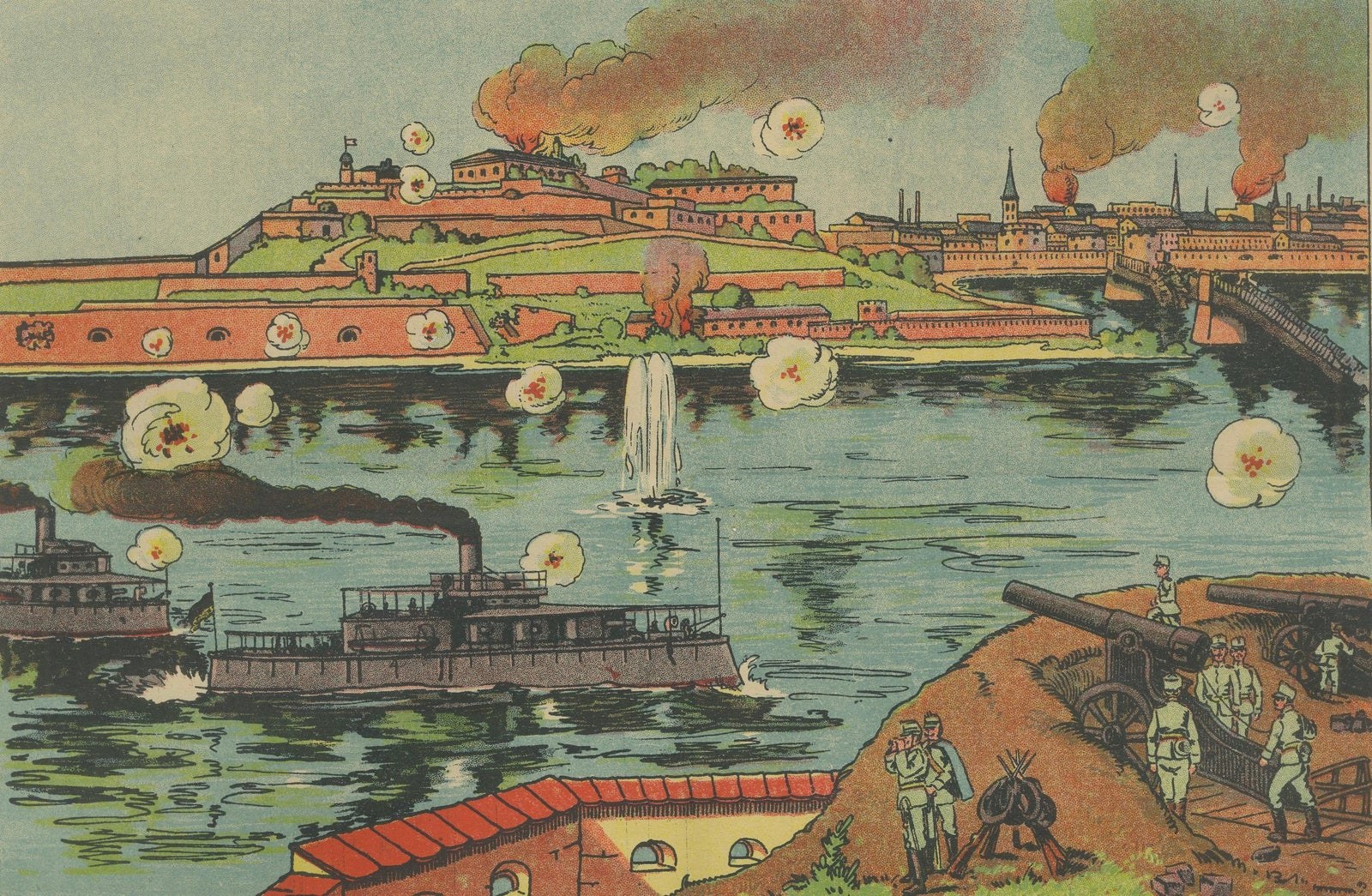
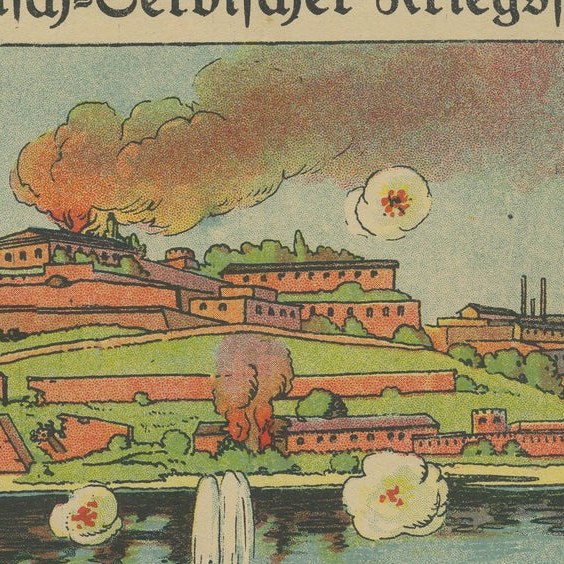
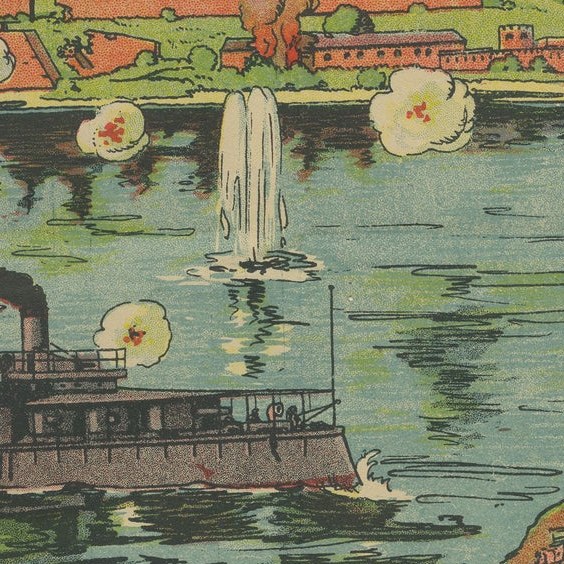
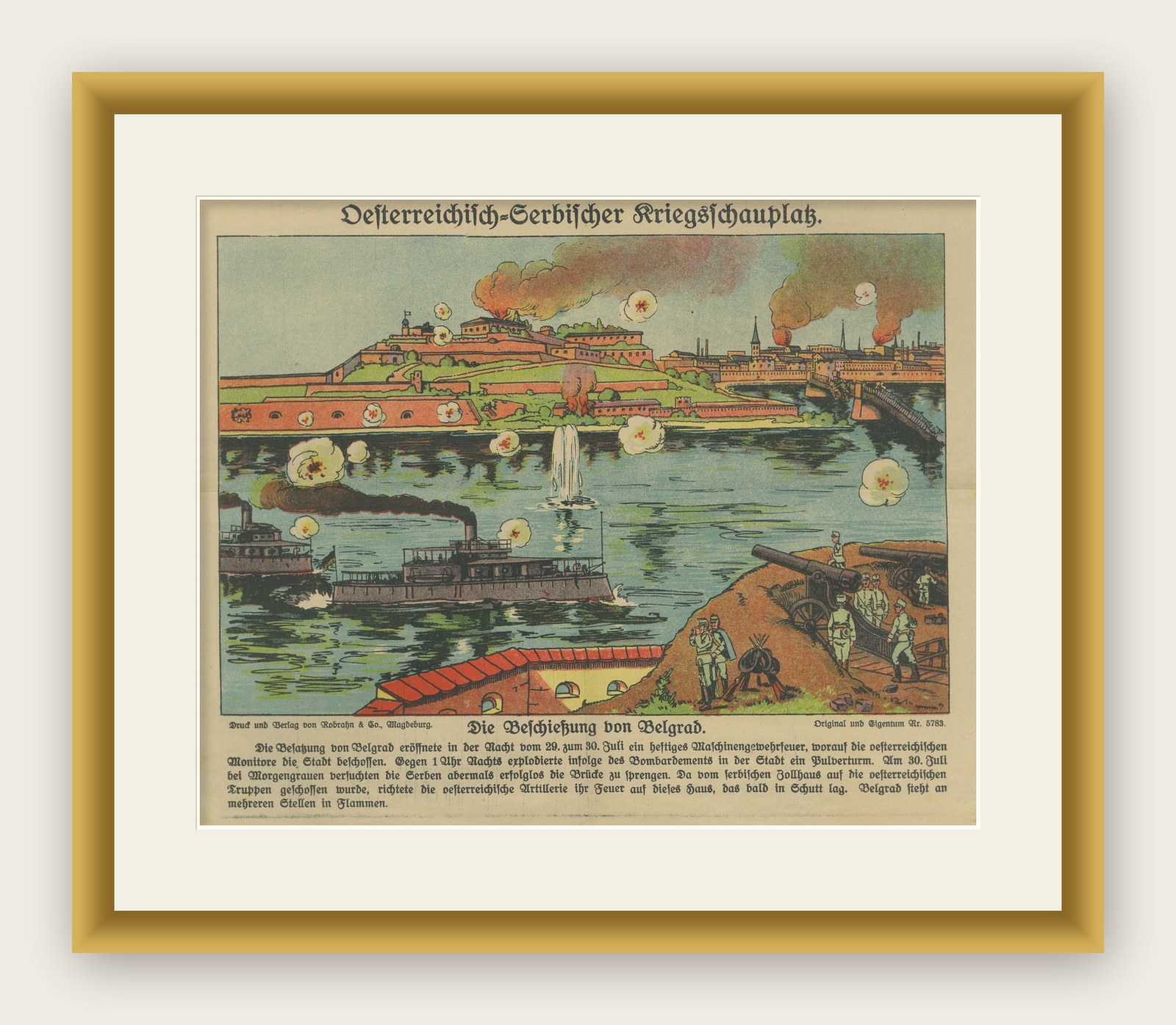
This vivid and highly decorative color print depicts the bombardment of Belgrade during the opening phase of the First World War, capturing the dramatic night and dawn attacks of late July 1914. Issued as part of a contemporary German illustrated war series, the image presents an immediate, panoramic view across the river toward the fortified city, with artillery fire, exploding shells, burning buildings, and military river vessels rendered in strong color and clear narrative detail.
Unlike later photographic or documentary imagery, this print communicates the event through bold illustration and storytelling. The composition balances wide architectural views with animated foreground detail: cannon crews at work, soldiers moving along embankments, and warships advancing under fire. The palette of greens, reds, ochres, and smoky blues gives the scene a striking decorative quality, making it as compelling visually as it is historically charged.
The print was produced on thin, inexpensive paper intended for rapid circulation during the first months of the war. As such, it represents an authentic contemporary visual response to unfolding events rather than a later retrospective interpretation. Today, these sheets are valued for their immediacy, color, and graphic force, and are particularly appealing when framed as standalone works with strong visual presence.
Translated original German caption
“The bombardment of Belgrade began during the night of July 29 to July 30 with heavy machine-gun fire, after which the Austrian monitors shelled the city. Around 1 a.m., as a result of the bombardment, a powder tower in the city exploded. On the morning of July 30, the Serbs again attempted unsuccessfully to blow up the bridge. Since fire was directed from the Serbian customs house at the Austrian troops, the Austrian artillery concentrated its fire on this building, which was soon reduced to rubble. Belgrade is ablaze in several places.”
This translated text is printed beneath the image and forms an integral part of the historical and visual narrative, anchoring the illustration to a specific moment in time while reinforcing its documentary intent.
Condition report:
Printed on thin wartime paper, as issued. Even age-related toning throughout, with soft handling creases and light edge wear consistent with ephemeral material of this type. No major losses. Overall well preserved for a fragile First World War illustrated sheet.
Framing suggestions:
Highly decorative when float-mounted to reveal the original sheet edges. We recommend a neutral or soft grey mat with a natural oak, walnut, or black frame. Museum glass advised due to the thin paper. Works particularly well as a statement piece in studies, libraries, or contemporary interiors seeking historical graphic contrast.
Technique: Color lithograph (offset print on thin paper)
Maker: Robrahn & Co., Magdeburg, Germany, 1914